News Posts matching #Intel

Return to Keyword Browsing

Gigabyte Announces Revolutionary Ultra Turbo Mode Performance Boost for Intel Z890 Motherboards

GIGABYTE Technology, a global leader in high-performance motherboards, graphics cards, and hardware solutions, today announces the groundbreaking Ultra Turbo Mode feature for its Intel Z890 series motherboards. This innovative BIOS level enhancement unlocks significant gaming performance boosts of up to 35% without requiring any additional hardware investment. With a simple BIOS update, users can access dramatically enhanced system performance, further solidifying GIGABYTE's commitment to delivering innovative, reliable, and performance-driven solutions.

Maximize Performance without Extra Expense
The Ultra Turbo Mode extracts maximum performance from systems without the need for expensive hardware upgrades. By intelligently optimizing BIOS settings, this revolutionary feature unlocks hidden potential in the latest Intel Core Ultra 2 9/7/5 K-SKU processors. The results are impressive: memory performance achieves a remarkable boost of up to 68% in AIDA64 testing across various high-performance memory configurations. Gaming performance also sees significant gains, with up to 35% higher frame rates in demanding AAA titles like Hitman 3: Dartmoor.


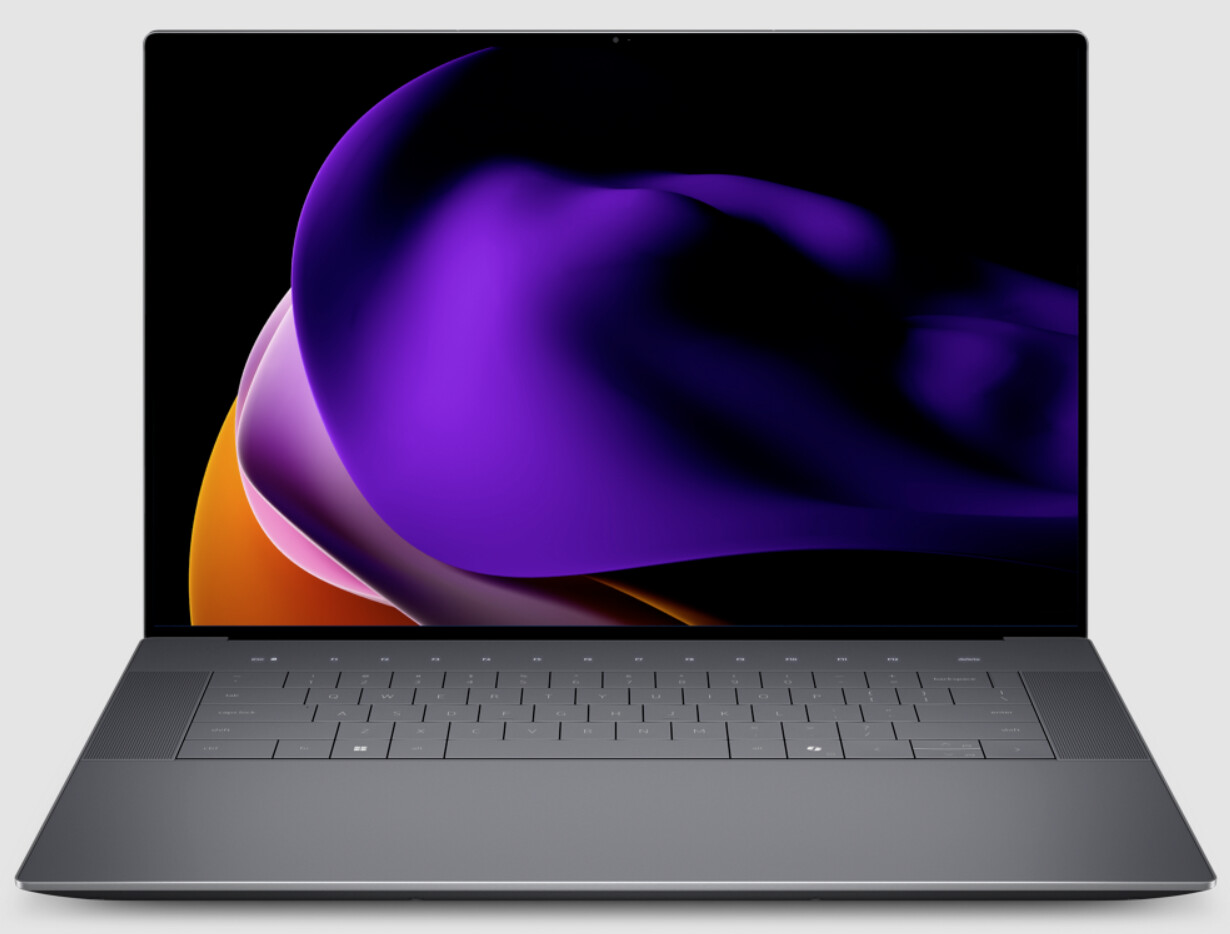
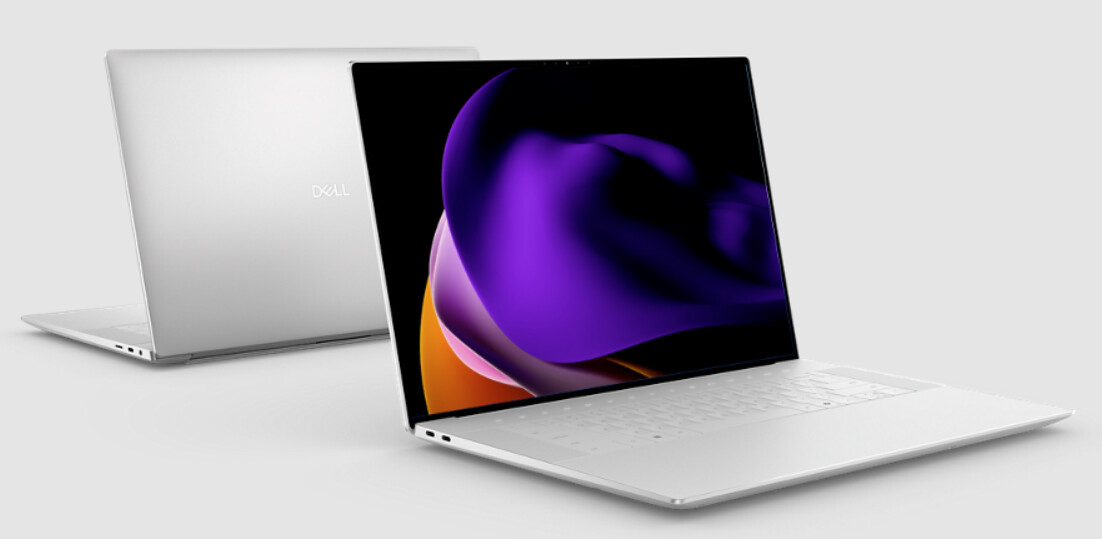
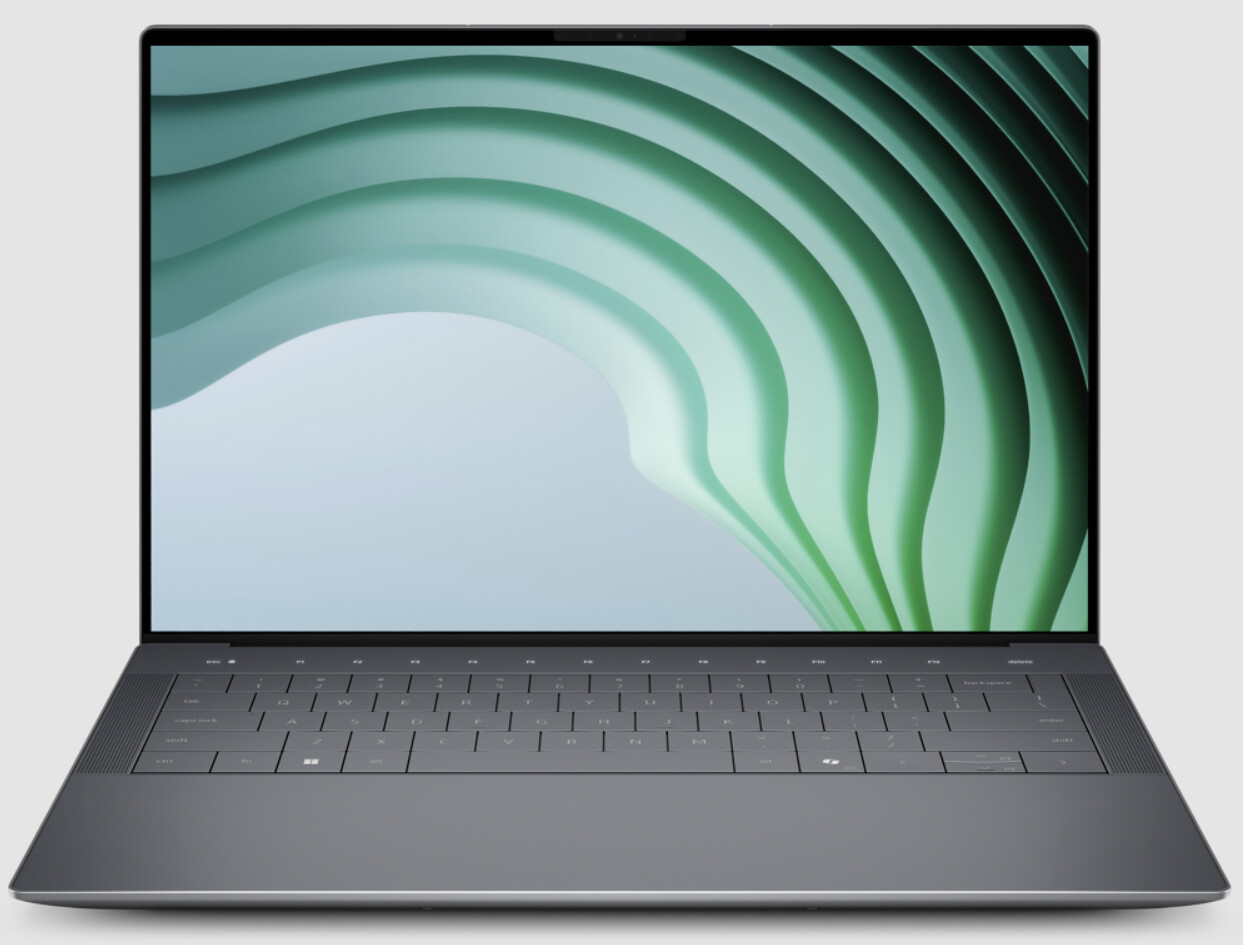
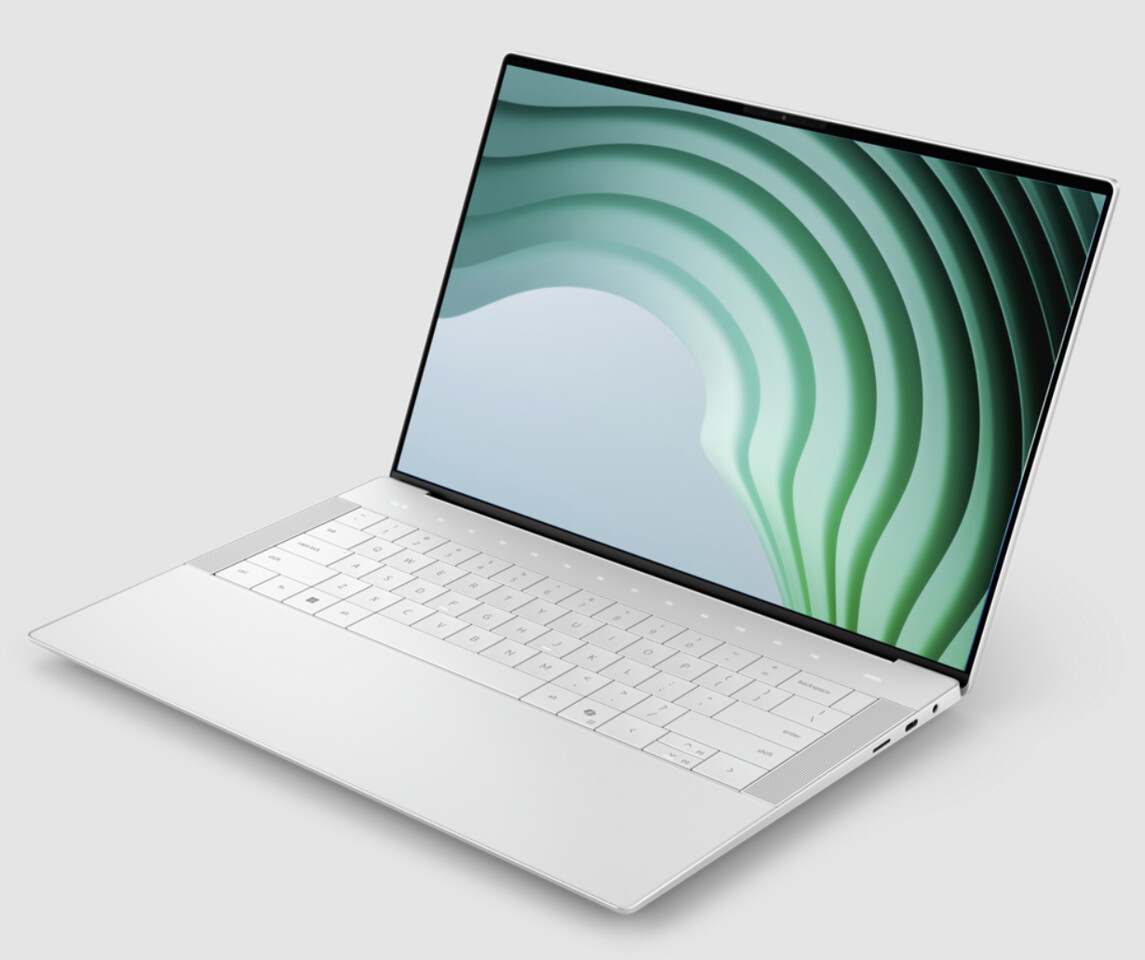
Dell Announces the 16 Premium and 14 Premium Laptop Ranges

Today, Dell unveils its new lineup of flagship laptops, now under the Dell Premium name. Powered by the latest Intel Core Ultra 200H series processors, these devices deliver meaningful performance advancements designed for students, creators and entrepreneurs who rely on their PCs to fuel their ambitions and keep pace with what's next.

Staying true to the XPS tradition, the new Dell Premium laptops uphold the signature craftsmanship and innovation that customers know and love - stunning displays, elevated and smooth finishes, monochromatic colors and cutting-edge technology. The new name signals a fresh chapter—one that makes it easier than ever to find the right PC while providing the same exceptional quality, design and performance.

Eurocom Releases User-Upgradeable 17.3" Nightsky RX517 Laptop Featuring NVIDIA RTX 5070

Eurocom introduces the Nightsky RX517, a customizable and user-upgradeable 17.3-inch laptop built for professionals, creators, and power users who need a balance of screen size, flexibility, and long-term scalability. The Nightsky RX517 comes with large 17.3" internal display for these looking for larger size viewing area. At the core of the Nightsky RX517 is Intel Core Ultra 9 275HX processor with 24 cores / 24 threads and 36 MB cache, paired with the NVIDIA GeForce RTX 5070 Blackwell GPU (4608 CUDA cores, 144 Tensor AI cores, and 8 GB GDDR7 memory). This configuration is ideal for productivity workloads, 2D/3D content handling, development, multi-display environments, and smooth day-to-day performance.

Designed to support up to four active displays with NVIDIA Surround View, the Nightsky RX517 empowers power users to expand their desktop environment for improved multitasking, creative workflows, and visual workspace management. The internal 17.3-inch FHD 144 Hz display delivers smooth visuals and large screen for creative and technical work. Following EUROCOM's user-friendly upgrade philosophy, the Nightsky RX517 offers user-accessible dual SODIMM slots supporting up to 128 GB of DDR5-5600 memory, and three physical M.2 NVMe slots enabling up to 24 TB of SSD storage in RAID 0/1/5 configurations. This allows users to upgrade storage and memory capabilities to meet user changing computing requirements without replacing the laptop.

Intel Winds Down Automotive Division, Prepares for Major Layoffs

Intel has confirmed plans to phase out its in-house automotive chip team and lay off most of the employees in that segment. In a memo to staff on Tuesday, the company stated that it will honor existing contracts with vehicle manufacturers and suppliers but will essentially dissolve the unit that designed and marketed its small automotive platform. This move supports Intel's new strategy under new CEO Lip-Bu Tan to concentrate on client computing and data center operations. "We are refocusing on our core client and data center portfolio to strengthen our product offerings and meet the needs of our customers," the statement said. "As part of this work, we have decided to wind down the automotive business within our Client Computing Group. We are committed to ensuring a smooth transition for our customers."

Intel's automotive division has never generated a major share of revenue, and the company does not report its results separately. Still, Intel highlights that over 50 million vehicles worldwide use its processors for services such as infotainment, electric vehicle management, and driver assistance. Despite that footprint, the division remains small compared with the rest of Intel's diverse chip portfolio. Importantly, the decision does not affect Mobileye, which Intel spun off and took public in 2023. Mobileye continues to operate independently, even though Intel retains nearly all of the voting shares. Intel has already informed its manufacturing staff of plans to cut up to 20% of its workforce starting in July. It will also outsource much of its marketing function to Accenture, relying on AI to manage campaigns. These actions are much needed for Intel's determination to make operations leaner and sharpen its focus on the markets where it remains strongest.

Intel "Nova Lake-HX" Enthusiast Mobile Processor Debuts New BGA2540 Package

Intel's next generation Core Ultra 300-series "Nova Lake-HX" enthusiast mobile processor is expected to debut a new BGA package, the BGA2540. This was sniffed out from shipping manifests of prototype boards of the processor. Although not socketed, mobile processors tend to carry forward package sizes and pin maps across generations, to simplify notebook mainboard and cooling solution designs for OEMs. Over the past several generations, the enthusiast notebook segment of mobile processors from Intel, designated by "-HX" in the codename, have meant notebook-friendly BGA variants of the maxed out "-S" segment silicon, with the highest core counts on the by the company in the client segment.

We've known from older reports that the maxed out desktop "Nova Lake-S" sees a significant increase in core counts, with a core configuration of 16 P-cores, 32 E-cores, and 4 low power island E-cores, a 3-tiered hybrid processor topology similar to "Meteor Lake." Intel is looking to at processor base power values as high as 150 W for its top Core Ultra 9 K-series SKUs. It's very likely that this silicon will be carried over with either the same or similar core-count to "Nova Lake-HX," which is why Intel is needing a larger package for mobile. The desktop "Nova Lake-HX" will require a motherboard change, as the processor is expected to debut the new LGA1954 socket.

An Intel-HP Collaboration Delivers Next-Gen AI PCs

AI PCs are a new class of laptops designed to deliver AI-enhanced experiences—from productivity to creativity—that adapt to users' needs and enhance people's lives. For HP's Intel-based AI PCs, Intel contributed more than just hardware like its Intel Core Ultra processors. Intel worked closely with HP to co-engineer and optimize hardware platforms for AI workloads. By fine-tuning performance across the central processing unit (CPU), graphics processing unit (GPU) and neural processing unit (NPU), Intel helped HP benchmark and validate real-world use cases, ensuring selected AI applications run efficiently on HP devices.

HP's latest AI PCs for business users—including the EliteBook X, EliteBook Ultra (announced in January at CES 2025) and EliteBook 8 (unveiled in March at HP Amplify)—are examples of how Intel's software and platform teams worked closely with HP to optimize performance and AI readiness on Intel Core Ultra-based systems. "We are delighted by the exceptional results Intel's Client Software team and HP's Commercial Personal Systems team achieved for the recent release of Intel Core Ultra 200V series devices," said Carla Rodriguez, vice president and general manager of the Client Software Ecosystem in the Client Computing Group at Intel.

Thermaltake Launches the WAir CPU Cooler for Workstations

Thermaltake has launched the WAir CPU Cooler a cooling solution for workstations that handle demanding tasks like 3D rendering and AI processing. This cooler supports Intel LGA4677 and AMD sTR5/SP6 sockets and is capable of delivering up to 500 W TDP cooling capacity. It measures 143.2 x 115 x 165 mm (L x W x H) and has a single-tower design with aluminium fins. Thermaltake WAir cooler features six 6 mm diameter heat pipes connected to a large nickel plated copper base with high-quality solder paste between heat pipes and heat sinks to enhance thermal conductivity.

The WAir uses two upgraded TOUGHFAN 14 Pro units. Each fan is 140.8 x 140.8 x 26.4 mm in size and runs at speeds from 500 to 1500 RPM controlled by PWM. Users can adjust the fan positions to fit different memory module heights. The fans have liquid crystal polymer (LCP) blades that help reduce vibration at top speeds. Each fan delivers up to 83.4 CFM airflow with 1.86 mm-H₂O static pressure and 24.4 dBA noise levels. The fans connect with 4-pin PWM connectors and offer 50,000 hours of operational life. Thermaltake didn't provide exact pricing and availability for the WAir CPU cooler series.

Intel GPUs Gain 20% Performance by Disabling Security Mitigations

Intel GPUs, both iGPUs and Arc, on Linux, can achieve a surprising 20% performance boost by taking direct action within their own graphics stack. The company has long incorporated security mitigations into its open-source Compute Runtime to protect against vulnerabilities like Spectre, but these safeguards have carried a hidden cost. With the introduction of a build-time option named NEO_DISABLE_MITIGATIONS, Intel now allows users to compile the Compute Runtime without these extra checks, thereby reclaiming up to 20% in OpenCL and Level Zero workloads. Behind the scenes, Intel's engineers have been testing unmitigated builds on GitHub for months, and the results have been clear: disabling these driver-level mitigations can significantly speed up shader compilation, AI-driven upscaling routines, and physics simulations that rely on GPU compute.

Intel's confidence in disabling these checks stems from the fact that modern Linux kernels already address Spectre vulnerabilities comprehensively at the operating system level. To keep users informed, the Compute Runtime build will emit a warning if it detects a kernel lacking the necessary patches, ensuring transparency about any residual risk. Canonical's Ubuntu team has partnered with Intel to introduce this enhancement in its upcoming 25.10 release. But make no mistake, this is Intel's initiative: the company is driving the performance improvements, publishing unmitigated binaries upstream, and coordinating with distribution partners to make the change broadly available. Security teams at Intel have analyzed the potential attack surface and concluded that the performance gains far outweigh the minimal risk, especially given that Intel's own builds have been running unmitigated without incident.

AAEON Release the World's Smallest 13th Gen Intel Core-Powered Single Board

In another breakthrough in single-board computing, AAEON has released the de next-RAP8, the world's smallest board featuring embedded 13th Generation Intel Core Processors, measuring just 3.31" x 2.17" (84 mm x 55 mm). Available with a choice of the Intel Core i7-1365UE, Intel Core i5-1335UE, or Intel Core i3-1315UE, all at 15 W, the de next-RAP8 can leverage up to 10 cores and 12 threads. The board also boasts up to 16 GB of LPDDR5x system memory and Intel Iris Xe graphics.

Designed for drone and robotics applications, the de next-RAP8 hosts two Intel-based RJ-45 ports, one for 2.5GbE and one for 1GbE speeds, alongside two USB 3.2 Gen 2 Type-A ports on its rear I/O. Rounding off its physical ports are an HDMI 1.2a port and a 12 V DC Jack. The board adds to these with a relatively dense set of pin headers and connectors. Given the board's target application fields being robotics and drones, the most notable inclusions are an 8-bit GPIO, four USB 2.0, and two RS-232/422/285 signals, all of which are available via a 40-pin header on the board's CPU-side. For more industrial use, the de next-RAP8 offers SMBus/I2C as an optional function.

Intel's Core Ultra 7 265K and 265KF CPUs Dip Below $250

Intel's high-end "Arrow Lake" processors have just become significantly more affordable, with the Core Ultra 7 265K and 265KF now priced below $250 US at major American retailers. In recent weeks, Intel has officially reduced its suggested retail prices from $399 to $309 and from $384 to $294, and retailers have pushed the savings even further. Today, shoppers can pick up the unlocked Core Ultra 7 265K for $239.99 and the graphics-disabled 265KF for $229.99 at Micro Center, reflecting a roughly 40 percent discount off launch pricing. In addition to these cuts, Micro Center is bundling the 265K with an ASUS Z890 AYW Gaming Wi-Fi motherboard and a 32 GB G.Skill Ripjaws S5 DDR5-6000 memory kit for $499, saving buyers approximately $70 compared to purchasing the components separately. Newegg's deal includes a free 16 GB Patriot Viper Venom DDR5-6400 kit with the 265K, while Amazon's Spring Bundle features two full-price PC games, Dying Light: The Beast and Civilization VII, plus software licenses valued at $159.

Internationally, similar markdowns are appearing across Intel's Arrow Lake-S lineup. In the UK, LambdaTek lists the Core Ultra 9 285 K at £481.18, the 265K at £234.04, and the 265KF at £230.97. The mid-range Core Ultra 5 245 K and 245KF both dip under £220. With their 20 cores and strong multithreaded performance, the Core Ultra 7 265K and 265KF now stand out in the sub-$250 segment, especially when bundled with motherboards, memory, and games. Consumers should balance these productivity gains against expected Arrow Lake gaming results and keep an eye on AMD's upcoming 3D V-Cache processors, which promise to intensify competition in the under-$300 market later this year.

Alphacool Unveils New Eisblock Aurora Arc B580 Steel Legend/Challenger GPU Water Block

Alphacool International GmbH, based in Braunschweig, has been a pioneer in PC water cooling technology for over 20 years. With one of the most comprehensive product portfolios in the industry and over 20 years of experience, Alphacool is now expanding its portfolio with the new Eisblock Aurora Arc B580 Steel Legend + Challenger with Backplate.

The GPU water cooler is precisely tailored to fit the layout of ASRock's Intel Arc B580 Steel Legend and Challenger graphics cards. An updated fin structure, optimized water flow, and an improved jetplate ensure high cooling performance. The chrome-plated copper base offers excellent thermal conductivity and long-lasting durability. Subtle RGB lighting complements the elegant design and provides even illumination.

Intel Appoints Sales and Engineering Leaders

Intel today announced a series of leadership appointments aligned with its focus on strengthening customer relationships and becoming a more engineering-focused company. Greg Ernst, a respected sales leader with more than 20 years of Intel experience, has been named chief revenue officer. In addition, Srinivasan Iyengar, Jean-Didier Allegrucci and Shailendra Desai are joining Intel in key engineering leadership roles.

"We see significant opportunities ahead to strengthen our product offerings and meet the changing needs of our customers," said Lip-Bu Tan, CEO of Intel. "Greg, Srini, J-D and Shailendra are highly accomplished leaders with strong reputations across our ecosystem, and they will each play important roles as we position our business for the future."

GEEKOM Unveils IT15 Intel-Based Mini PC

GEEKOM, a leading innovator in mini PC technology, is set to release its latest powerhouse, the GEEKOM IT15, setting a new benchmark for compact computing. Designed for professionals and businesses, this ultra-compact mini PC combines high-performance processing, robust stability, and unparalleled connectivity, making it the perfect solution for modern workspaces.

At the heart of the IT15 is Intel's 2nd Gen Core Ultra processor (up to Ultra 9), which delivers enhanced single-core performance and improved energy efficiency. By eliminating Hyper-Threading, the system optimizes pure computing power, ensuring rapid response times and higher productivity. With a turbo clock of up to 5.4 GHz, it effortlessly handles demanding tasks such as video editing, coding, and graphic design. The IT15 also leverages AI-driven performance optimization, enhancing system efficiency for task scheduling, power management, and content creation workflows.

RuggON Unveils 12-inch SOL 7: The World's First Rugged Tablet Powered by Intel Arrow Lake Processors

RuggON, a global provider of rugged computing solutions, announces the launch of the SOL 7, a groundbreaking 12-inch fully rugged tablet and the first powered by Intel Arrow Lake processors. Designed for high-performance computing in demanding environments, the SOL 7 delivers next-generation AI capabilities, robust durability and seamless connectivity for critical sectors including public safety, automotive applications, warehousing, logistics, and agricultural.

Unmatched AI Performance with Intel Arrow Lake
Powered by the latest the latest Intel Core Ultra 5/7 processor with integrated Intel AI Boost, the SOL 7 enables powerful on-device AI for real-time analytics, image recognition, and rapid decision-making. Equipped with a suite of data capture tools including optional 2D barcode scanner with OCR, NFC reader with FIDO2 security, smart card reader, fingerprint reader and UHF RFID reader, the SOL 7 empowers field professionals to operate smarter, faster, and more securely.

Intel Arc "Battlemage" B770 GPU Support Lands in Popular AIDA64 Tool

More confirmations regarding the final release of the Intel Arc "Battlemage" B770 GPU have landed, this time with the update of the popular AIDA64 tool. Just days after support for BMG-G31 GPUs, supposedly the SKUs behind the higher-end B770 and B750 models, has landed in the open-source Mesa driver, diagnostic tools are next. In the latest AIDA64 beta version 7.99.7817, FinalWire has added an interesting "GPU information for Intel Battlemage (BMG-G31)" section as a feature update. This means that the tool can now officially recognize Intel's upcoming GPUs and allow users to perform diagnostics. Additionally, the tool also supports the now finalized PCI Express 7.0 controllers and devices, as PCI-SIG has ratified the final specifications of the PCIe Gen 7 standard.

With this confirmation, higher-end Intel Arc B770 and B750 GPUs are getting more credibility for an actual release. We expect to hear more about it in the coming weeks as the rumored Q4 launch nears. Earlier rumors suggest that Intel will pair 32 Xe2 cores for the B770 model with 16 GB of GDDR6 memory on a 256-bit bus. Will Intel satisfy the needs of Arc graphics gamers who have been waiting for a higher-end card remains to be seen. Drop your expectations in the comments, and let us know.

Borderlands 4 PC Minimum Specs Emerge As Collector's Edition Without Game Key Dampens Spirits

Gearbox and 2K today opened Borderlands 4 pre-orders, with the rather unexpected $69.99 base game price resulting in a simultaneous sigh of relief following the gaming industry's recent move towards $80 AAA games. Following the pre-order launch, Borderlands 4's Steam page revealed the game's minimum system requirements as a bit of a mixed bag. According to the Steam page, the new looter shooter will only run on an AMD Radeon RX 5700 XT or NVIDIA GeForce RTX 2070, but this seems to largely be related to VRAM, since the minimum requirements also mentions that 8 GB is the minimum VRAM amount. An SSD and an eight-core CPU—listed as the AMD Ryzen 2700X or Intel Core i7-9700—will also be mandatory for Borderlands 4. Even the recommended specifications for Borderlands 4 are rather moderate, with the NVIDIA GeForce RTX 3080 and Radeon RX 6800 XT making the cut.

In addition to the reasonable PC specs, news also broke about an ECHO-4 Collector's Edition, a curious edition to the line-up of special edition bundles for Borderlands 4 that seems to be exclusive to GameStop for now. The Echo-4 Collector's Edition bundle is a host of physical Borderlands 4 memorabilia, including a cloth map of Kairos, an eight-inch Echo-4 figure with LED lights, a Vault symbol necklace, a card with five SHiFT codes for Borderlands 4 golden keys, and four double-sided lithography art prints—all for $149.99. The one glaring omission from the Echo-4 bundle is an actual game key for Borderlands 4. That is clearly labelled as "sold separately" on the GameStop page.

Lenovo and Intel Unroll the ThinkBook Plus Gen 6 Rollable Laptop Series

As a laptop user, some days you just want more screen space to get more done efficiently. That kind of relatable experience has been sparking innovation for years with the Intel customer engineers who work side-by-side with PC-maker Lenovo in China. Their newest co-engineered laptop design, the Lenovo ThinkBook Plus Gen 6 Rollable, an Intel Core Ultra processor-powered AI PC, goes on sale June 19 with the world's first rollable laptop screen. It's able to vertically expand from 14 inches up to 16.7 inches with either a hand motion or the push of a button. It adds nearly 50% more screen space, all with the power of on-device AI and Microsoft Copilot+.

Everyday Benefits of This AI PC
This laptop minimizes the need for constant scrolling or multiple screens. Excel spreadsheets go from 39 visible lines of information to 66 lines when the screen rolls out. Coders will appreciate the enhanced vertical display that shows more lines. Multitasking and on-the-road presentations are easier as dual 16:9 displays fit on top of each other. And vertical apps like Instagram and TikTok are more easily seen on the portrait display.

Intel Readies Core 5 120F Socket LGA1700 Processor

Intel is breathing new life into the Socket LGA1700 platform by giving it its fourth processor model generation, under the Core 100-series branding. These chips are based on the "Bartlett Lake-S" microarchitecture, but are designed to capture value price points. The main target of these chips are the gaming PC crowd. "Bartlett Lake-S" is a derivative of "Raptor Lake" but with the E-core clusters physically absent, and the chips only having "Raptor Cove" P-cores. A marketing slide for a new entry-level chip came to light, the Core 5 120F.

The Intel Core 5 120F is probably being designed for a sub-$150 price-point. The company's marketing material makes it abundantly clear that gamers that want maxed out 1080p AAA gaming experiences are the target audience of this chip. Core 5 120F comes with a 6-core/12-thread CPU, with six "Raptor Cove" P-cores, and no E-cores. The company didn't specify L2 cache size, but these are likely 1.25 MB per core. The six cores share an 18 MB L3 cache. It's highly likely that this particular silicon is physically similar to the "Alder Lake" H0 die, which also lacks any E-core clusters, physically only has six P-cores, and an 18 MB L3 cache. The Core 5 120F ticks at 2.50 GHz base frequency, with a 4.50 GHz maximum boost. It features a 2-channel DDR5 memory interface, supporting DDR5-4800 native memory speed, with support for up to 192 GB memory. The chip comes with 65 W processor base power.

Intel Arc "Alchemist" A750 Reaches End-of-Manufacture

Intel has confirmed that its Arc A750 graphics card has reached end-of-life, as outlined in Product Change Notification #856777-00 published yesterday. This announcement marks the beginning of the end for a model that arrived just two and a half years ago, and it offers partners a clear timetable for winding down orders and shipments. Customers should mark June 27, 2025, as their final opportunity to submit discontinuance orders for the Arc A750. After that date, no new orders will be accepted. All remaining units are slated for delivery by September 26, 2025. Intel recommends that system builders, integrators, and distributors assess their inventory and projected needs now and then place any last orders before the cutoff. Should questions arise, field sales representatives stand ready to assist. Do note that end of life here means end of manufacturing, not end of support. Intel will continue to provide driver and quality of life updates to these Arc Alchemist GPUs.

When it launched in October 2022, the Arc A750 staked its claim in the performance segment of Intel's market-entry discrete GPU lineup. Based on the DG2-512 processor in its ACM-G10 form, the card leveraged TSMC's 6 nm to pack 21.7 billion transistors into a 406 square millimeter die. With 3,584 shading units, 224 texture units, and 112 ROPs, it delivered strong raster throughput. Its 28 ray-tracing cores and 448 tensor cores brought hardware-accelerated lighting and machine-learning inference within reach of mainstream gamers and creators alike. At the board level, the A750 features 8 GB of GDDR6 memory, running at an effective 16 Gbps across a 256-bit bus, which yields 512 GB/s of bandwidth. A base clock of 2,050 MHz could be boosted to 2,400 MHz, while a dual-slot design drew up to 225 W via one 6-pin and one 8-pin connector. Video outputs included HDMI 2.1 and three DisplayPort 2.0 ports, all bridged to the host system over PCI-Express 4.0 x16.

MSI Releases MS-CF23 Mini-ITX Motherboard Optimized for Embedded Systems with Intel Arrow Lake-S and H810 Chipset

MSI IPC is proud to unveil the MS-CF23, a high-performance Mini-ITX motherboard designed for mainstream embedded and industrial applications. Powered by the latest 15th Gen Intel Arrow Lake-S Core Ultra 9/7/5 Series processors and integrated with the Intel H810 chipset, the MS-CF23 delivers exceptional processing power, enhanced connectivity, and maximum flexibility in a compact size.

Notably, the Arrow Lake Core Ultra processors are Intel's first to include an integrated Neural Processing Unit (NPU), bringing dedicated AI acceleration directly on the chip for smarter and faster edge computing. Engineered to meet diverse application needs such as digital signage, automation, and edge computing, the MS-CF23 offers rich I/O, scalable memory support, and advanced display capabilities, all with robust reliability and simple integration. Ideal for applications such as automation, digital signage, and edge computing, the MS-CF23 is packed with features to support robust computing and connectivity.

MAINGEAR Unleashes ULTIMA 18 - The Ultimate 18" 4K Gaming Laptop

MAINGEAR, the leader in premium-quality, high-performance gaming PCs, today announced its most powerful laptop to date, the 18-inch ULTIMA 18. Developed in collaboration with CLEVO, ULTIMA 18 redefines what a gaming laptop can be by offering desktop-level specs, like a 4K@200 Hz G-SYNC display, Intel Core Ultra 9 275HX processor, and up to an NVIDIA GeForce RTX 5090 mobile GPU, all inside a sleek chassis outfitted with metal lid and palm rest.

Designed for elite gamers and creators who demand top-tier performance without compromise, ULTIMA 18 is MAINGEAR's first laptop to support modern dual-channel DDR5 memory, PCIe Gen 5 SSDs, dual Thunderbolt 5 ports, and Wi-Fi 7. Whether plugged in or on the move, this system delivers unprecedented power, quiet efficiency, and immersive visuals for the most demanding workloads and graphics-rich game titles.

Lenovo Announces the All-New Workstations Solutions and Updates to the ThinkStation Desktop Portfolio

Lenovo, today at NXT BLD, announced its new portfolio of Workstation Solutions, a series of purpose-built, expertly-curated industry solutions that meet and exceed the rigorous performance and workflow requirements of engineers, designers, architects, data scientists, researchers, and creators so these power users can work smarter, faster, and more cost-effectively. Lenovo also unveiled the latest editions of its newest ThinkStation P2 and P3 desktop workstations designed to maximize performance and value.

Lenovo Workstations Solutions—Your Workflow, Perfected
Businesses need more than just powerful hardware—they need complete workflow solutions tailored to real-world industry challenges. Developed by Lenovo engineering experts through research and customer engagement to understand workflow bottlenecks and pain points, Lenovo Workstation Solutions deliver easily deployable blueprints—scalable and secure reference architectures powered by the state-of-the-art Lenovo Workstations—featuring superior hardware, software and services.

MSI Powers AI's Next Leap for Enterprises at ISC 2025

MSI, a global leader in high-performance server solutions, is showcasing its enterprise-grade, high-performance server platforms at ISC 2025, taking place June 10-12 at booth #E12. Built on standardized and modular architectures, MSI's AI servers are designed to power next-generation AI and accelerated computing workloads, enabling enterprises to rapidly advance their AI innovations.

"As AI workloads continue to grow and evolve toward inference-driven applications, we're seeing a significant shift in how enterprises approach AI deployment," said Danny Hsu, General Manager of Enterprise Platform Solutions at MSI. "With modular and standards-based architectures, enterprise data centers can now adopt AI technologies more quickly and cost-effectively than ever before. This marks a new era where AI is not only powerful but also increasingly accessible to businesses of all sizes.

El Capitan Retains Top Spot in 65th TOP500 List as Exascale Era Expands

The 65th edition of the TOP500 showed that the El Capitan system retains the No. 1 position. With El Capitan, Frontier, and Aurora, there are now 3 Exascale systems leading the TOP500. All three are installed at Department of Energy (DOE) laboratories in the United States.

The El Capitan system at the Lawrence Livermore National Laboratory, California, remains the No. 1 system on the TOP500. The HPE Cray EX255a system was measured with 1.742 EFlop/s on the HPL benchmark. LLNL now also submitted a measurement for the HPCG benchmark, achieving 17.41 Petaflop/s, which makes the system the new No. 1 on this ranking as well.

NVIDIA Grabs Market Share, AMD Loses Ground, and Intel Disappears in Latest dGPU Update

Within the discrete graphics card sector, NVIDIA achieved a remarkable 92% share of the add-in board (AIB) GPU market in the first quarter of 2025, according to data released by Jon Peddie Research (JPR). This represents an 8.5% increase compared to NVIDIA's previous position. By contrast, AMD's share contracted to just 8%, down 7.3 points, while Intel's presence effectively disappeared, falling to 0% after losing 1.2 points. JPR reported that AIB shipments reached 9.2 million units during Q1 2025 despite desktop CPU shipments declining to 17.8 million units. The firm projects that the AIB market will face a compound annual decline of 10.3% from 2024 to 2028, although the installed base of discrete GPUs is expected to grow to 130 million units by the end of the forecast period. By 2028, an estimated 86% of desktop PCs are expected to feature a dedicated graphics card.

NVIDIA's success this quarter can be attributed to its launch of the RTX 50 series GPUs. In contrast, AMD's RDNA 4 GPUs were released significantly later in Q1. Additionally, Intel's Battlemage Arc GPUs, which were launched in Q4 2024, have struggled to gain traction, likely due to limited availability and low demand in the mainstream market. The broader PC GPU market, which includes integrated solutions, contracted by 12% from the previous quarter, with a total of 68.8 million units shipped. Desktop graphics unit sales declined by 16%, while notebook GPUs decreased by 10%. Overall, NVIDIA's total GPU share rose by 3.6 points, AMD's dipped by 1.6 points, and Intel's declined by 2.1 points. Meanwhile, data center GPUs bucked the overall downward trend, rising by 9.6% as enterprises continue to invest in artificial intelligence applications. On the CPU side, notebook processors accounted for 71% of shipments, with desktop CPUs comprising the remaining 29%.
Return to Keyword Browsing
Nov 17th, 2026 14:09 CST change timezone

New Forum Posts

Popular Reviews

TPU on YouTube

Controversial News Posts