News Posts matching #LGA-1851

Return to Keyword Browsing

Shuttle Presents the XPC Barebone XB860G2

Compact design meets workstation performance: With the new XB860G2, Shuttle is expanding its portfolio with a high-performance solution that bridges the gap between ultra-compact mini-PCs and bulky tower systems. Thanks to the Intel B860 chipset, support for 'Arrow Lake-S' and a PCIe 5.0 slot for dual-slot graphics cards, the system offers maximum flexibility for demanding professional applications.

Hardware requirements in professional environments are diverse: whilst ultra-compact 1-liter systems are the ideal choice for efficient office applications and space-critical installations, computationally intensive projects often require additional hardware resources. The new Shuttle XPC Barebone XB860G2 fills precisely this market niche. With a chassis volume of around 4.7 liters, it offers space for dedicated components and optimized cooling performance that was previously reserved for significantly larger systems, without sacrificing the advantages of a compact form factor.

Intel's "Bartlett Lake-S" Core 200E Family Leaks: Up to 12 P-Cores and 5.9 GHz ST Boost

Thanks to a new table specification matrix published by a known leaker Jaykihn on X, we are seeing the final specifications of Intel's long-rumored "Bartlett Lake-S" Core 200E family of CPUs with P-Cores only. This platform is designed to fit inside Intel's LGA-1700 socket, but from a consumer standpoint represents a non-existent product that will not reach their hands, as Intel has abandoned the plan to launch this highly anticipated gamer CPU. Instead, Intel will only offer it for its edge and embedded products. At the top of the stack is the Core 9 273 PQE SKU, which is a 12 P-Core variant with 24 threads and a base frequency of 3.4 GHz. This model can boost all of its 12 cores to 5.3 GHz, while a single thread can go up to 5.9 GHz independently for tasks that require intensive single-threaded performance. It is equipped with 36 MB of L3 cache and an integrated GPU with 32 EUs of Xe-LP graphics.

Interestingly, the entire lineup is separated into three categories. One is a high-TDP PQE with a base power of 125 W, while the middle PE models are 65 W designs with lower clocks. The weakest models are the PTE SKUs that have a TDP of 45 W, which are more ideal for edge deployments where power/efficiency is the most important factor. Across the lineup, there are versions with 8, 10, and 12 cores, all with Hyper-Threading for 16, 20, and 24 threads. Some SKUs from the PE and PTE lineups do not enjoy Intel vPro and ECC memory support, while the PQE high-power SKUs are all equipped with vPro and ECC memory support. You can check out the complete table comparison and product segmentation below for more specific information on different models.

The 5 Biggest No-Shows of CES 2026

As the Consumer Electronics Show of 2026 comes to an end, our field crew has done of a lot of work to keep readers updated. However, pre-CES expectations were high for several product launches, that sadly didn't happen. In today's piece we are ranking the top five things we didn't get at CES 2026, even with hopes of a product launch occurring during the show.

1) First on our non-weighted ranking is NVIDIA's GeForce RTX 50-series "Blackwell" SUPER refresh. This mid-cycle was originally planned for late Q1 to early Q2 2026, with a possible announcement at CES 2026. The "SUPER" treatment was planned with denser GDDR7 memory modules with 3 GB of capacity per chip, increasing the memory configuration of the standard GeForce RTX 5070, RTX 5070 Ti, and RTX 5080. Initially, the RTX 5070 SUPER was planned with an upgrade to offer 18 GB, while the RTX 5070 Ti SUPER and RTX 5080 SUPER would each provide 24 GB of GDDR7 memory.

"Core Ultra 7 270K Plus" SKU Gets Benched, "ARL-S Refresh" CPU Boosts Up to 5.4 GHz

Intel "Arrow Lake Refresh" processor leaks continue to flow; the latest NDA-busting information comes from a test build's Geekbench 6.4 (on Windows 11 64-bit) scores and diagnostics. The evaluation platform utilized a Gigabyte Z890 EAGLE WIFI7 mainboard, paired with 64 GB DDR5-4800 SDRAM (four channels). Yesterday's database entry fleshes out a "Core Ultra 7 270K Plus" SKU's fundamentals and early performance figures. Team Blue's upcoming "Core Ultra 200K Plus" (unlocked) product stack is expected to consist of three models; reportedly prepped to outperform vanilla "Arrow Lake-S" desktop equivalents.

The freshly debuted Core Ultra 7 270K Plus option seems to be positioned as a clear upgrade over the familiar Core Ultra 7 265K 20-core CPU. According to Geekbench Browser, the newer design sports an extra complement of cores—specifically, four efficiency units. In general, industry experts reckon that "ARL-S Refresh" E-core base and turbo clocks have been elevated by 100 MHz. On average, the newer chip seemingly outperforms its natural predecessor by a small margin: 5.6% in single-core stakes, and 4.2% in multicore. Larger margins—in Geekbench—are anticipated in the near future, due to other test platforms taking advantage of greater memory transfer rates. A related late November leak described improved DDR5 memory support: 7200 MT/s transfer rates on CUDIMM modules.

Intel "Arrow Lake Refresh" Brings 7,200 MT/s DDR5 Memory Support

Additional confirmations regarding the launch of "Arrow Lake Refresh" have emerged, as Intel has updated its processor SKU support matrix for DDR5 technologies. The "Arrow Lake Refresh" processors will support faster DDR5 memory. Intel confirms that ARLR will ship with native support for DDR5 memory speeds reaching 7200 MT/s on CUDIMM modules. This enhanced speed rating applies only to DDR5 modules equipped with integrated clock driver circuits, commonly known as CUDIMMs, which improve signal integrity at higher frequencies. Standard UDIMMs and CSODIMMs will continue to operate within their existing specifications at 5600 MT/s and 6400 MT/s, respectively.

Intel attributes the speed boost to a refined integrated memory controller and subtle platform-level optimizations for LGA-1851 motherboards, not a new chipset. Core platform constraints, including the two-DIMMs-per-channel limit, remain unchanged, meaning the improvement simply provides additional headroom for compatible memory. Beyond memory improvements, select middle-class SKUs will gain extra efficiency cores or modest clock speed increases. Combined with the CUDIMM support, these changes should deliver measurable gains in specific workloads, though they will not dramatically shift Intel's competitive position. Overclocking enthusiasts can still exceed official speeds through manual tuning. Scheduled to debut in early 2026, just a few months before "Nova Lake," the update is primarily a refinement of Intel's existing technology rather than a completely new architecture. The fully new architecture is reserved for "Nova Lake-S."

ASUS Readies Curved Screen AIO Water Cooler: ROG RYUO IV SLC

ASUS has readied its first all-in-one water cooler with a built-in curved AMOLED screen called ROG RYUO IV SLC 360 ARGB. The upcoming ASUS ROG RYUO AIO cooler integrates a 6.67-inch 60 Hz AMOLED display for system monitoring, significantly larger than any commercial AIO cooler with a built-in display on the pump/water block combo. The cooler operates at 39.6 dB while its 120 mm fans deliver 71.4 CFM airflow at speeds between 500-2650 RPM through PWM/DC control. A copper water block connected to a 360 mm aluminium radiator forms the thermal transfer system, joined by 200 mm FEP sleeved tubing. Socket compatibility includes current-generation Intel LGA-1851/1700 and AMD AM4/AM5 platforms, with no support for legacy sockets.

The expanded display provides real-time data visualization during intensive computational workloads without requiring additional monitoring software. ASUS plans to release the cooler before the "618" Mid-Year Shopping Festival. While the initial product features a 360 mm radiator, smaller variants may follow for space-constrained builds. No pricing details have been announced. A similar solution to this is TRYX Panorama AIO, which features a 6.5-inch L-shaped 3D screen as well, but ASUS has outdone it with a 6.7-inch screen variant now. We are curious how this cooler will look in real life, and some photos are already available below.

Intel Confirms Panther Lake for 2H 2025, Nova Lake in 2026, Falcon Shores Canceled

Intel shared some news and updates about its upcoming CPU architectures during the Q4 earnings call. Intel confirmed that "Panther Lake", its next major CPU, is set to be released in late 2025. "Panther Lake" will use Intel's latest 18A manufacturing process and might be part of the Core Ultra 300 series. "Panther Lake" is rumored to combine next-generation "Cougar Cove" P-cores with existing "Skymont" E-cores both in the Compute complex, and in the SoC tile as low-power island E-cores. However, Intel hasn't confirmed if it will be available for desktop systems.

The following CPU architecture, "Nova Lake", is set to debut in 2026. Unlike "Panther Lake", we know "Nova Lake" will work on desktop computers. This suggests desktop users might need to wait until 2026 for an upgrade unless Intel surprises us with a desktop version of "Panther Lake" or an alternative option.

Intel Prepares Core Ultra 9 285K, Core Ultra 7 265K, and Core Ultra 5 245K Arrow Lake-S Desktop CPUs

Hardware leaker Raichu, known for accurately predicting Intel's moves, has unveiled intriguing details about the company's forthcoming desktop CPU lineup. According to the leaks, Intel is supposed to introduce a big shift in its desktop CPU naming convention with the arrival of the Core Ultra 200 series, codenamed Arrow Lake-S. This next-generation lineup promises to deliver one of the most significant performance leaps for desktop processors in recent years, marking a substantial departure from Intel's current naming strategy—a change that hasn't been witnessed in over a decade. The Core Ultra 200 series is expected to encompass a diverse range of tiers and variants, catering to various user needs. This includes the overclockable K models for enthusiasts, F variants without integrated graphics, and potentially low-power T models for energy-efficient SKUs. According to Raichu's leaks, the unlocked K-Series models are rumored to include the high-end Core Ultra 9 285K, the mid-range Core Ultra 7 265K, and the budget-friendly Core Ultra 5 245K. While the absence of a 290K part has raised eyebrows, these names resemble Intel's mobile CPU naming conventions.

To enjoy the Core Ultra 200 series, users will need to upgrade to new motherboards featuring the 800-series chipsets and the LGA-1851 socket. Unlike the Core Ultra 200V Lunar Lake models for mobile devices, details about the desktop version have remained scarce, shrouding the impending launch in an air of mystery. While Raichu's leaks carry significant weight, it's essential to approach such information cautiously. There's a possibility that SKUs like the 290K may still be introduced, as a new KS version, aligning with Intel's traditional naming conventions. The Core Ultra 200 series promises to cater to a wide range of desktop users, from the performance-hungry enthusiasts eyeing the Core Ultra 9 285K to budget-conscious consumers seeking the value proposition of the Core Ultra 5 245K. The Core Ultra 7 265K is expected to strike a balance between performance and affordability, targeting the mid-range segment. As more leaks and official information surface, we will continue to provide updates on this release from Intel.

Intel LGA-1851 "Arrow Lake" Socket Detailed

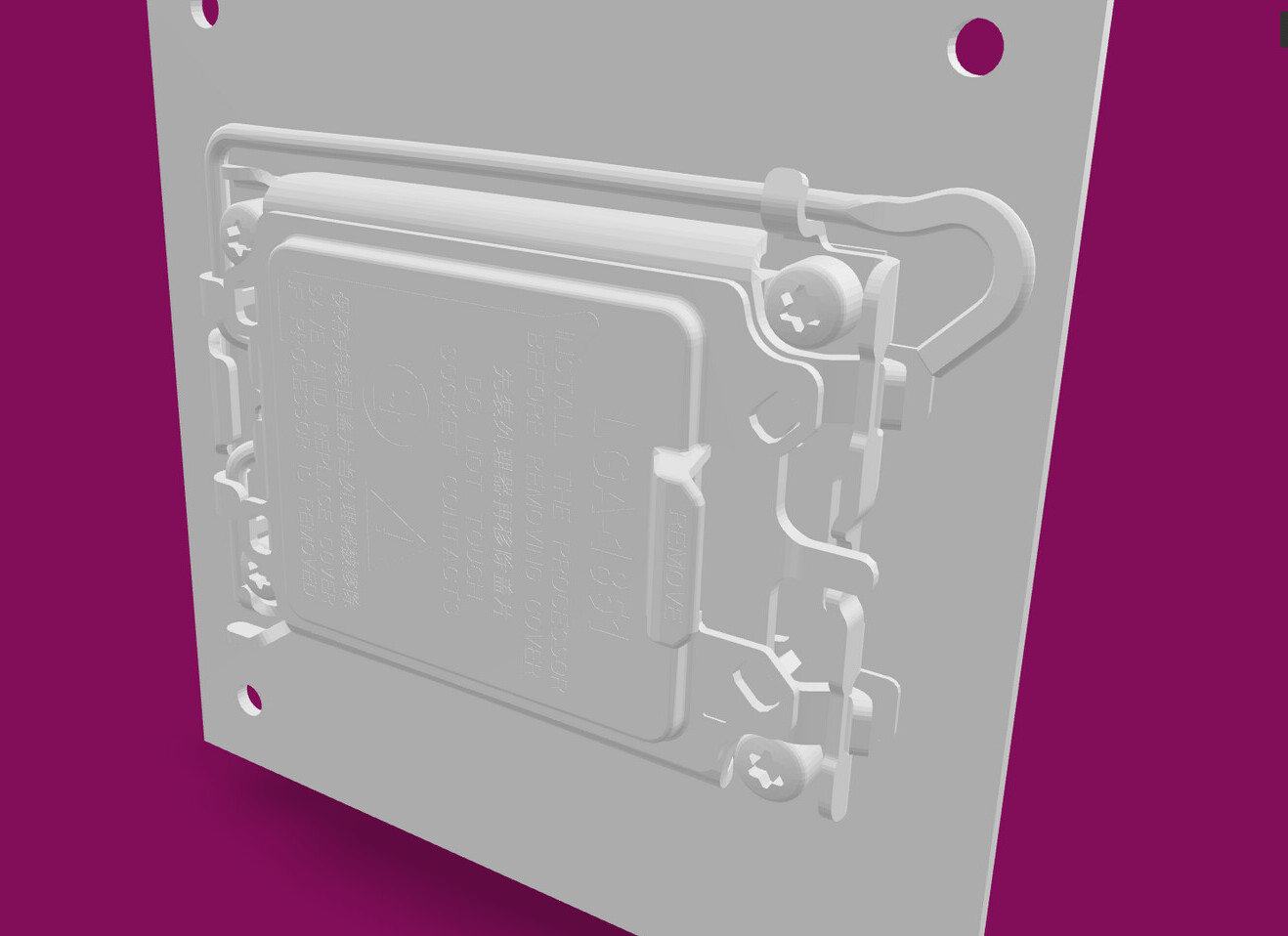
Thanks to the 3D renders and technical drawings obtained by Igor's Lab, we have insights into the structure of Intel's next-generation LGA-1851 socket for Arrow Lake processors. Scheduled to arrive in mid-2024, the LGA-1851 socket was originally intended for Meteor Lake-S desktop processors. However, the socket is now awaiting Arrow Lake since Meteor Lake is now a mobile-only processor generation. The first notable thing about LGA-1851 is that it will directly connect a dedicated PCIe 5.0 x4 interface to the CPU, besides the x16 lanes going to the GPU. This results in native support for high-speed PCIe 5.0 NVMe SSDs that can achieve speeds of over 12 GB/s in both read and write workloads.

Intel Arrow Lake-S will be available with eight P-cores and 16 E-cores in SKUs with different combinations of the two. The accompanying 800 series chipset includes Z890, B860, and H810 models, with an evident absence of H870 SKU. There will be W880 and Q870 workstation-grade chipsets as well. It is worth pointing out that Arrow Lake will enable DRAM capacities of up to 48 GB per DIMM at 6400 MT/s. We expect to hear more about Arrow Lake-S as we near the 2024 launch date and we get to see the Intel 20A node being used in client products. Below, you can see the technical drawings of the Independent Loading Mechanism (ILM) and chipset 3D models.

Noctua NH-U12A Mounting Kit Updated with LGA-1851 Socket Support

The latest retail batch of Noctua's NH-U12A single-tower CPU coolers has been photographed sporting updated packaging and containing a new set of mounting brackets. Japan's Akiba PC Watch reported on new stock of Noctua's popular (and well reviewed) NH-U12A cooler sitting on shelves at Tsukumo Computer's flagship store in Akihabara, Tokyo. Their article pinpointed Socket LGA-1851 compatibility listed on the revised retail box, and documented within new installation instruction steps. They noted that: "according to the manual, the mounting bar and spacer for fixing the CPU cooler are shared with the existing LGA-1700 (kit)."

Noctua has not updated its NH-U12A product page or compatibility centre pages with these revisions, but Tom's Hardware did pick up on the NH-D15's overhauled entry: "now listed as having SecuFirm2 mounts compatible with Intel LGA-1851." The Austrian computer hardware manufacturer seems to pride itself on its preparedness well in advance of a forthcoming new CPU range—Akiba PC Watch cheekily observed: "it is currently unknown when CPUs and motherboards compatible with LGA-1851 will be released." Intel's 15th Gen Arrow Lake S is presumably the main candidate lined up to adopt LGA-1851—technical specifications were uncovered back in June time.

Intel's Upcoming LGA-1851 Socket Detailed

Igor Wallossek over at Igor's Lab has posted a range of technical specs for Intel's upcoming LGA-1851 socket and it covers everything from the pin-out to the mechanical characteristics of the new socket. The new socket is intended for Intel's 15th gen Arrow Lake S CPU. Raptor Lake refresh, which will launch as Intel's 14th gen—and last generation—Core i desktop processor, still uses LGA-1700. Although the new socket has additional pins, the physical size remains the same as the LGA-1700 sockets, so it's expected that current coolers will remain compatible with the LGA-1851 socket. However, the mounting pressure has almost doubled from 489.5 N to 923 N, suggesting that a different mounting kit might be needed.

What is more interesting with regards to the new socket is that Igor confirms that Intel will be adding four PCIe 5.0 lanes for a CPU connected NVMe SSD, but apparently Intel will also keep the current four PCIe 4.0 lanes for a second CPU connected NVMe SSD, not quite matching AMD's AM5 platform. It's likely that we'll see a similar segmentation like the one AMD has done, so only Z-series chipset motherboards will be able to take advantage of the PCIe 5.0 NVMe lanes, but it's possible some other chipset SKUs from Intel will enable PCIe 5.0 storage support as well.
Return to Keyword Browsing
Nov 15th, 2026 08:23 CST change timezone

New Forum Posts

Popular Reviews

TPU on YouTube

Controversial News Posts