Tuesday, December 9th 2025

"Core Ultra 7 270K Plus" SKU Gets Benched, "ARL-S Refresh" CPU Boosts Up to 5.4 GHz

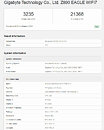
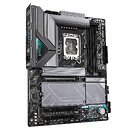
Intel "Arrow Lake Refresh" processor leaks continue to flow; the latest NDA-busting information comes from a test build's Geekbench 6.4 (on Windows 11 64-bit) scores and diagnostics. The evaluation platform utilized a Gigabyte Z890 EAGLE WIFI7 mainboard, paired with 64 GB DDR5-4800 SDRAM (four channels). Yesterday's database entry fleshes out a "Core Ultra 7 270K Plus" SKU's fundamentals and early performance figures. Team Blue's upcoming "Core Ultra 200K Plus" (unlocked) product stack is expected to consist of three models; reportedly prepped to outperform vanilla "Arrow Lake-S" desktop equivalents.

The freshly debuted Core Ultra 7 270K Plus option seems to be positioned as a clear upgrade over the familiar Core Ultra 7 265K 20-core CPU. According to Geekbench Browser, the newer design sports an extra complement of cores—specifically, four efficiency units. In general, industry experts reckon that "ARL-S Refresh" E-core base and turbo clocks have been elevated by 100 MHz. On average, the newer chip seemingly outperforms its natural predecessor by a small margin: 5.6% in single-core stakes, and 4.2% in multicore. Larger margins—in Geekbench—are anticipated in the near future, due to other test platforms taking advantage of greater memory transfer rates. A related late November leak described improved DDR5 memory support: 7200 MT/s transfer rates on CUDIMM modules.
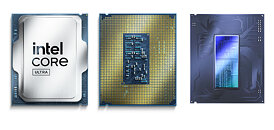
Over a year ago, TechPowerUp's W1zzard deemed this model unworthy of receiving any awards—since a late 2024 launch, deep discounts have chipped into the desktop chip's initial $395 MSRP. An accumulation of optimizations and appealingly reduced price tags, have elevated the original "Arrow Lake-S" desktop family's standing, but AMD's more mature mainstream gaming CPUs continue to dominate at retail. Team Blue enthusiasts are likely looking forward to the oft-leaked "Core Ultra 200K Plus" processor range's "early 2026" release window. Many will want to see Intel leadership roll out an aggressively competitive pricing strategy upon launch.
Sources: Geekbench Browser, VideoCardz, Wccftech, KitGuru, Tom's Hardware
Add your own comment

20 Comments on "Core Ultra 7 270K Plus" SKU Gets Benched, "ARL-S Refresh" CPU Boosts Up to 5.4 GHz

#2
Nostras
Yawn, this thing is going to add no noticeable improvement over the 265K whilst guaranteed to cost at least 20% more on launch.
Posted on Reply
#3
Deorc Mearh
I'm sure we are all running to buy 7200 64GB kits for this new cpu....
Posted on Reply
#4
tfp
NostrasYawn, this thing is going to add no noticeable improvement over the 265K whilst guaranteed to cost at least 20% more on launch.
No shock there unless you have something that needs 4 more ecores
Posted on Reply
#5
Dr. Dro
tfpNo shock there unless you have something that needs 4 more ecores
I mean, it's like the i7-14700K in that regard, at least they added the extra few e-cores. This is what happens when you don't have a new product to sell, it's the same thing we saw with the "14th Gen" Raptor Lake re-release. "Refresh" models with paltry factory clock speed improvements over the original. Unless the 290K+ turns out to be a stellar quality CPU like the 14900KS was (no RPL chip, including 14900K and 13900KS, run at 14900KS clocks, and believe me, I tried), it's pretty much gonna be worthless.

Nova Lake isn't ready and desktop Panther Lake-S is either delayed for a year or cancelled (thus justifying these things), if that's the case then LGA 1851 will be a single generation socket like AMD's sTRX4. Not a good look for Intel.
Posted on Reply
#6
TumbleGeorge
Gigabyte Z890 EAGLE WIFI7 mainboard, paired with 64 GB DDR5-4800 SDRAM (four channels).
Hmm, what's mean? Channels or subchannels?
Posted on Reply
#7
tfp
Dr. DroI mean, it's like the i7-14700K in that regard, at least they added the extra few e-cores. This is what happens when you don't have a new product to sell, it's the same thing we saw with the "14th Gen" Raptor Lake re-release. "Refresh" models with paltry factory clock speed improvements over the original. Unless the 290K+ turns out to be a stellar quality CPU like the 14900KS was (no RPL chip, including 14900K and 13900KS, run at 14900KS clocks, and believe me, I tried), it's pretty much gonna be worthless.

Nova Lake isn't ready and desktop Panther Lake-S is either delayed for a year or cancelled (thus justifying these things), if that's the case then LGA 1851 will be a single generation socket like AMD's sTRX4. Not a good look for Intel.
yep, just like the AMD refresh for 98503D. Need something "new" to sell to keep the prices up.
Posted on Reply
#8
Harun8
I bought Arrow Lake because of the sales and low prices. While a marginally better CPU is great and all, I feel this will only be used as an excuse to raise prices back up to the msrp. If Intel keeps their low prices, well, that would be nice and I would continue to suggest their CPUs
Posted on Reply
#9
Fluke
Back when CPUs were struggling around the Gigahertz Barrier, a model with +100MHz was markedly faster.
Now the same bump is... unnoticable?
Posted on Reply
#10
rattlehead99
Dr. DroI mean, it's like the i7-14700K in that regard, at least they added the extra few e-cores. This is what happens when you don't have a new product to sell, it's the same thing we saw with the "14th Gen" Raptor Lake re-release. "Refresh" models with paltry factory clock speed improvements over the original. Unless the 290K+ turns out to be a stellar quality CPU like the 14900KS was (no RPL chip, including 14900K and 13900KS, run at 14900KS clocks, and believe me, I tried), it's pretty much gonna be worthless.

Nova Lake isn't ready and desktop Panther Lake-S is either delayed for a year or cancelled (thus justifying these things), if that's the case then LGA 1851 will be a single generation socket like AMD's sTRX4. Not a good look for Intel.
The E-Cores in the 14700k were next to worthless, the E-Cores in the 200 series have the IPC/PPC of the P-Cores in the 14700k/14900k, they are just clocked lower and miss AVX10/512.
The E-Cores in the 200 series can make for a great CPU alone, the E-Cores in the 14700k are basically sandy bridge.
Posted on Reply
#11
Erratic4^2
rattlehead99The E-Cores in the 14700k were next to worthless, the E-Cores in the 200 series have the IPC/PPC of the P-Cores in the 14700k/14900k, they are just clocked lower and miss AVX10/512.
The E-Cores in the 200 series can make for a great CPU alone, the E-Cores in the 14700k are basically sandy bridge.
Worthless only for gaming. As someone who uses the 14700k I have appreciated the e-cores for multithreaded applications.
Posted on Reply
#12
Harun8
rattlehead99the E-Cores in the 200 series have the IPC/PPC of the P-Cores in the 14700k/14900k
While the 200S E-Cores are awesome, they still aren't as good as 200S P-Cores from my personal benchmarks, but feel free to correct my amateur benchmarking

In my benchmarks mt 245K E-Cores were around 70-85% the speed of a P-Core core per core, varying greatly by application, though still slower nonetheless. Although in some multithreaded loads the higher core count of E-Cores could beat P-Cores with their lower core count. I'd assume the higher end SKUs with more E-Cores would exaggerate this difference as well

I would assume they are much closer to a P-Core than Raptor Lake though yeah, but I haven't seen benchmarks on it
Posted on Reply
#13
Erratic4^2
Harun8While the 200S E-Cores are awesome, they still aren't as good as 200S P-Cores from my personal benchmarks, but feel free to correct my amateur benchmarking

In my benchmarks mt 245K E-Cores were around 70-85% the speed of a P-Core core per core, varying greatly by application, though still slower nonetheless. Although in some multithreaded loads the higher core count of E-Cores could beat P-Cores with their lower core count. I'd assume the higher end SKUs with more E-Cores would exaggerate this difference as well

I would assume they are much closer to a P-Core than Raptor Lake though yeah, but I haven't seen benchmarks on it
Is it still the case that regarding die space, roughly three E-cores fit in the space of 2 P-cores? And does that make them more capable per die space than p-cores in multithreaded applications?
Posted on Reply
#14
Harun8
Erratic4^2Is it still the case that regarding die space, roughly three E-cores fit in the space of 2 P-cores? And does that make them more capable per die space than p-cores in multithreaded applications?
Good question. Heres a die shot of the 285K's compute die


Just counting the pixels in the image, a P-Core seems roughly 70% the size of an E-Core cluster. So almost 3 E-Cores would fit in 1 single P-Core. Though ig cache sizes complicate this
Posted on Reply
#15
ThomasK


Intel is basically AMD from the past.
Posted on Reply
#16
N/A
At what voltage? 1.5? 1.25? In that case the actual usable clock speed for me is 4.5. I'd rather wait for unified EP core and 16A node.
Posted on Reply
#17
Harun8
ThomasKIntel is basically AMD from the past.
I disagree. Intel has higher core counts but an 8P/16E Intel chip isn't any better than a 16C AMD chip. They're just going a different way with their core config
Posted on Reply
#18
TheinsanegamerN
TumbleGeorgeHmm, what's mean? Channels or subchannels?
DDR5 has 32 bit channels, not 64 bit like previous iterations. As such, a "quad channel" DDR5 setup is 4x32 bit channels, for 128 bit total bus width.

Many manufacturers went back to "Dual channel" descriptions because people kept getting confused. This board, like all intel consumer socket boards, 4 DDR5 memory channels, running 2x32 bit for each memory stick, with A and B sets alternating access if you are running four sticks.
Harun8I disagree. Intel has higher core counts but an 8P/16E Intel chip isn't any better than a 16C AMD chip. They're just going a different way with their core config
That's literally what AMD was doing in the past...... MOAR COARS with a "different way" of configuring their CPUs, and is slower in games then its predecessor. That is the best description of the failure that was the Construction Core.

The only way it doesnt fit is that, unlike Bulldozer, Arrow lake can actually perform decently compared to AMD and even has some consistent wins in content creation and productivity.
Posted on Reply
#19
Harun8
TheinsanegamerNMOAR COARS with a "different way" of configuring their CPUs, and is slower in games then its predecessor
Except it has the same amount of cores as its predecessor. It only has more cores than AMD, because a hybrid architecture
Posted on Reply
#20
Visible Noise
ThomasKIntel is basically AMD from the past.
You obviously don’t remember had bad Derpdozer was. AMD was practically selling the fixtures off the walls to make payroll.
Posted on Reply
Add your own comment
Nov 18th, 2026 18:58 PST change timezone

New Forum Posts

Popular Reviews

TPU on YouTube

Controversial News Posts