Wednesday, September 10th 2025

NVIDIA GeForce RTX 50-Series SUPER GPUs Could Arrive at CES 2026
Widespread speculation surrounding the possible launch of the NVIDIA GeForce RTX 50 SUPER series has shifted, with industry sources confirming that the official timeline for the enhanced GPU variants has been moved by a few months. According to Hongxing2020 hardware leaker, known for his ties with GPU AIBs, he claims that the RTX 50 SUPER series has been delayed. Recent online reports have claimed Christmas as the release date; however, these may not be accurate. NVIDIA remains committed to its current RTX 50 Blackwell series for the following months, which continues to operate at full production capacity with no discontinuation plans in sight.
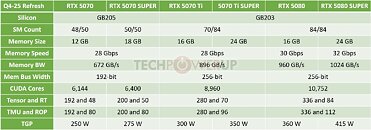
According to VideoCardz, a possible mid-cycle "Blackwell" refresh in the form of SUPER GPUs could hit at CES 2026, when the announcement is expected. NVIDIA plans to increase the memory sizes of key performance-segment and high-end graphics card SKUs to boost their performance in higher resolutions, particularly with ray tracing and neural rendering enabled. Specifically, the company plans to leverage new 24 Gbit density GDDR7 memory chips, which allow it to create memory sizes such as 18 GB over a 192-bit wide memory bus or 24 GB across a 256-bit wide memory bus. Besides the added memory, NVIDIA is expected to increase shader counts and GPU clock speeds marginally.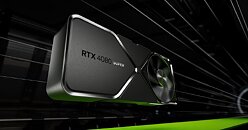
Source:
VideoCardz
According to VideoCardz, a possible mid-cycle "Blackwell" refresh in the form of SUPER GPUs could hit at CES 2026, when the announcement is expected. NVIDIA plans to increase the memory sizes of key performance-segment and high-end graphics card SKUs to boost their performance in higher resolutions, particularly with ray tracing and neural rendering enabled. Specifically, the company plans to leverage new 24 Gbit density GDDR7 memory chips, which allow it to create memory sizes such as 18 GB over a 192-bit wide memory bus or 24 GB across a 256-bit wide memory bus. Besides the added memory, NVIDIA is expected to increase shader counts and GPU clock speeds marginally.


69 Comments on NVIDIA GeForce RTX 50-Series SUPER GPUs Could Arrive at CES 2026
I figured we were slated for a pre-christmas launch but I guess the standard 5xxx series must be selling ok (or NV just doesn't care about consumer anymore, maybe a combination of the two).
As for the cards themselves it seems performance improvement will be miniscule, if nonexistent in games.
If they somehow manage to keep the price the same then at least 5080 will have the amount on ram it should have launched with, but 24GB 5070 Ti Super will immediately undercut it anyway. Just like 5080 is pointless now. As for 5070 Ti then i doubt most people buying it felt limited by 16GB.
5070 moving from 12GB to 18GB is good assuming Nvidia will not price it horribly compared to 9070.
Nvidia should also discontinue existing 5060 8GB and 5060 Ti 8GB models and make 12GB models of them instead at same prices as current 8GB models.
With price tag fitting the market.
You really think that 5070 Ti Super will have the same 279W power consumption with 8GB more G7?
Meanwhile you can subtract 20 from the 314 number and likely add 25 to 5070 Ti number and that's the chart we will be looking after 50 super series launches.
Not that i expect TPU to retest 9070 XT at that time. I mean the last one they tested was nearly four months ago, but they have already added 50 super series to the performance chart with zero testing.
On the other hand, I do think that arguing about 20-ish W between the 5070 Ti and 9070 XT is pointless.
The GPU will not suddenly consume 20W more because the VRAM is consuming 20W less. Most 9070 XT cards have TBP around 350W. 314W is not even the maximum. My card for example has TBP of 363W (+10% manual adjustment included) and i believe the AsRock Taichi model goes to 404W.
Besides on cards using Samsung G6 the TDP is not lowered from 304W to 284W. It's still 304W.
It was implied that Blackwell loses it's efficiency edge. Not that it already lost it.
Tho i dont believe 50W rise in TDP will means actually 50W increase in power consumption during gaming. Im guessing around 25W maybe because i dont want to overstate the eventual increase. The number of memory chips on board stays the same but obviously higher capacity modules consume more power.