News Posts matching #OCuLink

Return to Keyword Browsing

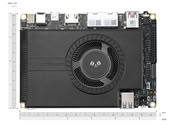
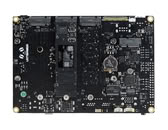
LattePanda Launches LattePanda Sigma 2: The Embeddable AI Single Board Server

The LattePanda Team today launched LattePanda Sigma 2, an x86 single-board server designed to bring high-performance local AI computing directly into intelligent products and systems. Built around the Intel Core Ultra X7 358H processor with Intel Arc B390 graphics, LattePanda Sigma 2 delivers up to 180 TOPS of total AI performance at INT8 in a compact form factor.

As "The Embeddable AI Single Board Server," LattePanda Sigma 2 combines high-performance computing, up to 64 GB of memory, high-speed networking, flexible expansion, and real-time hardware control in a single board. Rather than sitting alongside a product, it is designed to be integrated directly into the product itself, supporting applications from autonomous robots and vision systems to professional instruments and private AI appliances.
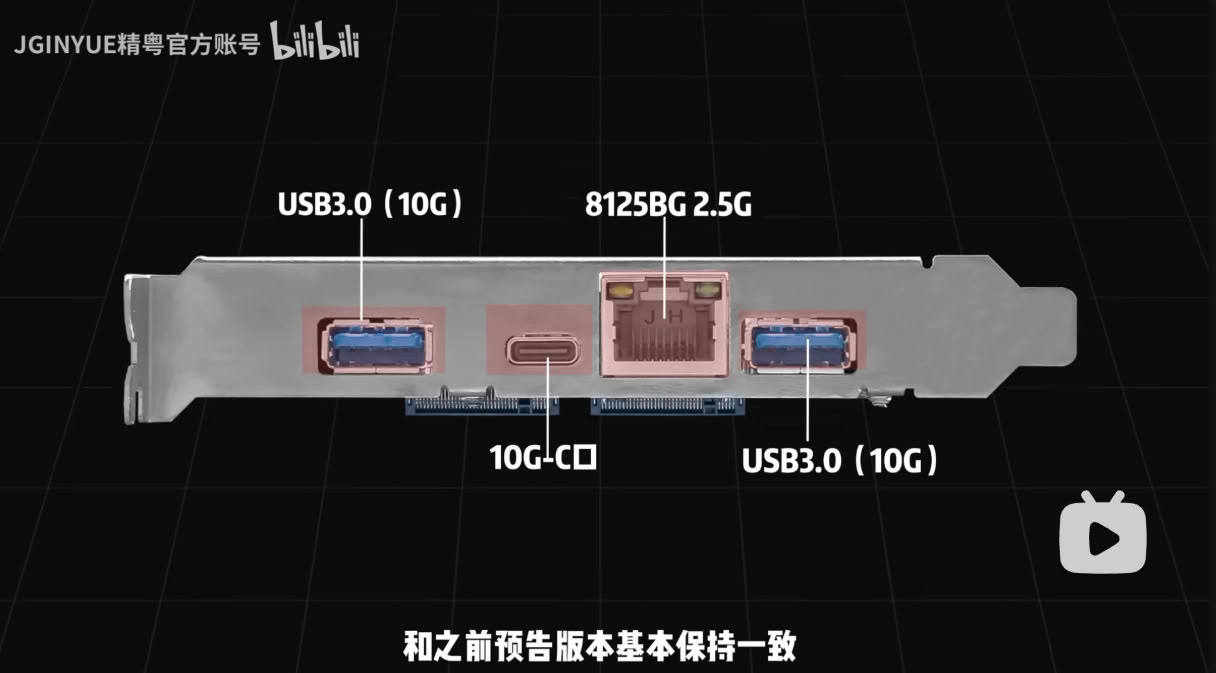
AMD B650 Chipset Arrives on a $58 PCIe Expansion Card From JGINYUE

JGINYUE has put AMD's B650 chipset on a PCIe add-in card called the Xscale.io, and it costs just 388 yuan in China, VideoCardz reports. That works out to roughly $58, although some conversions put it closer to $54. The card uses the "Promontory 21" chip to add four M.2 slots, a 2.5 GbE port, two 10 Gbps USB Type-A ports, and one 10 Gbps USB Type-C port to any system with a spare PCIe slot. There are also two internal USB 2.0 headers. The four M.2 slots are not equal, however. The two on the front are PCIe 4.0 x4, while the two on the back are limited to PCIe 3.0 x2 and PCIe 3.0 x1, so the rear slots are probably best left for slower bulk storage.

The card takes a 6-pin PCIe power connector, and it has a 4-pin fan header for an optional 40 mm fan. Apparently, that header runs at a fixed speed, and the fan is not included. This isn't the first card of its kind, since Lekuo launched a B650 add-in card in August with four M.2 slots and four SATA ports, and WisdPi sells a $199 option with OCuLink. JGINYUE's version undercuts both by a wide margin. The company reportedly plans variants with 20 Gbps USB Type-C, 10 GbE, and a half-height design, though there's no word on availability outside China.

Colorful Launches Ryzen Gorgon Halo Mini PC and Ryzen Max+ 395 Laptop Under Colorfire Brand

AMD launched the Gorgon Halo Ryzen AI Max+ Pro 495 in May 2026, and the powerful new APU seems to finally be making its way into the wider mini PC and laptop market, with Colorful being the latest brand to launch new workstations based on the new AMD silicon. Colorful has launched two new systems under its Colorfire brand: the Lingchuang Mini Pro mini PC, with the AMD Ryzen AI Max+ Pro 495, and the Ryzen AI Max+ 395-powered Lingchuang K16, a new mobile workstation laptop.

Colorful hasn't revealed much about the new mini PC other than that it can be configured with up to 196 GB of LPDDR5X-8533 unified memory, 160 GB of which can be assigned to VRAM to feed the Radeon 8065S. Pricing has not yet been announced, but configurations will start at 96 GB for the Lingchuang Mini Pro. The Lingchuang K16, meanwhile, has been listed on Chinese storefront, JD.com, with a price of ¥34,999, which converts to around $5,218 at the time of writing.

Acer Introduces Veriton RI110 AI Mini Workstation for Powering Hybrid Agentic AI Workloads

Acer today announced the Acer Veriton RI110 AI Mini Workstation (VRI110), a compact yet powerful device engineered for organizations looking to accelerate AI innovation without compromising space, performance, or security. Powered by an Intel Core Ultra X7 processor 358H and Windows 11 Pro, the system delivers high-performance AI computing to expedite AI-assisted content creation, inference, design, and everyday productivity. Designed for modern AI workflows, the Veriton RI110 delivers the scalability and intelligence organizations require to balance local and cloud resources with the performance professionals expect.

Performance for Advanced AI Workflows
Built to support up to 120 billion parameter AI models, the Acer Veriton RI110 pairs an Intel Core Ultra X7 processor 358H with Intel Arc B390 graphics to deliver responsive performance across content creation, development, and AI-powered applications. Complemented by up to 96 GB of LPDDR5X memory and up to 4 TB of PCIe Gen 4 SSD storage, the system enables fast multitasking and effective handling of complex datasets, models, and creative projects.

GMKtec Teases AMD Gorgon Halo-Powered Mini PC Coming in Early September

AMD's update to the Strix Halo Ryzen AI Max+ 395 is the Gorgon Halo Ryzen AI Max+ Pro 495, which launched with 16 Zen 5 cores, a total of 32 threads, and AMD's Radeon 8065S iGPU. So far, Framework has been the biggest OEM to tease the new Halo APU, but it seems as though GMKtec will soon launch a new Gorgon Halo mini PC in the Evo-X5 Pro.

GMKtec's official X account teased the new mini PC, which the brand says will launch at IFA Berlin 2026, on September 5. Aside from this, not much is known about the mini PC itself, however, the GMKtec Evo-X3 launched not too long ago, stacked to the gills with pro-tier ports, a beefy cooling solution with a 140 W peak TDP, and triple cooling fans. If the Evo-X5 doesn't stray too far from its predecessor, we can expect an OCuLink port, HDMI 2.1, at least one USB4 port, and 2.5 G LAN—or faster—packed into an aluminium chassis. We can also expect to see the price of the mini PC climb to the $4,000-range, especially for the top-end variant with 192 GB of RAM.

SAPPHIRE Technology Unveils EDGE+ Apex Robotics Platform

SAPPHIRE Technology today unveiled the EDGE+ Apex SOM/Carrier Robotics Platform, a production-ready hardware platform powered by AMD Ryzen AI Embedded X100 Series processors and designed to accelerate the development and deployment of physical AI in autonomous robotics. The platform has been showcased at AMD Advancing AI 2026 in San Francisco.

Built for rugged, always-on robotics deployments, the EDGE+ Apex platform pairs a COM-HPC module based on AMD Ryzen AI Embedded X100 Series processors with up to 128 GB of LPDDR5x memory and SAPPHIRE's purpose-built robotics carrier board to deliver the perception, planning and control performance autonomous machines require at the edge.

Minix Shows Bunch of New Mini-PCs and Portable Monitors at Computex 2026

Minix brought several new Mini-PCs and a couple of new portable monitors to the Computex 2026 show. Minix is covering almost every market segment with its Mini-PCs, and some upcoming designs are quite interesting. In addition, the company showcased several of its own portable monitors, including a 10-inch one.

Minix had an extensive lineup of Mini-PCs at the show, including the two new and upcoming Mini-PCs based on AMD's Ryzen AI Max+ 395 processor, the ER939-AI Pro and the ER939-AI Ultra. Both are branded as AI Mini Workstations and are practically the same hardware but packed in a completely different chassis design. The ER939-AI Pro is your standard Mini-PC packed in a white box with a rather neat leather handle at the top, while the ER939-AI Ultra uses a bolder design and even incorporates an LCD screen at the top of the case. Both offer up to 126 TOPS of overall AI performance, have all the usual connectivity and dual 10 Gb Ethernet, and can be equipped with up to 128 GB of LPDDR5X memory and up to 8 TB of NVMe SSD storage. Bear in mind that the ER939-AI Ultra is still in its early stages, so we might see some changes in the design, but, hopefully, they will keep the LCD screen.

Acemagic Introduces F5A Mini PC with Ryzen AI 9 HX 470 and OCuLink

Acemagic has launched the F5A, a mini PC built around AMD's Ryzen AI 9 HX 470, a 12-core, 24-thread chip combining Zen 5 and Zen 5c cores with boost clocks up to 5.2 GHz. Graphics come from the integrated Radeon 890M (RDNA 3.5, 16 compute units), and the XDNA2 NPU is rated at 55 TOPS, pushing total platform AI performance to up to 86 TOPS. Memory is fixed at 32 GB of LPDDR5X-8000, paired with a PCIe 4.0 NVMe SSD. Storage expansion is a strong point since Acemagic F5A mini PC features three M.2 2280 slots giving you up to 12 TB of total capacity. Networking covers Wi-Fi 7, Bluetooth 5.4, and dual 2.5 GbE LAN ports.

For a system this compact (130 x 132 x 62 mm) the connectivity is solid. You get HDMI 2.1, DisplayPort 2.1, and dual USB4 ports with DisplayPort output and 40 Gbps transfer speeds, plus an OCuLink port for eGPU or high-speed storage expansion. Multiple 8K display outputs are supported. Cooling is handled by a dual-fan setup with a vapor chamber, rated up to 65 W. The F5A is available as a barebones configuration at $759 or as a preconfigured 32 GB / 1 TB model at $1,299, however, availability seems limited at launch.

GPD Box Mini PC and G2 eGPU Get MCIO 8i Connectivity With 512 Gbps Bandwidth

GPD has officially announced its Box mini PC and its G-series eGPUs, which both now feature faster external PCIe interfaces for gaming and AI use cases. The GPD Box itself is a fairly standard Panther Lake mini PC, although not too much has been revealed about the Box aside from its new eGPU interface. The GPD Box swaps out the traditional USB4 or Thunderbolt 5 port with an MCIO 8i (Mini Cool Edge IO) port, which is capable of full PCIe 5.0 ×8 bandwidth. MCIO 8i aside, the Box looks to have a healthy assortment of ports, with dual USB Type-A and Type-C ports, alongside a 3.5 mm audio jack on the front and two USB Type-A ports, DP and HDMI for display, and dual Ethernet ports on the back of the mini PC. That MCIO ×8 port is theoretically capable of bidirectional bandwidth of up to 512 Gbps, although there are legitimate concerns about rated insertion cycles and wear on the ports, given that MCIO was initially designed for server applications, where hardware would be plugged and unplugged far less frequently than in consumer applications. It should also be noted that it is limited to PCIe ×8, even on PCIe Gen 5, meaning it will be limited to 256 Gbps bidirectional bandwidth on PCIe Gen 5.

The GPD G2 itself is the eGPU enclosure launching alongside the Box mini PC, and it is capable of connecting either over USB4 v2.0 or MCIO 8i, making it useful for more than just the GPD mini PC. GPD claims that the G2 can run an NVIDIA RTX 4090 with only 2% performance loss, which is a level of throughput that neither Thunderbolt 5 nor OCuLink can achieve. The G2 eGPU dock itself has dual USB Type-A ports for peripherals and a USB4 port with 100 W PD charging, and there's a built-in PCIe SSD expansion slot in the eGPU dock for extra storage. The G2 also has its own on-board PSU that connects to the GPU with an externally routed 12v-2×6 cable—GPD has not yet revealed the output of that unit, but presumably, it will at least be enough to power an RTX 4090 if that's what the company is staking its performance claim on. Availability and pricing have not yet been announced, but the Weibo announcement post lists 2026 as the release date, so we will likely find out more, including more specifications, later this year.

OCuLink Dev Kit Gives Framework Laptop 16 Desktop-Class PCIe Expansion

Alongside the Framework 13 Pro that was just announced, Framework also released the OCuLink Dev Kit, which is a new modular adaptor that replaces the Framework Laptop 16's Graphics Module with an external OCuLink port, allowing you to connect high-performance peripherals and hardware across a PCIe 5.0×8 interface and offering a theoretical maximum bandwidth of 128 GT/s. Framework suggests that users could use the OCuLink port to build out their Framework Laptop 16 as a lightweight on-the-go laptop, removing the dGPU and using that in an eGPU setup while docked at a desk and relying on the iGPU in the laptop for work away from the desk.

The Framework OCuLink Dev Kit includes the hardware that goes into the laptop itself, an OCuLink Expansion Bay adaptor, as well as the external bits, including a Graphics Module OCuLink Dock, for mounting your Framework Graphics Module externally, a PCIe OCuLink Dock with a full-size PCIe slot for hardware like GPUs, networking cards, capture cards, and whatever else goes into a PCIe slot; and an OCuLink 8i cable to connect the dock to the laptop itself. In order to use the external graphics module, you'll need to supply your own desktop PSU, since Framework does not include one in the package, and it should also be noted that the OCuLink port does not support the same charging capabilities as USB4 or Thunderbolt, so you'll still need to run at least two cables when using the Dev Kit.

GMKtec Unveils 2nd Gen EVO-T2 Desktop AI Supercomputer with 180 TOPS

GMKtec unveiled its next-generation EVO-T2 Desktop AI Supercomputer Series during Intel's 3rd-Generation Core Ultra processor launch event in Shanghai. Powered by Intel Core Ultra X9 388H and X7 358H processors based on the Panther Lake architecture, the EVO-T2 delivers up to 180 TOPS of AI computing power, positioning it as one of the most powerful desktop AI mini PCs available.

The system integrates Intel's latest 18A (1.8nm-class) manufacturing technology, featuring RibbonFET gate-all-around transistors and PowerVia backside power delivery, marking a major milestone in Intel's semiconductor roadmap.

Icy Dock Announces ToughArmor MB411V4PO-2B SSD Mobile Rack Adapter for Ultra Slim ODD Drive Bay

Upgrade the standard 9.5 mm Ultra-Slim ODD bay into a removable U.2/U.3 NVMe SSD bay that delivers enterprise-class speed and reliability in limited space. Ideal for Dell, HP, and Lenovo business desktops, compact workstations, and industrial or government systems, the MB411V4PO-2B enables quick drive maintenance, secure data access, and flexible storage expansion for environments where uptime and serviceability matter. This conversion adapter enables quick drive maintenance, secure data access, and flexible storage expansion where uptime and serviceability are essential.

OCuLink 4i PCIe Gen 4 x4 - Native U.2/U.3 NVMe Performance
Equipped with a native OCuLink 4i (SFF-8612) interface, the MB411V4PO-2B connects directly to NVMe hosts for PCIe Gen 4 x4 performance, delivering up to 64 Gbps transfer bandwidth - over 10× faster than traditional SATA ODD interfaces (6 Gbps). This dramatic increase in throughput enables faster data migration, real-time backups, and improved workflow efficiency for business and industrial applications.

GMKtec Launches NucBox K16 Mini PC with AMD Ryzen 7 7735HS and OCuLink Expansion

GMKtec today announced the official launch of the NucBox K16, a high-performance mini PC designed for power users, creators, and enthusiasts seeking desktop-class performance in a compact form factor. Powered by the AMD Ryzen 7 7735HS processor and equipped with high-speed LPDDR5X memory, PCIe 4.0 storage, and an OCuLink expansion interface, the NucBox K16 delivers exceptional computing capability in a sleek CNC-machined aluminium chassis.

Powerful AMD Ryzen Performance
At the heart of the NucBox K16 is the AMD Ryzen 7 7735HS, built on the Zen 3+ architecture with 8 cores and 16 threads, boosting up to 4.75 GHz on a power-efficient 6 nm process. Paired with AMD Radeon 680M integrated graphics featuring 12 compute units running at up to 2200 MHz, the system is well-suited for productivity, content creation, light gaming, and multitasking workloads.

Minisforum Shows Intel "Panther Lake" Mini PC and More at CES 2026

Minisforum had a quite a presence at CES 2026 with mini PCs ranging from Intel to AMD solutions, even with a mix of Arm-based SoCs. Interestingly, the systems come in various shapes and sizes, but our focus starts with the M2 Pro mini PC. Shaped like a NUC, the mini PC is powered by top-of-the-line Intel Core Ultra X9 388H "Panther Lake" processor with 16 cores, and Arc B390 integrated GPU for new gaming performance tier in the iGPU space. The system is equipped with a maximum of 96 GB of LPDDR5X memory, which runs at the 9,600 MT/s transfer rate, making the system run incredibly fast and feeding the powerful CPU+iGPU configuration.

Acemagic Showcases Next-Generation AI and Gaming Mini PCs at CES 2026

Acemagic unveiled its latest Mini PC lineup at CES 2026, highlighting significant advancements in local AI computing, content creation and gaming performance. Among the key exhibits was Acemagic's flagship Mini PC powered by the AMD Ryzen AI 9 HX 470 processor. Featuring Radeon 890M graphics and an XDNA 2 NPU, the system delivers up to 55 TOPS of AI performance, meeting Copilot+ PC requirements and enabling a wide range of local AI applications. The device also supports OCuLink expansion, PCIe 5.0 storage, dual 2.5 Gb Ethernet and Wi-Fi 7 connectivity, offering flexible performance and high-speed networking options.

For professional users, Acemagic introduced the TANK CENTER M1A PRO+, designed for intensive AI inference and creative workloads. Powered by the AMD Ryzen AI Max+ 395 processor, the system delivers up to 126 TOPS of total AI computing performance. It supports up to 128 GB of LPDDR5x unified memory and features three PCIe 4.0 M.2 slots, providing strong support for large AI models and storage-intensive applications.

UGREEN Shows GPU-Accelerated, AI-Powered NAS at CES 2026

At CES 2026, UGREEN showcased its latest models in the NASync line, the iDX6011 and iDX6011 Pro. The company envisions these NAS devices as private cloud appliances for creators, small studios, and home offices. Both models are built around Intel Core Ultra processors and can be equipped with up to 64 GB of LPDDR5x memory and up to 196 TB of pooled storage. Networking is a key focus, featuring dual 10 GbE ports that support link aggregation for up to 20 Gbps of bandwidth. This translates to a theoretical maximum of nearly 2,500 MB/s and provides redundancy if one link fails. The Pro model includes an OCuLink connector and an 8K HDMI output, allowing users to attach an external GPU for local AI acceleration or compute workloads, connect high-speed peripherals, and drive high-resolution monitoring for more demanding projects.

What really distinguishes these units from many consumer NAS boxes is the software layer that runs entirely on the device. A local large language model—Uliya AI Chat—processes natural language queries using a private knowledge base stored offline on the device. No internet connectivity is required, and all AI inferencing is conducted locally with RAG and other data indexing methods. The system can index faces, objects, scenes, and text for image recognition, allowing users to search with simple phrases. The AI Album can retrieve relevant photos based on straightforward descriptions. Audio recordings can be transcribed, translated, and summarized on the device, while an AI file organizer automatically sorts incoming files by type, date, or name. Users can also upload example images to train the system to recognize unique objects.

GMKtec Launches New NucBox K15 Mini PC With Core Ultra 5 125U Processor and OCuLink

GMKtec today officially announced the launch of the NucBox K15, its latest seventh-generation ultra workstation Mini PC. As one of the first Mini PCs to feature the Intel Core Ultra 5 Processor 125U, the NucBox K15 sets a new benchmark in performance, energy efficiency, and expandability for compact computing.

Next-Generation Intel Core Ultra Performance
Powered by the Intel Core Ultra 5 125U, the NucBox K15 features a 12-core, 14-thread hybrid architecture (2 Performance cores + 8 Efficiency cores + 2 Low-Power Efficiency cores), with a maximum turbo frequency of up to 4.3 GHz and 12 MB of Intel Smart Cache. In the Master Lu benchmark, the system achieves a score of over 1,100,000, demonstrating outstanding performance among low-power Mini PCs. Its strong multi-core capability ensures smooth multitasking, making it well-suited for office productivity, software development, and content creation workflows.

Minisforum EU & UK Stores Start Selling EOP4A OCuLink External GPU Card

Minisforum's UK and Europe webstores have listed a brand-new EOP4A OCuLink external GPU card. The tiny—80 mm x 40 mm (not including bracket)—adapter's interface is advertised as offering native high-performance. According to the manufacturer's typo and error-laden promo material, this design: "delivers lossless PCIe (4.0) to OCuLink conversion," thus "unleashing the full potential of external NVMe storage and compute accelerators." The Chinese tech specialist's EOP4A model seems destined for deployment in desktop setups, with externally connected graphics card boosting performance across content creation, AI development, and gaming applications.

The item's product specification sheet mentions a TO OCuLink SF8611/8612 interface, compatible PCIe slot types (x1, x4, x8, & x16), and support for (up to)
PCIe 4.0 ×4 bandwidths. The adapter is bundled with low-profile and full-height brackets. Plug-and-play functionality—e.g, driverless operation—is a big selling point. Currently, the EOP4A is listed with a tidy discount—for prospective UK buyers, £20 has been deducted from the standard price £89 tag (including VAT). A similar launch promotion is in effect at the Minisforum EU webshop, albeit with local taxes applied at checkout. The premium constructed EOP4A can be picked up for £69 (~$93 USD) or €55 + VAT (~$65 USD). By contrast, Minisforum's North American webstore directs potential customers to a placeholder product page. At the time of writing, this listing bears no pricing or stock availability info.

FEVM Squeezes Ryzen AI Max+ 395 APU into FAEX1 Model's 1-liter Enclosure

FEVM's brand-new FAEX1 mini PC has turned up at retail in China, packing AMD's top-flight "Strix Halo" Ryzen AI Max+ 395 mobile processor into a tiny footprint. The PC system manufacturer has prior experience with this potent 16-core APU—around late April, they introduced their FA-EX9 model. This slightly older design made use of a 2-liter case. Fast-forward to the tail end of 2025, this feat of engineering has been surpassed by the FAEX1—somehow squeezing a similar set of features into a 1.02-liter chassis. A "160 W maximum performance"-rated cooling setup consists of a large vapor chamber and two fans. According to an early hands-on video report—under normal 120 W conditions—the FAEX1 operates quietly at "below 40dB."

The ultra-compact mini PC sports a surprisingly comprehensive selection of ports, on front and back faces. Notably, an external GPU can be hooked up via an OCuLink port, or USB4. The Ryzen AI Max+ 395 chipset already offers plenty of integrated graphics muscle; the Radeon 8060S iGPU is somewhat comparable to the GeForce RTX 4070 Laptop dGPU, in terms of gaming performance. A JD.com store listing outlines a few FAEX1 SKU configurations—starting at 10,999 Yuan (~$1577 USD) for a basic system (no SSD bundled in) with 64 GB of LPDDR5X RAM onboard (soldered). The most expensive variant—sporting 128 GB of system memory—is priced at 13,999 Yuan (~$1982 USD).

UGREEN LinkStation eGPU Dock Launched in China, Features 850 W PSU & OCuLinK Interface

Ugreen is best known for producing a wide range of USB hardware, cables, and AC adapters. Earlier in the week, Chinese PC hardware press outlets noticed the retail listing of a brand-new LinkStation Graphics Card Expansion Dock. Ugreen's entry into this loftier market segment has generated buzz outside of China. A sleek semi-open enclosure design is combined with an impressive set of internals. An initial JD.com store entry advertises a 2299 Yuan (~$325 USD) price tag. Promotional renders show a hosted NVIDIA GeForce RTX Founders Edition graphics cards—matching the dock's largely brushed aluminium aesthetic—but Ugreen's spec sheet states that users can slot in their favored AMD or Intel products.

A fully-closed LinkStation can house a maximum card length of 370 mm. Excessively proportioned units can be accommodated, as long as a modular top cover is removed. This 5.08 kg eGPU setup can be hooked up to laptops, mini PCs, and gaming handhelds. Ugreen's dock sports an OCuLink port; supporting data transfer speeds up to 64 Gbps. Alternatively, USB4 (40 Gbps) connectivity is present—granting 100 W of reverse charging for connected devices. According to a contents rundown, 0.5 m OCuLink and 0.8 m USB4 cables are bundled in as standard. A 850 W Gold-rated ATX 3.1 power supply is fitted within the LinkStation Dock; good enough to take on GeForce RTX 40 or 50-series dGPUs. In-housing testing of the dock's OCuLink connection shows near-to direct-to-desktop mainboard interface performance.

GMKtec Launches NucBox M7 Ultra Mini PC Powered by AMD Ryzen 7 Pro 6850U

GMKtec has introduced the NucBox M7 Ultra compact Mini PC, the system is powered by AMD's Ryzen 7 PRO 6850U, an 8-core, 16-thread Zen 3+ processor built on TSMC's 6 nm process, paired with Radeon 680M graphics featuring 12 CUs running at 2200 MHz. The NucBox M7 Ultra supports up to 64 GB of DDR5-4800 memory and includes PCIe 4.0 M.2 storage with up to 16 TB of total expansion (2× M.2 2280). Display output options include HDMI 2.1, DisplayPort 2.0 and dual USB4 supporting up to 8K resolution across four screens. Connectivity is handled by Wi-Fi 6E, Bluetooth 5.2, and dual 2.5 GbE LAN ports.

Front I/O includes two USB 3.2 Gen 2 ports, a 3.5 mm combo jack, USB4, and an OCulink connector. The rear panel adds two USB 2.0 ports, HDMI, DP, USB4, dual LAN, and a security lock slot. The system ships with Windows 11 Pro pre-installed and also supports Linux distributions such as Ubuntu. The GMKtec NucBox M7 Ultra is available globally starting at $309.99 for the base model (no DDR, SSD or OS), with configurations up to 32 GB RAM and 1 TB SSD priced at $429.99. Early buyers before November 9 will receive a free USB Hub expansion dock.

External GPU Connection Battle: OCuLink Beats Thunderbolt 5 by About 16%

External graphics enclosures rely on external PCIe delivery to make sure that desktop-class GPUs aid laptop users in their quest for maximum performance. Usually, this is delivered over OCuLink or Thunderbolt 4/5 connectors. Independent testing by Try Some Tech found that a direct PCIe connection over OCuLink delivers the highest sustained throughput, while Thunderbolt 4 and 5 trade some performance for convenience and compatibility. In lab measurements, OCuLink reached roughly 6.6 GB/s host to device and 6.7 GB/s device to host. Thunderbolt 5 recorded about 5.6 GB/s host to device and 5.8 GB/s on the return. Those bandwidth gaps translated into measurable differences in real applications, especially storage workloads and sustained transfers, where sustained throughput matters more than peak bursts.

For testing, Try Some Tech mounted an NVIDIA GeForce RTX 5070 Ti in an enclosure and compared three setups: native PCIe, external via OCuLink, and external via Thunderbolt 5 using an Intel Core Ultra 7 265K testbed. The test included the following titles: Clair Obscur: Expedition 33, Indiana Jones, The Talos Principle 2, Days Gone, God of War, Red Dead Redemption 2, Cyberpunk 2077, Ghost of Tsushima, Hogwarts Legacy, Spider-Man: Miles Morales RT, and Spider-Man: Miles Morales. Compared to Thunderbolt 5, OCuLink increased gaming performance by up to 16.28% on average. Additionally, OCuLink is about 7-8% slower than a direct PCIe connection to the motherboard. When comparing direct PCIe to Thunderbolt 5, the TB5 connection lagged by roughly 19-25% on average, with worst cases approaching a 36% drop. OCuLink benefits from lower protocol overhead and lower latency, but it remains a specialist solution with limited laptop support, no hot swap, and no integrated power or display features. Thunderbolt is a more practical choice for most buyers because of its plug-and-play convenience, charging, and display passthrough.

Peladn Unveils Link S-3, Its First Thunderbolt 5 eGPU Dock

Chinese company Peladn is preparing the Link S-3 as its first external GPU dock to feature Thunderbolt 5 connectivity, following its previous Link S-1 and Link S-2 models that used Thunderbolt 4 and OCuLink, respectively. This low-profile dock enables desktop graphics card connectivity for systems lacking dedicated GPUs. The device features dual Thunderbolt 5 ports with up to 80 Gbps bidirectional speeds; however, practical performance is limited to 64 Gbps due to constraints of its PCIe 4.0 x4 slot for the graphics card. The dock supports external ATX or SFX power supplies and 140 W Power Delivery through its Thunderbolt 5 connection. Its open-air design exposes the connected graphics card to ambient air for cooling, eliminating the need for built-in fans.

Peladn Link S-3 includes 2.5 Gigabit Ethernet connection via Realtek's RTL8156B controller, an M.2 2280 slot for PCIe 3.0 x1 SSDs, a USB 3.2 Gen 2 Type-A port at 10 Gbps, and an SD card reader. While Thunderbolt 5 offers higher theoretical bandwidth than OCuLink's 64 Gbps, the practical advantage is minimal due to PCIe constraints. OCuLink connections may still provide lower latency in some scenarios, though the Link S-3's Thunderbolt 5 implementation enables additional connectivity features that OCuLink docks typically lack. The Peladn Link S-3 is available for pre-order in China at CNY 1,599 (approximately $223), with shipping starting on July 26. Global availability has not been announced.

UGREEN Shows Its Six-bay NASync Devices and Thunderbolt 5 M.2 NVMe SSD Enclosure

At Computex this year, UGREEN showcases its newest NAS devices, the NASync iDX6011 and the iDX6011 Pro, both models launched this January at CES although at that time only the NASync iDX6011 was available on display. On our visit to UGREEN's booth at Computex we have now found both of them. These NAS models feature Intel Core Ultra processors with six 3.5-inch drive bays and dual M.2 slots for storage (160 TB max., 6x 24 TB, 2x 8 TB) or cache. They come with 32 GB DDR5 RAM (expandable to 64 GB), PCIe 4.0 x8 expansion, and 128 GB SSD for the UGOS Pro operating system. Connectivity includes dual 10 Gbps Ethernet, 8K HDMI, USB 3.2/2.0 ports, and SD 4.0 card slot. The standard iDX6011 includes Thunderbolt 4 (40 Gbps) front ports, while the Pro model features front USB-C ports, status LCD, and rear OCuLink port (64 Gbps).

UGREEN also showcases its Thunderbolt 5 M.2 NVMe SSD enclosure launched this April. They say it can achieve speeds up to 7000 MB/s (read) and up to 6000 MB/s (write) thanks to the JHL9480 chip when using a Thunderbolt 5 connection (it is however backward compatible with Thunderbolt 4/3 and USB4). It supports up to 8 TB NVMe storage capacity with M.2 2280 NVMe M-KEY/(M&B) Key drives and promise to keep your SSD cool thanks to its aluminium enclosure and active cooling with a temperature-activated fan that engages at 40°C.

"FA-EX9" AMD Ryzen AI 2L Mini PC from FEVM Rivals NVIDIA DGX Spark

Today, Chinese PC maker FEVM introduced the FA-EX9 mini PC, powered by AMD's new Ryzen AI MAX+ 395 "Strix Halo" processor. This compact system measures just 192 × 190 × 55 mm (2 L volume) and packs 16 Zen 5 CPU cores alongside 40 RDNA 3.5 compute units (Radeon 8060S) and a dedicated XDNA 2 neural engine capable of 50 TOPS. FEVM configures the MAX+ 395 to run at up to 120 W sustained power, putting it in the same performance class as a Ryzen 9 9955HX paired with an RTX 4070 Laptop GPU. Memory comes as 128 GB of LPDDR5X on a 256-bit bus, with up to 96 GB usable as video memory for large-model inference. Storage is handled by dual M.2 PCIe 4.0 SSD slots, supporting up to 2 TB onboard and up to 16 TB total. The FA-EX9 offers one HDMI 2.1 port, one DisplayPort 1.4, two USB4 Type-C connectors for up to four 8K displays, and an OCuLink port for external GPU expansion. Inspiration for this mini PC seems to be NVIDIA's DGX Spark, which is Team Green's custom solution for local AI processing in an incredibly compact housing.

In comparison, NVIDIA's DGX Spark brings the GB10 Grace Blackwell superchip to a palm-sized AI appliance. It combines a 20-core Arm CPU cluster with a Blackwell GPU featuring next-gen Tensor and RT cores, delivering up to 1,000 FP4 AI TOPS. The DGX Spark is built around 128 GB of unified LPDDR5X memory at 273 GB/s, up to 4 TB of self-encrypting NVMe storage, four USB4 ports, one HDMI output, and a ConnectX-7 SmartNIC providing 200 GbE networking for multi-node clusters. Its chassis measures 150 × 150 × 50.5 mm (1.24 L volume) and draws approximately 170 W under load, with pricing starting at $2,999 for a 1 TB model or $3,999 for the 4 TB Founder's Edition, now available for preorder. While the FA-EX9 balances general-purpose computing, flexible GPU expansion, and high-speed I/O for edge AI and creative professionals, the DGX Spark focuses on out-of-the-box AI throughput and scale-out clustering. The FA-EX9 is more of a general-purpose Swiss army knife, which can be used for anything from AI to gaming. Release date and pricing are still unknown.
Return to Keyword Browsing
Nov 11th, 2026 04:20 CST change timezone

New Forum Posts

Popular Reviews

TPU on YouTube

Controversial News Posts