News Posts matching #RTX PRO 6000 Blackwell

Return to Keyword Browsing

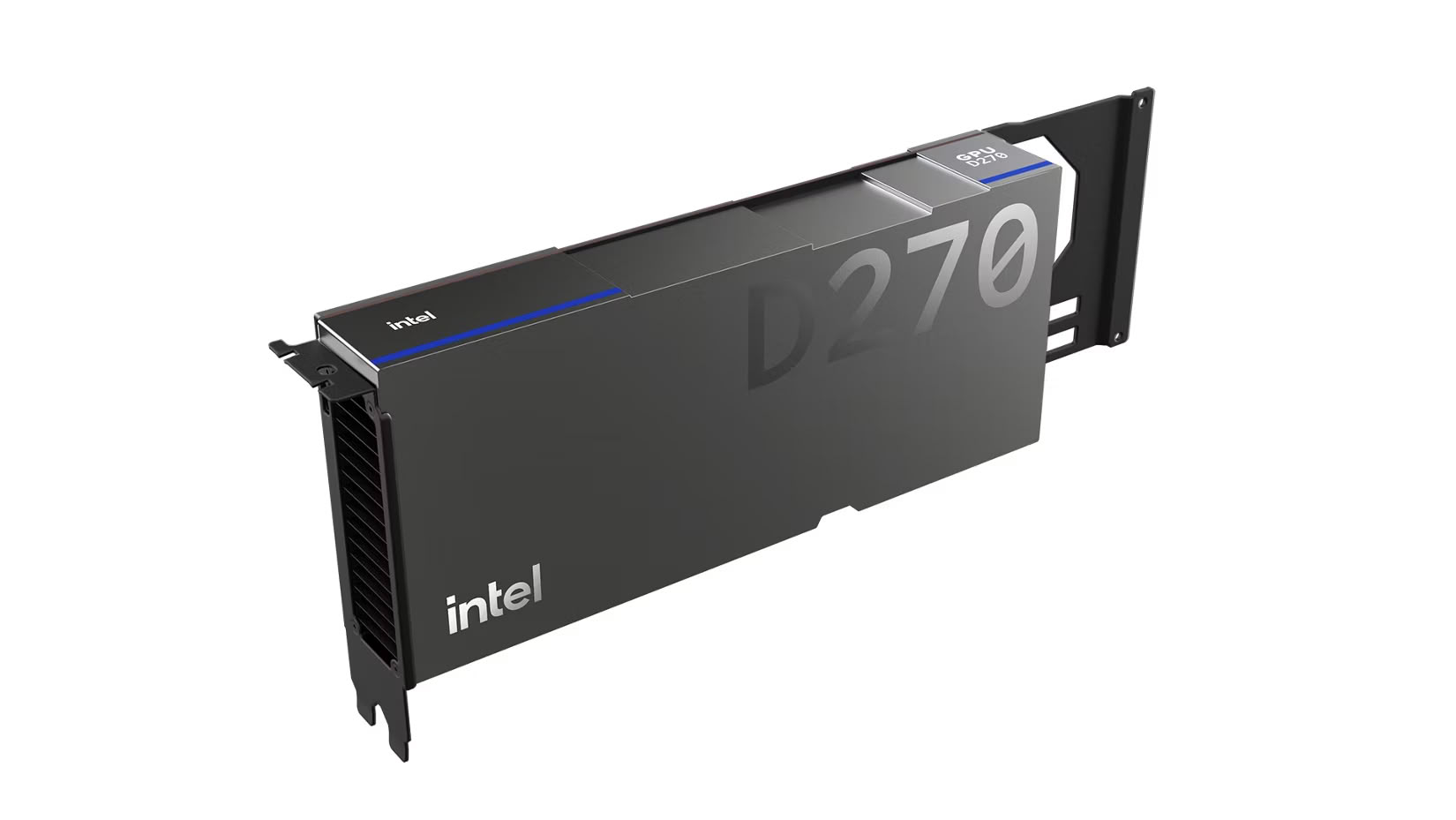
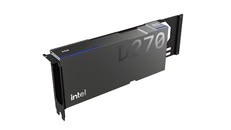
Intel Publishes Benchmarks for D270 "Crescent Island" GPU, Claims Wins Over RTX PRO 6000

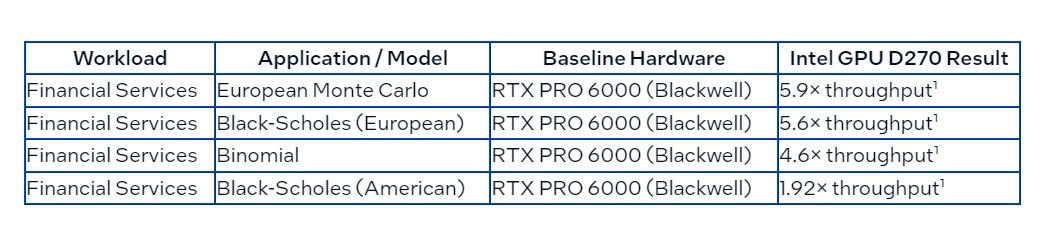
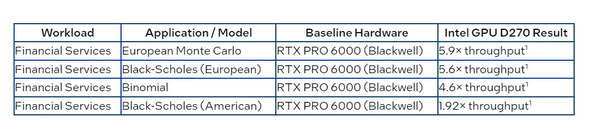
Intel's GPU D270 AI accelerator card, previously known as "Crescent Island," just got some first-party benchmarks. According to Intel, the GPU is up to 5.9 times faster than NVIDIA's RTX PRO 6000 Blackwell Server Edition in FP64 financial workloads. Going through the individual test results, the D270 system posted a 5.6x lead in European Black-Scholes, 4.6x in Binomial, and 1.92x in American Black-Scholes. Intel also points out the fact that the D270 runs at 350 W, while the NVIDIA RTX PRO 6000 has a 600 W power limit. Most of the lead seems to come from the D270's 32 Xe3P cores, each handling 64 FP64 FMA operations at native full rate. These benchmarks were published at SC26 in Chicago.

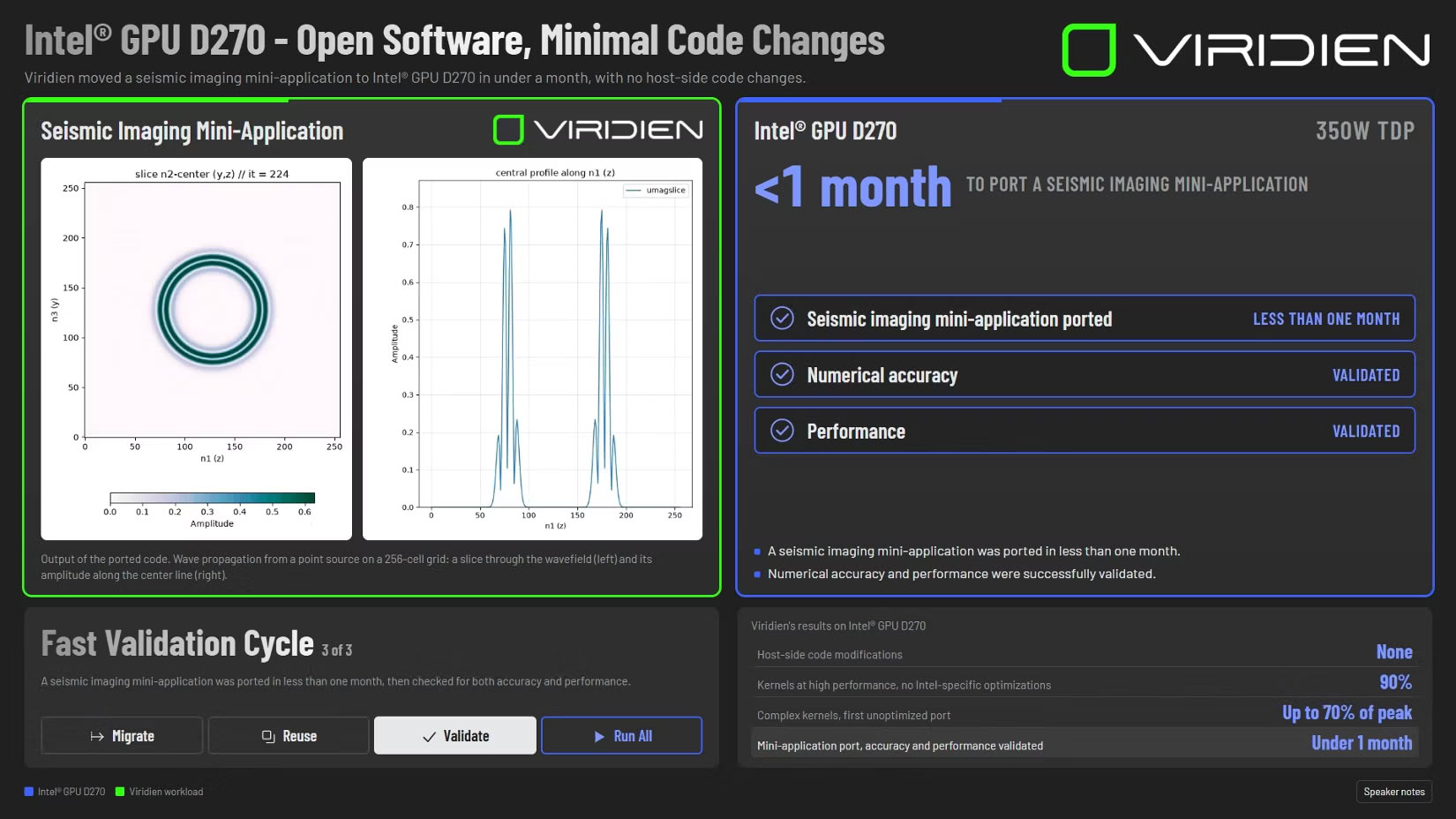
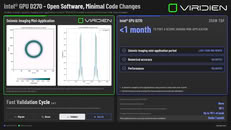
As for the AI figures, they are a lot more modest. Intel claims up to 29% lower latency on the Drex decision model and 1.12x the output token throughput on Qwen3-30B-A3B in FP8. These tests were both run against a single RTX PRO 6000. In the financial tests previously mentioned, the NVIDIA system had eight RTX PRO 6000 cards running against a single D270, though Intel doesn't mention how many were used per run. Intel also showed FP32 seismic modeling with Veridien, although performance figures were left out for this one. All results come from pre-production silicon, and it is important to note that these are first-party results that are intended to showcase the best-case scenarios for the D270. As a reminder, the D270 "Crescent Island" GPU can pack up to 480 GB of memory, while Intel-branded cards come with 160 GB of LPDDR5X as standard. There's still no official word on pricing or launch date.
MSI Powers the Next Era of AI Infrastructure at SC26

MSI, a leading global provider of high-performance server solutions, showcases its latest AI innovations at SuperComputing 2026 (SC26), booth #5429. From liquid-cooled platforms based on NVIDIA MGX and desktop AI supercomputing based on NVIDIA DGX Station architecture to next-generation multi-node compute and enterprise servers, MSI delivers a comprehensive portfolio designed to power agentic AI and AI factory deployments. Spanning the latest AMD and Intel processor architectures, MSI's solutions combine rack-scale compute density with flexible, balanced performance to support enterprise AI workloads, from large-scale infrastructure to local AI development.
Danny Hsu, General Manager of Enterprise Platform Solutions at MSI"Building a modern data center takes more than computing power. It requires strong technology partnerships and a trusted infrastructure foundation that can turn innovation into real-world value," "Through our collaborations with AMD, Intel, and NVIDIA, we combine leading-edge technologies with MSI's system integration expertise to deliver reliable, flexible, and efficient infrastructure that helps customers maximize their investments, scale with confidence, and prepare for the next era of AI."

Thermaltake Unveils Complete Lineup of AI Workstations and Gaming PCs

Thermaltake, a leading brand in gaming PCs, AI workstations, and gaming PC components, offering a comprehensive portfolio of PC cases, power supplies, cooling solutions, gaming peripherals, memory, and racing simulators, today announced its complete lineup of AI workstations and gaming PCs. The new lineup includes the A1500 Dual Enterprise Flagship AI Workstation, A750 Professional AI Workstation, A550 Developer AI Workstation, CAPO X Dual AI Gaming PC, and View 380 XL Gaming PC, delivering versatile solutions for enterprise on-premises AI applications, AI developers, content creators, and gamers.

The A1500 Dual enables enterprises to bring large language model (LLM) applications on-premises while running enterprise AI workloads and professional content creation simultaneously. The A750 features a quad-GPU configuration designed for team-based AI development and professional computing, while the A550 allows individual developers and studios to test AI models, generate images, and produce content locally. The CAPO X Dual AI Gaming PC offers two system configurations for pairing AI agents with AI application workloads or gaming with livestreaming tasks, while the View 380 XL Gaming PC balances gaming performance with everyday creative applications. By combining high-wattage power supply technology, advanced cooling solutions, and years of expertise in hardware development, system integration, and testing, Thermaltake continues to expand its portfolio of purpose-built AI workstations and gaming PCs.

ASUS Unveils XA P2N-E2 Powered by NVIDIA Vera CPU at OCP 2026

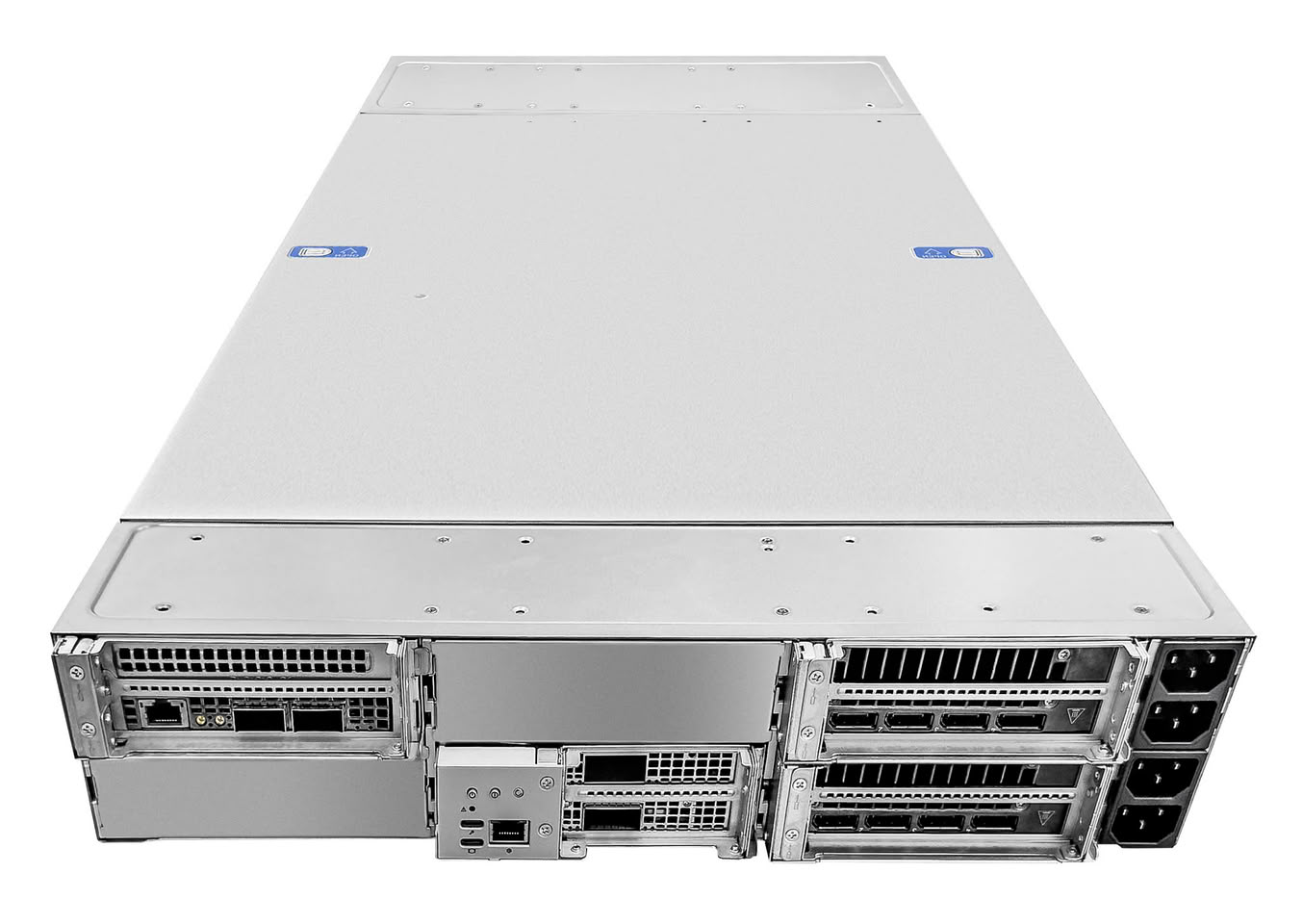
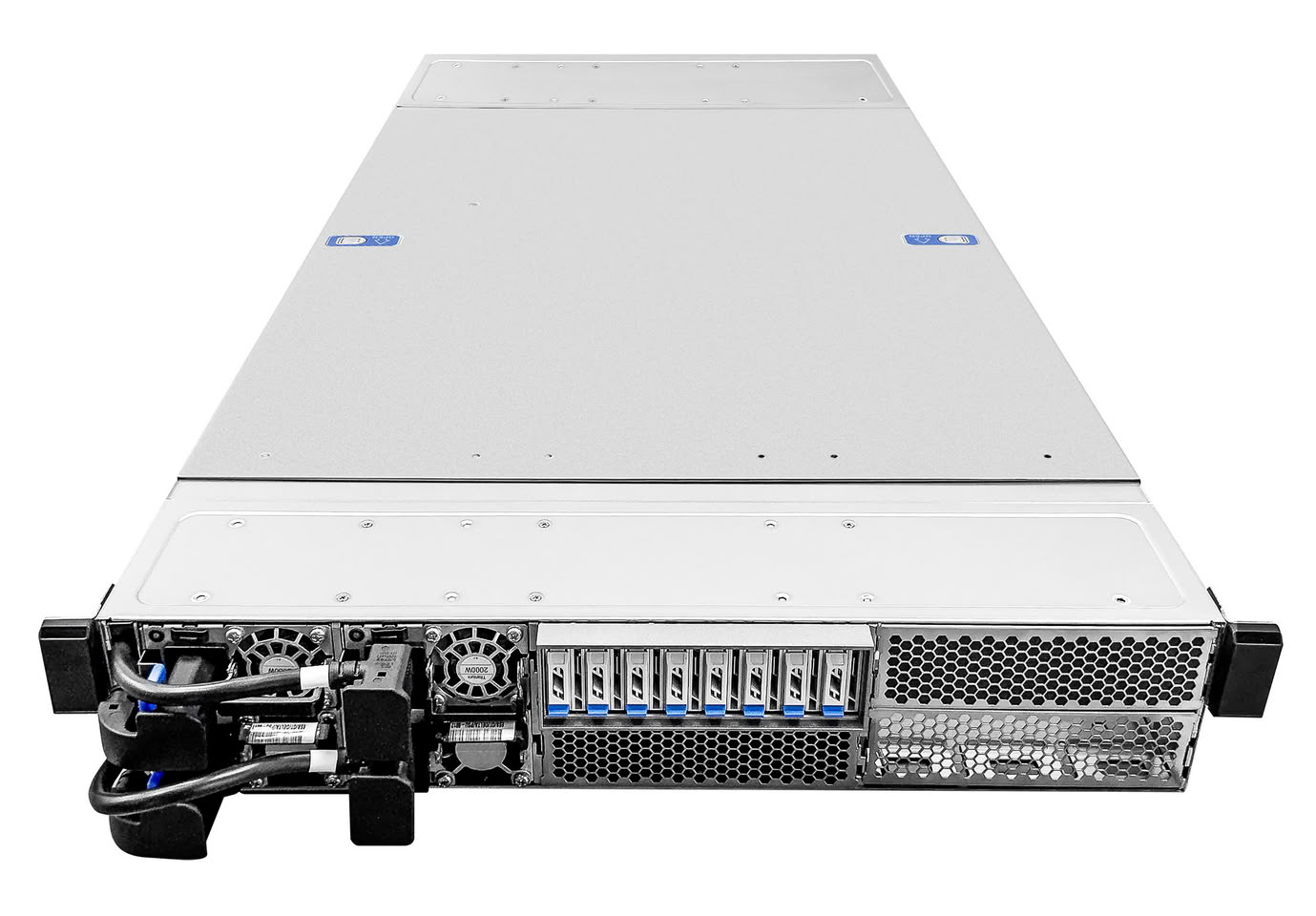
ASUS is expanding its AI infrastructure portfolio with the launch of the XA P2N-E2, a 2U NVIDIA MGX architecture-based server powered by NVIDIA Vera CPUs and designed for agentic AI and reinforcement learning workloads. Unveiled at OCP Global Summit 2026, this new ASUS server powered by the Vera CPU targets the execution layer of AI applications, handling workloads such as code execution, tool use, sandboxing, data processing and orchestration that extend beyond the AI model itself. The XA P2N-E2 supports up to two dual-slot NVIDIA RTX PRO 6000 Blackwell Server Edition GPUs, combining high-performance CPU computing with flexible GPU acceleration in a compact 2U platform. The high single-thread CPU performance and high-bandwidth, energy-efficient memory are designed to keep AI agents responsive during demanding execution and evaluation tasks.

At OCP, ASUS also showcases a broader portfolio covering rack-scale AI systems, accelerated computing, high-speed networking, context memory, low-latency inference and high-density storage. At the rack level, XA VR721-E3, the ASUS AI POD integrates 36 NVIDIA Vera CPUs and 72 NVIDIA Rubin GPUs through the NVIDIA Vera Rubin NVL72 platform, using a fully liquid-cooled architecture for large-scale AI training, post-training and inference. For a more flexible server configuration, the XR R1I12B-M1BHFS combines NVIDIA HGX Rubin NVL8 with direct-to-chip liquid cooling for the GPU baseboard and air cooling for Intel Xeon 6 processors. Together, the systems reflect the ASUS approach to scaling AI infrastructure across different compute densities, cooling architectures and deployment requirements, from individual servers to large-scale AI environments.

INNO3D Announces AGS-4UMGX-R1 4U GPU Server With NVIDIA MGX

INNO3D announces the AGS-4UMGX-R1 NVIDIA MGX 4U GPU Server, a high-performance platform built for AI training, AI inference, large language models (LLMs), digital twins, and high-performance computing (HPC) workloads.

Powered by dual Intel Xeon 6 processors and supporting up to 32 DDR5 RDIMMs, the AGS-4UMGX-R1 delivers the scalability required for modern AI deployments. The system supports up to eight NVIDIA RTX PRO 6000 Blackwell Server Edition GPUs and features the NVIDIA ConnectX -8 SuperNIC with eight 400 Gbps QSFP ports for ultra-fast AI networking.

INNO3D Launches the Tower Workstation AWS-511Z-R1

INNO3D announces the AWS-511Z-R1 Tower Workstation, a high-performance enterprise platform built for AI development, engineering simulation, digital twins, 3D content creation, and data-intensive workloads. Powered by Intel Xeon W-3400 processors and supporting up to 2 TB DDR5 memory, the AWS-511Z-R1 delivers workstation-class performance for professionals working with advanced AI, rendering, visualization, and scientific computing applications.

The system supports up to four NVIDIA RTX PRO 4500 Blackwell Workstation Edition GPUs or two NVIDIA RTX PRO 6000 Blackwell Workstation Edition GPUs, providing the compute power required for demanding AI and graphics workflows. The AWS-511Z-R1 reflects INNO3D's commitment to providing scalable enterprise computing solutions that bring AI and accelerated computing closer to businesses and professionals. By combining powerful GPU performance with a flexible workstation design, organisations can innovate faster across a wide range of industries.

ASRock's TempGuard Failed to Stop a PSU-Side Connector Meltdown on a $15,000 RTX PRO 6000 Rig

A repair shop technician has reported another melted 16-pin power connector on an ASRock Taichi TC-1650T PSU, paired with a $15,000 NVIDIA RTX PRO 6000 Blackwell Workstation Edition GPU. The former ships with native 12V-2x6 cables carrying ASRock's own NTC temperature sensor. According to the technician's Reddit post, the connector failed catastrophically on the PSU side and melted into the socket itself, even though both ends of the cable were fully seated. The GPU reportedly survived, and the damage was confined to the power supply side. The technician also says the sensor is mounted on the wrong side of the cable, on the ground line rather than the 12 V side it's supposed to watch, which would explain why it apparently never caught the rising heat in time.

ASRock added the NTC sensor and TempGuard system to its 12V-2x6 cables specifically to shut a system down before a connector melts. This time the system failed to catch the rising temperatures, but it has worked in the past. TempGuard reportedly caught a shunt-modded RTX 5090 pulling over 1,300 W, saving its power connectors from melting. On the flip side, this isn't the first time this exact GPU and PSU pairing has run into trouble either, as a similar melting incident on the same combo surfaced back in March. If the sensor placement is really off on at least some cables, that's a bigger concern than one bad unit, especially when paired with a card that costs as much as a used car.

Modified GeForce RTX 5090 with 96 GB Memory Shows Up on Alibaba for Nearly $4,000

A Chinese manufacturer is now selling a modified GeForce RTX 5090 with 96 GB of memory, three times the 32 GB on the retail card. Shenzhen Suqiao Intelligent Technology, an OEM/ODM with over a decade of experience building graphics cards, motherboards, and servers, listed the card on Alibaba for $3,888. That's roughly 35% less than a standard RTX 5090 currently costs in the US, and a fraction of what NVIDIA charges for its RTX PRO 6000 Blackwell. The latter uses the same GB202 die and now starts at a whopping $16,000.

Suqiao likely built this with a custom PCB running clamshell memory, packing GDDR7 modules on both sides of the board to double capacity, the same approach NVIDIA itself uses on the Pro 6000. The GPU die may come from harvested RTX 5090 units, reballed onto the new board and running on leaked or modified firmware, a method Chinese workshops already used to push the RTX 4090 to 48 GB VRAM. The listing does raise some doubts, though, since it mentions GDDR6X memory at 14 Gbps, which doesn't line up with a genuine 96 GB Blackwell build.

System76 Introduces Thelio Mira AI Workstation

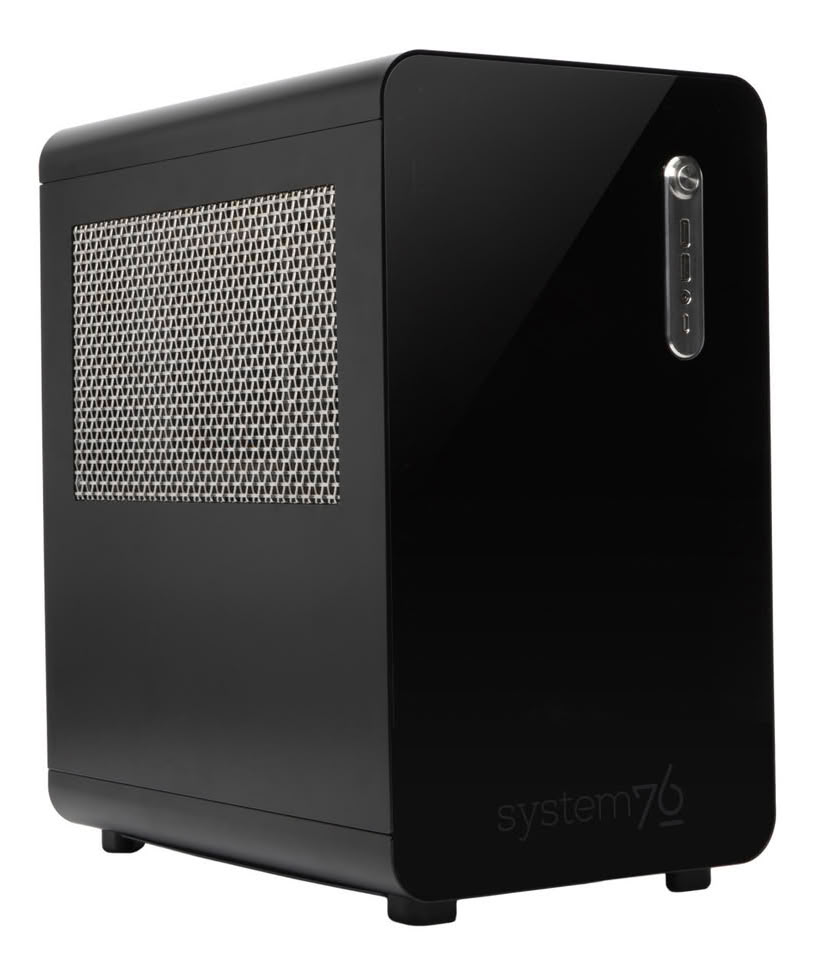
System76's high-performance computers have always met the challenges of AI, but with the Sept. 9 launch of the Thelio Mira AI, our customers can now purchase a lower-cost Thelio workstation that's optimized for AI development and local AI workloads.

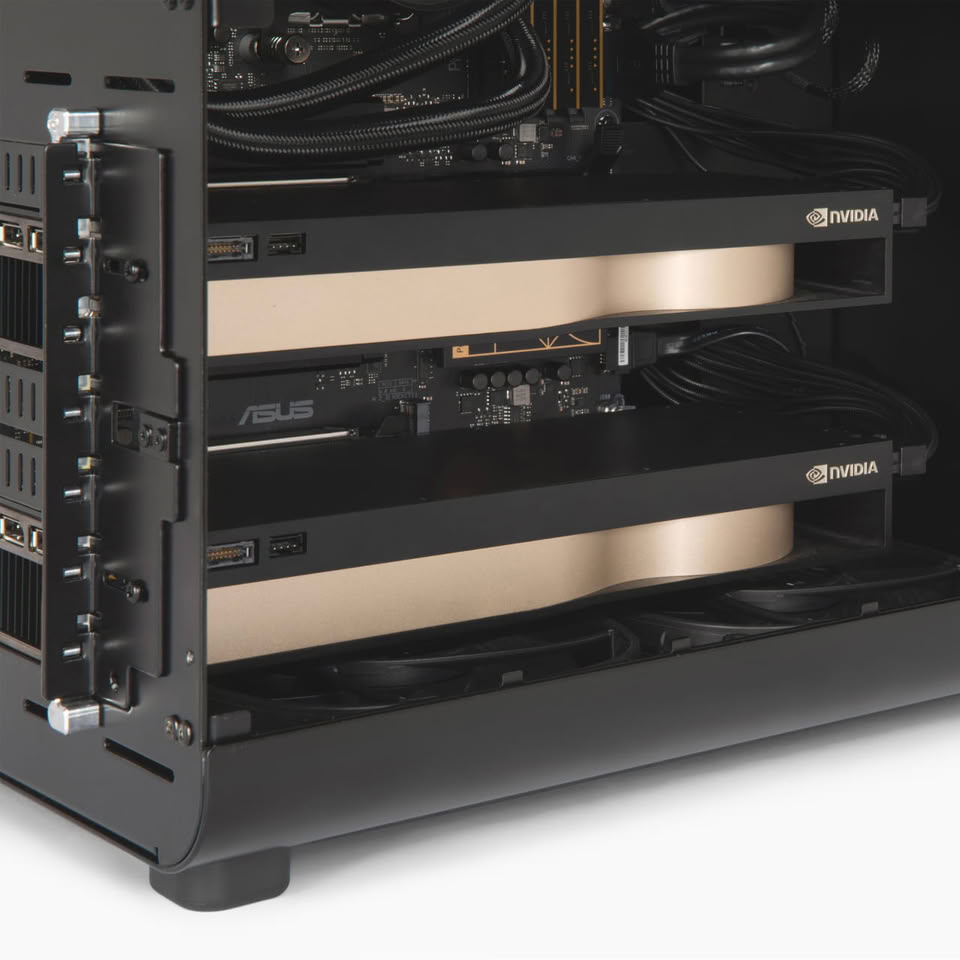
The Thelio Mira AI - which adds new capabilities to our best-selling Mira desktop - offers a cost-effective GPU workstation solution for AI projects, prioritizing GPU compute. It's powered by dual NVIDIA GPUs and a lower-wattage AMD CPU to free up more power for those GPUs.

ZOTAC to Celebrate 20th Anniversary with Full-Spectrum Showcases, and Anniversary-Exclusive Hardware

ZOTAC Technology, leader in innovation and high-performance hardware solutions, is joining COMPUTEX 2026, one of the largest, most anticipated technology exhibitions of the year. This year, ZOTAC celebrates its 20th Anniversary at the event by showcasing products both classic and new, as a nod to the Company's past and its outlook toward the future. As a member of the NVIDIA Partner Network (NPN) Program, the Company plans to illustrate its future product strategy: a full-range of computational offerings for every application, from Gaming, Local AI deployment, to Industrial and Enterprise-level high performance computing applications.

ZOTAC, as a brand historically focused on gaming, has come a long way since first starting to offer NVIDIA GeForce graphics cards, and was one of the first pioneers of the now ubiquitous Mini PC product category, known for novel designs that pushed compact computing to new levels. During the exhibition, ZOTAC will be looking back at the last 20 years, and present the Company's significant products that shaped the Company, while looking forward to new heights.

Lenovo Announces the ThinkStation P4 with AMD Ryzen PRO 9000 Series Processors

Lenovo announced the ThinkStation P4, the first workstation in the world to feature the power and efficiency of the latest AMD Ryzen PRO 9000 Series processors, the extreme AI compute of the NVIDIA RTX PRO 6000 Blackwell Workstation Edition GPUs, a cutting-edge thermal design and future-ready expandability. A desktop engineered to set new benchmarks in its class, the ThinkStation P4 is optimized for AI tasks and designed for professionals tackling increasingly complex workflows.

"As workflows become more complex and AI-driven, professionals of all levels require systems that keep pace with their evolving needs," said Tom Butler, Vice President, Commercial Portfolio and Product Management, Lenovo Intelligent Devices Group. "According to the CIO Playbook 2026, two thirds of companies prefer hybrid AI as their primary model, making workstations capable of handling AI workflows on-device a must. The ThinkStation P4 provides a strong balance of performance and value, packing flagship workstation capability in a scalable offering for engineers, designers, architects, creators and more."

HP Refreshes Z Workstations With Up to Four NVIDIA RTX PRO 6000 Blackwell GPUs

Today, at HP Imagine 2026, HP Inc. announced a new generation of HP Z Workstations, and AI solutions to give people world-class high-performance compute, while also helping IT organizations modernize their infrastructure for a hybrid future. Across industries, power users such as engineers, architects, product designers, AI developers, and professional creators are facing unprecedented pressure as workflows grow more complex and performance demands accelerate. At the same time, IT leaders must balance these needs against cost, security, and manageability. HP's latest Z portfolio addresses both challenges and delivers uncompromising performance, future-proof design, and solutions that help customers deploy the right compute in the right place at the right time.

"Technology and high-performance workflows are evolving faster than ever," said Jim Nottingham, SVP and Division President, Advanced Compute Solutions. "HP Z workstations are built to equip the best and brightest professionals with the tools they need for specialized workflows and AI at the edge, while giving IT decision makers the ability to scale performance responsibly."
EK Releases New EK-Pro GPU Water Block for NVIDIA RTX PRO 6000 Blackwell Server Edition and MAX-Q

EK by LM TEK is proud to announce the EK-Pro GPU Water Block for NVIDIA RTX PRO 6000 Blackwell Server Edition & MAX-Q Workstation Edition GPUs, a high-performance single-slot solution engineered for high-density AI server deployments and professional workstation applications. Designed for NVIDIA RTX PRO 6000 GPUs, this full-cover EK-Pro block actively cools the GPU core, VRAM, and VRM, ensuring optimal performance, stability, and efficient heat dissipation.

The single-slot form factor maximizes GPU density, making it ideal for AI and server infrastructure. Integrated quick-disconnect fittings enable efficient maintenance without the need for disassembly or loop draining, reducing downtime and supporting scalable data center operations. The EK-Pro GPU Water Block for NVIDIA RTX PRO 6000 Blackwell Server Edition and MAX-Q Workstation Edition is available through the EK Shop via our enterprise team. Please note this EK is not compatible with the reference RTX Pro 6000 Workstation Edition GPU.

MSI Accelerates Enterprise AI with NVIDIA MGX Servers and DGX Workstations at GTC 2026

MSI, a global leader in high-performance server solutions, today unveils its latest AI infrastructure portfolio built on NVIDIA's modular architectures, including the NVIDIA MGX platform and NVIDIA DGX Station technology. Designed to accelerate AI training, large-scale inference, HPC, edge, and next-generation data center workloads, MSI's expanded lineup delivers exceptional scalability, performance density, and deployment flexibility.

Scalable AI Infrastructure Built on NVIDIA MGX Architecture
Leveraging the modular design of NVIDIA MGX architecture, MSI has developed a comprehensive portfolio of 4U and 6U liquid-cooled servers supporting NVIDIA RTX PRO 6000 Blackwell Server Edition and NVIDIA RTX PRO 4500 Blackwell Server Edition GPUs. The NVIDIA MGX architecture enables flexible CPU selection, high-capacity memory configurations, and seamless integration of high-speed networking - empowering enterprises to deploy infrastructure tailored to diverse workload requirements, from data center deployments to edge applications.

Giga Computing Shows Data Center Portfolio and Infrastructure at NVIDIA GTC 2026 Including New NVIDIA Rubin Platforms

Giga Computing, a subsidiary of GIGABYTE and a leader in accelerated computing and infrastructure solutions, today announced new enterprise AI solutions that support NVIDIA Vera CPU and NVIDIA Vera Rubin platform, well as a new AI factory in Taiwan. The GIGABYTE booth at NVIDIA GTC shows scalable AI solutions that not only focus on performance and efficiency but also incorporate the software and infrastructure needed to build AI factories and other large GPU clusters. The GIGABYTE booth staff is ready to introduce the latest hardware and software for success in deploying accelerated computing.

Personal AI Supercomputers
With products spanning all segments of the supercomputer space, Giga Computing showcases professional desktop and deskside solutions that are ideal for AI development and accelerating AI training and inference workloads. These solutions are being used by data scientists and researchers in research institutions, government agencies, and enterprises.

Phison Rescales Local AI Inferencing with Flash Memory Expansion

Phison Electronics (8299TT), a global leader in NAND flash controllers and storage solutions, today announced its GTC showcase at booth 119, demonstrating how multi-tier memory architecture supports larger models and long-context inference on NVIDIA-powered local AI platforms. The industry is facing a growing memory constraint while demand for AI-ready platforms continues to surge. Fine-tuning and inference on proprietary data require massive compute and memory resources, creating investment challenges for organizations. These rising solution costs and workflow bottlenecks are slowing time-to-market for revenue-generating innovation. To address this challenge, Phison introduced aiDAPTIV technology for local and edge AI use cases. By leveraging Pascari SSDs as a new AI memory tier, aiDAPTIV technology intelligently extends and manages AI working memory across GPU memory, system RAM and flash.

Today's announcement showcases how aiDAPTIV applies these multi-tier memory architecture principles to local AI systems as NVIDIA AI infrastructure advances GPU memory capabilities to support inference workloads in data center environments. Built on high-endurance flash optimized for sustained paging and context retention, aiDAPTIV supports memory-intensive inference and fine-tuning workloads under fixed hardware configurations. The aiDAPTIV flash-based memory tier enables organizations to support these evolving workloads on local systems while maintaining data privacy and improving long-term infrastructure efficiency.

NVIDIA Virtualizes Game Development With RTX PRO Server

Game development teams are working across larger worlds, more complex pipelines and more distributed teams than ever. At the same time, many studios still rely on fixed, desk-bound GPU hardware for critical production work. At the Game Developers Conference (GDC) this week in San Francisco, NVIDIA is showcasing a new approach to bring together disparate workflows using virtualized game development on NVIDIA RTX PRO Servers, powered by NVIDIA RTX PRO 6000 Blackwell Server Edition GPUs and NVIDIA vGPU software.

With the RTX PRO Server, studios can centralize and virtualize core workflows across creative, engineering, AI research and quality assurance (QA) - all on shared GPU infrastructure in the data center. This enables teams to maintain the responsiveness and visual fidelity they expect from workstation-class systems while improving infrastructure utilization, scalability, data security and operational consistency across teams and locations.

GIGABYTE Powers Telecom AI Transformation with End-to-End Infrastructure at MWC 2026

GIGABYTE Technology, a global leader known for its engineering excellence in high-performance computing and AI servers, extends its comprehensive end-to-end AI infrastructure portfolio designed specifically for the telecommunications industry at MWC 2026. GIGABYTE's end-to-end product solutions enable operators to convert massive volumes of network data into intelligence, automation, and new revenue streams, as telecommunications networks evolve from data carriers into AI-powered digital platforms.

At the core of the telco-to-AI transformation is the AI Factory, where network and subscriber data are converted into operational intelligence and commercialized AI services. GIGABYTE addresses this need with GB300 NVL72, a liquid-cooled rack-scale platform integrating 72 NVIDIA Blackwell Ultra GPUs and 36 NVIDIA Grace CPUs in a single system. Connected via NVIDIA Quantum-X800 InfiniBand or NVIDIA Spectrum-X Ethernet and NVIDIA ConnectX -8 SuperNIC s, GB300 NVL72 is optimized for large-scale AI training and inference workloads, enabling operators to automate operations, optimize network planning, and deploy AI-driven services at telecom scale.

Giga Computing Announces New Server Built on NVIDIA GB200 NVL4 Platform at SCA/HPC Asia 2026

Giga Computing, a subsidiary of GIGABYTE and a leader in high-performance computing and data center solutions, today announced the launch of its next-generation AI and HPC server, GIGABYTE XN24-VC0-LA61, powered by the NVIDIA GB200 NVL4 platform. Purpose-built for its heterogeneous architecture of CPU and GPU, the system will make its debut at SCA/HPC Asia 2026 in Osaka, Japan, showcasing Giga Computing's latest innovation in accelerated computing with liquid cooling technologies.

The XN24 server has been selected for the RIKEN Center for Computational Science (R-CCS) next-generation HPC-Quantum hybrid platform. The new platform integrates GIGABYTE servers into the development of FugakuNEXT, the eventual successor to Japan's flagship supercomputer, Fugaku. This integration will use the NVIDIA CUDA-Q platform to support the development of hybrid quantum-GPU supercomputing systems and research into advanced scientific applications that bridge quantum and traditional high-performance computing.

Infortrend Launches Edge AI Server, Bringing AI to The Edge Without Complex Setup

Infortrend Technology, Inc., a leading provider of enterprise storage and AI solutions, today announced the launch of the KS 3000U edge AI server. The platform enables mid-sized organizations and distributed sites to deploy AI inference at the edge with high availability and simplified setup.

While AI workloads move closer to where data is generated, organizations that continue to rely on cloud services face challenges, including latency, high operational costs, and data privacy. According to IDC, by 2030, 50% of enterprise AI inference workloads will be processed locally at the edge. For companies with limited on-site IT resources, this shift highlights the need for reliable, easy-to-deploy on-site edge AI infrastructure.

Razer Unveils Forge AI Dev Workstation - Their Vision of Powerful Purpose-built Hardware

Razer has announced the Razer Forge AI Dev Workstation, a new addition to its growing line of high-performance hardware for AI developers. Built on over 20 years of high-performance engineering, this definitive local compute platform is designed to handle the most demanding training, inference, and simulation workloads for AI developers, researchers, and enterprises.

The Forge AI Dev Workstation fulfills Razer's vision for powerful, purpose-built AI hardware, delivering end-to-end local performance with secure on-device compute, zero subscription costs, and maximum responsiveness.

NVIDIA and AWS Expand Full-Stack Partnership

At AWS re:Invent, NVIDIA and Amazon Web Services expanded their strategic collaboration with new technology integrations across interconnect technology, cloud infrastructure, open models and physical AI. As part of this expansion, AWS will support NVIDIA NVLink Fusion—a platform for custom AI infrastructure—for deploying its custom-designed silicon, including next-generation Trainium4 chips for inference and agentic AI model training, Graviton CPUs for a broad range of workloads and the Nitro System virtualization infrastructure.

Using NVIDIA NVLink Fusion, AWS will combine NVIDIA NVLink scale-up interconnect and the NVIDIA MGX rack architecture with AWS custom silicon to increase performance and accelerate time to market for its next-generation cloud-scale AI capabilities. AWS is designing Trainium4 to integrate with NVLink and NVIDIA MGX, the first of a multigenerational collaboration between NVIDIA and AWS for NVLink Fusion. AWS has already deployed MGX racks at scale with NVIDIA GPUs. Integrating NVLink Fusion will allow AWS to further simplify deployment and systems management across its platforms.

MiTAC Computing Unveils Advanced AI Cluster and Cooling Solutions at SC2025

MiTAC Computing Technology, a global leader in high-performance and energy-efficient server solutions, is proud to announce its participation at the Supercomputing (SC) 2025 (November 18-20, St. Louis, Missouri), booth 3916. Under the theme "AI Cluster Power - Cool Fast. Scale Faster.", MiTAC Computing will showcase its modular, highly scalable rack infrastructure designed for demanding AI and HPC workloads. The exhibition will demonstrate the company's full spectrum of capabilities, ranging from single AI servers to complete cluster-level integration, with a focus on cutting-edge liquid cooling and energy-efficient designs to maximize performance and sustainability.

Collaborating with key industry players such as AMD, Broadcom, CoolIT, Intel, KIOXIA, Micron, NVIDIA, Samsung, and Solidigm, MiTAC Computing is dedicated to accelerating the development of advanced computing and high-efficiency data centers.

ASUS Showcases NVIDIA GB300 NVL72 at SC25

ASUS announced a showcase of its comprehensive AI infrastructure portfolio accelerated by NVIDIA Blackwell and Blackwell Ultra architectures at Supercomputing 2025 (SC25). Driven by the strategy of 'Ubiquitous AI. Incredible Possibilities.', ASUS infrastructure goes all in AI strategy, aiming to accelerate clients' time to market with superior computing performance. ASUS stands as a total infrastructure solution provider, offering robust, scalable, cloud and on-premise solutions for diverse AI workloads. This is achieved through the seamless integration of the latest NVIDIA compute platforms with advanced cooling, network orchestration, and large-scale deployment capabilities. By providing a full spectrum of AI solutions, from personal workstations to national supercomputing systems, ASUS is committed to democratizing access to powerful AI technologies for everyone.

Rack-scale AI infrastructure with NVIDIA GB300 NVL72
At the top of the portfolio, the XA GB721-E2, ASUS AI POD built on NVIDIA GB300 NVL72, embodies a field-proven rack-scale AI architecture, accelerated by 72 NVIDIA Blackwell Ultra GPUs and 36 NVIDIA Grace CPUs. Combining a 100% liquid-cooling system with integrated switch trays, the system delivers deployment-ready scalability and energy-efficient performance, offering 10-petaflops-class computing power for enterprise AI and national-cloud workloads.

MSI Unveils Next-Gen Systems Based on NVIDIA MGX and Desktop NVIDIA DGX AI Platforms

MSI, a global leader in high-performance computing, will unveil its next generation of AI computing solutions at Supercomputing 2025 (SC25), held at the America's Center in St. Louis, Missouri. Built on NVIDIA MGX, NVIDIA DGX Station, and NVIDIA DGX Spark reference architectures, the lineup is powered by NVIDIA Hopper GPUs, NVIDIA RTX PRO 6000 Blackwell Server Edition GPUs, NVIDIA Blackwell Ultra GPUs, as well as the Grace Blackwell GB10 Superchip.

Together, these platforms deliver data-center-class performance across diverse AI workloads—from large-scale model training and simulation to edge inferencing and desktop AI development. MSI's AI servers are purpose-built for large language models (LLMs), deep learning, and NVIDIA Omniverse workloads, offering flexible configurations with both Intel Xeon and AMD EPYC processors, supporting up to 600 W GPUs for maximum performance and scalability.
Return to Keyword Browsing
Nov 28th, 2026 21:25 CST change timezone

New Forum Posts

Popular Reviews

TPU on YouTube

Controversial News Posts