Wednesday, August 12th 2026

NVIDIA RTX PRO 6000 "Blackwell" 96 GB GPU Now Costs $16,000
If you thought consumer graphics card prices were bad, the situation isn't much better on the workstation front. According to an update on NVIDIA's marketplace, the company's flagship workstation card—the RTX PRO 6000 "Blackwell"—is now retailing for $16,000. This makes it the most expensive GPU that NVIDIA sells outside of its server offerings like the B200/B300, which come in the SXM form factor. Even for a graphics card equipped with 24,064 CUDA cores and 96 GB of GDDR7 memory, this price is astonishing and show just how much memory shortages are impacting GPU pricing. For a SKU that features 32 GDDR7 memory modules, each with a 3 GB capacity, any increase in supply chain costs is instantly multiplied by 32 for this very expensive component.
On the RTX PRO 6000 "Blackwell" GPU, there are 16 GDDR7 modules on the front side with the GPU die and 16 GDDR7 modules on the back of the PCB, effectively sandwiching the PCB. This results in 32 modules spread across the GPU. Back in late July, each 3 GB GDDR7 module cost about $60 to $70, so the total cost of the GDDR7 alone ranged from $1,920 to $2,240. This is the price of what is essentially a raw material, crucial for manufacturing this SKU. Considering that there might be additional GDDR7 price increases now, NVIDIA has priced its flagship workstation SKU at $16,000, accounting for many other component costs, such as MLCCs, which are also in tight supply.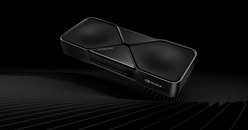
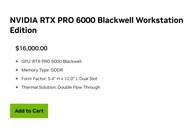 To put things into perspective, NVIDIA originally launched this GPU SKU at an MSRP of $8,565. In June, it received a price bump to $13,250. Now, just two months later, the price is about 87% higher than the original MSRP. This suggests that we could see a full 100% increase in the future if prices don't stabilize, potentially pushing the GPU's price north of $17,000. However, for workstation clients, the pricing is much less impactful than it is for gamers.
Sources:
NVIDIA, via VideoCardz
On the RTX PRO 6000 "Blackwell" GPU, there are 16 GDDR7 modules on the front side with the GPU die and 16 GDDR7 modules on the back of the PCB, effectively sandwiching the PCB. This results in 32 modules spread across the GPU. Back in late July, each 3 GB GDDR7 module cost about $60 to $70, so the total cost of the GDDR7 alone ranged from $1,920 to $2,240. This is the price of what is essentially a raw material, crucial for manufacturing this SKU. Considering that there might be additional GDDR7 price increases now, NVIDIA has priced its flagship workstation SKU at $16,000, accounting for many other component costs, such as MLCCs, which are also in tight supply.


17 Comments on NVIDIA RTX PRO 6000 "Blackwell" 96 GB GPU Now Costs $16,000
At best, nVidia's site now matches what I've been seeing locally.
For the sake of the easiest supplier I can search for (red is before tax):
On the same place, PNY versions are slightly cheaper by 2~3k.
Given that sans compute optimizations, this could have been potentially the 5090 Ti, I wager the potential cost of that one even with 2GB per chip would be way higher than the +$4k being asked for the 5090. /speculation
Next option is RTX Spark laptop, if it lands at ~5k with 128g of uniram, we good.
Real world application is failing miserably in ROI terms, the costs are just way, way too high. Nvidia are setting up SPV to try and keep it going, but most likely this is going to end very, very badly.
There are some things like RAG, which can save most of the compute costs. Still there are usually massive problems in implementation in corporate use cases. As for the large proprietary models, just forget it they're way too expensive.
If it had launched in a normal market it would have cost 4k for this one with 96GB