News Posts matching #ReShade

Return to Keyword Browsing

New DLSS 5 Mod Borrows a VR Trick for Better Ultrawide Performance

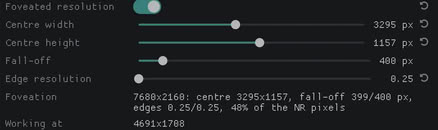
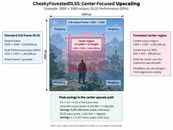
A new DLSS 5 mod borrows a trick from VR headsets to make Neural Rendering less punishing on ultrawide monitors. FoveatedDLSS5, a ReShade add-on built by maximedgoulet, keeps neural rendering at full resolution in the middle of the screen and steps it down toward the edges, where peripheral vision picks up less detail. In a Reddit post, the modder says The Witcher 3 went from 49 FPS to about 80 FPS on an RTX 4090 at 7680x2160 with 2x multipass, a gain of over 60%.

With default settings on a 7680x2160 panel, Neural Rendering ends up processing about 71% of the original pixels. Smaller screens gain less, however. At 4K, the defaults leave 93% of the pixels, and at 3440x1440 the mod turns itself off, so 16:9 and 21:9 users should shrink the center zone. It's also a pre-release tested in one game, and it only works when neural rendering runs after upscaling, which rules out pairing it with the Neural Upstream trick. Videocardz points out a similar project, CheekyFoveatedDLSS, that has been out since early September and adds eye-tracked foveation for VR headsets.
Mod Revives Multi-GPU Gaming With Dedicated DLSS 5 GPU for Impressive FPS Gain

If you were around during what many consider the golden age of PC gaming, back when SLI was still possible, and, going back even further, when gamers put dedicated PhysX cards into their PCs, the latest trick shown off by modder, Marcelo Guibout, on YouTube. Guibot showed off a gaming setup using two NVIDIA RTX 5060 Ti 16 GB GPUs in tandem to split the rendering and Neural Rendering workloads.

[Editor's note: Our in-depth analysis of the DLSS 5 model leaked in the NBA2K27 and in use here is now live]

Similarly to the example of PhysX cards, the idea is to split the workloads between two GPUs, theoretically allowing for improved performance on the GPU doing the primary rendering, since it will be able to use resources on raster or ray tracing rendering that might otherwise be used for DLSS 5 Neural Rendering. With the Neural Coprocessor enabled using the multi-GPU processing setup, frame rates improved anywhere from 59% to 125% compared to running DLSS 5 on the same GPU—performance was still down compared to DLSS 5 off, however.

New DLSS 5 Swapper Tool Brings Neural Rendering to Games NVIDIA Never Supported

A new tool called DLSS 5 Swapper, published on GitHub by developer rakanki911, automates installing DLSS 5's Neural Rendering into games, including ones that never officially got support for it. Users can drag and drop a game into the app, or let it scan the drive for installed titles on its own. For games that already ship with DLSS, the swap is simple. For everything else, the tool relies on DLSS5-Feeder, a community mod that emulates the DLSS calls required to trigger Neural Rendering, paired with ReShade for the depth buffer and motion data that DLSS needs to work. That combination reportedly runs across titles from DirectX 9 through DirectX 12, and even on a handful of emulators like PCSX2, Dolphin, and Xenia.

Perhaps even more interestingly, the app also extends DLSS 5 support to RTX 20-series and RTX 30-series graphics cards, sidestepping NVIDIA's RTX 50-series requirement. This tool builds on the same leaked DLSS 5 files that surfaced in NBA 2K27's pre-launch build, files modders have spent weeks getting to run on older GPUs and non-DLSS games. DLSS 5 Swapper mostly bundles that scattered work into a single app; however, since it's unofficial and has no ties to NVIDIA, it's important to verify the download source before installing anything. Given how far these mods have already spread, this tool is likely to become the most popular way for people to try Neural Rendering, at least until NVIDIA offers something similar itself.

DLSS 5 Patched to Work on RTX 4000 "Ada Lovelace" GPUs Despite No Official Support

The modding community has been hard at work ever since the untimely release of DLSS-NR, a precursor to DLSS 5. Now, modders have gotten NVIDIA's leaked DLSS 5 tool working on RTX 4000 series cards, even though the tool was only built for RTX 5000 Blackwell hardware. The DLL leaked earlier this week via an early-access build of NBA 2K27, and people on the RenoDX Discord quickly got it running in other games using ReShade and RenoDX.

As we noted in our DLSS-NR breakdown, the AI model runs on FP8, which Ada Lovelace GPUs support just fine, but the compiled binaries inside the file only targeted Blackwell's sm_120 architecture, with nothing built for Ampere or Ada. A modder going by "Uncle Burrito" has apparently fixed that by hunting down the incompatible binaries and swapping in ones built for Ada. Tom's Hardware confirmed the patch works on an RTX 4080, and said other developers in the same Discord are working on their own versions of the fix.

NVIDIA Outs GeForce Software 441.08 with Updates to NULL, ReShade Support, Image Sharpening

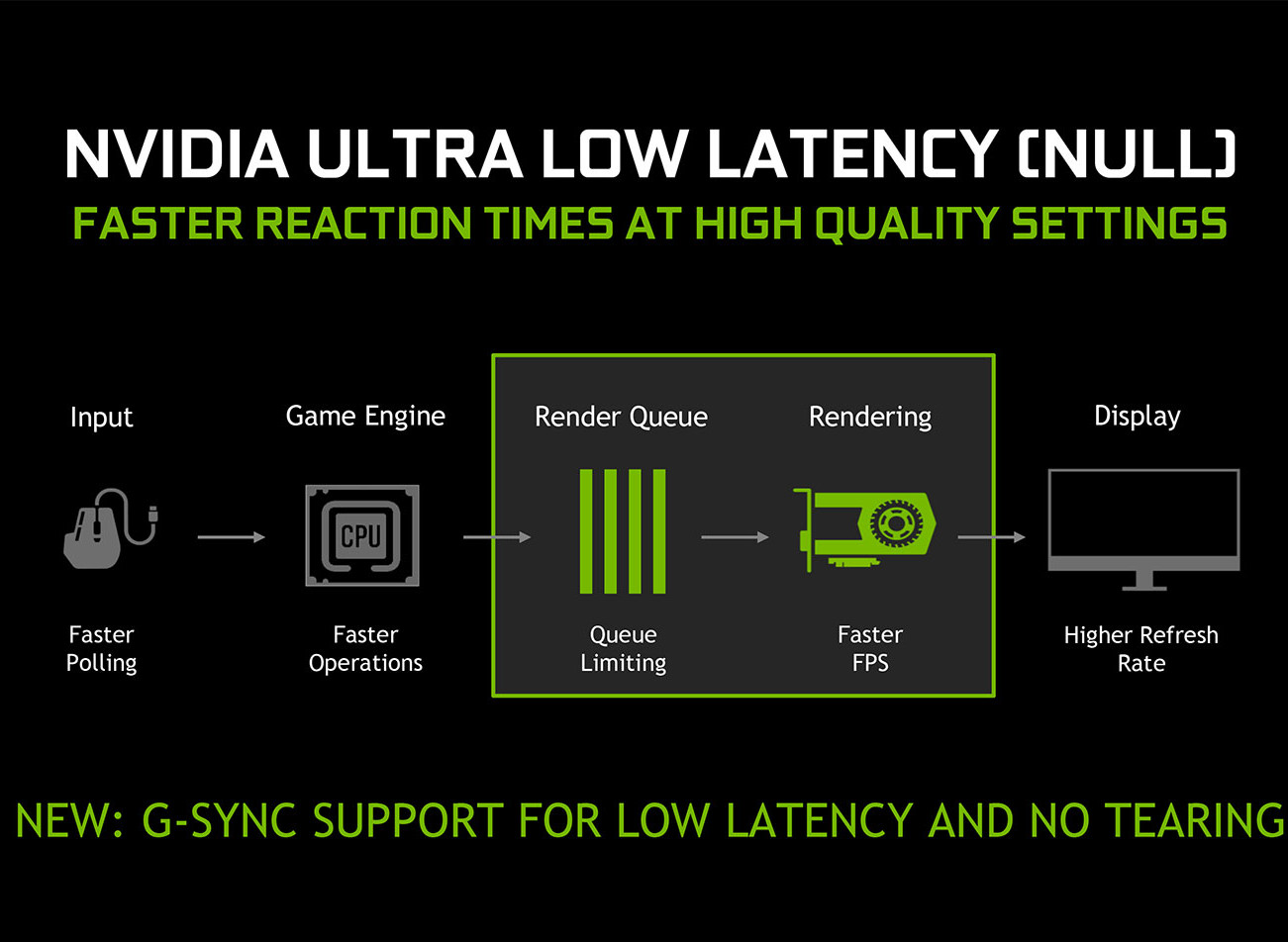
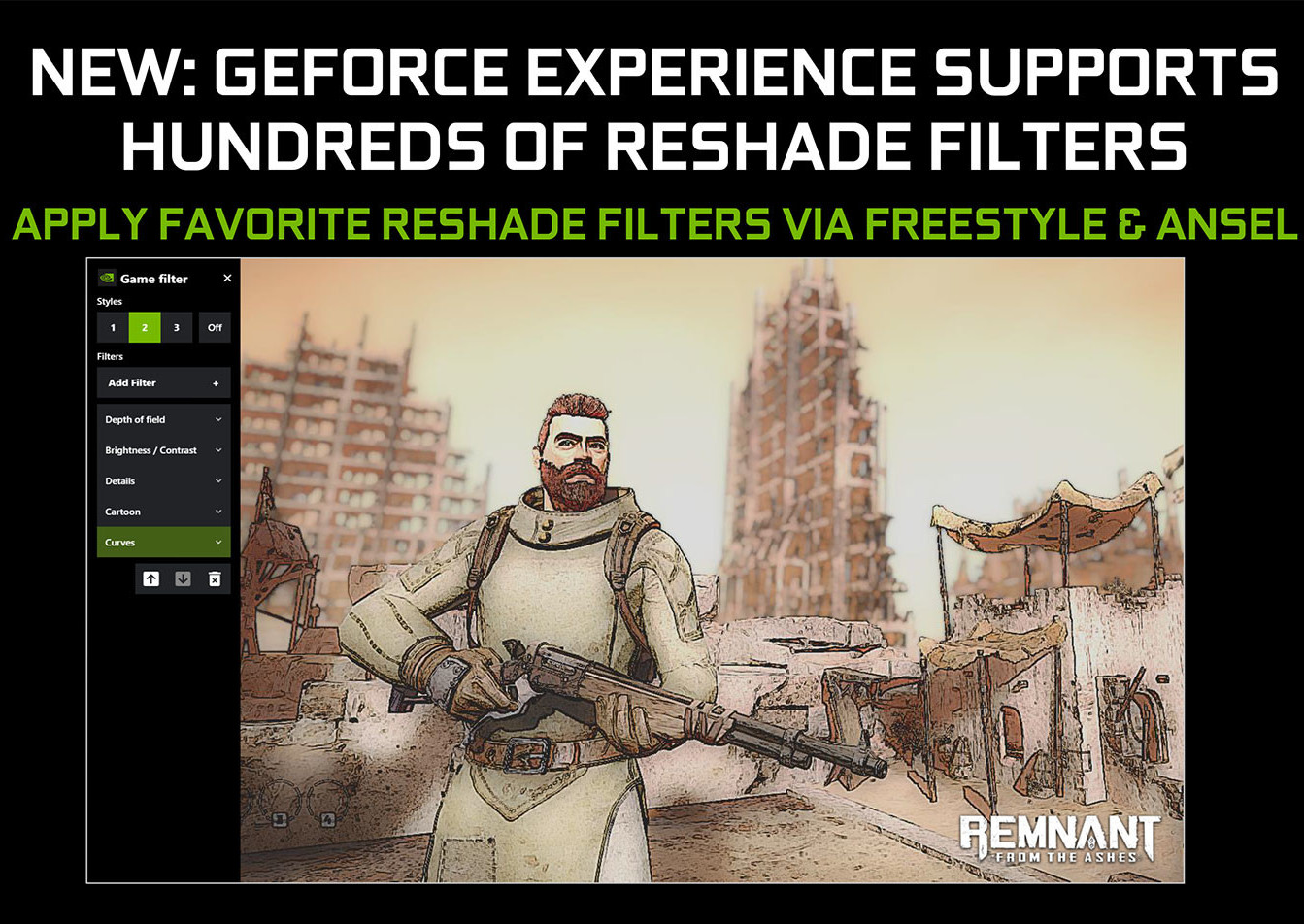
NVIDIA today released the GeForce Software 441.88 WHQL drivers with a few major feature updates. To begin with, the drivers add support for the freshly minted GeForce GTX 1660 Super. NVIDIA updated NULL (NVIDIA Ultra-Low Latency), an input-lag reduction feature, with support for G-Sync. You can now use the two together to make the input latency "cost" of G-Sync practically "free." Next up, NVIDIA updated Freestyle and Ansel with support for ReShade filters, with some riders. You can't use custom ReShade filters in competitive games, but can use some official ReShade filters. Lastly, NVIDIA enhanced its Image Sharpening features to reduce its performance cost, and added support for DirectX 11 - something the competing Radeon Image Sharpening feature lacks.
DOWNLOAD: NVIDIA GeForce Software 441.08 WHQL

The change-log follows.

NVIDIA to Implement ReShade Post-Processing Injector at Driver Level

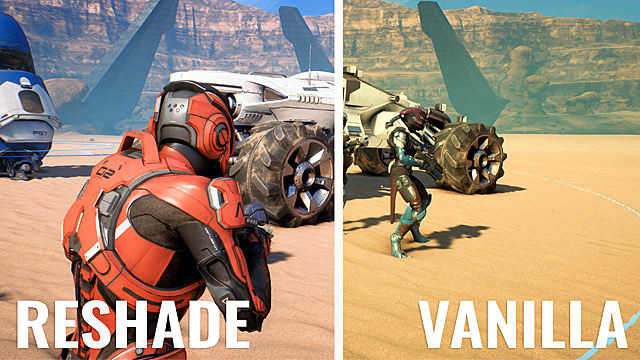
NVIDIA is taking a somewhat unusual step in that it's integrating a popular tool at a driver level. ReShade has become well--known throughout the gaming community due to the way it can add - sometimes critically - to many games, whether it be purely in an aesthetics, filter-like level (which really takes no toll on performance), or by adding features that were never developed into the engine, such as ambient occlusion, SMAA anti-aliasing, depth-of-field, and others.

The fact that NVIDIA is integrating it on a driver-level will likely do much in putting the tool even more in the eyes of PC gamers. For now, there is no word on whether the available ReShade tools will be available on a manual-import basis, but it's likely these will be curated by NVIDIA's own engineers. You can also likely forget some of the more advanced features of the tool - NVIDIA only talks about "hundreds of filters" being made available, which seems to bypass any other image-enhancing capabilities of the tool other than color grading, contrast enhancements, and such. The new driver with ReShade support will be available next week alongside NVIDIA's GeForce GTX 1660 SUPER launch. NVIDIA confirmed that ReShade filters will be supported through GeForce Experience using NVIDIA Freestyle and Ansel technologies.

NVIDIA's Lightspeed Studios Aim to Remaster Games With RTX Effects

NVIDIA's efforts with Quake 2 RTX haven't gone unnoticed in the community, providing a distinct overhaul in image quality to the now decades-old game. Raytracing and its global illumination capabilities have already been well explored in this publication, and its effect in older games - the ones that already run remarkably well in modern hardware - has been well documented, with some third party solutions (such as ReShade) including the effect to great measure in a number of games that haven't been built from the ground-up for raytracing.

The new Lightspeed Studios from NVIDIA aims to bring Quake 2 RTX-like improvements to other games. A job posting from the company dated from the end of September seems to make it clear that the company is looking to increase the number of games with RTX support in this way. Read on after the break for the description in the job listing.

Post-process Injector, ReShade 4.0 Released, Offers Numerous Enhancements

Generic post-processing injector, ReShade, which offers SMAA anti-aliasing, screen space ambient occlusion, depth of field, and many other effects, has been updated to version 4.0. More than just a version update the ReShade FX compiler has received a complete overhaul having been made fully standalone as of this release. These changes bring performance improvements, better error recovery, improved support for code features, and even opens up the ability to add Vulkan support since it can now generate HLSL, GLSL, and SPIR-V. With a change-log packed with enhancements changes and new features, Crosire, the author also reworked the UI. Not only can the new UI be customized by the user, but it also includes new features such as an in-game code editor and texture preview.

While it should be noted that due to the compiler change some effects may no longer compile or work properly in version 4.0. However, these effects just need to be updated by their authors to work with the latest release. Going forward it is likely smaller revisions and updates will be forthcoming with a version 4.0.1 already having surfaced with further fixes. Sadly, even with these quick fixes, teething issues continue beyond the few broken effects by other authors. Some games like Diablo 2 and Arma 3 are proving problematic for some users of the latest ReShade version. Even so, with further updates should see these issues resolved, however for those enjoying those two games, in particular, can roll back to 3.4.1 which remains a fairly stable release.
The Change-log follows.
Return to Keyword Browsing
Nov 13th, 2026 21:56 CST change timezone

New Forum Posts

Popular Reviews

TPU on YouTube

Controversial News Posts