News Posts matching #Reference design

Return to Keyword Browsing

Vastarmor Reveals "Custom" Radeon AI PRO R9700 32 GB Graphics Card

Vastarmor's Chinese website has been updated with a new workstation-grade graphics card model. This new addition seems to signal the AMD board partner's debut in the field of producing dedicated professional graphic solutions. The company is better known for its well-populated gaming product range, utilizing several generations of Team Red Radeon GPU tech. At CES 2026, TechPowerUp enjoyed sneak peeking a pleasingly low-profile prototype Radeon RX 9060 XT card at the Minisforum booth. Up until the start of this year, Vastarmor has deployed AMD's Navi 48 GPU die in flagship Super Alloy and regular Alloy Radeon RX 9070 XT SKUs. This supply relationship has expanded into Navi 48 XTW territories, as demonstrated by the manufacturer's fresh listing of a custom Radeon AI PRO R9700 32 GB model.

Somewhat disappointingly, the Chinese AIB has not deviated much from Team Red's official reference design. Visually, Vastarmor's largely faithful interpretation distinguishes itself by adding company logos/branding onto the shroud, backplate, and the blower fan's face. When compared to a slightly older low effort PowerColor rendition, Vastarmor's "customization" goes the extra mile. According to Vastarmor's spec sheet (translated from Mandarin), this new product adheres to AMD's reference levels. No details regarding pricing or regional availability are present on the company's product page. Last October, Team Red's official Radeon AI PRO R9700 reveal set an MSRP of $1299. The ongoing computer memory crisis will likely drive up costs across consumer and professional markets. Workstation cards, that pack 32 GB of GDDR6 or GDDR7 VRAM, are expected to become increasingly expensive prospects.

AMD Radeon RX 9070 XT "Reference Design" Tinkered With & Tested, Max. VRAM Temp Reduced to 82 °C

AMD's Radeon RX 9070 XT and RX 9070 "MBA" graphics cards are no longer "best kept secrets"—as demonstrated recently by the "leaking out" of supposed reference models through black market/back alley channels in China. Late last month, a dual-fan non-XT specimen was snapped up by Chiphell forum member—alleged benchmark results were soon shared within that community. A few days later, a "Made-by-AMD" Radeon RX 9070 XT sample was dissected and compared to Sapphire's PULSE Radeon RX 9070 XT 16 GB SKU. An additional MBA XT example emerged last week, courtesy of another in-depth Chiphell thread. A "bored" enthusiast happened upon a 5499 RMB (~$748 USD) when idly browsing through Xianyu listings (Taobao's Ebay equivalent platform). Their buying experience was described as follows: "(I) found a 'public version' Radeon RX 9070 XT in Tianjin. It was said to be manufactured by (an) OEM, so I bought it without hesitation...I made an appointment to meet today and got it successfully. I don't have to wait for a graphics card anymore."

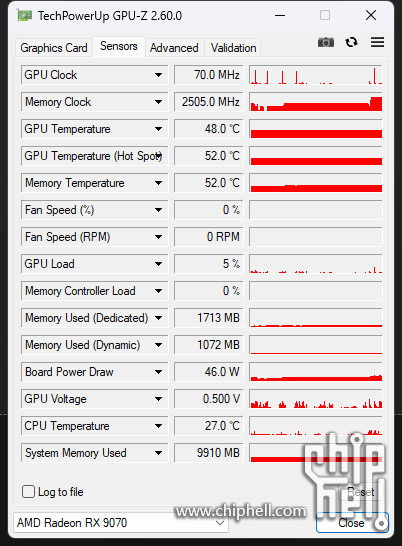
For unknown reasons, AMD decided to launch its first wave of RDNA 4 gaming graphics cards sans first-party designs. Leaked specimens have attracted much attention in China; with owners bragging about their respective ownerships of reasonably priced rarities. The latest back channel customer expressed satisfaction when inspecting Team Red's all-black flagship Navi 48 GPU-based solution: "after I got it, I have to say that it is not very heavy and is quite light. But the appearance is really what I like." After initial tests, they discovered that VRAM temperatures were not up to snuff—as alluded to (pre-launch) by other Chiphell figures. Their personal DIY improvements were described: "(I) took it apart to measure the thickness of the thermal grease pad. Everyone said the temperature of the video memory was high, so I decided to change to something better....(with) original silicone grease FurMark 2K resolution for 20 minutes: maximum core temperature was 62 degrees, maximum hot spot temperature was 84 degrees, maximum memory temperature was 88 degrees, maximum power was consumption 346 W."

AMD-built Radeon RX 9070 non-XT Tested Out by Chiphell Member

Around late January, out-of-date AMD marketing material teased the existence of a Radeon RX 9070 series reference card design. Almost a month later, PC hardware news outlets picked up on an official signal about Team Red's launch lineup consisting entirely of board partner-produced options. First-party enthusiasts were disappointed by the apparent total lack of "Made by AMD" (MBA) solutions, but some unusual specimens appeared online roughly two weeks post-RDNA 4's launch. Reports pointed to triple-fan Radeon RX 9070 XT and dual-fan RX 9070 MBA cards being exchanged for cash via Chinese black market channels. Photographed examples seemed to sport a somewhat muted black shroud design—not quite as exciting when compared to AMD's marketed/rendered brushed metal effect promo units.

Members of the Chiphell forum have spent months leaking many aspects of Team Red's foray into a new generation of graphics architecture—going back to the days of old nomenclature: Radeon RX 8800 XT. Yesterday, one participant revealed their fresh purchase of a Radeon RX 9070 non-XT MBA card. They sold their old GeForce RTX 4070 SUPER 12 GB graphics card, in favor of Navi 48 GPU-based OEM hardware. The post focused mainly on photo uploads and screenshots, but a brief description stated: "purchased at original price (TPU note: presumably 4499 RMB), room temperature is 16 degrees Celsius. Dual fans on the front. The back panel has an AMD logo, but it's a sticker." As theorized by VideoCardz, AMD likely produced a limited number of pre-release "public" MBA cards. The publication reckons that partner companies have received a smattering of samples for evaluation or software development purposes. The presence of an old school Radeon logo (pre-RDNA era) is a head scratcher, given the unit's supposed first-party origin.

AMD Radeon RX 7600 MBA Model Becomes Purchasable in EU

AMD's entry-level Radeon RX 7600 GPU launched last May—critical reception was lukewarm, and Team Red enthusiasts found more compelling "budget" options within the preceding RDNA 2 generation. AMD's board partners rolled out customized Radeon RX 7600 8 GB cards—as planned—but the reference design was a scarcity around launch time. As pointed out by TPU's resident graphics card reviewer extraordinaire, W1zzard, a "Made by AMD" (MBA) model was lined up for direct sale via official AMD online stores, "as well as through its board partners, with minimal re-branding." Plans were (apparently) scuppered by a discovery of 8-pin power cable insertion issues—review outlets informed AMD about these problems prior to launch.

According to a fresh VideoCardz report, AMD has started to offer its Radeon RX 7600 reference design through official European channels: "despite the initial promise of offering the RX 7600 directly to gamers through their webstore, AMD has struggled to generate significant interest in the card nearly a year after its launch. Furthermore, there hasn't been a substantial change in pricing, with the card still retailing at $269 (in the US). Turns out, the Radeon RX 7600 MBA is now available in Germany." Several European shop portals display prices of €295 (~$318) and €300 (~$324)—at the time of writing. Potential customers will have to weigh up the benefit of AMD's extra time spent on ironing out the reference design's past issues, versus market-tested + custom-cooled partner models.

Arm IPO Filing Reveals Development of Reference Designs

British semiconductor specialist firm, Arm Ltd., has has confirmed that it will be offering its clients the option to license "SoC solutions," as opposed to the usual model of paying for intellectual properties. A new Bloomberg article reaffirms previous claims that Arm's engineering department was beavering away on reference chip designs. An IPO filing, registered with the SEC, reveals that various system-on-chip designs are in the pipeline—likely targeting fast-growing tech markets.

An Arm statement explained: "More recently, we have invested in a holistic, solution-focused approach to design, expanding beyond individual design IP elements to providing a more complete system. By delivering SoC solutions optimized for specific use cases, we can ensure that the entire system works together seamlessly to provide maximum performance and efficiency. At the same time, by designing an increasingly greater portion of the overall chip design, we are further reducing incremental development investment and risk borne by our customers while also enabling us to capture more value per device." Arm is probably keen to boost its profit margins, and become more attractive in the eyes of potential investors—lately their designs have been implemented in more expensive product segments, namely automotive, client PCs, and cloud data center solutions.

NVIDIA GeForce RTX 3090 SUPER Founders Edition Pops Up on Taobao

An unreleased NVIDIA GeForce RTX 3090 SUPER Founders Edition graphics card was last spotted just over a year ago. A fortunate member of the Chinese NGA discussion board provided a close-up shot of a shroud bearing "super." A new leak gives us a full view of the RTX 3090 SUPER FE with prominent branding—KittyYYuko declared: "WTF, I have indeed heard of this leak before" upon posting this discovery to social media.

According to ITHome, the example from last year appeared to be a publicly released variant of "an unpackaged GeForce RTX 3090 Ti," and the latest finding seems to be identical. A seller, tbNick_dn86z, has created an entry for his GeForce RTX 3090 SUPER Founders Edition card with a value of 9999 RMB (~$1370) on Xianyu (Taobao's second hand market)—it is advertised as being "original and not modified, with a pure black casing." When confronted about identifying any apparent differences between the SUPER and officially launched Ti version, tbNick_dn86z confirmed that they are largely the same (minus external branding)—a matching device ID is shared across both variants.

Leaked AMD Radeon RX 7600 GPU Reference Card Design Emerges

We have seen a few examples of custom design/board partner Radeon RX 7600 graphics card models via leaks over the past two weeks - and AMD's alleged reference design has made an appearance this weekend, only fours days prior to the official product launch date (May 25). The leaked images once again come courtesy of VideoCardz - the set of two photos show a dual-fan setup on a mostly black shroud with the company's simple "Radeon" logo positioned near the top - this design seems to be missing an underlining strip of RGB (as seen on the big boy cards).

The picture of the card's flipside depicts a very plain looking backplate. The overall aesthetic is not too far removed from the existing high-end Radeon RX 7900 XT and 7900 XTX reference siblings, although this leaked entry-level offering is tiny in comparison - it is reported to be just under 21 centimeters in length (versus the 7900 XT at 27.6 cm and 7900 XTX at 28.7 cm). The RX 7600 MBA (made-by-AMD) card is said to be two slots wide.

Gigabyte Announces Its RX Vega 56 Reference Model Graphics Card

In a slightly anemic post on their website, Gigabyte has been the first of AMD's AIB partners to showcase a reference design RX Vega 56 graphics card. This was a silent addition to their website; no press releases have been sent out as of yet. There is only so much a company can say about their reference design graphics cards, though, absent of coming up with interesting phrases to sell the card's capabilities. Specifically, Gigabyte praised:

Next Gen Compute Units
These revamped nCUs (1 nCU = 64 stream processors) are designed to operate at incredible clock speeds and deliver extreme gaming experiences with the newest high resolution and high refresh rate monitors.
Return to Keyword Browsing
Nov 14th, 2026 02:51 CST change timezone

New Forum Posts

Popular Reviews

TPU on YouTube

Controversial News Posts