
News Posts matching #Systems

Return to Keyword Browsing

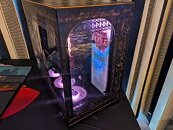
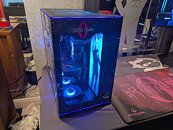
Starforge Systems shows New Desktop Systems and Peripherals at CES 2026

Starforge Systems brought a lot of its new and updated gaming desktop systems to the CES 2026 show and showcased some of its new peripherals, including those developed with Ducky for RuneScape and Frieren, Starforge Systems has plenty of themed desktop systems, including Solo Leveling, Jujutsu Kaisen 0, Frieren, Path of Exile, RuneScape, and others, as well as some neat standard and limited edition PCs like The Bungulator.

They also mostly pair up those same systems with custom artwork and even custom matching peripherals or add-ons like keyboards with custom caps, mice, desk mats, platelights, and wall art. More importantly, you can buy most, if not all, of those cases and accessories without the system.

Supermicro Brings Enterprise-Class AI Performance to the Client, Edge, and Consumer Markets

Super Micro Computer, Inc. (SMCI), a Total IT Solution Provider for AI/ML, HPC, Cloud, Storage, and 5G/Edge, will showcase its latest high-performance Super AI Station in Las Vegas, Nevada. Designed for AI developers, start-ups, and higher education and research professionals, Supermicro's new portfolio of products brings the latest innovation and performance to the desktop, edge, and consumer markets.

"The consumer technology landscape is evolving faster than ever, driven by breakthroughs in consumer-focused AI applications," said Charles Liang, president and CEO of Supermicro. "Supermicro introduces the latest innovations that deliver unprecedented performance and energy efficiency, empowering the next generation of users including creators and developers."

NVIDIA Prepares Native GeForce NOW Support for Linux-Powered Operating Systems

NVIDIA is reportedly preparing to offer native support for its GeForce NOW streaming service on Linux-based operating systems. This development is significant for gamers who have had to rely on unstable workarounds on their Linux desktop PCs, which often broke after updates. With native support, GeForce NOW on Linux will enhance gaming beyond traditional hardware-based acceleration, as cloud GPUs are typically more powerful than what most gamers own. The GeForce NOW Ultimate subscription, priced at $19.99 per month, provides access to a powerful GeForce RTX 5080 and a vast game library of over 4,000 titles, which continues to expand.

While there is no concrete information on when NVIDIA will launch full native Linux support, hints suggest that announcements might be made at the upcoming CES event. Additionally, NVIDIA already overhauled its GeForce NOW platform by imposing a 100-hour cap on all subscription tiers. Starting January 1, 2026, each GeForce NOW cloud gaming subscription is limited to 100 hours of playtime per month. Given that months average about 30.437 days, any playtime exceeding the 100-hour limit is rounded up to the next 15-hour block, potentially leading to extra charges if more playtime is desired. Now, Linux desktop users will face the same limitations, but they will finally receive native support.

ASUS Announces "Strategic Price Adjustments" for DRAM and SSDs

We recently covered a rumor that ASUS was planning on expanding its DDR4-compatible motherboard production and theorized that it might be a way to offer inexpensive build options to PC gamers in the midst of a growing DRAM shortage that continues to drive the price of DDR5 and NAND through the roof. It seems as though this may have been a correct estimation, as ASUS recently announced (via DigiTimes) a 2026 price hike on SSDs and DRAM kits, which will come into effect on January 5, 2026. While ASUS directly mentions DRAM and SSDs in its announcement, it doesn't specify which products will see a price increase, although it's easy to speculate where the effects will be felt the hardest—laptops, PC builds, smartphones, video cards, and gaming handhelds immediately stand out as victims.

ASUS says the price increase has become necessary after it has been "absorbing and responding to cost pressure over an extended period," and it blames supply chain pressure caused by increased demand from the AI industry for the price increases. This isn't entirely unexpected, and it was one of the potential outcomes industry insiders discussed in a prior rumor that suggested upcoming hardware launches may be delayed as a result of the DRAM shortage. The far-reaching effects of the DRAM crisis may extend to next-gen gaming consoles as well, which have been predicted to be delayed to well after the expected 2028 launch period.

AAEON Introduces GENESYSM-MTH6 Compact Industrial AI System

Industry-leading embedded solutions provider AAEON has released the GENESYSM-MTH6, a slim SubCompact System powered by Intel Core Ultra processors Series 1 (formerly Meteor Lake). Measuring just 190 mm x 134.1 mm x 43 mm and with both wall and VESA mounting options, the GENESYSM-MTH6 appears well-suited to act as a compact edge AI system for industrial setups. However, given the presence of three LAN ports for peripheral camera support, AAEON have noted it has the specifications necessary to operate as part of AI-assisted surveillance applications.

Differentiating itself from previous AAEON SubCompact Systems is the GENESYSM-MTH6's inclusion of the PER-SB2B expansion module as part of the product's BOM. The module, which was offered as an optional accessory for the board-level GENE-MTH6, will be included by default for the GENESYSM-MTH6. This module provides a substantial boost to the expansion options available, providing the system with two M.2 2280 M-Key slots for high-speed storage or AI acceleration, while maintaining an additional M.2 2280 M-Key on the system's motherboard. Other expansion options include an M.2 3052 B-Key and M.2 2230 E-Key, which allow for the installation of 5G and Wi-Fi 6E CNVi modules, respectively.

Intel to Acquire SambaNova AI Chip Startup

According to sources close to Wired, Intel has signed a new agreement with SambaNova, an AI chip startup, to acquire the company under undisclosed terms. The signed term sheet is non-binding, meaning it can be canceled under any condition, and a final deal has not yet been reached. Intel's current CEO, Lip-Bu Tan, has been serving as chairman of the board for SambaNova Systems, effectively giving him insider knowledge of the company's operations. The company has raised a total of $1.14 billion in funding as of early 2025, meaning that a lot of investors have shown confidence into its technology.

SambaNova develops AI chips based on its Reconfigurable Dataflow Unit (RDU), which takes a novel approach to enable trillion-parameter inference on its SambaRack rack-scale solutions. The latest 4th generation RDU features 1,040 RDU cores, 653 TeraFLOPS of BF16 (similar to FP16) compute, 520 MB of on-chip memory, 64 GB of HBM3, and is paired with a 1.5 TB external DDR memory pool to accommodate large language models for inference. Since it is a private company, we don't have sales figures officially published anywhere.

December 13, 20:35 UTC: Bloomberg reports that the deal is worth about $1.6 billion, including debt. Additionally, the deal is reportedly nearing its final stages.

Supermicro Intros New 4U and 2-OU (OCP) Liquid-Cooled NVIDIA Blackwell HGX B300 Systems

Super Micro Computer, Inc. (SMCI), a Total IT Solution Provider for AI, Cloud, Storage, and 5G/Edge, today announced the expansion of its NVIDIA Blackwell architecture portfolio with the introduction and shipment availability of new 4U and 2-OU (OCP) liquid-cooled NVIDIA HGX B300 systems. These latest additions are a key part of Supermicro's Data Center Building Block Solutions (DCBBS) that deliver unprecedented GPU density and power efficiency for hyperscale data centers and AI factory deployments.

"With AI infrastructure demand accelerating globally, our new liquid-cooled NVIDIA HGX B300 systems deliver the performance density and energy efficiency that hyperscalers and AI factories need today," said Charles Liang, president and CEO of Supermicro. "We're now offering the industry's most compact NVIDIA HGX B300 solutions—achieving up to 144 GPUs in a single rack—while reducing power consumption and cooling costs through our proven direct liquid-cooling technology. Through our DCBBS, this is how Supermicro enables our customers to deploy AI at scale: faster time-to market, maximum performance per watt, and end-to-end integration from design to deployment."

Siemens and nVent to Release Joint Reference Architecture for NVIDIA AI Data Centers

As AI workloads grow more intensive and distributed, data center infrastructure strategies must balance performance, efficiency, and scalability through increasingly intelligent and adaptive systems. To support this next generation of digital infrastructure, Siemens and nVent are combining their expertise to help data centers prepare cooling and power infrastructure for global deployment and operational resilience.

The new joint architecture developed by Siemens and nVent has been created to help customers build 100 MW hyperscale AI data centers designed to house large-scale, liquid-cooled AI infrastructure like NVIDIA DGX SuperPOD with DGX GB200 systems. It presents a Tier III-capable architecture that integrates Siemens' industrial-grade electrical and automation systems with NVIDIA DGX SuperPOD reference designs and nVent liquid cooling technology.

"We have decades of expertise supporting customers' next-generation computing infrastructure needs," said Sara Zawoyski, president of nVent Systems Protection. "This collaboration with Siemens underscores that commitment. The joint reference architecture will help data center managers deploy our cutting-edge cooling infrastructure to support the AI buildout."

AMD AGESA v1.2.8.0 May Prevent BIOS Entry and Crash Systems

AMD is gradually releasing the AGESA PI 1.2.8.0 BIOS update, which primarily aims to enhance memory compatibility. However, users who have installed this BIOS version are reportedly facing issues. A member of the Chiphell forum installed the latest AGESA PI 1.2.8.0, hoping for improved system optimizations and memory tuning, only to encounter significant problems. The user is unable to access the CMOS screen, as the system crashes immediately upon each attempt. Furthermore, the computer fails to boot into the operating system, and the system boot repair utility consistently crashes when used.

The distribution of the update appears to have been limited and quietly handled by some manufacturers. MSI published BIOS files for several X870E and B850 models that reference AGESA PI v1.2.8.0, and an AMI BIOS image labelled 7E59v1A65 with a release date of 2025-12-03 and a file size near 15.9 MB lists improved memory compatibility in its release notes. Community tracking shows the new BIOS available only for a few SKUs, including the MPG X870E Edge Ti WiFi, MPG X870E Carbon WiFi and MAG B850M Mortar.

HP Reports Fiscal 2025 Full Year and Q4 FY25 Results

HP Inc. and its subsidiaries ("HP") announced fiscal 2025 net revenue of $55.3 billion, up 3.2% (up 3.7% in constant currency) from the prior-year period.

Fiscal 2025 GAAP diluted net EPS was $2.65, down from $2.81 in the prior-year. Fiscal 2025 non-GAAP diluted net EPS was $3.12, down from $3.43 in the prior-year period. Fiscal 2025 non-GAAP net earnings and non-GAAP diluted net EPS exclude after-tax adjustments of $443 million, or $0.47 per diluted share, related to restructuring and other charges, acquisition and divestiture charges, amortization of intangible assets, certain litigation charges (benefits), net, non-operating retirement-related credits, tax adjustments, and the related tax impact on these items.

QNAP Launches the TL-R6020Sep-RP 4U 60-Bay High-Density SAS/SATA JBOD Expansion Enclosure

QNAP Systems, Inc., a leading computing, networking and storage solution innovator, today released the TL-R6020Sep-RP, a 4U 60-bay high-density SAS/SATA JBOD expansion enclosure. Optimized for petabyte-scale storage, the TL-R6020Sep-RP enables enterprises to cost-effectively scale their storage infrastructure for cold data, video surveillance, big data, and multimedia archiving applications. The TL-R6020Sep-RP provides four high-speed Mini-SAS HD (SFF-8644) ports with SAS 12 Gb/s bandwidth and Broadcom SAS DataBolt technology for bandwidth optimization. With its dual-path redundant design, system operation continues uninterrupted even if one cable fails. By supporting daisy-chaining of up to four enclosures (240 drives total), the TL-R6020Sep-RP allows seamless capacity expansion up to 4 PB raw storage. By adding SAS expansion cards to the NAS and connecting to the TL-R6020Sep-RP, users can distribute the bandwidth load caused by large numbers of drives and further improve overall performance.

"With growing volumes of surveillance and big data, enterprises need storage expansion that is both scalable and reliable," said Waterball Liu, Product Manager of QNAP. "The TL-R6020Sep-RP delivers petabyte-level capacity in a 4U chassis with flexible daisy-chaining, helping organizations meet future storage demands with confidence, while effectively reducing operational costs. As the preferred enterprise-grade ZFS storage solution, QuTS hero NAS offers multi-layered data protection along with advanced services such as real-time compression and deduplication, further unleashing the potential of PB-scale capacity."

AMD Sells ZT Systems Data Center Manufacturing to Sanmina

AMD (NASDAQ: AMD) today announced the completion of the agreement to divest the ZT Systems U.S.-headquartered data center infrastructure manufacturing business to Sanmina (NASDAQ: SANM). As part of the transaction, AMD retains ZT Systems' world-class design and customer enablement teams to accelerate the quality and time-to-deployment of AMD AI systems for cloud customers. Additionally, Sanmina becomes a preferred new product introduction (NPI) manufacturing partner for AMD cloud rack and cluster-scale AI solutions to further strengthen the AMD ecosystem of ODM and OEM partners.

"Rack-scale innovation marks the next chapter in the AMD data center strategy," said Forrest Norrod, executive vice president and general manager, Data Center Solutions business unit at AMD. "By extending our leadership from silicon to software to full systems, we're giving cloud and AI customers an open, scalable path to deploy AMD performance faster than ever. Our strategic partnership with Sanmina brings U.S.-based manufacturing strength together with AMD AI systems design and enablement expertise to deliver quality, speed and flexibility at scale."

Frore Systems introduces LiquidJet, Coldplate for AI Data Centers

Frore Systems today announced the launch of LiquidJet, a revolutionary direct-to-chip liquid cooling 3D coldplate solution designed to meet the escalating demands of AI Data Centers. Built with Frore's unique semiconductor manufacturing process adapted to metal wafers, LiquidJet unlocks higher performance from the world's most powerful GPUs—starting with NVIDIA Blackwell Ultra—delivering significant reductions in data center total cost of ownership (TCO).

"LiquidJet's unique 3D architecture, with customized short-loop jet channel microstructures, sets a new bar for coldplate thermal performance," said Seshu Madhavapeddy, CEO and Founder of Frore Systems. "Just as AirJet redefined active cooling for consumer and edge devices, LiquidJet transforms coldplates into a future-ready platform for the AI Factory."

Supermicro Introduces Data Center Building Block Solutions

Super Micro Computer, Inc. (SMCI), a total IT solution provider for AI/ML, HPC, Cloud, Storage, and 5G/Edge, is announcing the availability of its Data Center Building Block Solutions (DCBBS). These solutions are considered a new business line for Supermicro and enable organizations to design, order, and build complete data centers from a single vendor, reducing time-to-online (TTO) and improving overall quality and serviceability. The complete data center IT infrastructure is now available, including servers, storage, management software, liquid cooling infrastructure, networking, and electrical components—tested and integrated in Supermicro's manufacturing facilities before shipment to the customer. By providing a complete IT solution, organizations can work directly with Supermicro to simplify the entire data center build out.

"With our expertise in delivering solutions to some of the largest data center operators in the world, we realized that supplying a complete IT infrastructure solution will benefit many organizations seeking to simplify their data center build out," said Charles Liang, president and CEO of Supermicro. "Our global manufacturing staff is prepared to collaborate with customers on their specific data center needs and deliver all of the necessary IT components for a modern, energy-efficient data center, including complete data center management software. With this new business line, we now offer services to expedite the construction and build out of complete data centers. Our liquid-cooling options are designed and optimized specifically for the latest generation of GPUs, CPUs, and other electronics. These technologies can cut data center power consumption by up to 40% when using the Supermicro liquid-cooling infrastructure components, compared to existing air-cooled data centers."

TDK Announces New TMR Sensors for High-Performance Gaming Gear

TDK Corporation (TSE:6762) announces new TMR sensors as part of TDK's broad suite of custom sensing solutions for gamers and gaming gear builders who seek the ultimate game performance from their keyboards, controllers, mice, webcams, AR/VR, driving wheels, and pedals. TDK's suite of gaming sensing solutions - which includes TMR-based sensors and MEMS motion, microphone, and ultrasonic time-of-flight sensors - are exceptionally precise with fast response, plus compact and low power, to enable a winning edge for gaming gear.

Serious gamers demand the highest levels of performance from sensors within their gear, and TDK has a well-established presence with top industry gaming OEMs. Building on this, TDK now expands its custom sensing solution offerings to include ultra-precise TMR sensors to more top gaming gear manufacturers globally.

Starforge Systems Launches Jujutsu Kaisen 0 PC Collection

Attention all Jujutsu Kaisen 0 fans! Starforge Systems is excited to announce the launch of their all-new Limited Edition PC collection celebrating the iconic anime film, Jujutsu Kaisen 0. Featuring powerful components and striking artwork that stars the movie's cast, this collection is a must have, no matter how obsessed you are with Gojo.

The Jujutsu Kaisen 0 PC bundle ($2399.99) brings the world of Jujutsu Kaisen to life, and fans can now channel their inner sorcerer with the PC, desk mat and wall art from Starforge Systems' collection.

MagStor Reveals LTO-Powered Data Storage Systems Targeting Surveillance Sector

MagStor, a recognized leader in tape storage solutions, today announced a new line of video surveillance appliances to deliver best-in-class data storage solutions to the Video Surveillance markets.

As video surveillance data requirements explode due to increased retention times and higher resolution video, integrators and end users are struggling with ways to tame the costs. For example, a 50 camera setup at a retail location can generate nearly 500 TB of data over 12 months, forcing users to spend massive amounts on traditional spinning disk or cloud storage. MagStor's new video surveillance appliances provides relief to users seeking more reliable and lower cost storage:

OpenAI and NVIDIA Announce Strategic Partnership to Deploy 10 Gigawatts of NVIDIA Systems

OpenAI and NVIDIA today announced a letter of intent for a landmark strategic partnership to deploy at least 10 gigawatts of NVIDIA systems for OpenAI's next-generation AI infrastructure to train and run its next generation of models on the path to deploying superintelligence. To support this deployment including data center and power capacity, NVIDIA intends to invest up to $100 billion in OpenAI as the new NVIDIA systems are deployed. The first phase is targeted to come online in the second half of 2026 using the NVIDIA Vera Rubin platform.

"NVIDIA and OpenAI have pushed each other for a decade, from the first DGX supercomputer to the breakthrough of ChatGPT," said Jensen Huang, founder and CEO of NVIDIA. "This investment and infrastructure partnership mark the next leap forward—deploying 10 gigawatts to power the next era of intelligence."

Jülich Supercomputing Centre to Deploy World's First HPC NVIDIA DGX Quantum System

Quantum Machines, Arque Systems, and the Jülich Supercomputing Centre (JSC) announced today the first deployment of an NVIDIA DGX Quantum-powered quantum computer at a major supercomputing center, positioning Europe at the forefront of hybrid quantum-classical computing globally. This milestone at JSC, operator of Europe's fastest supercomputer JUPITER (ranked #4 globally) and the continent's first exascale system, represents a significant leap in integrating quantum computing capabilities into real-world high-performance computing environments. The deployment at this pioneering facility, which has led European HPC innovation for nearly two decades, provides researchers with unprecedented access to integrated quantum resources within one of the world's most powerful computational infrastructures.

DGX Quantum combines NVIDIA's Grace Hopper Superchip with Quantum Machines' OPX1000 hybrid quantum-classical controller, enabling seamless interaction between classical and quantum computing resources. The integration enables round-trip data transfer with latency under 4 microseconds - a 1000-fold improvement over previous implementations.

32 GB of RAM Could Become the New Standard for Gamers, According to Steam Survey

The Steam Hardware and Software Survey has delivered yet another update, showing us where the general PC gamer is headed. This time, the sector shows an interesting growth is system memory, particularly among users with 32 GB of RAM. While 16 GB of RAM is still the most common configuration, accounting for 41.88% of all surveyed systems, the next most common configuration is actually 32 GB, at 36.46%, with a growth of +1.31% in August compared to July. At this rate, if the growth continues, the 32 GB systems could be on a path to becoming a standard in gamers' choice in just a couple of months, meaning that more users than ever could be on 32 GB RAM systems. DDR5 memory is becoming cheaper, and OEMs are offering more memory configurations, all of which is making gamers opt for higher capacity, whether it's a prebuilt, DIY, or laptop system.

A few familiar forces drive that shift. Current generation platforms from both Intel and AMD utilize dual channel DDR5 configurations, so new builds moving forwards typically start at 32 GB from a pair of 16 GB modules, as densities were doubled from DDR4 to DDR5. Single channel memory from a single installed DIMM would typically be the only way to get just 16 GB of RAM in current generation desktops, since 8 GB modules are quite rare. Modern AAA games increasingly recommend 32 GB for the smoothest experience at high or ultra settings, and anyone who streams, records, or runs background tools alongside a game benefits from the extra headroom. Local AI is part of the equation for some users. Many hobbyist AI tasks rely on GPU VRAM, but certain CPU-based or very large-model setups can also increase system RAM requirements. High-end desktop configurations are a niche example, but show just how much memory some workloads can demand. Students, content creators, and professionals who use rendering, CAD, or EDA alongside gaming likewise favor bigger capacities. Finally, many gamers buy extra RAM to future-proof their systems so they can upgrade a GPU later without worrying about memory.

Carbice Ice Pad Now Available As Premium Upgrade Option With CyberPowerPC Systems

Carbice, a leader in next-generation carbon nanotube-based thermal interface materials (TIMs) and high-performance cooling expertise, is bringing its space-proven cooling tech to the desktop. Starting today, PC builders can select the Carbice Ice Pad as a premium upgrade option when customizing systems from CyberPowerPC. Engineered with vertically aligned carbon nanotubes, the Ice Pad replaces outdated thermal paste, offering a first-of-its-kind thermal material that was previously unavailable to PC builders. Used in satellites and supercomputers, the Ice Pad is a mess-free, maintenance-free replacement, providing gamers, creators, and enthusiasts with long-term thermal reliability, even under sustained CPU loads or overclocked conditions.

"Games like Call of Duty: Modern Warfare III or Starfield push your CPU to the edge, tracking frames at 240 Hz, calculating real-time physics, and rendering massive open worlds. But if your thermal paste is drying out or cracking under load, you're leaving performance on the table," said Dr. Baratunde Cola, founder and CEO of Carbice. "Our Ice Pad is engineered to create a tight, durable thermal interface that transfers heat away from your CPU with far greater consistency than thermal paste. No reapplication. No cleanup. No degradation under pressure. It's been proven in space and AI data centers, and now the Ice Pad is the first consumer product to actually deliver full nanoscale physics for high-performance gamers."

Supermicro Expands Its NVIDIA Blackwell System Portfolio with New Liquid-Cooled and Air-Cooled Systems

Supermicro, Inc., a Total IT Solution Provider for AI, HPC, Cloud, Storage, and 5G/Edge, today announced the expansion of its NVIDIA Blackwell system portfolio with the new 4U DLC-2 liquid-cooled NVIDIA HGX B200 system ready for volume shipment and the introduction of an air-cooled 8U front I/O system. Tailored to the most demanding large-scale AI training and cloud-scale inference workloads, Supermicro's new systems streamline the deployment, management, and maintenance of air- or liquid-cooled AI infrastructure and are designed to support coming NVIDIA HGX B300 platforms, allowing easy front I/O access, simplifying cabling, improving thermal efficiency and compute density, and reducing operational expenses (OPEX).

"Supermicro's DLC-2 enabled NVIDIA HGX B200 system leads our portfolio to achieve greater power savings and faster time to online for AI Factory deployments," said Charles Liang, CEO and president, Supermicro. "Our Building Block architecture enables us to quickly deliver solutions exactly as our customers request. Supermicro's extensive portfolio now can offer precisely optimized NVIDIA Blackwell solutions to a diverse range of AI infrastructure environments, whether deploying into an air- or liquid-cooled facility."

Xbox "Magnus" APU to Power Multiple Systems, Not Only the Main Console

Microsoft's next-generation Xbox will be a new design approach with the introduction of the "Magnus" APU, a chip built to power an entire family of devices rather than a single flagship console. Leaks and analysis shared by Digital Foundry have revealed that Magnus splits compute and graphics into separate dies linked over a high-bandwidth 384-bit fabric. This Lego-style modular design enables Microsoft to swap out upgraded CPU or GPU tiles without redesigning the motherboard. By moving away from a few-year console generations toward more frequent "phase" updates, Microsoft aims to maintain competitive performance and introduce new systems, ranging from palm-sized streaming boxes to even full-tower gaming rigs, on an annual basis.

For AMD, which architects the Magnus APU, this represents an opportunity to tap into a more predictable and potentially lucrative channel beyond the traditional DIY PC market. By planning an entire vertical of systems powered by Magnus APU, Microsoft is aiming to compete more with integrated PC systems than with consoles alone. If the Magnus APU can deliver the gaming performance required for both handhelds and tower-style consoles, Microsoft could capture a significant market share. For handheld versions, the design could likely be a cut-down version to maintain a lower power draw and keep thermals in check. However, for the regular console, the Magnus APU will likely be a powerful combination of Zen 6 / Zen 6c, along with UDNA graphics. We are yet to see what Microsoft plans as we move closer to the next-gen Xbox launch.

No Secure Boot? No Battlefield 6 — EA Faces Backlash

As part of our ongoing commitment to Positive Play in Battlefield, Secure Boot is a requirement to play Battlefield 6 on PC. This supports the need for enhanced security while playing and utilizing new anti-cheat features in Battlefield. As cheat developers continue to evolve their tactics, we're stepping up our game too.

Requiring Secure Boot provides us with features that we can leverage against cheats that attempt to infiltrate during the Windows boot process. It also lets the Battlefield Positive Play team use its own features and related dependent security features like TPM to combat other forms of cheating, the most relevant of which include:
  • Kernel-Level Cheats and Rootkits
  • Memory Manipulation and Injection
  • Spoofing and Hardware ID Manipulation
  • Virtual Machines and Emulation
  • Tampering with Anti-Cheat Systems

QNAP Officially Launches Dual-NAS High Availability Solution for Continuous Business Operations

QNAP Systems, Inc., a leading computing, networking, and storage solutions innovator, today officially released its High Availability (HA) solution, empowering businesses to maintain uninterrupted access to mission-critical data and services through reliable dual-NAS failover architecture. Building on successful beta testing and positive market reception, the finalized HA solution offers enterprise-level uptime with cost-effective deployment for organizations of all sizes.

"With growing IT complexity, uninterrupted access to critical services is essential," said Andy Yu, Product Manager at QNAP, adding "QNAP's High Availability solution combines automatic failover, real-time sync, and intuitive management to ensure continuous operations across industries."
Return to Keyword Browsing
Nov 11th, 2026 06:26 CST change timezone

New Forum Posts

Popular Reviews

TPU on YouTube

Controversial News Posts