Tuesday, September 2nd 2025

32 GB of RAM Could Become the New Standard for Gamers, According to Steam Survey
The Steam Hardware and Software Survey has delivered yet another update, showing us where the general PC gamer is headed. This time, the sector shows an interesting growth is system memory, particularly among users with 32 GB of RAM. While 16 GB of RAM is still the most common configuration, accounting for 41.88% of all surveyed systems, the next most common configuration is actually 32 GB, at 36.46%, with a growth of +1.31% in August compared to July. At this rate, if the growth continues, the 32 GB systems could be on a path to becoming a standard in gamers' choice in just a couple of months, meaning that more users than ever could be on 32 GB RAM systems. DDR5 memory is becoming cheaper, and OEMs are offering more memory configurations, all of which is making gamers opt for higher capacity, whether it's a prebuilt, DIY, or laptop system.
A few familiar forces drive that shift. Current generation platforms from both Intel and AMD utilize dual channel DDR5 configurations, so new builds moving forwards typically start at 32 GB from a pair of 16 GB modules, as densities were doubled from DDR4 to DDR5. Single channel memory from a single installed DIMM would typically be the only way to get just 16 GB of RAM in current generation desktops, since 8 GB modules are quite rare. Modern AAA games increasingly recommend 32 GB for the smoothest experience at high or ultra settings, and anyone who streams, records, or runs background tools alongside a game benefits from the extra headroom. Local AI is part of the equation for some users. Many hobbyist AI tasks rely on GPU VRAM, but certain CPU-based or very large-model setups can also increase system RAM requirements. High-end desktop configurations are a niche example, but show just how much memory some workloads can demand. Students, content creators, and professionals who use rendering, CAD, or EDA alongside gaming likewise favor bigger capacities. Finally, many gamers buy extra RAM to future-proof their systems so they can upgrade a GPU later without worrying about memory.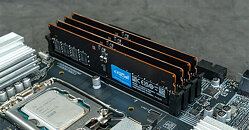
Sources:
Steam Survey, via Tom's Hardware
A few familiar forces drive that shift. Current generation platforms from both Intel and AMD utilize dual channel DDR5 configurations, so new builds moving forwards typically start at 32 GB from a pair of 16 GB modules, as densities were doubled from DDR4 to DDR5. Single channel memory from a single installed DIMM would typically be the only way to get just 16 GB of RAM in current generation desktops, since 8 GB modules are quite rare. Modern AAA games increasingly recommend 32 GB for the smoothest experience at high or ultra settings, and anyone who streams, records, or runs background tools alongside a game benefits from the extra headroom. Local AI is part of the equation for some users. Many hobbyist AI tasks rely on GPU VRAM, but certain CPU-based or very large-model setups can also increase system RAM requirements. High-end desktop configurations are a niche example, but show just how much memory some workloads can demand. Students, content creators, and professionals who use rendering, CAD, or EDA alongside gaming likewise favor bigger capacities. Finally, many gamers buy extra RAM to future-proof their systems so they can upgrade a GPU later without worrying about memory.

55 Comments on 32 GB of RAM Could Become the New Standard for Gamers, According to Steam Survey
My next PC will be at least 64GB.
Though, i guess 48 is an option as well these days. But 64 and never having to look back is the better call i think.
Kinda hoping by that time CAMM is a thing for desktop motherboards.
Selling machines with just 8GB or less should be illegal though.
It's very hard to find a 2x 8 GB DDR5 memory kit, they exist, but you'd have to go out of your way to buy them. The only other way to get 16 GB in a new PC would be to buy a prebuilt/laptop that came with single channel memory, 1x 16 GB, a configuration that sadly exists. Or one of those frankenstein low end laptops with 8/16 GB soldered and a free SODIMM slot.
2x 16, 2x 24 and 2x 32 GB are very much the standard for new builds, unless for some reason people are doing new builds with last gen parts, or castrating dual channel platforms with single channel memory configurations.
Edit: Updated the article to account for this.
And for my upgrade this year went 64GB. If the price for 96GB was abit better I would have gone up to that.
Of all people in this world, buildzoid managed to get me interested in memory overclocking, as it is exciting.
My memory history went like this:
2009: 2x2GB DDR3-1600 awful high voltage Mushkin kit
2017: 2x4GB DDR3-1600 great Ballistix kit
2018: 2x8GB DDR3-2133 G.Skill Sniper kit
2019: 2x16GB DDR4-3200 Ballistix Sport LT kit
2020: 2x16GB DDR4-3200 Ballistix kit
Soooo in the span of 10 years I hopped DDR3 4GB->8GB->16GB then jumped straight to DDR4 32GB->64GB.
I'm a guy on 64GB telling you guys you don't need 64GB. Even with all the dumb shit I do every day it's overkill.
In other trends, 8 GB is way down to single digit percentage points. On the other hand, it's surprising to still see it near 10% when I had 8 GB all the way back in 2009, even if that was ahead of the norm at the time. So you could say it's surprising that it's still baseline relevant over 15 years later. For all the complaining people do about increasing hardware needs over the last many years, the reality is the opposite is true and the growth of needs has slowed substantially, especially with RAM. Right now, more than ever, is older hardware usable. Apologies for the link to a competitor (as if this 21 year old article might steal some current day traffic, haha), but look at the performance that used to be considered impressive from a brand new flagship. Yes, graphics card pricing in particular is bad now, but longevity and barrier to entry (that is, where the hardware requirement floors are) seems like it has never been better than now? A 10 or 15 year old PC right now is more capable than a PC of that same age at any point in the past, yet people complain like it's the worst it's ever been? Anyway, back to the subject of changing hardware trends, I also notice octo cores are also about to surpass hex cores cores as the most common, and quad cores have slipped so much that the number of people above 8 cores is almost double the amount of people with 4 cores. A lot of standards are working towards changing right now.