Saturday, December 13th 2025

Intel to Acquire SambaNova AI Chip Startup
According to sources close to Wired, Intel has signed a new agreement with SambaNova, an AI chip startup, to acquire the company under undisclosed terms. The signed term sheet is non-binding, meaning it can be canceled under any condition, and a final deal has not yet been reached. Intel's current CEO, Lip-Bu Tan, has been serving as chairman of the board for SambaNova Systems, effectively giving him insider knowledge of the company's operations. The company has raised a total of $1.14 billion in funding as of early 2025, meaning that a lot of investors have shown confidence into its technology.
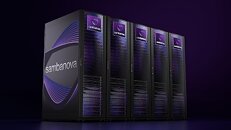
SambaNova develops AI chips based on its Reconfigurable Dataflow Unit (RDU), which takes a novel approach to enable trillion-parameter inference on its SambaRack rack-scale solutions. The latest 4th generation RDU features 1,040 RDU cores, 653 TeraFLOPS of BF16 (similar to FP16) compute, 520 MB of on-chip memory, 64 GB of HBM3, and is paired with a 1.5 TB external DDR memory pool to accommodate large language models for inference. Since it is a private company, we don't have sales figures officially published anywhere.
December 13, 20:35 UTC: Bloomberg reports that the deal is worth about $1.6 billion, including debt. Additionally, the deal is reportedly nearing its final stages.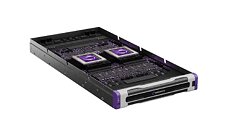
 If the deal goes through, it is unclear how Intel will integrate the company into its existing AI product portfolio. In the past, Intel acquired Movidius for its NPU chips, which are now integrated across Intel processors. Another notable acquisition was Habana Labs for its Gaudi AI accelerators, which gained little traction in the data center space compared to AMD/NVIDIA solutions. Intel plans to integrate Gaudi IP into its next-generation "Jaguar Shores" AI accelerator for training and inference, meaning that any remaining IP will be incorporated into Intel's product portfolio. With SambaNova, the question is whether Intel will keep it as a standalone product or integrate the technology into its existing offerings.
Source:
Wired
SambaNova develops AI chips based on its Reconfigurable Dataflow Unit (RDU), which takes a novel approach to enable trillion-parameter inference on its SambaRack rack-scale solutions. The latest 4th generation RDU features 1,040 RDU cores, 653 TeraFLOPS of BF16 (similar to FP16) compute, 520 MB of on-chip memory, 64 GB of HBM3, and is paired with a 1.5 TB external DDR memory pool to accommodate large language models for inference. Since it is a private company, we don't have sales figures officially published anywhere.
December 13, 20:35 UTC: Bloomberg reports that the deal is worth about $1.6 billion, including debt. Additionally, the deal is reportedly nearing its final stages.


21 Comments on Intel to Acquire SambaNova AI Chip Startup
That way they would make some money to afford purchases like these, which they really should t at this point in time
Stacking it is difficult and is making it hard to run fast because heat can’t be wicked away as easy.
So no, dram isnt going anywhere before 2030 the formfactor might change like on package as we see in mobile socs and intel lunarlake or camm modules.
HBM is viable in the consumer market. AMD used it in Fury and Vega GPUs, and Intel even shipped a consumer CPU with an on-package Vega GPU connected via EMIB to HBM. It's just that GDDR is cheaper, or at least it was.
If a billion dollars can't make memory, Intel and Kioxia could consider partnering to make DRAM. Kioxia recently announced a new memory tech which I assume means Kioxia is re-entering the memory market in the distant future.
Come to think of it, I wonder where Optain would be in AI today if development had continued. Might not be so much demand for RAM.How much are you willing to bet on the price of dram a few years from now? Billions?
Seems to be a new trend in the market. Every time there is an expensive acquisition, 10% of the working staff is laid off.
So Intel was even late for the train.
Nobody was building new computers with hybrid storage in those years. Sure, before Optane came out many people I know built a computer with a little tiny SSD and put Windows on it and they also had an HDD which they configured Steam to use. Intel's SSD-as-cache solution might've made sense for those setups, and SSD-as-cache was a common option offered by OEMs. But by the time Intel Core i 7th-gen processors were out, SSDs were big enough and cheap enough that most people just put everything onto one large SSD. Optane's long write life made it ideal for SSD-as-cache and some OEMs were still selling new hybrid systems, but they were using cheaper NAND flash, while enthusiasts were choosing all-SSD systems. If Intel wanted to sell Optane this way it needed to sell to users of older systems and to AMD customers because a lot of new enthusiast builds had Ryzen CPUs. But instead Optane was treated as the golden ticket to selling more Core i CPUs, which I think failed to even produce a small impact on CPU sales while it tanked Optane sales.
The truth is you could get 3rd-party software and use it as a cache with an AMD CPU or an Intel 6th gen or older. Or you could just not use cache software at all and use it as a normal M.2 drive, which is what I did in an AMD system and today in my AMD server. But I literally had to ignore Intel's product listing which told me that I couldn't buy the product to use in my system. How can any product succeed by telling a huge percentage of people who can and would use it that it won't work for them? Now I don't know why it failed in the server market or why Micron never brought it to market or why Solidigm/SK Hynix passed it up. But Intel was first to release 3D Xpoint to consumers and if Intel screwed up the marketing this bad, it's easy to think that someone barely more competent in Micron saw the sales numbers and decided it was a failed product, never realizing that Intel had self-sabotaged.
It was also kind of a bad product. What I have is an M.2 drive on an x2 PCIe interface. You can't have the fastest SSD on an x2 interface. Really all it is is a small SSD that's relatively expensive and has a really really long write life. But it could've been a really fast SSD with another storage chip on board and a really good controller. Or it could've replaced the SLC cache on Intel's SSD products or it could even have replaced the DRAM cache on more premium SSDs. But none of these options ever came to be. And if it had stuck around, there surely would be a use for it today in the AI world.
Also for reference here's Intel's page on supported platforms. www.intel.com/content/www/us/en/support/articles/000026040/memory-and-storage/intel-optane-memory.html