News Posts matching #Tensor

Return to Keyword Browsing

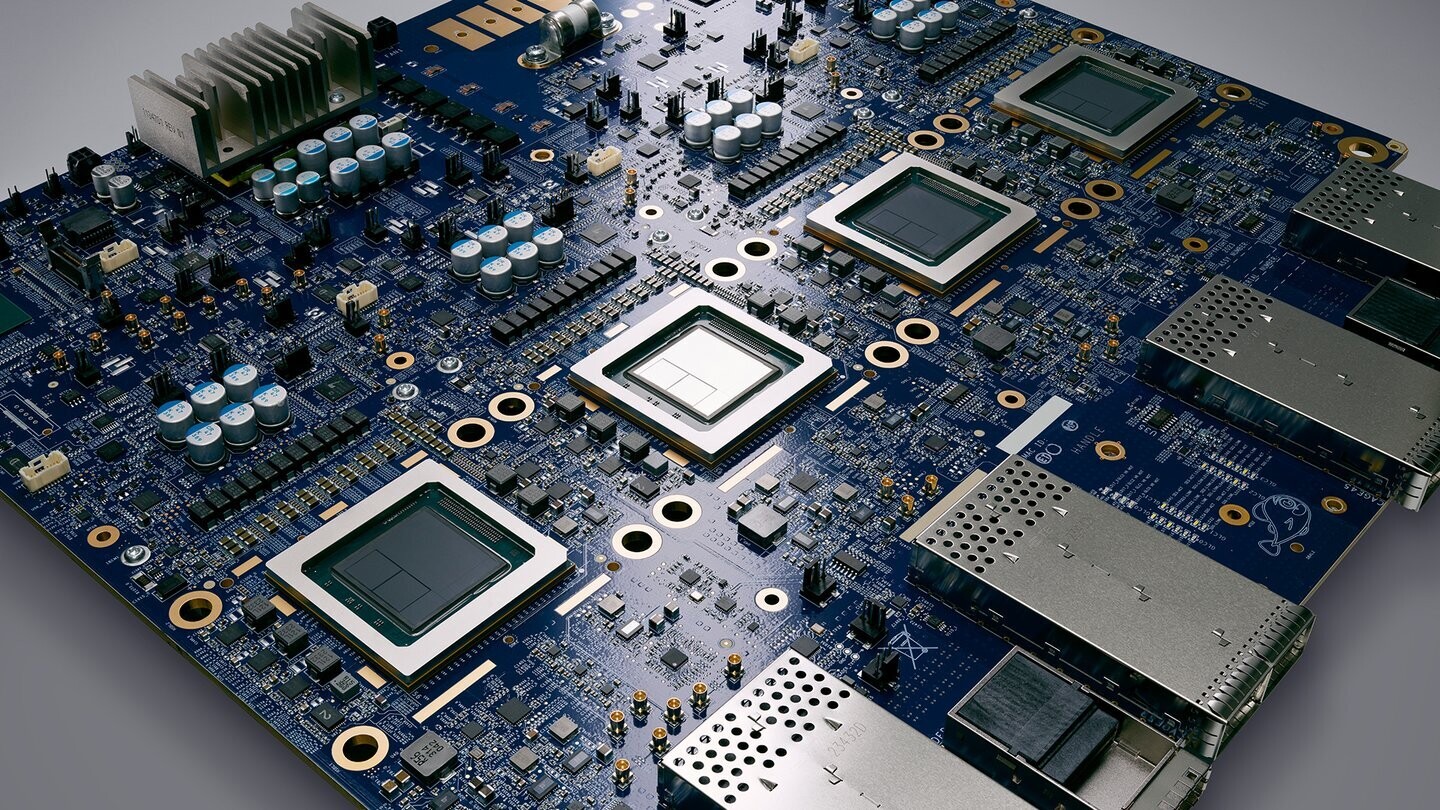
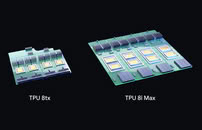
Google Extends Tensor Processor Unit Series with TPU 8tx and 8i Max

While we've always co-designed our TPUs in partnership with Google DeepMind, we're now increasingly getting feedback from external organizations on their specific needs. With computing moving from human to agent scale, businesses are asking for accelerators that can reason across AI models' massive context windows. In addition, some highly regulated customers are asking for specialized encryption capabilities for unique workloads.

The new TPU systems we are announcing today address this new reality. Coupled with our recent PyTorch announcements, our aim is to make TPUs more easily accessible to every developer and Cloud customer. By combining modular custom silicon with an open and easy-to-use software stack, we can deliver new hardware and system configurations at the pace of the AI industry.
New UEFI Tool Lifts NVIDIA's Tensor Cap on RTX 20 to 40 Series Cards in Windows

Last week, modders found a way to double the tensor throughput of GeForce RTX 20, RTX 30, and RTX 40 cards, though Zagitta's original tool only ran on Linux. Now, Chinese modder physicsdolphin has released nv-uefi-unlocker, a UEFI tool that lifts the same limit on Windows. NVIDIA runs FP16, BF16, and TF32 tensor math with FP32 accumulation at half rate on GeForce cards, while the same silicon in professional cards runs at full speed. The tool removes that cap before the driver even loads, without any VBIOS flashing. An earlier Windows port from impacifist targeted a single RTX 3090 system, while this one covers all three generations.

The gains look substantial. One user's RTX 4070 Ti Super went from 57.00 to 150.93 TFLOPS in FP16 (2.65x), though board power also climbed from 227 W to nearly 292 W. An RTX 2070 reportedly jumped from 36 to around 60-63 TFLOPS. Not every card has been tested; RTX 20 owners have to enable GSP firmware mode first, and RTX 50 isn't supported at all. The unlock resets on every power-off, so it runs from a USB stick on each cold boot, with Secure Boot disabled or a self-signed certificate enrolled. That could be a problem for games whose anti-cheat requires Secure Boot.

Modder Behind GTA 5's Switch Port Is Now Bringing It to Android

An unofficial, native Android port of Grand Theft Auto 5 is reportedly in development, though it looks like only a small portion of phones will actually be able to run it at launch. The project comes from M0jso of Paralympics Productions, the same developer behind the unofficial GTA 5 port for the original Nintendo Switch that we recently covered. Unlike solutions that run the Windows version through compatibility layers like Winlator, this port is being built to run GTA 5 natively on Arm. It reportedly uses the same base as the Switch port, which itself was built on GTA 5 Legacy 1.0.2699 and the leaked 2023 source code.

Minimum requirements are said to be a Snapdragon 865, 8 GB of RAM, and 65 GB of storage, with support extending up through recent Snapdragon 7 and 8 series chips. The first public build is Snapdragon-only, so Exynos chips (including the 1480, 1580, 2200, 2400, and 2600), Pixel Tensor with PowerVR graphics, and MediaTek Helio chips are apparently left out for now, at least until Mali GPU support gets added later. There's no word on an actual release date yet, and it's still worth treating this as an early and unofficial project until we see it running. However, it is confirmation that GTA 5 will be coming to Android phones pretty soon, if the Nintendo Switch port timeline is anything to go by.

NVIDIA Confirms DLSS 5 for GeForce RTX 40-Series is Coming

NVIDIA has officially confirmed that the company is working to bring DLSS 5 neural rendering to the previous-generation GeForce RTX 40-Series "Ada Lovelace." Previously, it was believed that DLSS 5 technology would be exclusive to the latest GeForce RTX 50-Series "Blackwell" and future models, without looking back. As NVIDIA continues to focus on hardware-software cooptimization, we now have official confirmation that the GeForce RTX 40-Series will also receive a DLSS 5 port. However, the launch of DLSS 5 on the GeForce RTX 40-Series is secondary, as NVIDIA is still preparing and optimizing performance for the GeForce RTX 50-Series to ensure that the model won't significantly impact the final game performance, despite reportedly being very compute-heavy.
NVIDIADLSS 5 is our most computationally demanding model to date. Since we initially announced it in March, we've achieved a 5X performance gain and there's more to come. Our current focus is on optimizing performance for the GeForce RTX 50 Series with model updates expected later this fall. Once RTX 50 Series performance is more fully tuned, we plan to work on expanding official support to the GeForce RTX 40 Series.

DLSS 5 Officially Goes Live September 3 With NBA 2K27, Exclusive to RTX 50-series "Blackwell" GPUs

NVIDIA has confirmed that DLSS 5 will officially launch on September 3 alongside NBA 2K27, and it will remain exclusive to GeForce RTX 50-series GPUs. When asked directly at a Gamescom technical briefing whether older cards would ever receive support, NVIDIA gave a flat answer: "It's RTX 50-series only." The model runs on Blackwell's fifth-generation Tensor cores, and there's no fallback path for RTX 40-series or anything older. That confirmation lines up with what modders had already found by digging through the leaked DLSS 5 DLL that surfaced through an early NBA 2K27 build last week, which contained executable code gated specifically to Blackwell hardware.

According to NVIDIA, DLSS 5 is its largest and most complex model to date, and the priority has been optimizing it specifically for RTX 50 hardware rather than stretching it across older Tensor core generations. However, that didn't stop modders from finding workarounds for RTX 40-series, 30-series, and even 20-series GPUs. After the DLSS 5 DLL leaked through an early NBA 2K27 build, a modder patched around the CUDA binaries and got Neural Rendering running on an RTX 4090, with performance dropping by roughly 36 to 39 percent in Control. That's still a significant hit, but nowhere near the collapse seen on RTX 30-series cards, which lack native FP8 support and saw frame rates fall off a cliff in the same tests. Given that the RTX 40-series already has native FP8 acceleration built in, official support for it seems like it could've been on the table, even as a lower-tier experience

Google Launches Pixel 11 Series Powered by Tensor G6 Chip

Today we unveiled Pixel 11, Pixel 11 Pro, and Pixel 11 Pro XL, which come with major camera upgrades, enhanced durability, and our fastest, most powerful chip, Google Tensor G6, that runs the latest Gemini Nano model.

These phones are designed for Gemini Intelligence to deliver time-saving, personal help and include new camera experiences that will help you better capture the moment in your authentic style.

NVIDIA Details the "Rubin" Architecture: Die Annotation, Vera CPU, HBM4, and Disaggregated Inference

NVIDIA has released a technical details on its next-generation "Rubin" GPU, including a fully annotated die shot. "Rubin" represents a significant generational leap in NVIDIA's mission to scale computing across numerous racks, systems, and data centers. The company is promoting this generation as the first "agentic AI" native design. This AI paradigm means that inference workloads are continuously active, engage in reasoning, planning, tool utilization, and execute many sequential steps. In this context, inference refers to a completed model running on the GPUs, rather than being trained, which is what Rubin is designed for. NVIDIA claims up to 10x more agentic throughput per unit of energy compared to "Blackwell." This improvement relies not only on the new "Vera" CPU and rack-level power management but also on the entire system, as customers now prioritize overall system performance rather than just the performance of a single GPU.

In its full configuration, "Rubin" combines two compute dies in a single package, linked with a high-speed connection that NVIDIA calls NV-HBI. This chiplet approach uses CoWoS-L packaging from TSMC, chosen because each die is already as large as the chip factory can print in one go, reaching the reticle limit. The GPU contains 336 billion transistors, up to 224 SMs, 896 Tensor Cores with a third-generation Transformer Engine, and 288 GB of HBM4 memory, capable of delivering up to 50 PetaFLOPS of inference and about 35 PetaFLOPS of training at the ultra-compact NVFP4 format. This is NVIDIA's proprietary 4-bit data format that enhances efficiency in inference and training with minimal to no accuracy loss compared to the 8-bit and 16-bit data formats used today for training and inference. However, this is quite different from the FP16/FP32 formats used in gaming GPUs. Below, we will break down not just the GPU, but the entire platform NVIDIA has built around it.

NVIDIA GeForce RTX 50 Super GPUs Surface Online

Previous rumors indicated that NVIDIA had seemingly indefinitely postponed the launch of the GeForce RTX 50 Super-series GPUs, with no real indication of a launch date for new Super cards in sight. With the recent apparent cancellation of the RTX 5050 9 GB GPU and RTX 60-series GPUs on the cards for late 2027, it seemed more and more unlikely that the RTX 50 Super-series GPUs would ever launch at all. Now, thanks to listings in the online Seasonic PSU calculator, rumors of upcoming RTX 50 Super GPUs are floating around. If the Seasonic calculator is anything to go by, it looks as though the RTX 50 Super cards will initially be available in three variants: RTX 5080 Super, 5070 Ti Super, and an RTX 5070 Super. There is no indication of an RTX 5060 Super just yet.

According to information in the PSU calculator, the RTX 5080 Super will have a TGP of 415 W, which is a 55 W increase over the RTX 5080's 360 W as reported by the same Seasonic PSU calculator. Similarly, the RTX 5070 Ti Super will get a 50 W increase over the 5070 Ti's 300 W, for a TGP of 350 W, while the RTX 5070 Super is rated at 275 W, compared to the 250 W of the original RTX 5070. This is a more substantial increase than the 15-20 W increase that came with the jump from the RTX 4070, 4070 Ti, and 4080 to their respective Super variants. Of course, previously, NVIDIA's Super variants also came with additional Cuda, RT, and Tensor cores as well as faster memory, all of which may result in higher power draw to sustain the same or similar GPU clock speeds.

Samsung Exynos 2600 SoC Annotated, Showcases 3-tier CPU, AMD RDNA 4 iGPU

Die-shots of the Samsung Exynos 2600 application processor for smartphones, tablets, and ultraportable notebooks surfaced, and were annotated by Kurnal Salts. It showcases a massive logic complex with large amounts of on-die memory and compute muscle. Samsung buids the Exynos 2600 on Samsung SF2, the company's in-house 2 nm GAAFET foundry node, which offers comparable transistor densities and electrical specs to TSMC N2. It is a monolithic chip, with all logic components on die.

We begin our tour with the CPU. Samsung designed the Exynos 2600 with a 3-tiered heterogenous multicore design, and a 1X+3P+6E core configuration. Leading it is one C1-Ultra extreme core that ticks at up to 3.80 GHz, offers the highest IPC, and comes with 3 MB of dedicated L2 cache. Next to it are three C1-Pro performance cores, which run at up to 3.25 GHz, and handle most performance-heavy workloads. Each C1-Pro core has 1 MB of dedicated L2 cache. Trailing these are six other C1-Pro cores, which are purposed to serve as efficiency cores. Their clock speed only runs up to 2.75 GHz, and have a more aggressive power-management scheme. The "P-cores" and "E-cores" on this chip are functionally identical, and have the same transistor count, but are simply configured differently. The CPU complex is held together by 16 MB of shared L3 cache that all 10 cores have equal access to.

Microsoft's Shader Model 6.10 Opens Direct Access to GPU AI Engines

Microsoft has released the Shader Model 6.10 preview, included in the new AgilitySDK 1.720-preview build. This preview introduces a compelling feature related to GPU-dedicated AI engine control. According to the developer blog, Shader Model 6.10 features a new, streamlined algebra matrix API that reveals all known matrix operations for popular gaming GPUs from AMD, Intel, and NVIDIA. This means that modern GPUs have dedicated hardware for processing AI workloads, typically involving matrix multiplication and accumulation. Modern machine learning-based upscaling relies on this hardware, whether it's Tensor cores from NVIDIA, XMX cores from Intel, or AI accelerators in AMD GPUs, each with its own communication method. To unify access, Microsoft is introducing a new API from the class linalg::Matrix, which will expose all matrix operations to the shader language. This allows neural rendering operations to be executed across multiple GPUs with a single programming effort.

As the developer behind the DirectX 12 API, Microsoft is observing a significant increase in graphics features utilizing neural network-based rendering techniques to enhance user graphics. This will require more matrix units in modern gaming GPUs. To provide a unified layer of abstraction for programming and executing neural rendering operations, Microsoft hopes that Shader Model 6.10 will become the standard for every GPU maker. Interestingly, this feature is supported across all NVIDIA RTX hardware, as it includes Tensor cores. Intel support is planned for an upcoming release, with B-series GPUs expected to be compatible. Only AMD's RDNA 4-based Radeon RX 9000 series GPUs support this feature, with no support planned for older models like the RX 7000 series and below.

Google Introduces Its Eighth Generation of Custom Tensor Processor Unit

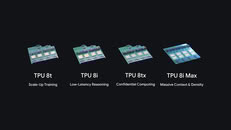
Today at Google Cloud Next, we are introducing the eighth generation of Google's custom Tensor Processor Unit (TPU), coming soon with two distinct, purpose-built architectures for training and inference: TPU 8t and TPU 8i. These two chips are designed to power our custom-built supercomputers, to drive everything from cutting-edge model training and agent development, to massive inference workloads. TPUs have been powering leading foundation models, including Gemini, for years. These 8th generation TPUs together will deliver scale, efficiency and capabilities across training, serving and agentic workloads.

In this age of AI agents, models must reason through problems, execute multistep workflows and learn from their own actions in continuous loops. This places a new set of demands on infrastructure, and TPU 8t and TPU 8i were designed in partnership with Google DeepMind to take on the most demanding AI workloads and adapt to evolving model architectures at scale.

ASUS Announces UGen300 USB AI Accelerator

ASUS today announced the UGen300 USB AI Accelerator—the first AI USB device from ASUS, bringing inference performance directly to any device. An M.2 version is also available. This slim AI accelerator measures 105 x 50 x 18 mm and features the Hailo-10H AI processor that delivers 40 AI TOPS of dedicated power to support large language models such as LLMs, VLMs, and more. UGen300 includes 8 GB LPDDR4 dedicated memory and connects to other devices via a USB-C interface, consuming just 2.5 watts of power under typical workloads. The convenient plug-and-play design ensures cross-platform compatibility with Windows, Linux, and Android. UGen300 also supports major AI frameworks like TensorFlow, PyTorch, and ONNX—right out of the box.

"By integrating the Hailo-10H into a ubiquitous USB device, ASUS brings the full power of AI and generative AI to everyone" said Max Glover, Chief Revenue Officer of Hailo. "We're excited to see how our developer community will use this plug-and-play accelerator to push the boundaries of on-device AI. This is exactly how Hailo envisions the future of AI: accessible, affordable, and designed for anyone to build with."

MSI EdgeXpert Achieves NVIDIA-Certified Systems Status, Fully Supporting NVIDIA AI Enterprise

MSI announced that its next-generation AI platform, MSI EdgeXpert, has officially become an NVIDIA-Certified System. This validation ensures the hardware has undergone rigorous testing by NVIDIA engineers for performance, functionality, scalability, and security. Most importantly, it brings MSI EdgeXpert into the supported ecosystem of NVIDIA AI Enterprise (NVAIE), strengthening its capability to support enterprise-grade generative AI, AI agents, and high-performance edge AI workloads.

Establishing Hardware Trust Standards through Rigorous Testing
NVIDIA-Certified Systems establish a broad hardware trust standard. MSI EdgeXpert has passed extensive evaluations, including deep learning training with TensorFlow and PyTorch, high-throughput inference with TensorRT and Triton, and system-level security testing. While the certification covers a wide range of hardware reliability, its support for NVIDIA AI Enterprise is one of the most significant values, helping organizations move efficiently from proof of concept to real-world deployment.

NVIDIA Unveils Local AI Video Generation Updates at GDC 2026

At GDC, NVIDIA announced a suite of tools designed to streamline local AI video generation for concept development and storyboarding. These updates specifically target rendering workflows running on NVIDIA RTX GPUs and the DGX Spark AI development desktop. ComfyUI, a popular generative AI tool known for its highly customizable but complex interface, is receiving a major accessibility update. To make the software more approachable for artists unfamiliar with visual programming concepts like node graphs, ComfyUI introduced App View. This new, simple interface allows you to generate content simply by entering a text prompt and adjusting basic parameters. The traditional, complex workspace remains fully available as Node View, and you can toggle seamlessly between the two modes depending on your need for granular control.

Generating high-quality 4K Ultra HD video locally entails balancing three constraints, generation speed, video memory limits, and overall control. Artists typically generate smaller, faster previews before upscaling them, a process that traditionally took minutes for just a 10-second clip. To accelerate this pipeline, NVIDIA released RTX Video Super Resolution as a node from directly within ComfyUI, enabling rapid upscaling to 4K. AI developers can access this upscaling technology through a free Python package available via the PyPI repository. The tool takes advantage of Tensor cores on GeForce RTX GPUs.

NVIDIA Announces DLSS 4.5 with Increased Image Quality, 6x FrameGen, and 240 FPS Mode

NVIDIA today announced the new DLSS 4.5 technology at its 2026 International CES media event, to improve gaming performance and image quality, bringing higher resolutions and refresh rates within reach of PC gamers. DLSS 4.5 is a major update over DLSS 4 that debuted in 2024 with the GeForce RTX 50-series "Blackwell" graphics cards. It is designed to bring games with performance-intensive path tracing effects to a broader audience, with the fastest RTX 50-series GPU models being able to play path-traced games at 4K Ultra HD with 240 Hz.

At the heart of the DLSS 4.5 update are two key announcements—2nd Generation Super Resolution Transformer, and Dynamic Multi Frame Generation. One of the defining features of DLSS 4 is its high-quality upscaler, which replaced convolutional neural network (CNN) based AI models with a newer Transformer-based model, resulting in a significant improvement in image quality. Now, at CES, NVIDIA announced that they have updated their algorithm with an even newer Transformer-based model that has been trained on a much larger dataset. This 2nd Gen Transformer was developed using five times the compute power that went into the first-gen DLSS 4 Transformer upscaler, and leverages the FP8 data format that's supported by the Tensor cores of GeForce RTX 40-series "Ada" and 50-series "Blackwell" GPUs. DLSS 4.5 is still supported on older 30-series "Ampere" and 20-series "Turing" GPUs, however these generations lack FP8 acceleration, so the performance uplift over native wouldn't be as significant as with newer GPUs.

Origin PC Introduces the S-Class Edge AI Developer Kit

ORIGIN PC today revealed the S-Class Edge AI, a compact and turnkey developer kit built around the NVIDIA Jetson Orin NX 16 GB Super. The platform is designed for developers, researchers, and integrators who need a ready-to-use environment for robotics, computer vision, and edge AI workloads. It delivers up to 157 TOPS of performance and allows users to move from unboxing to real-time inference within minutes. S-Class Edge AI represents a new step in ORIGIN PC's expansion into advanced edge computing solutions.

A Compact and Developer Focused Form Factor
The S-Class Edge AI features a small enclosure that fits easily on a desk, lab bench, or classroom workstation. Front and rear ports include USB 3.2, USB Type C OTG, HDMI 2.0, audio I/O, DC power, and dual Ethernet connectivity. This layout supports peripherals, displays, and robotics equipment and allows developers to begin testing immediately. The thermally optimized chassis supports stable operation during extended workloads. The compact footprint reinforces the platform's role as a lab-friendly and classroom-friendly solution that provides workstation level capability without taking up significant space.

Canonical Prepares Native AMD ROCm Support for Ubuntu

Canonical is pleased to announce an expanded collaboration with AMD to package and maintain AMD ROCm software directly in Ubuntu. AMD ROCm is an open software ecosystem to enable hardware-accelerated AI/ML and HPC workloads on AMD Instinct and AMD Radeon GPUs, simplifying the deployment of AI infrastructure with long term support from Canonical.

Canonical has formed a dedicated team of engineers to package the AMD ROCm software libraries to streamline installation, support, and long-term maintenance on Ubuntu. Canonical will also submit these packages for consideration on Debian.

NVIDIA Wins Every MLPerf Training v5.1 Benchmark

In the age of AI reasoning, training smarter, more capable models is critical to scaling intelligence. Delivering the massive performance to meet this new age requires breakthroughs across GPUs, CPUs, NICs, scale-up and scale-out networking, system architectures, and mountains of software and algorithms. In MLPerf Training v5.1—the latest round in a long-running series of industry-standard tests of AI training performance—NVIDIA swept all seven tests, delivering the fastest time to train across large language models (LLMs), image generation, recommender systems, computer vision and graph neural networks.

NVIDIA was also the only platform to submit results on every test, underscoring the rich programmability of NVIDIA GPUs, and the maturity and versatility of its CUDA software stack.

Google Cloud G4 VMs With NVIDIA RTX PRO 6000 Blackwell GPU Now Generally Available

NVIDIA and Google Cloud are expanding access to accelerated computing to transform the full spectrum of enterprise workloads, from visual computing to agentic and physical AI. Google Cloud today announced the general availability of G4 VMs, powered by NVIDIA RTX PRO 6000 Blackwell Server Edition GPUs. Plus, NVIDIA Omniverse and NVIDIA Isaac Sim are now available as virtual machine images (VMIs) on the Google Cloud Marketplace to unlock physical AI-driven applications for key industries like manufacturing, automotive and logistics. This powerful combination creates a versatile, multi-workload platform for enterprises to accelerate their most demanding challenges on Google Cloud.

NVIDIA RTX PRO 6000 Blackwell GPUs excel at high-performance AI inference for multimodal, generative and agentic AI deployments, while also powering complex visual and simulation workloads ranging from computer-aided engineering and content creation to robotics simulation. Customers like WPP are using G4 VMs with NVIDIA Omniverse to instantly generate photorealistic 3D advertising environments at global scale, while Altair is using the platform within Altair One to accelerate demanding simulation and fluid dynamics workloads.

Acer Unveils the Veriton GN100 AI Mini Workstation Built on the NVIDIA GB10 Superchip

Acer today introduced the Veriton GN100 AI Mini Workstation, a compact yet powerful computer designed to run large AI models locally, minimizing dependence on cloud services and helping reduce associated costs.

The device is built on the NVIDIA GB10 Grace Blackwell Superchip, delivering up to 1 PFLOPS of FP4 AI performance. This powerhouse combines next-generation CUDA cores, fifth-gen Tensor Cores, and 20 Arm-based CPU cores, backed by 128 GB of unified system memory and 4 TB of NVMe M.2 SSD storage. This robust configuration enables server-grade performance in a mini-PC form factor.

Google Tensor G5 Benchmark Leaks With Impressive Performance Gains — Still Trails Flagship Snapdragon SoCs

The Google Pixel 10 has been officially announced, with the Google Tensor G5 SoC and 16 GB of RAM running the show, however independent performance benchmarks have yet to prove the capabilities of said Tensor G5. A recently leaked Geekbench 6 CPU comparison, however, puts forward some impressive numbers from the new SoC. According to the leaked benchmark results, posted to r/pixel_phones on Reddit, the Google Tensor G5 in the Google Pixel 10 XL scored 2,296 in single-core tests, with the multicore score coming in at 6,203 points.

By comparison, the Geekbench 6 charts list the chart-topping Samsung Galaxy S25 Ultra and its Qualcomm Snapdragon 8 Elite as having a single-core score of 2,867 points and a multicore score of 9,491 points. Meanwhile, the Google Pixel 9 Pro scored just 1,876 points in single-core benchmarks and 4,337 points in multicore. This puts the Tensor G5 a solid 22% ahead of its predecessor, but still 20% behind the Samsung flagship in single-core performance. The gap grows in multicore benchmarks, however, where the Tensor G5 is still around 35% slower than the Snapdragon 8 Elite but a decent 43% faster than the G4 that preceded it. Google Tensor SoCs have never been known for their raw performance, but it's clear that Google has put some effort into making its Tensor SoCs more powerful. We will likely see more testing reveal the real-world performance improvements of the Tensor G5 when full reviews are released later this month around the phone's actual retail availability date.

NVIDIA's Dominance Challenged as Largest AI Lab Adopts Google TPUs

NVIDIA's AI hardware dominance is challenged as the world's leading AI lab, OpenAI, taps into Google TPU hardware, showing significant efforts to move away from single-vendor solutions. In June 2025, OpenAI began leasing Google Cloud's Tensor Processing Units to handle ChatGPT's increasing inference workload. This is the first time OpenAI has relied on non-NVIDIA chips in large-scale production. Until recently, NVIDIA GPUs powered both model training and inference for OpenAI's products. Training large language models on those cards remains costly, but it was a periodic process. Inference, by contrast, runs continuously and carries its own substantial expense. ChatGPT now serves more than 100 million daily active users, including 25 million paid subscribers. Inference operations account for nearly half of OpenAI's estimated $40 billion annual compute budget. Google's TPUs, like v6e "Trillium" provide a more cost-effective solution for steady-state inference, as they are designed specifically for high throughput and low latency.

Beyond cost savings, this decision reflects OpenAI's desire to reduce reliance on any single vendor. Microsoft Azure has been its primary cloud provider since early investments and collaborations. However, GPU supply shortages and price fluctuations exposed a weakness in relying too heavily on a single source. By adding Google Cloud to its infrastructure mix, OpenAI gains greater flexibility, avoids vendor lock-in, and can scale more smoothly during usage peaks. For Google, winning OpenAI as a TPU customer offers strong validation for its in-house chip development. TPUs were once reserved almost exclusively for internal projects such as powering the Gemini model. Now, they are attracting leading organizations like Apple and Anthropic. Note that, beyond v6e inference, Google also designs TPUs for training (yet-to-be-announced v6p), which means companies can scale their entire training runs on Google's infrastructure on demand.

NVIDIA TensorRT Boosts Stable Diffusion 3.5 Performance on NVIDIA GeForce RTX and RTX PRO GPUs

Generative AI has reshaped how people create, imagine and interact with digital content. As AI models continue to grow in capability and complexity, they require more VRAM, or video random access memory. The base Stable Diffusion 3.5 Large model, for example, uses over 18 GB of VRAM - limiting the number of systems that can run it well. By applying quantization to the model, noncritical layers can be removed or run with lower precision. NVIDIA GeForce RTX 40 Series and the Ada Lovelace generation of NVIDIA RTX PRO GPUs support FP8 quantization to help run these quantized models, and the latest-generation NVIDIA Blackwell GPUs also add support for FP4.

NVIDIA collaborated with Stability AI to quantize its latest model, Stable Diffusion (SD) 3.5 Large, to FP8 - reducing VRAM consumption by 40%. Further optimizations to SD3.5 Large and Medium with the NVIDIA TensorRT software development kit (SDK) double performance. In addition, TensorRT has been reimagined for RTX AI PCs, combining its industry-leading performance with just-in-time (JIT), on-device engine building and an 8x smaller package size for seamless AI deployment to more than 100 million RTX AI PCs. TensorRT for RTX is now available as a standalone SDK for developers.

NVIDIA Blackwell Delivers Breakthrough Performance in Latest MLPerf Training Results

NVIDIA is working with companies worldwide to build out AI factories—speeding the training and deployment of next-generation AI applications that use the latest advancements in training and inference. The NVIDIA Blackwell architecture is built to meet the heightened performance requirements of these new applications. In the latest round of MLPerf Training—the 12th since the benchmark's introduction in 2018—the NVIDIA AI platform delivered the highest performance at scale on every benchmark and powered every result submitted on the benchmark's toughest large language model (LLM)-focused test: Llama 3.1 405B pretraining.

The NVIDIA platform was the only one that submitted results on every MLPerf Training v5.0 benchmark—underscoring its exceptional performance and versatility across a wide array of AI workloads, spanning LLMs, recommendation systems, multimodal LLMs, object detection and graph neural networks. The at-scale submissions used two AI supercomputers powered by the NVIDIA Blackwell platform: Tyche, built using NVIDIA GB200 NVL72 rack-scale systems, and Nyx, based on NVIDIA DGX B200 systems. In addition, NVIDIA collaborated with CoreWeave and IBM to submit GB200 NVL72 results using a total of 2,496 Blackwell GPUs and 1,248 NVIDIA Grace CPUs.

Doudna Supercomputer Will be Powered by NVIDIA's Next-gen Vera Rubin Platform

Ready for a front-row seat to the next scientific revolution? That's the idea behind Doudna—a groundbreaking supercomputer announced today at Lawrence Berkeley National Laboratory in Berkeley, California. The system represents a major national investment in advancing U.S. high-performance computing (HPC) leadership, ensuring U.S. researchers have access to cutting-edge tools to address global challenges. "It will advance scientific discovery from chemistry to physics to biology and all powered by—unleashing this power—of artificial intelligence," U.S. Energy Secretary Chris Wright (pictured above) said at today's event.

Also known as NERSC-10, Doudna is named for Nobel laureate and CRISPR pioneer Jennifer Doudna. The next-generation system announced today is designed not just for speed but for impact. Powered by Dell Technologies infrastructure with the NVIDIA Vera Rubin architecture, and set to launch in 2026, Doudna is tailored for real-time discovery across the U.S. Department of Energy's most urgent scientific missions. It's poised to catapult American researchers to the forefront of critical scientific breakthroughs, fostering innovation and securing the nation's competitive edge in key technological fields.
Return to Keyword Browsing
Nov 17th, 2026 18:23 CST change timezone

New Forum Posts

Popular Reviews

TPU on YouTube

Controversial News Posts