Tuesday, April 28th 2026

Microsoft's Shader Model 6.10 Opens Direct Access to GPU AI Engines
Microsoft has released the Shader Model 6.10 preview, included in the new AgilitySDK 1.720-preview build. This preview introduces a compelling feature related to GPU-dedicated AI engine control. According to the developer blog, Shader Model 6.10 features a new, streamlined algebra matrix API that reveals all known matrix operations for popular gaming GPUs from AMD, Intel, and NVIDIA. This means that modern GPUs have dedicated hardware for processing AI workloads, typically involving matrix multiplication and accumulation. Modern machine learning-based upscaling relies on this hardware, whether it's Tensor cores from NVIDIA, XMX cores from Intel, or AI accelerators in AMD GPUs, each with its own communication method. To unify access, Microsoft is introducing a new API from the class linalg::Matrix, which will expose all matrix operations to the shader language. This allows neural rendering operations to be executed across multiple GPUs with a single programming effort.
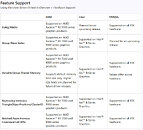
As the developer behind the DirectX 12 API, Microsoft is observing a significant increase in graphics features utilizing neural network-based rendering techniques to enhance user graphics. This will require more matrix units in modern gaming GPUs. To provide a unified layer of abstraction for programming and executing neural rendering operations, Microsoft hopes that Shader Model 6.10 will become the standard for every GPU maker. Interestingly, this feature is supported across all NVIDIA RTX hardware, as it includes Tensor cores. Intel support is planned for an upcoming release, with B-series GPUs expected to be compatible. Only AMD's RDNA 4-based Radeon RX 9000 series GPUs support this feature, with no support planned for older models like the RX 7000 series and below.
 In addition to this major API advancement, Microsoft is also rolling out several other DirectX 12 updates in Agility SDK 1.720-preview and DXC 1.10.2605.2. These updates include new group wave indexing, expanded shared memory limits from 32 KB (or 28 KB for mesh shaders) to whatever the underlying hardware supports, allowing shaders to utilize the entire GPU capacity. Additionally, some ray tracing intrinsics and batched asynchronous command list APIs have been updated. The update is intended to give developers more flexibility, better performance, and broader hardware support across modern GPUs.
Source:
Microsoft
As the developer behind the DirectX 12 API, Microsoft is observing a significant increase in graphics features utilizing neural network-based rendering techniques to enhance user graphics. This will require more matrix units in modern gaming GPUs. To provide a unified layer of abstraction for programming and executing neural rendering operations, Microsoft hopes that Shader Model 6.10 will become the standard for every GPU maker. Interestingly, this feature is supported across all NVIDIA RTX hardware, as it includes Tensor cores. Intel support is planned for an upcoming release, with B-series GPUs expected to be compatible. Only AMD's RDNA 4-based Radeon RX 9000 series GPUs support this feature, with no support planned for older models like the RX 7000 series and below.


23 Comments on Microsoft's Shader Model 6.10 Opens Direct Access to GPU AI Engines
You guys happy?
The biggest difference is the ability to perform the sparse compression, medium.com/@hxu296/exploring-spgemm-and-nvidias-leap-in-deep-neural-network-efficiency-d367adc68791 on paper the 7900XTX should murder a 4080 at FP16 matrix math and equal a 5090, but when you take into account that the zeros in multiple tables don't need accessed for every calculation and the multiple multiple speedup this produces in the real world.... well here we are. the 9070XT can perform the same compression and thus its sparse FP16 number is 389TFlop, 3X greater real world performance, and thus the RT/PT performance close to a 4080, minus the use of cheaper memory that causes the 9070 to lose the latency game.
My point is that the FP16 capability is at least equivalent to Turing and Ampere, both of which have AI upscaling and support for this new DirectX feature that exposes Tensor/XMX/WMMA units to developers. It's inexcusable for AMD to not release an ML FSR version for RDNA 3 and prevent developers from making their own use of it through this DirectX freature.
Without the ability to use the "Sparse" function you lose 3-4X the performance, and with the relatively low WMMA performance of RDNA3 its ability to upscale frame gen is limited to essentially slower than 3000 series cards. I didn't buy mine for RT/PT and AI bullshit. I bought it to run the games I haven't had time to play for the past few years.
I'll insta buy it
For years we worked at matrix math with brute force cause the hardware was useful in other ways. Simple hardware "tensors" are just compression and test matrices.
However, training an upscaling or FG algorithm is extremely expensive. Nvidia says they have a supercomputer with 1000s of GPUs running 24/7 over 7 years that's only been improving DLSS. AMD and Intel no doubt have similar setups. That's far beyond the capabilities of even AAA game developers, and probably beyond game engine developers like Epic or Valve as well.
So there would either need to be collaboration between Nvidia, AMD, and Intel (probably coordinated by Microsoft) to combine their efforts and train a single algorithm, or there would need to be a method for game developers to create a model that's specifically tailored for their game and is computationally "cheap" enough to train on their own.
devblogs.microsoft.com/directx/shader-model-6-9-retail-and-more/
And even older than that the 7000 series were already excluded from cooperative vectors and the likes:
devblogs.microsoft.com/directx/cooperative-vector/
Even though they did get WaveWMMA way back in 2023:
devblogs.microsoft.com/directx/agility-sdk-1-711/That's a huge endeavor if you want to make a generic model that can be used across many different games, resolutions and whatnot. However...Such hardware agnostic implementation should make it feasible for individual games to build their own upscalers in a cheap-ish manner.
As an aside, related to:Even if AMD or Nvidia train their own models, if the weights were to ever get released then it should be possible to run it in hardware from a different vendor, specially if the initial model targeted a generic runtime such as DX.
Nvidia will never open anything they think is a competitive advantage, and AMD is utterly incompetent in software.
This is an API that gives games manual control over the AI instructions in your GPU. Previously only DLSS/RayReconstruction and nVidia drivers could use the AI engine in the context of a game. Now game developers can also use the AI cores for the game. Expect to see this included in games 7 years from now.
When we reach that point, the best option for Nvidia would be to pivot from locking the model to their own GPUs to licensing it for entire games. It's a win-win for all parties. Developers get to decide which model creates the best image for their game, and AMD/Intel/Nvidia (or maybe even other companies like Google) would compete on making the training process quick and easy. Only using one model also makes it significantly easier to bugfix and support on both sides. Gamers get the best model for the game, regardless of their GPU brand.