Wednesday, August 20th 2025

Google Tensor G5 Benchmark Leaks With Impressive Performance Gains — Still Trails Flagship Snapdragon SoCs
The Google Pixel 10 has been officially announced, with the Google Tensor G5 SoC and 16 GB of RAM running the show, however independent performance benchmarks have yet to prove the capabilities of said Tensor G5. A recently leaked Geekbench 6 CPU comparison, however, puts forward some impressive numbers from the new SoC. According to the leaked benchmark results, posted to r/pixel_phones on Reddit, the Google Tensor G5 in the Google Pixel 10 XL scored 2,296 in single-core tests, with the multicore score coming in at 6,203 points.
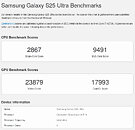
By comparison, the Geekbench 6 charts list the chart-topping Samsung Galaxy S25 Ultra and its Qualcomm Snapdragon 8 Elite as having a single-core score of 2,867 points and a multicore score of 9,491 points. Meanwhile, the Google Pixel 9 Pro scored just 1,876 points in single-core benchmarks and 4,337 points in multicore. This puts the Tensor G5 a solid 22% ahead of its predecessor, but still 20% behind the Samsung flagship in single-core performance. The gap grows in multicore benchmarks, however, where the Tensor G5 is still around 35% slower than the Snapdragon 8 Elite but a decent 43% faster than the G4 that preceded it. Google Tensor SoCs have never been known for their raw performance, but it's clear that Google has put some effort into making its Tensor SoCs more powerful. We will likely see more testing reveal the real-world performance improvements of the Tensor G5 when full reviews are released later this month around the phone's actual retail availability date.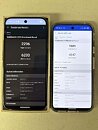

Source:
r/pixel_phones on Reddit
By comparison, the Geekbench 6 charts list the chart-topping Samsung Galaxy S25 Ultra and its Qualcomm Snapdragon 8 Elite as having a single-core score of 2,867 points and a multicore score of 9,491 points. Meanwhile, the Google Pixel 9 Pro scored just 1,876 points in single-core benchmarks and 4,337 points in multicore. This puts the Tensor G5 a solid 22% ahead of its predecessor, but still 20% behind the Samsung flagship in single-core performance. The gap grows in multicore benchmarks, however, where the Tensor G5 is still around 35% slower than the Snapdragon 8 Elite but a decent 43% faster than the G4 that preceded it. Google Tensor SoCs have never been known for their raw performance, but it's clear that Google has put some effort into making its Tensor SoCs more powerful. We will likely see more testing reveal the real-world performance improvements of the Tensor G5 when full reviews are released later this month around the phone's actual retail availability date.


12 Comments on Google Tensor G5 Benchmark Leaks With Impressive Performance Gains — Still Trails Flagship Snapdragon SoCs
The truth is, this stupid nonsense of SOC performance in phones is only important to the benchmarks junkies that have nothing else to add to the conversation.
But there are people who use their phones to run social media production companies and edit 4kfootage on the things or just use them as their main gaming experience.
Also the way websites are evolving you need today’s flagship mobile Soc to run a normal website without add and tracking blockers in a couple of years.
Honestly the ability to easily run LineageOS has been better than any chipset metric.
Samsung wasn't the problem.
This should have an Impact on multithreaded benchmarks.
Potty they didntpick a Qualcomm modem this time around
As a low user a lot of the time, being able to unplug my phone on a morning and not need to plug it back in until the following night (without battery anxiety) is what I am after, I do stream white noise while I sleep so that makes a solid dent in a 2 day battery life.
Compared to their batteries, big three batteries, durability and charging speeds looks decade old.
...but even being generous and assuming you've never come across this issue (yet), I'll bet $100 that you've come across a time where you wished your phone had an actual decent modem in it that didn't sink the battery in 4 hours (unless you only sit on 4G and/or WiFi, like most Pixel users). Or that it had an actual decent battery life in low signal areas and charging speeds on par with other phones in the 21st century. I rarely ever upgrade (only when my screen cracks and it's no longer worth it to repair the device) -- but coming from an ancient OnePlus 7 Pro to a Pixel 7 Pro 5 years later, literally the first thing I noticed was my cellular signal (even on 4G) being cut almost in half. And my old OnePlus wasn't even the 5G variant. Adding insult to injury, I had the volume buttons fall out of the phone in less than a week -- that only incentivised me to return it to the store even faster.
I can tolerate a less-than-ideal performing SOC if the Tensor was efficient -- but it's literally at least half as efficient as any average bottom of the barrel Snapdragon, nevermind the iPhone. But I could tolerate both the inefficiency and the poor performance if at least the battery capacity was above the rest of the market -- instead, it has below average battery, the slowest charging speeds and now suffers from the same battery explosion issues as the Galaxy Note 7...so it fails in literally all 3 categories of the basic functionality of a smartphone...and Google has the nerve to charge 2-3x the price of much better phones for this experience? No thanks.
I could tolerate that during the Pixel 6 era when they were literally almost giving the phones away (they threw in free Bose headphones and did all sorts of crazy promos here on the 6 series), but I'm not paying anything near iPhone/flagship Android prices for that sort of budget experience -- and no amount of new timed-exclusive to Google AI gimmicks (that would be used and forgotten about in 10 minutes) will fix that.