News Posts matching #ssd

Return to Keyword Browsing

Goodram Introduces Value Series PX500 NVMe SSDs Available up to 1 TB

It's been a while since we've had a post on a Goodram product at TechPowerUp, with the company's releases mainly falling off the radar. However, the company's new PX500 series of NVMe SSDs are being positioned as value options in the segment, whilst being quoted with some respectable transfer speeds - provided you don't acquire the lowest capacity version. Available in 256 GB, 512 GB and 1 TB capacities, the Goodram PX500 are DRAM-less SSDs driven by Silicon Motion's SMI 2263XT controller.

Quoted numbers for the 256 GB version stand at 1,850 MB/s sequential read, 950 MB/s sequential write, 102,000 IOPS 4K random read and 230,000 IOPS 4K random write. The 512 GB version posts 2,000 MB/s, 1,600 MB/s, 173,000 IOPS and 140,000 IOPS in the same performance metrics, while the 1 TB version maxes out at 2,050 MB/s, 1650 MB/s, 240,000 IOPS and 280,000 IOPS, respectively. The Goodram PX500 series of NVMe SSDs are backed by a three-year warranty, and prices have not yet been announced.

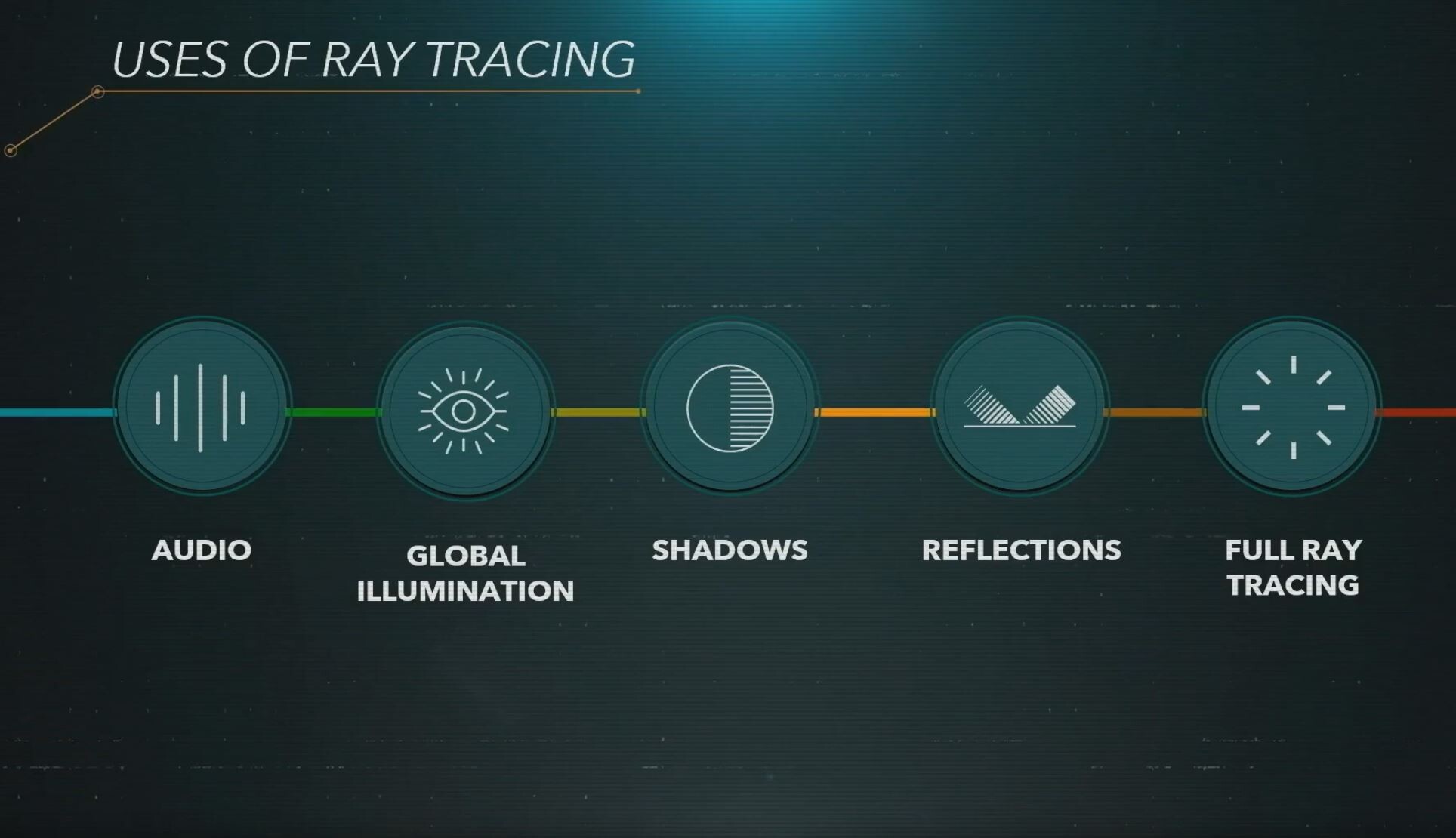
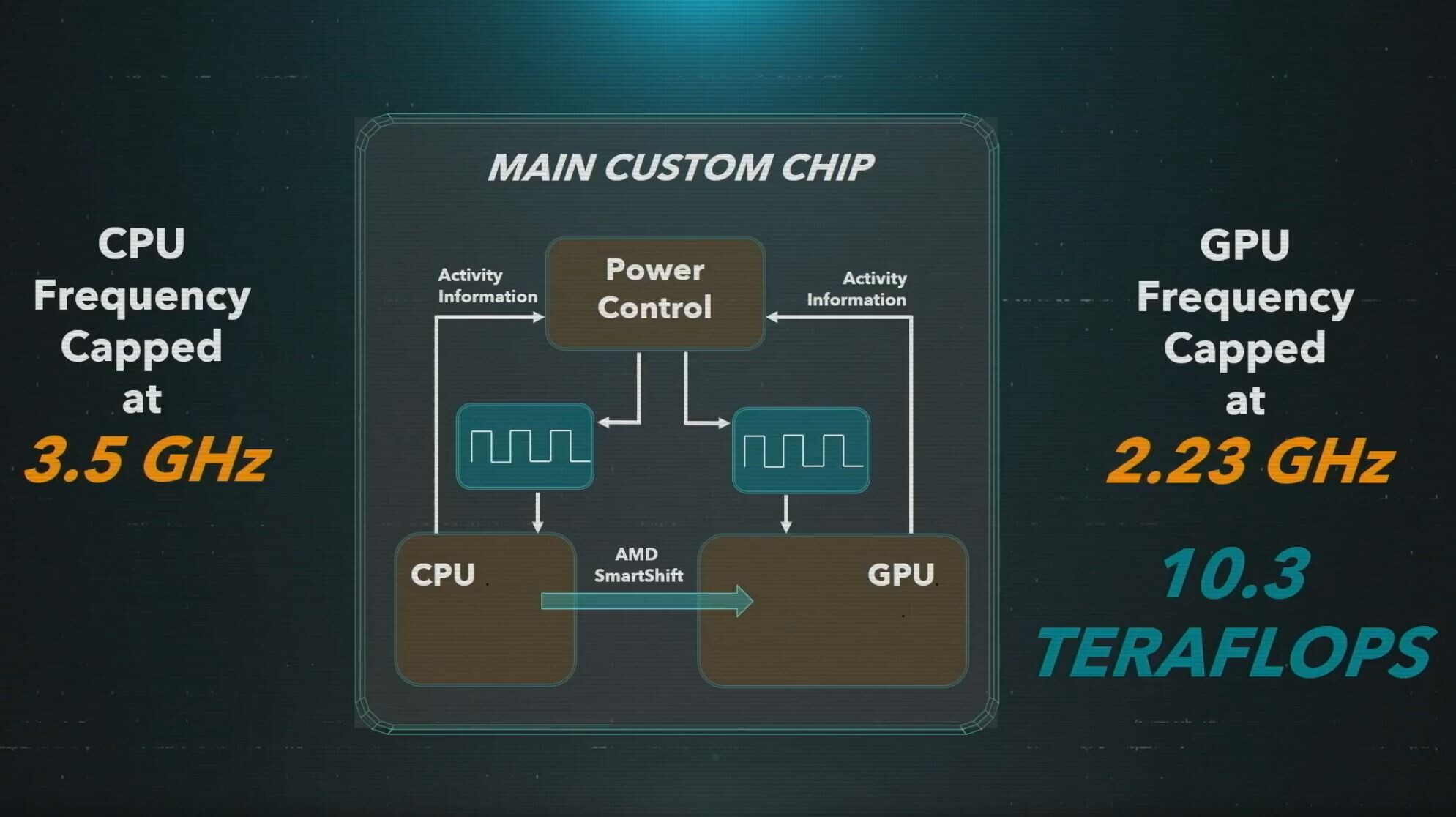
Sony Reveals PS5 Hardware: RDNA2 Raytracing, 16 GB GDDR6, 6 GB/s SSD, 2304 GPU Cores

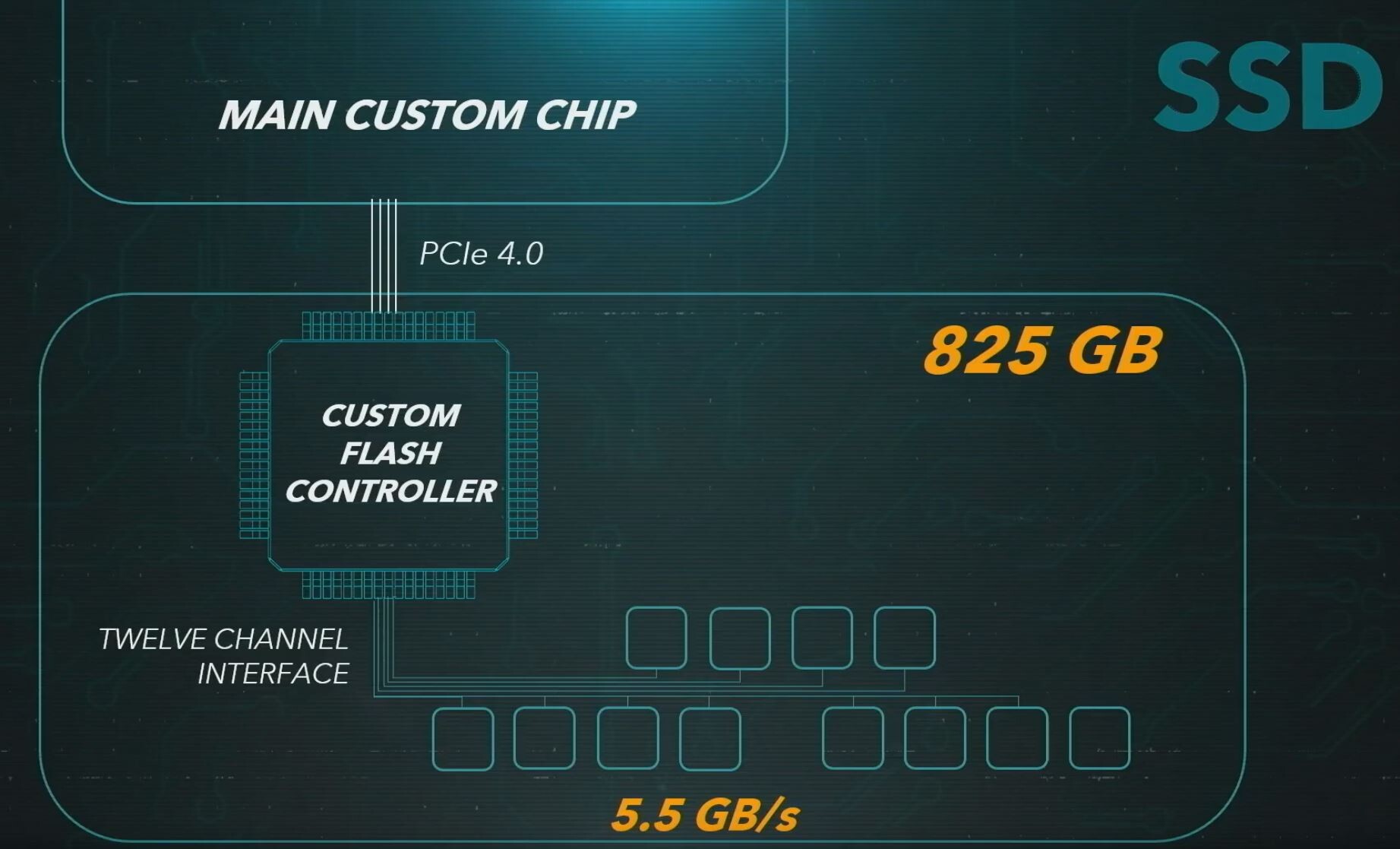
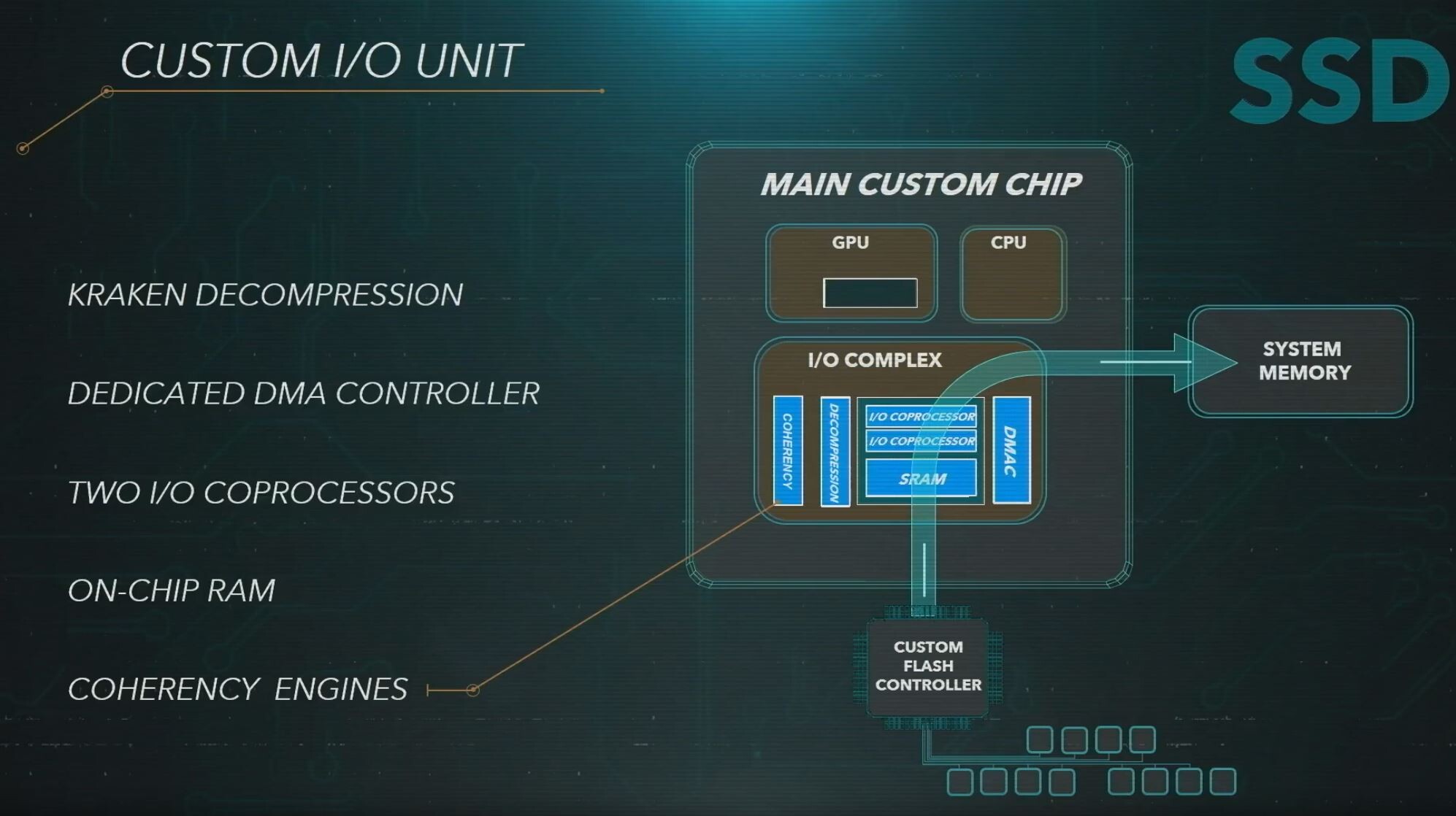
Sony in a YouTube stream keynote by PlayStation 5 lead system architect Mark Cerny, detailed the upcoming entertainment system's hardware. There are three key areas where the company has invested heavily in driving forward the platform by "balancing revolutionary and evolutionary" technologies. A key design focus with PlayStation 5 is storage. Cerny elaborated on how past generations of the PlayStation guided game developers' art direction as the low bandwidths and latencies of optical discs and HDDs posed crippling latencies arising out of mechanical seeks, resulting in infinitesimally lower data transfer rates than what the media is capable of in best case scenario (seeking a block of data from its outermost sectors). SSD was the #1 most requested hardware feature by game developers during the development of PS5, and Sony responded with something special.

Each PlayStation 5 ships with a PCI-Express 4.0 x4 SSD with a flash controller that has been designed in-house by Sony. The controller features 12 flash channels, and is capable of at least 5.5 GB/s transfer speeds. When you factor in the exponential gains in access time, Sony expects the SSD to provide a 100x boost in effective storage sub-system performance, resulting in practically no load times.

Seagate Announces IronWolf 510 M.2 NVMe SSD for NAS Applications

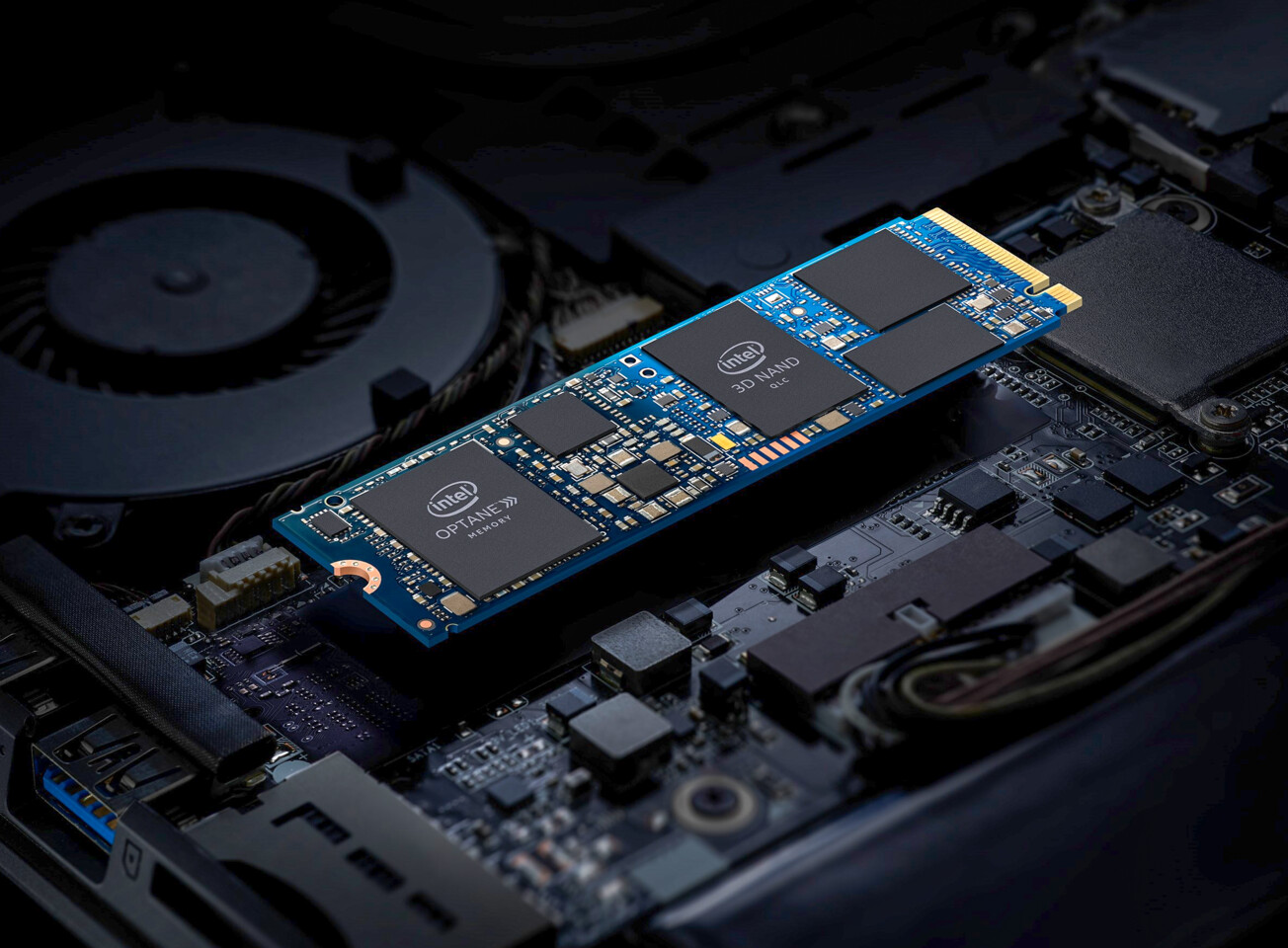
Seagate Technology plc, a world leader in data solutions, today announced the latest in high-performance solutions for multi-user NAS environments, adding to their award-winning IronWolf SSD product line. Seagate's IronWolf 510 is an M.2 NVMe SSD with caching speeds of up to 3 GB/s for NVMe-compatible systems and is ideal for creative pros and business NAS needing 24x7 multi-user storage that is cache enabled.

The IronWolf 510 SSD meets leading top NAS manufacturer requirements of one drive write per day (DWPD), allowing multi-user NAS environments to do more with their data with lasting performance. The IronWolf 510 SSD is reliable with 1.8 million hours mean time between failures (MTBF) in a PCIe form factor, two years of Rescue Data Recovery Services, and a five-year limited warranty. IronWolf Health Management helps analyze drive health and will soon be available on compatible NAS systems.
Seagate IronWolf 510 Seagate IronWolf 510 Seagate IronWolf 510

Kingston Releases DC1000M U.2 NVMe SSDs for Mixed-use in Data Centers

Kingston Digital, Inc., the Flash memory affiliate of Kingston Technology Company, Inc., a world leader in memory products and technology solutions, today announced the availability of DC1000M, a new U.2 data center NVMe PCIe SSD. DC1000M is designed to support a wide range of data-intensive enterprise workloads, including Cloud computing, web hosting, high-performance computing (HPC), virtual infrastructures, artificial intelligence and deep learning applications. DC1000M joins the recently released DC1000B NVMe boot drive, the VMware Ready DC500 series SATA SSDs and DC450R to form the most complete range of superior enterprise-class data center storage solutions in the market.

"Mission critical services and Cloud-based applications depend not only on lightning-fast IOPS and bandwidth, but also on the consistency and predictability of the data being serviced," said Keith Schimmenti, enterprise SSD business manager, Kingston. "DC1000M provides the stability and low latency for the evolving data center, while powering the workloads that require one drive write per day (1 DWPD) endurance."

SilentiumPC Unveils the Astrum AT6V TG Series Cases

SilentiumPC, the European manufacturer of CPU coolers and PC cases, presents the Astrum AT6V series, a new member of its case family aimed at gamers with high ambitions. The Astrum AR6V series stands out thanks to its eye-catching design, but also for its inner strengths. One of the series' particular strengths is the sophisticated Natissis two-chamber internal structure, which offers maximum compatibility and supports an exceptionally wide range of component choices.

The large mesh front combined with the four pre-installed 120 mm fans ensure excellent air circulation inside the case. The series consists of the basic model Astrum AT6V TG and the top-of-the-line model Astrum AT6V TG ARGB. In the latter, the tempered glass side panel comes with the novel edge lit addressable RGB lighting feature, and premium 120 mm fans with built-in ARGB LEDs. Thanks to the cutting-edge features and refinements, Astrum AR6V series is able to meet the high expectations and demands of ambitious gamers.

Driven by Strong Demand from Data Center Clients, 4Q19 NAND Flash Revenue Grows 8.5%, Says TrendForce

According to the DRAMeXchange research division of TrendForce, 4Q19 NAND flash bit shipment increased by nearly 10% QoQ thanks to demand growth from data center clients. On the supply side, contract prices made a successful rebound due to shortages caused by the power outage at Kioxia's Yokkaichi production base in June. In sum, 4Q19 NAND flash revenue reached $12.5 billion, an 8.5% increase QoQ.

The stronger-than-expected 4Q19 performance from the demand side helped improve supplier inventory back to normal levels. In response, NAND suppliers were able to reduce their allocations to the wafer market and instead focus on shipping products with comparatively higher margins.

Patriot Viper Gaming Launches PXD m.2 PCIe Type-C External SSD at PAX East 2020

VIPER GAMING by PATRIOT has announced that their team will be featured at PAX EAST 2020, which is part of a national series of festivals centered around the gaming culture. The brand-new Patriot PXD m.2 PCIe Type-C External SSD, the next generation of portable storage solutions, will be showcased and tested on the PlayStation 4 with Marvel's Spider-Man video game. This PCIe m.2 based SSD over USB 3.2 Type-C connectivity brings superb speed and stability utilizing the Phison E13 PCIe controller, capacities from 512 GB to 2 TB.

"We can't think of a better way to be immersed with the gaming community than to be a part of PAX EAST, and debuting PXD with its first public showcase is a great way to let gamers know that they have an exciting alternative coming in April 2020," said Roger Shinmoto, Vice President at VIPER GAMING by PATRIOT. At PAX EAST, gamers will be able to experience the PXD m.2 PCIe Type-C External SSD on the PlayStation 4 with Marvel's Spider-Man video game as well as the award-winning V765 gaming keyboard, V570 BLACKOUT RGB gaming mouse, V380 gaming headset and more gaming peripherals at the booth.

Lexar Presents the Professional SL100 Pro Portable SSD

Lexar, a leading global brand of flash memory solutions, is pleased to announce the Lexar Professional SL100 Pro Portable SSD is currently available at major US retailers. There is no doubt that users need larger storage devices for transferring and storing all types of data from audio, photos, and videos to office files and programs. The Lexar SL100 Pro Portable Solid-State Drive (SSD) is crafted for on the go (laptop and tablet) users who need high transfer speed and excellent reliability. The pocket-size drive comes wrapped in a brushed aluminum housing and features a shock and vibration resistant design for ultra protection. The SL100 Pro provides users the blazing-fast data transfer speed of up to 950 MB/s read and 900 MB/s write.

Team Group Releases the T193 Stationery Flash Drive and the PD1000 Portable SSD

TEAMGROUP releases two storage products, the T193 Stationery Flash Drive and the PD1000 Portable Solid State Drive. The T193 Stationery Flash Drive combines multifunctional stationery design and applications. Functions such as a 180-degree protractor, magnifying glass and magnet are all on this flash drive and offering 128 GB of large capacity available to choose from. PD1000 Portable Solid State Drive uses USB 3.2 Gen2 ultra high-speed interface. The read/write speed is up to 1000/900 MB/s. It complies with the IP68 certification, which is dustproof, waterproof and 1600 kg pressure proof. These two unique and creative devices will change the data storage industry of 2020.

After the T183 Tool Flash Drive was highly praised by major design awards and global consumers, TEAMGROUP has once again released the all new multifunctional T193 Stationery Flash Drive. T193 is the first flash drive that combines stationery and complete protection design. It has functions like a 180-degree protractor, magnifying glass and magnet. In addition, it is made with top aluminium alloy material and it has dust-proof, waterproof and shockproof protection. T193 uses USB 3.2 Gen1 interface and offers large storage capacity from 32 GB to 128 GB. Its multiple functions and special look make it different than other ordinary USB flash drives.

KIOXIA First to Deliver Enterprise and Data Center PCIe 4.0 U.3 SSDs

The PCI Express 4.0 specification was designed to double the performance of server and storage systems, pushing speeds up to 16.0 gigatransfers per second (GT/s) or 2 gigabits per second (Gb/s) throughput per lane, and driving new performance levels for cloud and enterprise applications. Today, KIOXIA America, Inc. (formerly Toshiba Memory America, Inc.) announced that its lineup of CM6 and CD6 Series PCIe 4.0 NVM Express (NVMe ) enterprise and data center solid state drives (SSDs) are now shipping to customers.

An established leader in developing PCIe and NVMe SSDs, KIOXIA delivers never-before-seen performance. KIOXIA was the first company to publicly demonstrate PCIe 4.0 SSDs and is now the first to ship these next-generation drives. The CM6 and CD6 Series SSDs are compliant to the latest NVMe specification, and include key features such as in-band NVMe-MI, persistent event log, namespace granularity, and shared stream writes. Additionally, both drives are SFF-TA-1001 conformant (also known as U.3), which allows them to be used in tri-mode enabled backplanes, which can accept SAS, SATA or NVMe SSDs.

ADATA Launches SE760 External Solid State Drive

ADATA Technology, a leading manufacturer of high-performance DRAM modules, NAND Flash products, and mobile accessories today announces the launch of the ADATA SE760 external solid state drive (SSD). The SSD features a stylish and compact form factor for easy portability and implements the USB 3.2 Gen 2 interface for excellent read and write performance.

The ADATA SE760 sports a compact, streamlined design that's great for on the go. Its sleek metal exterior with a textured hairline-brushed surface looks and feels great. The SSD implements the USB 3.2 Gen 2 interface, allowing it to reach read/write speeds of up to 1,000 MB/s, which is over 12 times faster than an external hard drive. This blazing-fast performance will allow users to transfer a 10 GB 4K movie in approximately twenty seconds.

PATRIOT Launches the P300 M.2 PCIe Gen3 x4 NVMe SSD Series

PATRIOT, a global leader in performance memory, SSDs, gaming peripherals, and flash storage solutions, is pleased to announce the official launch of P300 Gen3 x4 NVMe m.2 SSD with capacities available from 256 GB up to 1 TB. The P300 is designed to deliver the most significant all-around performance for desktop and laptop users. Built with next-generation PCIe Gen3 x4 NVMe controller and best-in-class components, the P300 is posed to bring out rapid data transfer speeds and best in class reliability for the user. P300 represents a milestone for the next generation of PCIe Gen3 x4 NVMe SSD, which can offer 25% higher transfer speeds better IOPs over standard PCIe 3 x2 solutions and attribute to its low power consumption is the best solution for laptop battery endurance.

Intel Builds 10 million QLC 3D NAND Solid-State Drives

Last week, Intel's memory and storage group produced Intel QLC 3D NAND solid-state drive (SSD) number 10 million based upon the QLC NAND die built in Dalian, China. Production began in late 2018, and this milestone establishes QLC (quadruple-level cell memory) as a mainstream technology for high-capacity drives.

"Many have talked about QLC technology, but Intel has shipped it, and at scale," said Dave Lundell, director of Client SSD Strategic Planning and Product Marketing at Intel. "We have seen strong demand for the cost-effective capacity of our standalone QLC SSD (Intel SSD 660p) and the performance of our Intel Optane Technology + QLC solution (Intel Optane Memory H10)."

ICY DOCK Introduces ToughArmor MB720M2K-B Full Metal 4 Bay for M.2 NVMe SSDs

Introducing the ToughArmor MB720M2K-B, the world's first quad drive ruggedized M.2 NVMe SSD removable enclosure. M.2 NVMe SSDs no longer requires to be installed on to a motherboard or a riser card with a tiny screw and can now be installed and accessed from the front of your computer without any tools. The ToughArmor MB720M2K-B comes with patent-pending tool-less M.2 drive installation design which will alleviate the pain that many user experiences when installing M.2 drives and offer easy drive maintenance and system upgrading.

SK Hynix Inc. Reports Fiscal Year 2019 and Fourth Quarter Results

SK hynix Inc. today announced financial results for its fiscal year 2019 and fourth quarter ended on December 31, 2019. The consolidated revenue of fiscal year 2019 was KRW 26.99 trillion won while the operating profit amounted to 2.71 trillion won, and the net income 2.02 trillion won. Operating margin for the year was 10% and net margin was 7%.

In order to respond to changing market conditions, SK hynix proactively adjusted both investment and output level last year to maximize business management efficiency. However, amid increasing global economic uncertainty, the increase of inventory burden and conservative purchasing policies on the side of the customers led to a slowdown in demand as well as price falls. As a result, the Company's earnings decreased year-over-year (YoY).

Intel 400-series Chipset Motherboards to Lack PCIe Gen 4.0, Launch Pushed to Q2

Intel's upcoming 400-series desktop chipset will lack support for PCI-Express gen 4.0. The motherboards will stick to gen 3.0 for both the main x16 PEG slots wired to the LGA1200 socket, and general purpose PCIe lanes from the PCH, according to a Tom's Hardware report. It was earlier expected that 400-series chipset motherboards will come with preparation for PCIe gen 4.0, so even if the upcoming 10th gen "Comet Lake" desktop processors lacked gen 4.0 root-complexes, the boards would be fully ready for the new bus standard in 11th gen "Rocket Lake" desktop processors.

10th gen "Comet Lake" desktop processors are built on 14 nm process, and implement Intel's current-gen CPU core design Intel has been implementing since 6th gen "Skylake." It's only with 11th gen "Rocket Lake" that the mainstream desktop platform could see a new CPU core design, with the company reportedly back-porting "Willow Cove" CPU cores to the 14 nm process. "Rocket Lake" is also expected to feature a small Gen12 iGPU with 32 execution units, and a new-gen uncore component that implements PCIe gen 4.0. PCIe gen 4.0 doubles bandwidth over gen 3.0, and while only a handful GPUs support it, the standard is made popular by a new generation of M.2 NVMe SSDs that are able to utilize the added bandwidth to push sequential transfer rates beyond M.2 PCIe 3.0 x4 limitations.

Seagate Reveals Lyve Drive Mobile System

Seagate had plenty of things to show off at their CES booth, however, some things specially stuck out, like the Lyve Drive Mobile system. Developed to address the need for data movement between different endpoints, the Lyve Drive system comes in a few flavors. First in the line is a Lyve Drive Cards and Card Reader solution, which offers 1 TB CFexpress cards on the go, and a portable reader for them to read the data on the spot. Next up is the Lyve Drive Shutte which resembles an autonomous data storage and data transport solution that offers capacities of up to 16 TB of HDD or SSD storage.

Another Part of the Lyve Drive ecosystem is a Lyve Drive Mobile Array, which offers a sealed and ruggedized solution for carrying up to 6 of Seagate's 18 TB Exos HAMR (heat-assisted magnetic recording) hard drives for a total capacity of 108 TB. Next in the lineup is the Lyve Drive Modular Array - a 4-bay flexible solution that offers various configurations for business, so their deployment strategy of these devices varies. It uses Seagate's MACH.2 multi-actuator technology that transfers the data concurrently. Last but not least is a Lyve Drive Rackmount Reciver which is a 4U rackmount hub that allows for direct connection of Lyve Drive arrays into the data center, without a need to reconnect any of the data center networking specially for storage transfer.

Razer at CES 2020: Kishi Mobile Controller, Tomahawk Gaming Desktop, and an Epic Sim

Razer had an interesting outing at CES 2020. There were no new PC gaming peripherals, other than Star Wars "storm trooper" co-branded Kraken, Goliathus, and Atheris; but three interesting exhibits. To begin with, Razer Kishi is an adjustable, split game controller for smartphones. The controller's two ends (meant for your left and right hands, wrap around the two ends of your smartphone. You get two analog thumbsticks, a D-pad, four action buttons, and four triggers. The Razer Gamepad app lets you map the controller to your smartphone over Bluetooth, and provides custom button mapping. The company also showed off Arctech line of smartphone sleeves that are designed to dissipate heat.

Having made its mark as a leading gaming notebook vendor, Razer is turning its attention to pre-built gaming desktops, and we saw one of its first creations, the Tomahawk SFF. Much like Apple, Razer has a serious focus on form as much as function, and that's evident with the aluminium CNC precision-milled chassis with tempered glass side-panels, and a size that's fit both for desks and the living room.

Plextor at CES 2020: M9P Plus AIC SSD and its M.2 Twin

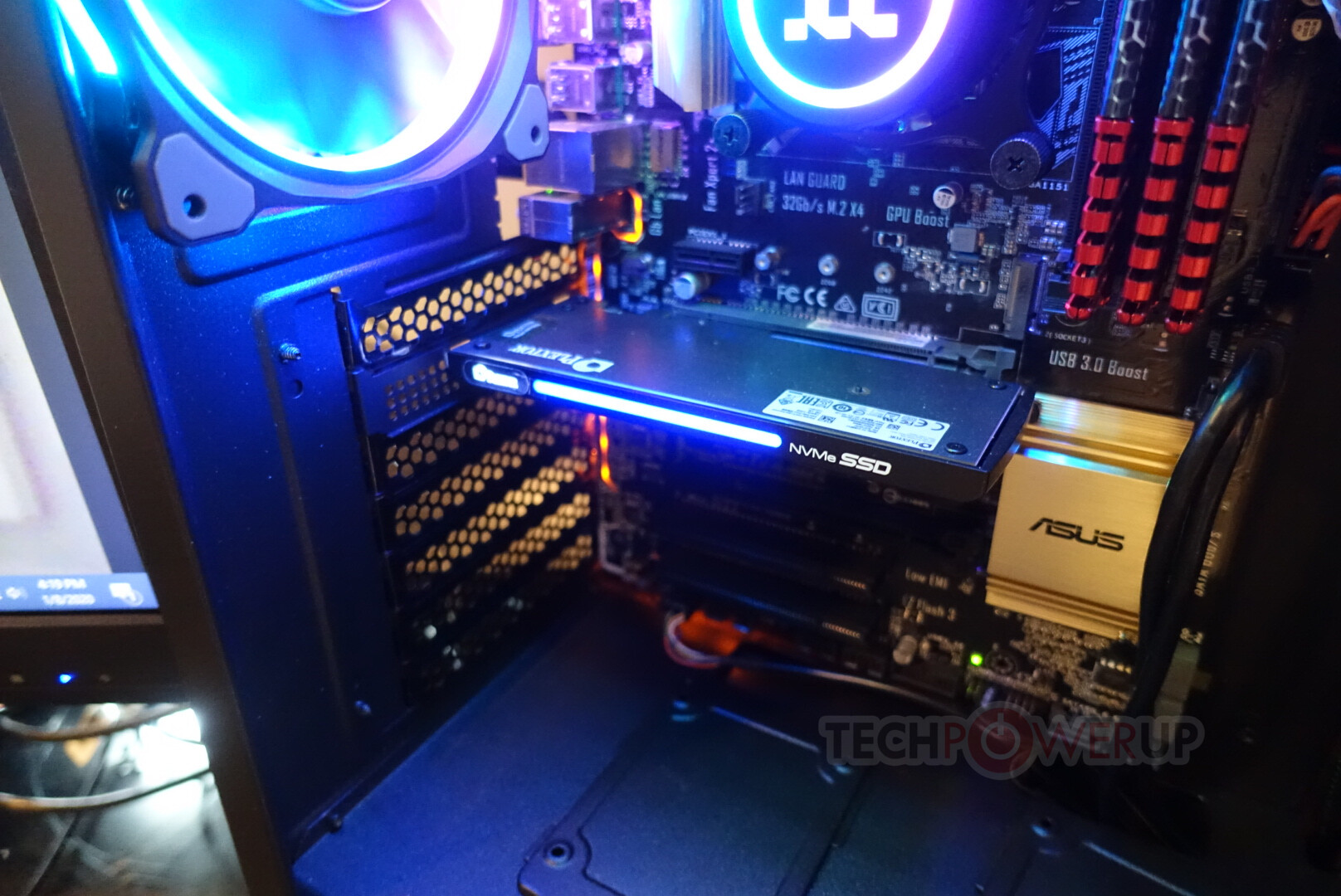
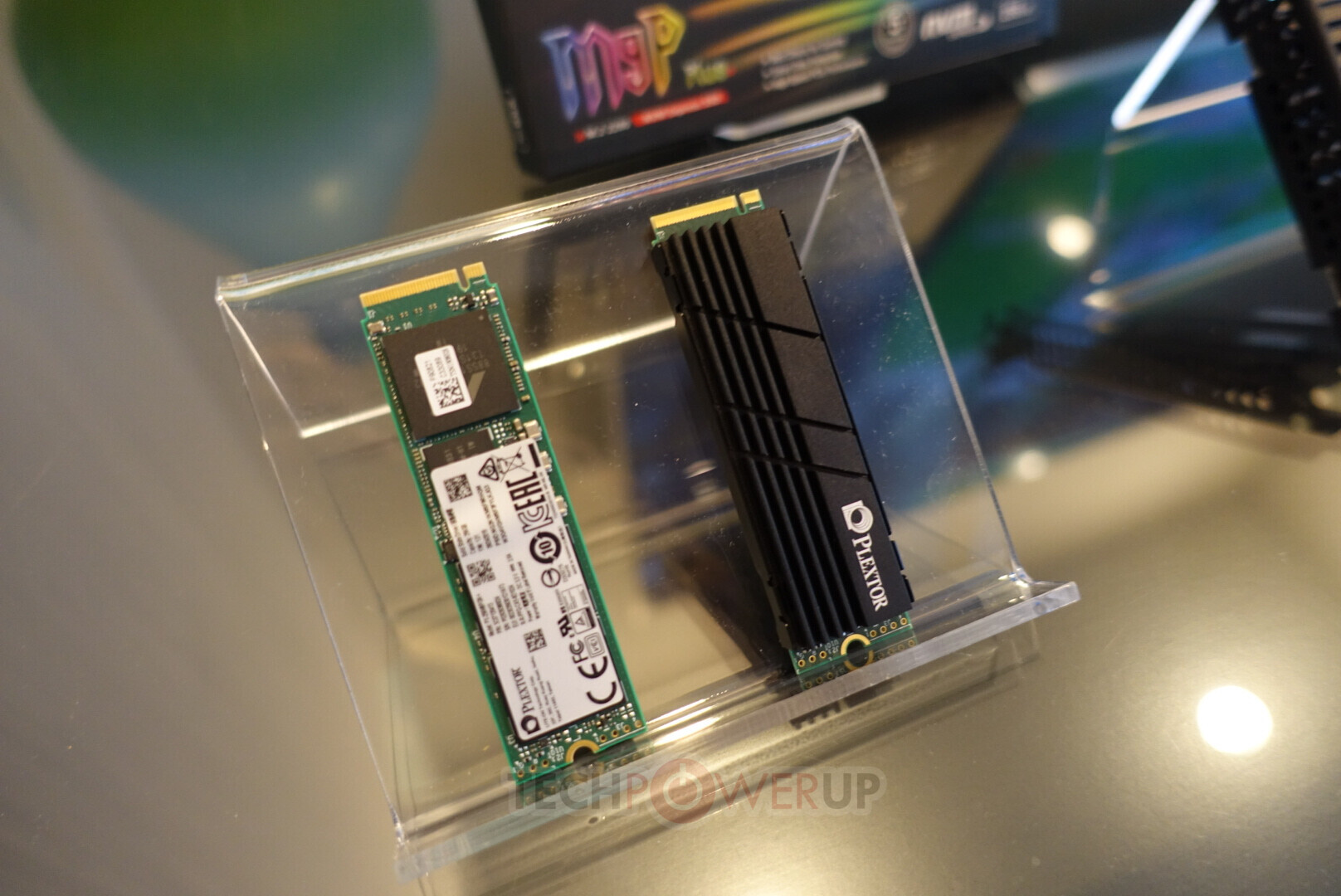
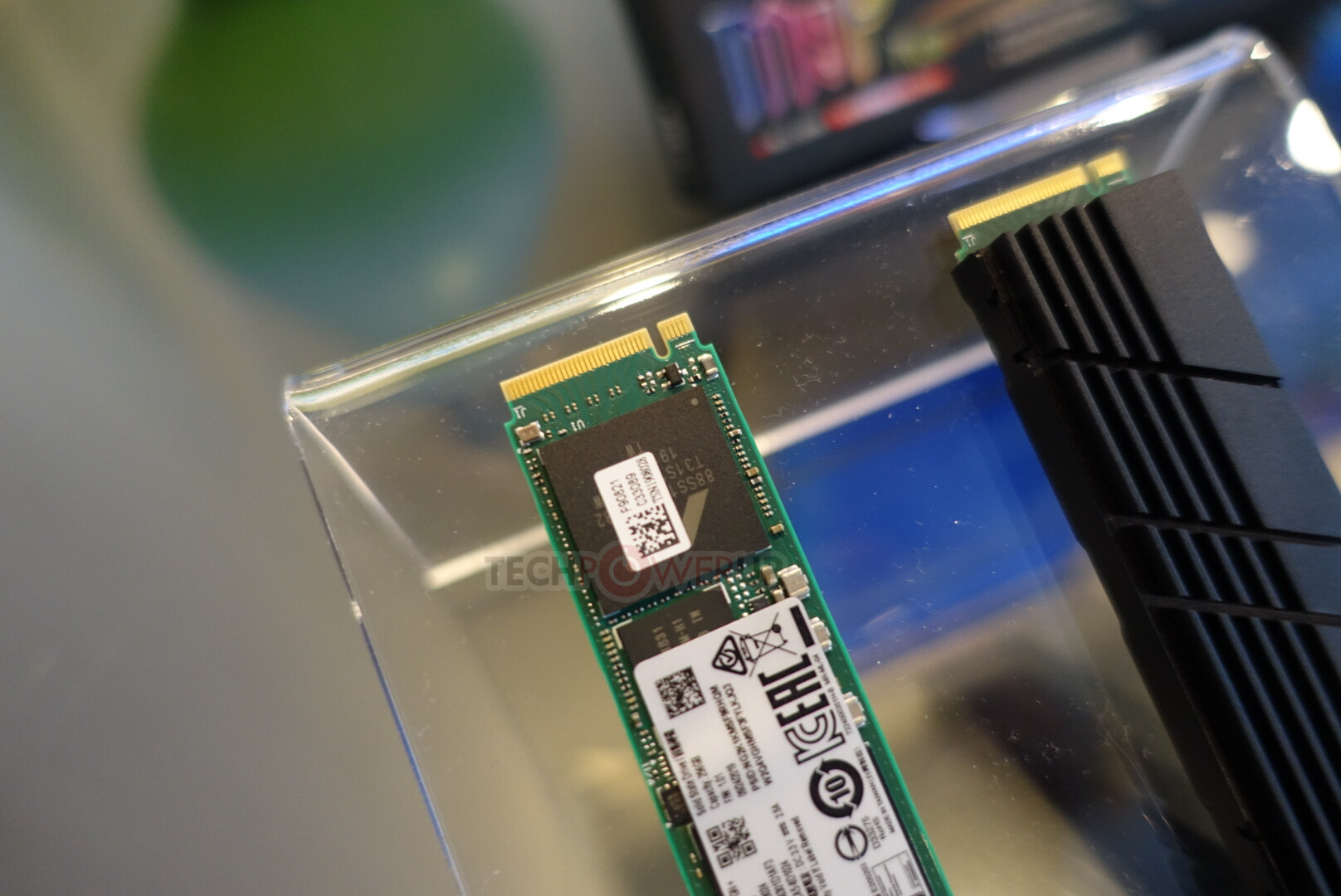
Plextor showed off its very recently announced M9P line of premium PCI-Express NVMe SSDs at CES 2020. The M9P Plus comes in both half-height add-in card (AIC) form-factor, and a more conventional M.2-2280 form-factor. In both, it leverages PCI-Express 3.0 x4 along with the NVMe 1.3 protocol. At the heart of these drives is the Marvell 88SS1092 "Eldora Plus" controller that has 8 flash channels. This controller is paired with Kioxia 96-layer 3D TLC NAND flash (BiCS 4), and a DDR4 DRAM cache.

With capacities of 256 GB, 512 GB, and 1 TB, the M9P offers sequential reads of up to 3,400 MB/s, with up to 2,200 MB/s writes (up to 1,700 MB/s writes for the 256 GB variant). Endurance (TBW) for the three models are proportionately rated at 160 TB, 320 TB, and 640 TB. The 256 GB variant of the M.2-2280 model is priced at $51, the 512 GB variant at $81, and the 1 TB variant at $135. The AIC equivalents are priced at roughly $15 premiums over these prices, and in addition to the convenience of AIC (easier to swap in a test bench), they feature some RGB LED embellishments.

Phison Demonstrates 4-Bits Per Cell QLC SSDs

Phison Electronics, the industry's leader in flash controller and NAND storage solutions, is demonstrating mainstream performance using 4-bits per cell QLC NAND flash controllers and SSDs at the Consumer Electronics Show 2020 (CES) in Las Vegas, Nevada. In its private suite, Phison is showcasing the addition of support for QLC NAND to its already shipping E16 PCIe Gen 4x4, E12 PCIe Gen 3x4, and S12 SATA controllers that use TLC NAND. Phison's industry leading approach leverages highly successful controllers that were qualified by tier-1 OEMs, are in mass production now, and extends new SSD designs to utilize either TLC or QLC NAND. Phison's proprietary QLC NAND controller technology enables higher SSD capacities in industry standard form factors while meeting the performance demands of mainstream applications.

Phison's flagship E16 series controller for PCIe Gen 4x4 NVMe SSDs can achieve up to 4 TB in capacity with QLC NAND and reaches speeds of 4.9 GB/s for sequential reads and 3.8 GB/s for sequential writes. The E12 series controller enables PCIe Gen 3x4 NVMe SSDs and has a capacity of up to 8 TB and speeds of 3.4 GB/s sequential reads, 3.0 GB/s sequential writes with QLC NAND. For the SATA interface, Phison is also demonstrating the S12 controller series SSDs with up to 16 TB using QLC NAND and performance at 550 MB/s sequential reads and 530 MB/s sequential writes. Phison's DRAM-less S13T controllers enable smaller form factors, have a capacity of up to 2 TB, and operate at 550 MB/s sequential reads and 500 MB/s sequential writes.

ASRock to Launch Hyper Quad M.2 PCIe 4.0 Expansion Card

ASRock is looking to launch a PCIe expansion card for all of your M.2 needs. Should you find your current motherboard is already full to the gills with M.2 SSDs, ASRock's Hyper Quad M.2 PCIe expansion card will allow you to increase M.2 vacancy by up to four additional slots (there's an on-off toggle for you to move in the PCB to select the active M.2 SSDs). The card uses the PCIe 4.0 x16 interface to sufficiently feed the four M.2 SSDs (which typically use the PCIe 4x NVMe protocol) with data.

This is a top notch expansion card design, featuring an aluminium cover and a 50 mm fan to cool down all those SSDs' controllers. The cover features 4x 110 mm thermal pads which align with the M.2 mounts on the PCB, thus allowing the aluminium cover to serve as a veritable heatsink and improve operating temperatures. The expansion card is fed by a single 6-pin power connector, and there is an activity LED for quality of life improvements. No word on pricing just yet.

Kingston Technology Announces Data Center DC1000B NVMe SSD

Kingston Technology today announced the Data Center DC1000B M.2 NVMe SSD, optimized for server boot drive applications, featuring power-loss protection (PLP). Kingston's Data Centre DC1000B is a high-performance M.2 (2280) NVMe PCIe SSD using the latest Gen 3.0 x 4 PCIe interface with 64-layer 3D TLC NAND. DC1000B offers data centres a cost-effective boot drive solution with the reassurance that they are purchasing an SSD designed for server use. The DC1000B is ideally suited as an internal boot drive for use in high-volume rack-mount servers, as well as for use in purpose-built systems that require a high-performance M.2 SSD that includes on-board power loss protection (PLP).

M.2 NVMe SSDs are evolving within the data centre, providing efficiencies in booting servers to preserve valuable front-loading drive bays for data storage. Whitebox and Tier 1 Server OEMs are beginning to equip server motherboards with one, or sometimes two, M.2 sockets for boot purposes. While the M.2 form factor was originally designed as a client SSD form factor, its small physical size and high performance make it attractive for server use. Not all SSD are created equal and using a client SSD in a server application may result in poor, inconsistent performance.

SecureData Introduces the SecureDrive Duo with Keypad and BT Encryption at CES 2020

We were impressed with SecureData's offerings for the encrypted portable storage market in the form of the SecureDrive BT and SecureUSB BT, and the company took to CES 2020 to announce their latest and greatest in the form of the SecureDrive Duo that combines Bluetooth app-based encryption we saw with the previous drives, as well as keypad-based encryption for on-the-go modification. The new drive retains also all the features of the BT lineup, including FIPS 140-2 Level 3 certification and secure device management. We expect this first of its kind drive to be made available in a variety of storage sizes in both HDD and SSD formats as with the SecureDrive BT, when it is made available for purchase later this year.

Silverstone at CES 2020: Cases, PSUs, and Accessories Galore

Silverstone at CES 2020 took the opportunity to showcase selections of their portfolio for the media, ranging from PC cases in major form-factors, PSUs, and a range of "ease-of-life" and aesthetic-driven accessories. Accessory-wise, there's a range of SSD-related products, such as the MS09 stick, which allows conversion of an M.2 SSD to what basically amounts to a USB 3.1 pen drive; other products in this category include the MS09-Mini and the MS11, which improves support for the NVMe protocol. The ECM26 is a PCIe adapter for M.2 sticks, while the Silverstone TP02-M2 presents itself as a heatsink for installation on non-passive-cooled M.2 SSDs.

Continuing the SSD accessories galore, there are a number of other solutions, including a tool-less NMVe to PCIe adapter (ECM21-E), an ARGB powered one (ECM24-ARGB, which includes a heatsink), a simpler, non-ARGB one with a heatsink (ECM23), and my personal favorite, a docking station for a barebones M.2 drive you may have around, in the form of the TS16 station. The presence of a Power button very surely means this can't be hot-swapped - the risk of data-loss is real.

Samsung at CES 2020: SSD 980 PCIe Gen 4 M.2, SSD T7, and the Gorgeous Odyssey G9 Monitor

It's finally here: a high-end PCI-Express gen 4.0 M.2 NVMe SSD by Samsung, made end-to-end by homebrew components. When it releases sometime later this year with a possible technical reveal in Q2, the SSD 980 will be possibly the only client-segment M.2 NVMe PCIe gen 4 SSD to feature MLC (2 bits per cell) NAND flash memory. This also means that the highest capacity on offer is just 1 TB. The company also put out sequential transfer rates: up to 6,500 MB/s reads, with up to 5,000 MB/s writes. The biggest payoffs of MLC would be sustained write performance and endurance (in its capacity class, compared to TLC and QLC).

Next up, is the Portable SSD T7 Touch, a successor to the T5 from 2017. This drive comes in an in-built fingerprint reader, letting you secure its data with your fingerprints. The drive is also a much needed update to the T5, which still uses 64-layer TLC NAND; and possibly uses the latest generation 96-layer V-NAND. The drive is built with an aluminium case that's drop-resistant up to 2 m. A single USB 3.2 connection handles power and data. The drive includes type-C to type-C and type-C to type-A cables, and will be compatible not just with PCs, but also Samsung Galaxy smartphones and tablets.
Return to Keyword Browsing
Nov 18th, 2026 23:26 PST change timezone

New Forum Posts

Popular Reviews

TPU on YouTube

Controversial News Posts