News Posts matching #ssd

Return to Keyword Browsing

Corsair MP600 PCIe Gen 4 M.2 SSD Pricing Out

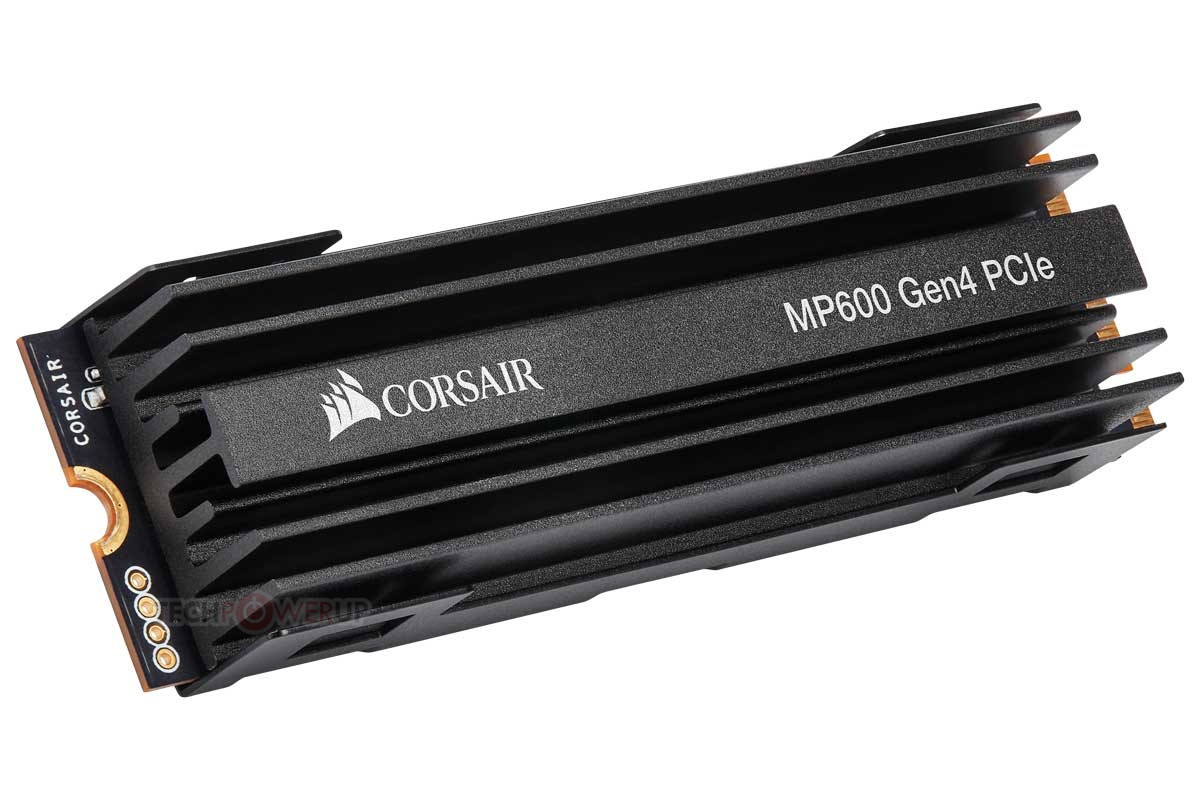
It looks like SSD manufacturers such as Corsair will price some of the first M.2 PCIe gen 4.0 NVMe SSDs at a premium compared to existing drives that use PCIe gen 3.0. The company on the sidelines of Computex launched its MP600 series of high-end M.2 SSDs that take advantage of PCI-Express 4.0 x4 bus (64 Gbps) on the upcoming AMD "Valhalla" desktop platform, with up to 4950 MB/s of sequential read speeds. Ahead of their market availability alongside AMD Ryzen 3000 "Matisse" processors and AMD X570 chipset motherboards on July 7th, Cowcotland scored prices of the 1 TB and 2 TB models in Europe.

According to the French publication, the 1 TB variant of MP600 is priced at 249€ (0.24€ per GB), and the 2 TB variant at 449€ (0.22€ per GB), including VAT. To put these prices into perspective, the 960 GB variant of Corsair's current flagship SSD, the MP510, is priced at 160€, and its 1920 GB variant at 320€. Stateside, the Intel 660p 1 TB PCIe 3.0 x4 M.2 NVMe drive is priced at $99.99 on Newegg, although it isn't generally counted as a premium SSD. Its 2 TB variant is priced at $192 on the same site. Nearly all client-segment PCIe gen 4.0 SSDs launched so far are built around the new Phison PS5016-E16 controller.


Apacer Announces the Panther AS2280P2 PRO M.2 NVMe SSDs

Experience the sensation of evolution in bloodbath battle! The latest masterpiece in Apacer Gaming series, Apacer AS2280P2 PRO M.2 PCIe "PANTHER" SSD; equipped with "battle armor". When the battle is fierce, the "battle armor" will evolve from orange to a dazzling golden color when temperature rises, cheering on gamers even more! The sequential read/write speed of Apacer AS2280P2 PRO can reach up to 1,580/950 MB/s, and the random write performance can even reach up to 92,160 IOPs, bringing the best gaming experiences for gamers with their best performances.

Gamers may have had the experience of almost being defeated during a battle, but then their characters suddenly leveled up and their HP/MP were instantly filled, the battle situation was reversed all of sudden! Apacer is dedicated to creating unique gaming experiences for gamers, AS2280P2 PRO SSD is equipped with a creative "battle armor" that changes color with temperature, reproducing the exciting sensation when leveling up during death battles. The "battle armor" displays a passionate orange color under room temperature, but when it heats up during battles, it will evolve into a dazzling golden armor, accompanying players to enjoy killing enemies on the battlefield.

ADATA Upgrades Endurance Rating of Its Industrial-Grade 3D TLC SSDs

ADATA Technology (Taiwan Stock Exchange: 3260.TWO), a leading manufacturer of high-performance DRAM modules, NAND Flash products, and mobile accessories announces that it has upgraded the endurance rating of its industrial-grade 3D TLC solid state drives (SSD) to 3K P/E cycles, bringing their endurance, reliability, and stability up to par with 2D MLC SSDs. Combined with their ability to operate in a wide range of temperatures (-40° C to 85° C), they are excellent solutions that provide the durability and consistency required by applications such as Artificial Intelligence, Internet of Things (IoT), Intelligent Transportation Systems, surveillance systems, data centers, network operations, defense systems, and energy exploration.

The continual improvements in NAND Flash design and manufacturing, as well as the ever-changing demands of the market, have driven 3D NAND to become a popular memory solution across many industries. Despite its growing prominence, 3D NAND has had two major deficiencies, namely the ability to operate in extreme temperatures and achieve higher endurance ratings. To fill this gap, ADATA has upgraded its industrial-grade 3D TLC SSDs to an endurance rating of 3K P/E cycles, which makes them comparable to 2D MLC SSDs. At the same, ADATA 3D TLC SSDs are also designed to operate in a wide temperature range (-40° C to 85° C), delivering a memory solution that is long-lasting, robust, and reliable.

Sony PlayStation 5 Promises 4K 120Hz Gaming

Sony has finalized the design and specification of its PlayStation 5 entertainment system. Unlike buzzwords Microsoft threw around like "8K capable" for its "Project Scarlett" console, Sony has a slightly different design goal: 4K UHD at 120 Hz, guaranteed. The most notable absentee at E3 2019, Sony is designing the PlayStation 5 to leverage the latest hardware to guarantee 120 frames per second on your 4K display. Much like "Project Scarlett," the SoC at the heart of the PlayStation 5 is a semi-custom chip co-designed by AMD and Sony.

This unnamed SoC reportedly features an 8-core/16-thread CPU based on AMD's latest "Zen 2" microarchitecture, which is a massive leap from the 8 low-power "Jaguar" cores pulling the PS4 Pro. The GPU will implement AMD's new RDNA architecture. The SoC will use GDDR6 memory, shared between the CPU and GPU. Much like "Project Scarlett," the PS5 will include an NVMe SSD as standard equipment, and the operating system will use a portion of it as virtual memory. There will also be dedicated hardware for 3D positional audio. Sony also confirmed full backwards compatibility with PS4 titles.

Xbox "Project Scarlett" to be 8K and Ray-tracing Ready, AMD-powered, Coming 2020

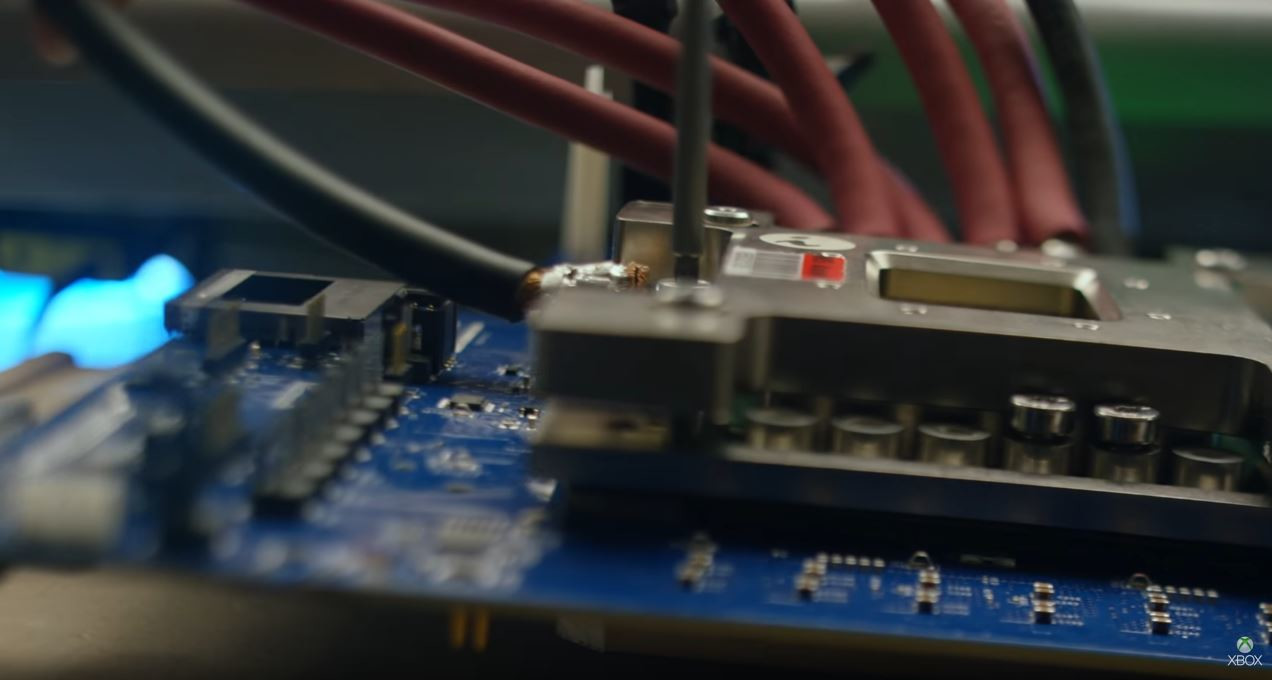
Microsoft at its E3 2019 keynote dropped a huge teaser of its next-generation gaming console development, codenamed "Project Scarlett." The console is expected to pack some serious hardware that powers gaming at 8K resolution (that's four times 4K, sixteen times Full HD). That's not all, it will also feature real-time ray-tracing. Microsoft's performance target for the console is to be 4 times higher than that of the Xbox One X. The company is also giving the console its first major storage sub-system performance update in years.

At its heart is a new 7 nm semi-custom SoC by AMD and a high degree of customization by Microsoft. This chip features CPU cores based on the "Zen 2" microarchitecture, which provide a massive leap in CPU performance over the current Scorpio Engine SoC that uses low-power "Jaguar Enhanced" cores. At the helm of graphics is a new iGPU based on the RDNA architecture that powers AMD's upcoming Radeon RX 5000 "Navi" graphics cards. It's interesting here to note that Microsoft talks about real-time ray-tracing while we're yet to see evidence of any specialized ray-tracing hardware on "Navi." In its teaser, however, Microsoft stressed on the ray-tracing feature being "hardware-accelerated."

GALAX HOF E16 is a Monstrous M.2 PCIe Gen 4 SSD Dressed in White

With AMD "Valhalla" desktop platform mainstreaming PCI-Express gen 4.0, several SSD manufacturers put out their first products that can take advantage of it, this Computex. The drive with the highest on-paper transfer rates has to be the HOF E16 from GALAX, which will also be sold under the Galaxy and KFA2 brands in various markets. Built in the M.2-2280 form-factor, the drive features an M.2 PCI-Express 4.0 x4 host interface (backwards-compatible with older PCIe generations), with 64 Gbps of interface bandwidth on tap. The drive comes in capacities of 1 TB, 2 TB, and segment-first 4 TB.

The HOF E16 uses the same heatsink GALAX deployed on the older generation of HOF M.2. A block of aluminium pulls heat from the drive's controller, while a flattened copper heat-pipe spreads heat across. The drive is based on the new Phison E16 controller that's cushioned by an LPDDR4 DRAM chip, and wired to 96-layer 3D TLC NAND flash memory. The drive offers sequential read speeds of up to 4,800 MB/s, and sequential writes of up to 4,000 MB/s. 4K random reads are rated at up to 750,000 IOPS, and 4K random writes up to 700,000 IOPS.

TEAMGROUP Showcases T-FORCE Gaming Brand at Computex 2019

With plenty of dominant new products, the world's leading memory brand, TEAMGROUP will exhibit its gaming brand T-FORCE at COMPUTEX Taipei 2019 during May 28th-June 1st. This year, TEAMGROUP's booth (J0218) at Nangang Exhibition Center Hall 1 will not only show the world eye-catching new T-FORCE RGB products but also announce many new storage products that are related to intelligent living. The core focuses of COMPUTEX 2019 are 'mirror design, water cooling, and extended concept. Also, the visitors will be able to fully understand TEAMGROUP's non-stop efforts over the years. At the same time, T-FORCE gaming memory modules, the winners of 2019 Red Dot Design Award and iF Design Award will be showcased at our booth. The world will witness the solid strength of T-FORCE which shines on the international design stage.

Toshiba Launches XG6-P NVMe SSD Series

Toshiba today announced the XG6-P solid state drive (SSD) series, a derivative of its NVMe M.2-based XG6 Series featuring class-leading write performance. Offering up to 2,048 gigabytes (GB) of capacity, XG6-P SSDs are ideal for high-end workstation PCs and gaming systems, as well as cost-optimized data center and composable infrastructures. With over 30 percent higher sequential and random write speeds and over 15 percent higher random read speeds than its predecessor, the XG6-P Series enables enhanced application performance and data access.

Gigabyte Shows Off 15 GB/s PCIe 4.0 SSD

With AMD chipset based motherboards like X570 and next-generation Ryzen 3000 series CPUs delivering the 4.0 version of the PCIe protocol for consumers, products based on the faster protocol are bound to take advantage of its improvements - especially in terms of better bandwidth.

At their Computex booth, Gigabyte showed off some pretty impressive results of their PCIe 4.0 based SSD card. The so-called "Auros AIC Gen4 SSD" is a performance monster. It is able to pack up to four PCIe 4.0 M.2 SSDs that can go up to 2 TB of density each, for a maximum 8 TB total storage. Put them in RAID 0 configuration, though, and you will get some amazing performance numbers. Gigabyte demonstrated speeds exceeding 15 GB/s in sequential reads and writes, providing much more bandwidth than what has ever seen before ina consumer-geared product. The SSD comes with an aluminum shroud with pre-applied thermal pads to facilitate heat dissipation. Additionally, there is a blower fan attached to the card to keep a constant flow of fresh air, which seems like a must if you're packing four M.2 drives inside a tiny aluminum case.

ADATA Unveils its M.2 PCIe Gen4 SSD: Ready for AMD X570

It looks like SSDs will beat graphics cards to utilizing (and benefiting) from the bandwidth of PCI-Express gen 4.0 bus. AMD X570 platform motherboards offer 2-3 M.2 slots with PCIe gen 4.0 x4 wiring (64 Gbps). Corsair formally launched the MP600, and now ADATA joins the party with its unnamed drive. Based on the Silicon Motion SM2267 controller, the drive comes in an unbelievable capacity of up to 8 TB, probably using 96-layer QLC NAND flash.

The controller features DRAM cache, and dynamic SLC caching (all of the NAND flash is treated as SLC until storage demands force portions of them to be treated as MLC, TLC, and eventually QLC). It takes advantage of NVMe 1.3 protocol. As for performance, ADATA claims sequential speeds of up to 4000 MB/s reads. Such speeds were impossible of PCIe gen 3.0 x4 due to various overheads. Sequential writes are still up to 3000 MB/s. 4K random read/write access is rated at 400k IOPS. The company didn't reveal availability details.

Patriot Also Shows Off Burst and P200 SATA SSDs

Patriot Memory's SSD lineup for 2019-20 includes two new SATA SSDs to cater to the mainstream market, the P200 and Burst. Both drives are built in the 2.5-inch form-factor, with SATA 6 Gbps interface. The Burst is available in capacities of up to 960 GB, and is powered by a Phison S11 controller with DRAM cache. The drive offers sequential transfer rates of up to 560 MB/s reads, with up to 540 MB/s writes, and endurance of up to 835 TBW, benefiting from the drive's overprovisioning. The P200 is an interesting drive, in that it comes in two controller options. Capacities 256 GB, 512 GB, and 1 TB ship with Silicon Motion SM2258XT DRAM-less controller, while the 2 TB version is powered by a Maxiotech MAS0902A. On offer are up to 530 MB/s reads, up to 460 MB/s writes, and up to 1 PBW endurance.

Patriot Viper VPR100 and VPN100 SSDs Pictured

Patriot showed off many new M.2 NVMe SSDs at its Computex 2019 booth, led by two Viper series models that caught our eyes, the VPR100 and VPN100. While technically an M.2-2280 drive, the Viper VPR100 features a chunky heatsink that makes the drive wider than 22 mm. This could be a problem if you're trying to install it in an M.2 slot positioned between two PCIe slots. The heatsink is studded with RGB LEDs. The drive is based on the Phison E12 controller and offers sequential transfer rates of up to 3450 MB/s reads, and up to 3000 MB/s writes. The Viper VPN100 is practically the same drive, but with a heatsink that sticks to the 22 mm width limit. You can run both drives without their heatsinks.

Corsair Announces MP600 M.2 NVMe PCIe Gen 4.0 SSD Compatible with AMD X570

CORSAIR , a world leader in PC gaming peripherals and enthusiast components, today unveiled the new CORSAIR Force Series MP600 NVMe PCIe Gen4 x4 M.2 SSD, one of the world's first PCIe 4.0 M.2 SSDs compatible with the new AMD X570 chipset, also revealed today. Unleashed by the PCIe 4.0 ready AMD X570 chipset, the MP600 reaches new heights of enthusiast single-drive storage performance, delivering up to 4950MB/sec sequential read - ten times the performance of many SATA SSDs, and fifty times faster than some hard disk drives.

The MP600's phenomenal performance stems from the hugely increased bandwidth of PCIe 4.0 (PCI-Express Generation 4), a feature that will be made available to customers for the first time as part of the AMD X570 chipset and 3rd Generation AMD Ryzen Desktop Processors. Easily fitting into a PCIe 4.0 x4 M.2 slot, the MP600's NVMe interface and high-density 3D TLC NAND combine with a Phison PS5016-E16 controller to enable a new level of single-drive SSD performance. Boasting up to 4,950MB/s sequential read and 4,250MB/s sequential write speeds, the MP600 is ready to become the storage center of your new 3rd Gen AMD Ryzen Desktop Processor and AMD X570 chipset-based system.

Gigabyte Teases World's First PCIe 4.0 M.2 SSD With Speeds up to 5000 MB/s, Other Computex Announcements

Who would have thought that Gigabyte - who don't manufacture controllers, nor memory - would be the first company to tease a PCIe 4.0-based M.2 SSD. In a blog post on its website that serves as a warm-up for the upcoming Computex, the company says that they'll be announcing the world's first PCIe 4.0 M.2 SSD - with speeds up to 5000 MB/s at "low temperatures" - I guess that means that thermal throttling will become much more common with these new SSDs.

Any other details are currently unknown; however (and we're just speculating here), we know that Phison was preparing a PCIe 4.0 NVMe controller in the form of the E16. At the time (back in January of 2019), Phison paired their E16 controller with Micron's 96-layer TLC flash, but improvements in controller development as well as changes in the flash memory used could have brought up their - then - performance figures of expected 4.8/4.4 GB/s of read/write throughput on Toshiba's BiCS 4 flash. We'll just have to wait for Computex and see, but oh my - new PCIe 4.0 SSDs, new up-to 16-core CPUs on the 7 nm process, new 7 nm GPUs... Isn't this a great time to be a PC enthusiast? Read after the break for the rest of Gigabyte's Computex tease.

ADATA Launches XPG SPECTRIX S40G RGB Gaming SSD

ADATA Technology, a leading manufacturer of high-performance DRAM modules, NAND Flash products, and mobile accessories today announces that launch of the XPG SPECTRIX S40G RGB gaming SSD. With sustained read/write speeds of up to 3500/3000MB per second, customizable RGB lighting, and a slew of performance enhancing features, the XPG SPECTRIX S40G is a no brainer for those seeking amazing performance and exceptional reliability.

The S40G supports the NVMe standard and utilizes the high-speed PCIe Gen3 x4 interface to let users enjoy sustained read/write speeds of up to 3500/3000 MB per second. What's more, sporting next-generation 3D Flash memory it offers a leap forward in capacity, efficiency, and durability. Also with the M.2 2280 specification, it supports the latest Intel and AMD platforms. These capabilities make the S40G ideally suited for gamers, PC enthusiasts, overclockers, and graphics professionals. User can customize the SSD's look with programmable RGB lighting effects. They can set up patterns, pulse speed, lighting intensity, and more. Control is a snap with XPG's RGB control software.

Mushkin Announces Availability of Helix-L NVMe SSD

Mushkin Enhanced MFG - An industry-leading designer and manufacturer of high-performance and high-reliability computer products, is excited to announce global availability of its much-anticipated Helix-L PCIe m.2 SSD (Solid State Drive) originally announced at CES 2019 and has available capacities of 250 GB, 500 GB, and 1 TB.

Built using the latest Silicon Motion SM2263XT PCIe Gen 3 x 4 NVMe controller to generate super-fast sequential Read and Write speeds. The Helix-L offers extreme storage performance and capacities in a M.2 2280 form factor, fitting directly into a motherboard or notebook. Employing the ultra-high-speed PCIe Gen3 x4 M.2 interface for maximum bandwidth, the Helix-L leaves traditional SATA III and even previous generation M.2 SSDs in the rearview. Loading everything from large video and image files to games, applications or the operating system faster than ever before.

Kingston Introduces Next-Gen KC2000 NVMe PCIe SSD

Kingston Digital, Inc., the Flash memory affiliate of Kingston Technology Company, Inc., a world leader in memory products and technology solutions, today announced KC2000, its next generation M.2 NVMe PCIe SSD for enterprise and power users. Kingston's KC2000 NVMe PCIe SSD delivers powerful performance using the latest Gen 3.0 x 4 controller and 96-layer 3D TLC NAND. Offering superior read and write speeds up to 3,200 and 2,200MB/s, respectively, KC2000 delivers outstanding performance and endurance, and improves workflow in desktop, workstations and high-performance computing (HPC) systems.

KC2000 is a self-encrypting drive that supports end-to-end data protection using 256-bit AES Hardware-based encryption and allows the usage of independent software vendors with TCG Opal 2.0 security management solutions such as Symantec , McAfee , WinMagic and others. KC2000 also has built-in Microsoft eDrive support, a security storage specification for use with BitLocker.

Silicon Power Releases Bolt B75 Pro Portable SSD

The uniquely attractive Bolt B75 Pro Portable SSD with USB 3.1 Gen2 interface has joined Silicon Power's (SP) lineup of noteworthy memory storage devices. In an effort to create a well-rounded portable SSD with combined design and performance prowess, SP blended the award-winning design of a previous model with the functionality of an in-demand SSD. The inspiration originated from a German transport plane born nearly a century ago with corrugated metal skin. It inspired the SP design team to add prominent, strengthening ridges to the portable SSD.

Wrapped in a sleek and slim yet lightweight aluminum body that's military-grade shockproof, the Bolt B75 Pro is a perfect example of "form follows function." On the exterior, its 3D ridges provide a barrier from scratches and fingerprints, while the L-shaped LED light gives clear indication of the data transfer status from nearly any angle. On the interior, it has huge storage capacity (256GB/512GB/1TB/2TB) and reads and writes at blistering speeds (up to 520 and 420MB/s respectively).

KLEVV Announces RGB-king CRAS C700 RGB NVMe M.2 SSD

Klevv today announced the launch of the CRAS C700 RGB NVMe M.2 SSD, which dials RGB goodness up to at least 12. The new SSD makes use of the PCIe 3.0 4x interface through the NVMe 1.3 protocol, enabling up to read 1500MB/s read and 1300MB/s write speeds. Klevv have made this SSD available in 120 GB, 240 GB and 480 GB capacities. There's SLC caching on-board, which means performance will certainly be slower in more data-heavy operations, in the event that the SLC cache overflows. The RGB goodness is distributed through 8 individually-addressable LEDs behind a gem-like diffuser, which provides an even glow that's programmable through most motherboard RGB control software.

Klevv also announced that the CRAS C700 RGB NVMe M.2 SSD makes use of 10-layer PCB for "better data integrity", as well as a 27% reduction in operating temperatures for the SD due to KLEVV's heatsink design. An unannounced feature for the RGB power in these SSDs is the ability to illuminate even Game of Thrones' Season 8, Episode 3 from inside your PC case.

Trendforce: SSD Price-per-GB Could Drop as Low as $0.1 by Year's End

A report from technology market analyst Trendforce places SSD's pricing in sharp decline, with price per GB being projected to hit as low as $0.1 by year's end. Citing oversupply in the NADN flash market and an impending price war to allow manufacturers to sell out accumulating inventory, this is one of those clear cases of a win for consumers - which, after the shenanigans in the DRAM market, is about time. Trendforce further states that the price reductions should render 128 GB SSDs obsolete, as they mostly are by now, with 512 GB capacities becoming the mainstream choice for system integrators and DIY.

Pricing evolution in the market also places premium NVMe solutions at an only 6% premium over SATA offerings, showcasing the increased cost savings that manufacturers have achieved with the reduction in price for NVMe controllers, and the lower amount of physical materials needed to put an NVMe SSD together compared to a SATA-based alternative. Furthermore, Trendforce says that value PCIe-based solutions have a 0% price difference compared to SATA-based ones, so the option for the older form factor should only fall upon how many NVMe/PCIe sockets users' motherboards have available to populate.

SK Hynix Begins Sampling 96-layer 4D QLC NAND Flash Memory

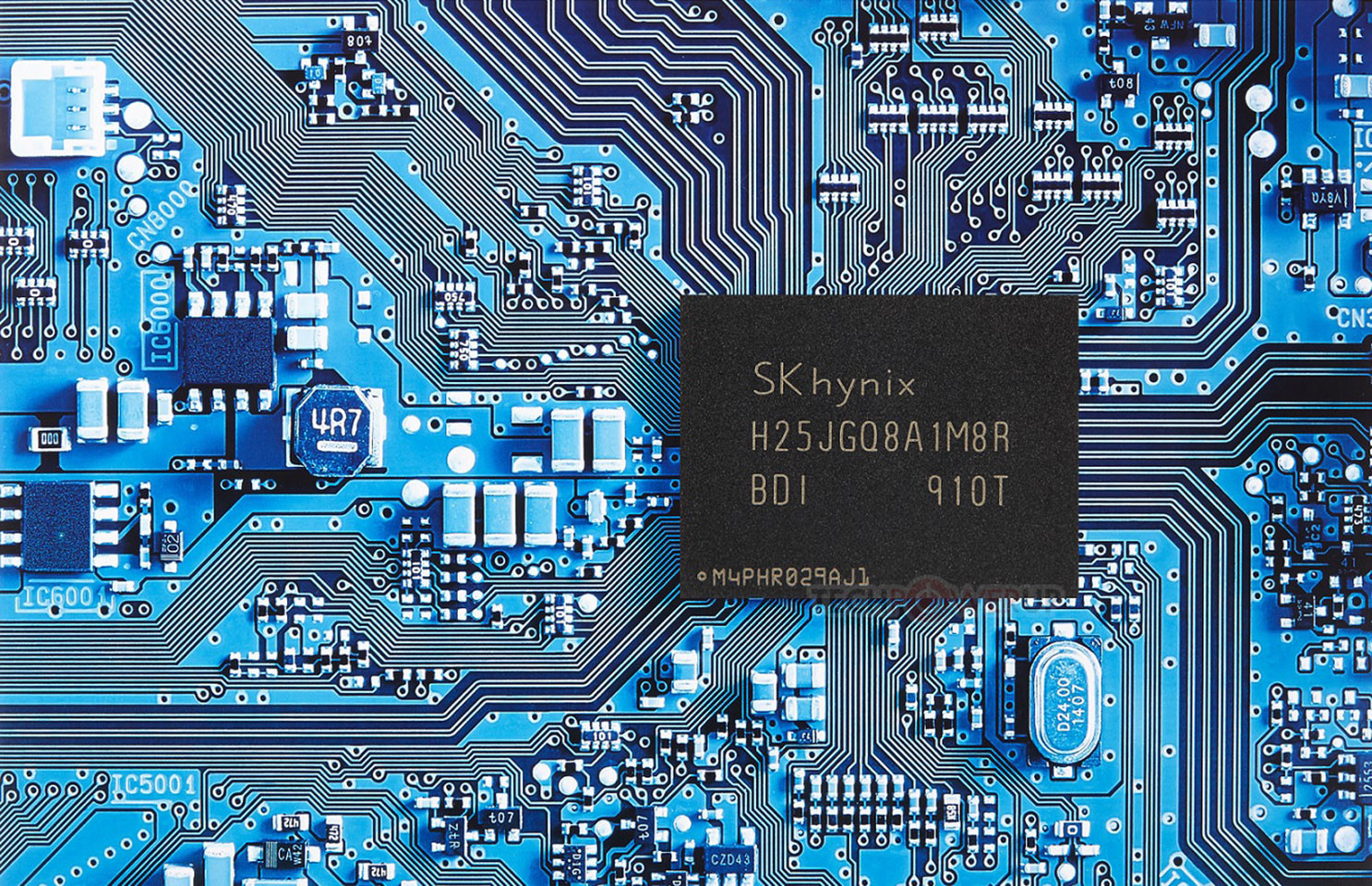
SK Hynix Inc., announced today that it has delivered samples of new 1Tb (Terabit) QLC (Quadruple Level Cell) product to major SSD (Solid State Drive) Controller companies. The Company applied its own QLC technology to its world's first 96-Layer "CTF (Charge Trap Flash) based 4D (Four-Dimensional) NAND Flash (or 4D NAND)." SK Hynix intends to expand its NAND portfolio to 96-layer-based 1Tb QLC products in time for the QLC market opening and strengthen its responsiveness to the next-generation high-density memory market.

QLC stores four bits of data in one NAND cell, allowing higher density compared to TLC (Triple Level Cell) that stores three bits per cell. Using QLC, it is possible to develop high-density products with cost competitiveness. SK Hynix is able to secure the industry's top-level cost competitiveness through this product, which has reduced the area to less than 90% of the existing 3D-based QLC products.

PNY Rolls Out XLR8 CS3030 Series M.2 NVMe SSDs

PNY today rolled out the XLR8 CS3030 line of high-end SSDs in the M.2-2280 form-factor. Featuring M.2 PCI-Express 3.0 x4 interface, the drives take advantage of the NVMe 1.3 protocol. The company didn't mention which controller it is using, but that it's mated to 3D TLC NAND flash. Available in capacities of 250 GB, 500 GB, and 1 TB, the XLR8 CS3030 has among the highest on-paper maximum sequential-read numbers, at up to 3,500 MB/s. The 250 GB variant writes at up to 1,050 MB/s, the 500 GB variant at up to 2,000 MB/s, and the 1 TB variant up to 3,000 MB/s. Endurance of the three variants is rated at 380 TBW, 800 TBW, and 1,650 TBW, respectively. The company did not put out random-access numbers. Available now, the XLR8 CS3030 series SSDs are backed by a 5-year warranty.

Hard Drive Shipments Expected to Drop Nearly 50 Percent YoY in 2019

With solid-state drives (SSDs) entering value and mainstream price segments, and the transition in consumers' data-storage behavior from local storage to the cloud, there is expected to be a dramatic fall in shipments of hard disk drives (HDDs) in 2019. Japanese company Nidec, which manufactures nearly 85% of all DC motors for use in HDDs across the industry, estimates a nearly 50 percent drop in HDD shipments for 2019. Since these motors are specifically designed for use in HDDs, it is directly proportional to new HDD shipments, thus presenting a reliable outlook of the HDD industry itself. The DC motor inside HDDs is a non user-replaceable component as detaching it involves opening the seal of the disk chamber, thereby contaminating it.

In 2010, Nidec shipped nearly 650 million motors, which dropped significantly down to 375 million motors in 2018, indicating the sharp decline in the HDD industry. While Nidec will ship as few as 290 million motors in 2019, it estimates shipments of HDDs to go down by nearly 50 percent year-over-year (YoY). Data centers are swallowing up large volumes of high-capacity (>10 TB) HDDs for warm- and cold-storage even as SSDs and DRAM are sought for hot-storage. The client-segment, however, is now firmly captivated with SSDs, with even mainstream laptops packing SSDs. Prominent HDD manufacturers Seagate, Western Digital, and Toshiba, have each invested heavily in building up SSD product lines, and specializing their HDD portfolio for enterprise and quasi-enterprise (eg: NAS, NVR, high-uptime client) markets.

SMART Modular Announces HRS-T5E Rugged 2.5-inch SSD

SMART Modular Technologies, Inc., a subsidiary of SMART Global Holdings, Inc., (NASDAQ: SGH), and a leader in specialty memory, storage and hybrid solutions including memory modules, Flash memory cards and other solid state storage products, today announced a new addition to its SMART RUGGED product offering, the HRS-T5E 2.5" SATA SSD. Powered by a flexible, custom flash controller, the HRS-T5E SSD provides read/write performance ideal for high throughput applications such as flight data recorders and sensor data capture. It is also well suited for high-reliability telemetry, surveillance, and other mission critical storage applications.

Available in capacities up to 4TB, SMART's new 3D TLC NAND Flash storage solution offers more reliability, superior performance, and requires less power and cooling in applications where traditional hard disk drives (HDDs) are typically used. Recent improvements in 3D NAND, endurance-enhancing data placement and error correction technology, make the T5E perfectly suitable as a cost effective replacement for 2D planar based SSDs for read-intensive applications.

Western Digital Launches 4 TB Version of its Blue SATA SSD

Western Digital is launching a behemoth, consumer-oriented 4 TB SSD based on its WD Blue product line. The WD Blue 4 TB uses the SATA interface (for which controllers are still slightly cheaper than for NVMe solutions) with a Marvell 88SS1074 4-channel controller with a 64-layer 3D TLC NAND from SanDisk. Read and write speeds are basically SATA III-bound (sequential 560MB/s read and 530MB/s write speeds, with random 4K read/write of 95K/82K IOPS.)

The WD Blue 4TB SATA SSD has its official availability date on May 13th, but it's already popping up here and there around retailers' shops in Europe. The 4 TB SSD is being priced at €545, which seems to be inline with expectations for such a capacity level. Quick napkin math saying that these should find a home at the sub-$500 level is very likely accurate, considering past pricing practices from manufacturers between the European and US markets.
Return to Keyword Browsing
Nov 18th, 2026 23:40 PST change timezone

New Forum Posts

Popular Reviews

TPU on YouTube

Controversial News Posts