News Posts matching #test build

Return to Keyword Browsing

Subnautica 2 Gets Experimental Branch To Test New Updates Before Launch

Subnautica 2 launched to massive success in mid-May, quickly racking up hundreds of thousands of concurrent players on Steam. Now, three months after launch, Unknown Worlds has announced a new experimental build for the Early Access game, much like it had with the original Subnautica and Below Zero later. The studio says that the experimental branch is part of its dedication to a transparent development process for Subnautica 2.

The experimental build is optionally available on both Steam and Xbox and will allow players to try out upcoming in-game content before it lands in the mainline build of the game. The goal of the experimental build is to crowdsource issues and bugs before new features, changes, and mechanics hit the mainline version of the game, and players will be able to freely switch between builds without affecting their main savegame. At the time of writing, the main focus is on major updates, meaning experimental build players will receive major updates "shortly before" the main branch, but the game studio may also test smaller patches in the experimental branch.

The Legend of California Gets Alpha Playtest in Late March, Minimum Specs Call for RTX 2060 Super

Jeff Kaplan's new game studio, Kintsugiyama, recently announced The Legend of California as its first title—a Western-inspired open-world, online FPS exploration game with shades of the survival-craft genre. Kaplan, who previously served as lead designer on Overwatch, said that The Legend of California was slated for a 2026 launch, but it now seems as though Kaplan was serious, with the game studio announcing a public alpha playtest in a new video on YouTube. The playtest will start on March 26 and end on March 30, while participants can sign up on the Steam store page and will be selected randomly via Steam sometime around March 25. The playtest will be online-only, and players will be able to play solo or in a squad of up to four players.

In the playtest announcement video, Kaplan admits that it will be a limited playtest, so not everyone who registers will get a slot to play. Kaplan calls it the "next important moment for the development of this game," suggesting Kintsugiyama will use the data and feedback gathered from the playtest for further improvement and development of the game. A FAQ on the game's Steam page claims that there will be another playtest "in summer," and that the game will launch in Early Access before getting a full release. The FAQ also addresses the game's minimum hardware requirements, which were seemingly added to the Steam page along with the playtest announcement. According to the FAQ, the minimum hardware specifications—an NVIDIA GeForce RTX 2060 Super 8 GB or AMD Radeon RX 6600 8 GB, 16 GB of RAM, and an Intel Core i7-10700K or AMD Ryzen 7 3700X—will target 30 FPS, while the recommended spec—an NVIDIA GeForce RTX 3080 or AMD Radeon RX 6800, 32 GB RAM, and an Intel Core i7-12700K or AMD Ryzen 7 5700X—will target 60 FPS.

OptiScaler One-Ups AMD With FSR 4 Vulkan Support

We previously covered how enterprising gamers managed to bypass AMD's FSR 4 restrictions to get Redstone frame generation tech working on older RDNA GPUs with OptiScaler. Now, it seems as though OptiScaler has managed bypass another one of AMD's limitations that restricted FSR 4 implementations to DirectX 12 games. According to the build notes uncovered by a Reddit user u/eduhfx, OptiScaler is testing adding Vulkan support in a new test build v0.9.0-pre10. Notably, OptiScaler is using a compatibility tool to work around FSR 4's lack of Vulkan support, similarly to how Linux translates DirectX, calls to Vulkan with DXVK or VKD3D. This also means that FSR 4 on Vulkan should work on Linux systems, as well, where games often run better under Vulkan than DX12—although at the time of writing, FSR 4 w/DX12 currently has issues running on Linux due to a Mesa issue that seemingly cannot be solved by the OptiScaler team.
Added Vulkan w/DX12 support - FSR 4 VK w/DX12, FSR 2.1 VK w/DX12

Currently, known issues:
FSR 4 VK w/DX12 has issues on Linux due to missing Mesa extensions
Not interested in reports as nothing we can fix on our side as far as we know

Gnome 50 Desktop Environment Public Beta Launches with VRR and dGPU Improvements

The Gnome Project has officially announced the Gnome 50 public beta testing phase and API, feature, and UI freeze ahead of the desktop environment's official launch later this year. The freeze effectively means that the features that are part of the new public beta version will be part of the official release when that lands on March 18, 2026. The Gnome 50 beta brings with it a number of features that should make living with Gnome significantly easier, especially if you have gaming-grade hardware. Gnome 50 public beta can be downloaded as a live image or installed via Flatpak using the 50beta branch from Flathub Beta. The biggest changes coming to Gnome 50 and the public beta include making VRR and fractional scaling non-experimental in Mutter, Gnome's Wayland compositor library, where the aforementioned features were previously experimental and needed to be enabled in the terminal. Gnome 50 will also complete Gnome's transition to a Wayland-only desktop environment, a move that has been in the works since mid-2025—Gnome 49 was shipped with X11 disabled, while Gnome 50 will feature no X11 code.

There are also myriad changes to screencasting—namely HiDPI and monitor mode emulation—and improved support for multi-monitor setups. Many of Gnome's default apps will also move to the 50.beta version, bringing along with them bug fixes and an overall increased level of polish. Nautilus, the default file manager, gets case-insensitive path completion; Gnome's symbolic icons are more crisp; GDM gets bug fixes and initial support for unified authentication; Gnome Control Center gets a text size slider and a few extra options to tweak; the Gnome Shell gets the option for parents to extend screen time limits; Gnome software will also get a progress bar when installing or removing add-ons as well as a few bug fixes and translation updates. The list goes on, but in general, it looks like Gnome 50 is shaping up to deliver a more cohesive desktop experience when it eventually launches in stable form.

Core Ultra 9 290K Plus "ARL-S Refresh" CPU Geekbenched - Test Shows ~9% Uplift Over 285K

Recent Geekbench Browser database entries have outed test scores and basic specifications for two of Intel's upcoming "Arrow Lake Refresh" flagships. On January 13, a not-yet-launched Core Ultra 9 290HX Plus mobile unit was tracked in a new Acer Predator Helios gaming laptop. A few hours earlier, Team Blue's Core Ultra 9 290K Plus desktop chip entered the fray onboard a test rig built around Gigabyte's top-level and world record-holding Z890 AORUS TACHYON ICE mainboard configured with 48 GB DDR5-8000 of system memory. This leak shows the future 24-core "Arrow Lake Refresh" range topper posting overall scores of 3456 single-core and 24610 multicore points in Geekbench 6.5 test scenarios. Naturally, news reports have quickly compared the Core Ultra 9 290K Plus to a nearby non-refreshed "Arrow Lake" part—Core Ultra 9 285K.

The newcomer managed to build upon the current flagship's officially ranked achievements (based upon multiple entries); doing 7% better in single-core stakes, and 9% in multicore tests. When compared to AMD's fanciest "Granite Ridge" desktop offering—Ryzen 9 9950X3D—the Core Ultra 9 290K Plus is 2% faster in terms of single-core results, and 11% above in multicore. Interestingly, the lesser Core Ultra 9 270K Plus model was Geekbenched in December—producing 3235 (single-core) and 21368 (multicore) tallies. The flagship "Arrow Lake-S Refresh" SKU is about 7% and 15% faster (respectively) than its (also) 24-core sibling. According to Geekbench diagnostic data and other specification leaks, the two (8P + 16E) siblings feature minor differences in core clock speeds, so it is possible that Team Blue engineers have tuned the more expensive option to a greater degree. Golden Pig Upgrade has proposed a March/April launch window for the Core Ultra 200 Plus desktop family, consisting of the two aforementioned models and an 18-core (6P + 12E) Core Ultra 5 250K Plus SKU.

KDE Plasma 6.6 Enters Public Testing With Swathe of Performance and Usability Updates

KDE Plasma, one of the current top Linux desktop environments, has officially released version 6.6 into public beta. The new DE update features a number of user-facing and behind-the-scenes updates that should make a significant difference to end users. The first major change noted in the Plasma 6.6 update log is the addition of three new packages, plasma-login-manager, plasma-keyboard, and plasma-setup, and these new packages—except for the plasma-setup wizard—are related to KDE's move away from SDDM as the display manager. Starting with KDE 6.6, SDDM will be replaced by KDE's own Plasma Login Manager, which is slated to introduce a number of new features, including improved multi-monitor support, support for HDR, different keyboard layouts and layout switching, power profile management, and screen readers. Overall, the improvements in PLM alone are substantial, but that's not all that KDE Plasma 6.6 has in store for its users.

The full changelog is available on the KDE Wiki, but some of the highlights include saving a custom theme from current settings, connecting to Wi-Fi networks with a QR code, OCR in Spectacle, improved support for controllers as input devices in the KWin window manager, automatic brightness on devices with ambient light sensors, the implementation of the USB portal to allow sandboxed apps to access USB devices, and a host of accessibility options, like slow keys on Wayland and a monochrome filter. Performance and efficiency tweaks are also on the cards, with the new update promising reduced idle memory usage, a number of fixes for memory leaks, smoother animations on high refresh displays, and improved screen mirroring support. KDE Plasma 6.6 public beta can be downloaded from KDE.org. Although Plasma 6.6 is by definition an incremental upgrade, the number of changes present are promising, especially those related to the new login manager and the promised performance fixes. The full release for Plasma 6.6 is planned for February 17.

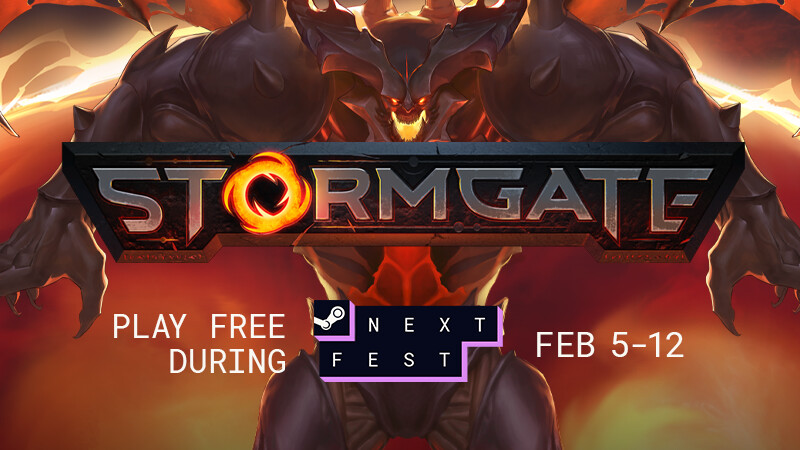
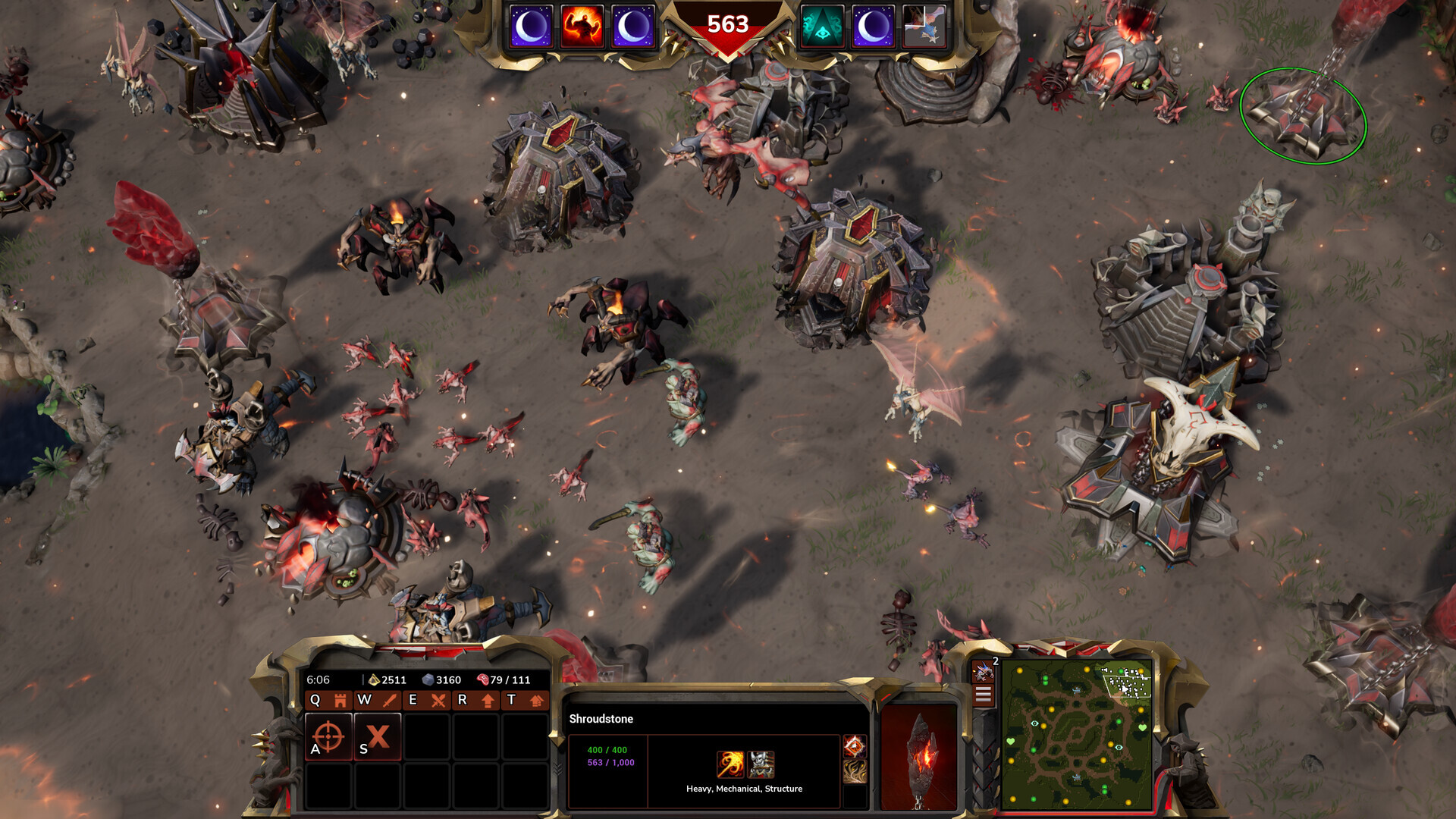
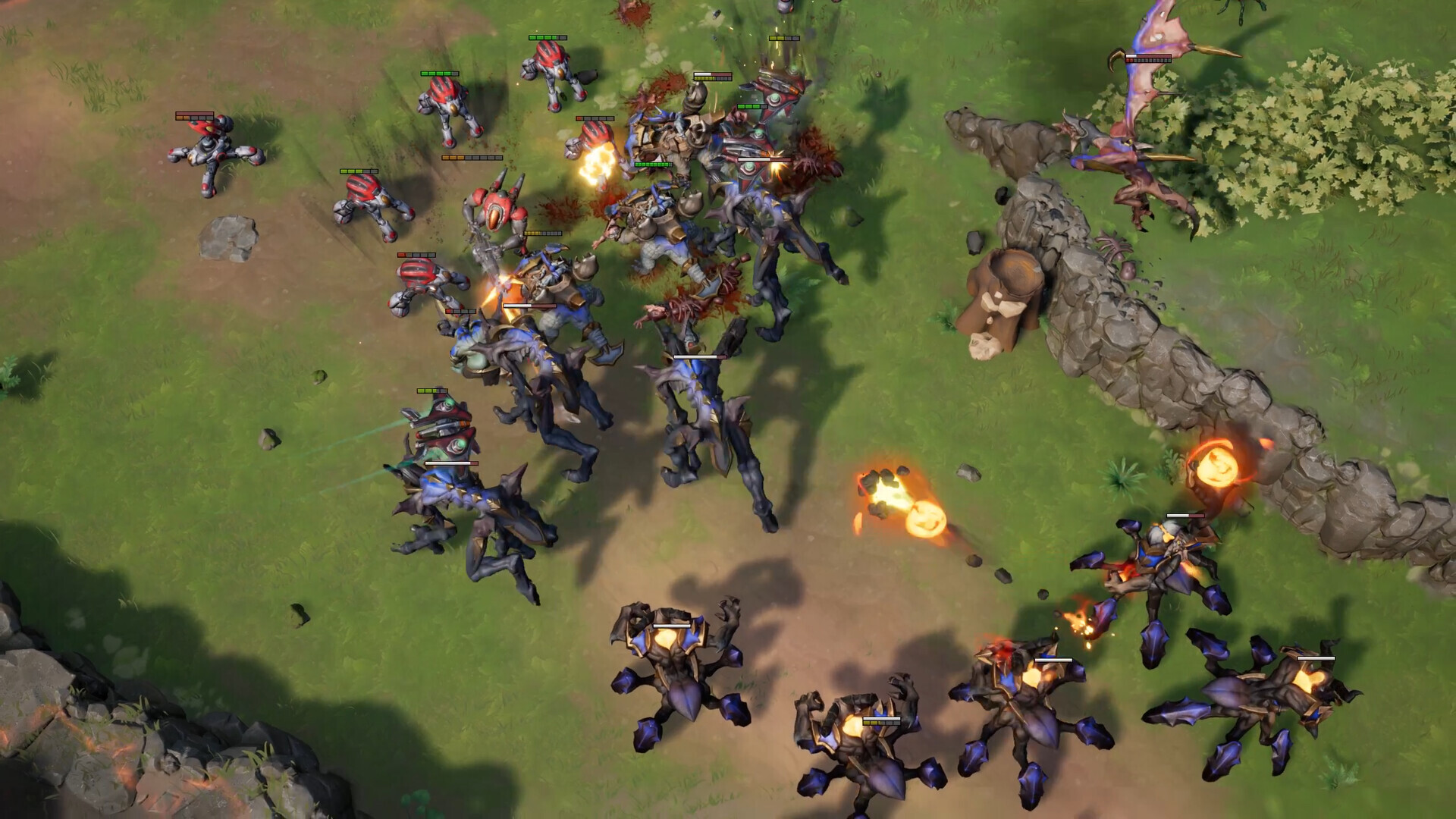
Frost Giant Presents Their "Stormgate" RTS Demo

Steam Next Fest is here and we're thrilled to have you join us to play the first-ever public demo of Stormgate! The Steam Next Fest demo includes full access to the current closed beta phase, codenamed "Elephant." (Each Stormgate playtest build is named after a classic RTS unit, in alphabetical order.) Here are some key insights into the current game state and what you can look forward to during the playtest.

How to Play With Friends
While our party system is still under construction, you can easily play with friends by creating custom games, either public or private, and sharing the Lobby ID. Crush that smack-talkin' Major Galt together in our 3P co-op map, WRECK HAVOC!

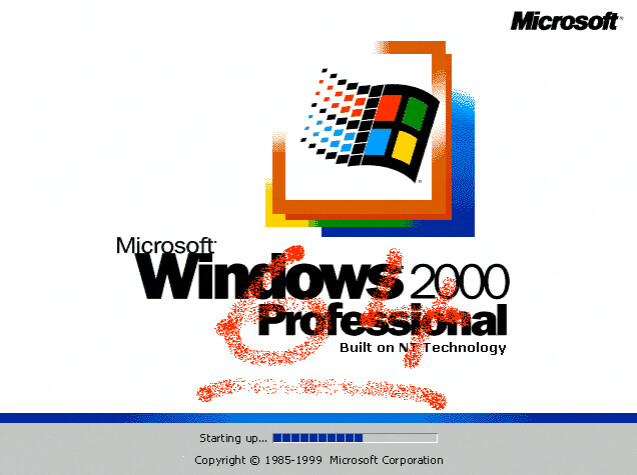
First Test Build of Windows 2000 64-bit Rediscovered

A 64-bit Dec Alpha C compiler was found by Virtually Fun's neozeed earlier this year - the software archeologist has been searching for various test builds of Microsoft Windows NT, including an "AXP64/ALPHA64 port," deemed extra special due to it being the first 64-bit version of Windows 2000 Professional. The small discovery of this obscure compiler was celebrated, but its functionality is ultimately not all that useful - neozeed notes that the items have been sitting within 1999 vintage Windows Platform SDKs: "It turns out that the AXP64 compiler set has been hiding in plain sight for DECADES. I know that it's so unlikely that we'd ever see any public release of a 64-bit version of Windows for the Alpha, but oddly enough the compiler, headers and libraries are all there. YES. You can make full executes for AXP64/Alpha64. Of course with no OS, so it's not like you can run them."

He continues: "Sadly as of today, there is no way to test. There is one surviving machine with Windows 2003 AXP64, outlined in an article by Raymond Chen. It's a great read about how Alpha64 NT port came to be. The machine is still sitting in Microsoft Archives. Hopefully one day someone can dig it out." The story could have ended there, but a follow up post appeared on Virtually Fun earlier this week - courtesy of guest contributor Antoni Sawicki (aka tenox) who has also experimented with the cross-compiler. He provided a little bit more historical context before making an interesting announcement: "The Win64 project for AXP64 and IA64 was code named "Sundown." Sadly, 64-bit Alpha AXP Windows was never released outside of Redmond."
Return to Keyword Browsing
Nov 11th, 2026 07:09 CST change timezone

New Forum Posts

Popular Reviews

TPU on YouTube

Controversial News Posts