Monday, June 15th 2015
Radeon R9 390X and R9 390 to Feature Faster Memory, Core Over Predecessors
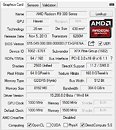
AMD's upcoming Radeon R9 390X and R9 390 performance-segment graphics cards reportedly feature higher GPU and memory clocks over the products they are a re-branding of, the R9 290X and R9 290, respectively. The 28 nm "Grenada" silicon they are based on, is identical to "Hawaii," down to the last transistor. This has been confirmed by leaked GPU-Z screenshots, which reveal the device-IDs of the two cards to be identical to those of the R9 290X and R9 290. Since the Device-IDs are the same, GPU-Z is reading the chip as "Hawaii." The code-name "Grenada" appears in the BIOS version string.
Unlike older, more blatant re-brands, such as GeForce 8800 GT to 9800 GT, AMD did drop in a few changes. To begin with, the memory amount has been doubled on both cards, to 8 GB. The memory clock has been increased from 1250 MHz (5.00 GHz GDDR5-effective), to 1500 MHz (6.00 GDDR5-effective), resulting in memory bandwidth increase to 384 GB/s, up from 320 GB/s. The core clock speed on the R9 390X is 1050 MHz (up from 1000 MHz on R9 290X); and 1000 MHz on the R9 390 (up from 947 MHz on the R9 290).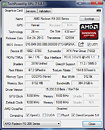
Source:
VideoCardz
Unlike older, more blatant re-brands, such as GeForce 8800 GT to 9800 GT, AMD did drop in a few changes. To begin with, the memory amount has been doubled on both cards, to 8 GB. The memory clock has been increased from 1250 MHz (5.00 GHz GDDR5-effective), to 1500 MHz (6.00 GDDR5-effective), resulting in memory bandwidth increase to 384 GB/s, up from 320 GB/s. The core clock speed on the R9 390X is 1050 MHz (up from 1000 MHz on R9 290X); and 1000 MHz on the R9 390 (up from 947 MHz on the R9 290).


114 Comments on Radeon R9 390X and R9 390 to Feature Faster Memory, Core Over Predecessors
Theoretically, yes its possible. In practice, we know there are many hurdles to be taken to turn that performance into a smooth gameplay experience. It took Nvidia a couple of driver updates to get their 970 with its memory arch working the way it should, and there are still fundamental issues with Maxwell drivers, including an unusually high number of crashes even outside the game. And it is only since a couple of years that we have had attention for microstutter/frame pacing issues and are looking to eliminate them from the driver. All this goes to show that while theoretically stuff 'should work fine' it really doesn't and the driver already is a huge collection of tweaks and per-game optimization.
HBM is going to force AMD into a separate driver dev process. Do you see it happening when the third rebrand is not even getting its Tonga optimizations?
I'm just being a realist instead of an optimist.
According to my GPU-Z my specs are almost the same as the R9 390(X) wow, as I predicted this would happen and continue. Technology is milked with model names and numbers. Each 3-6months to a year the performance only goes up 0.15-0.20%, sadly the price is the only thing that goes way up and not the performance. I see the pattern, I know this HBM(2)+ is just bullshitting their way through manipulating everything explaining how much quicker and better it is when really you just wasted another $400-$600 on another shitty graphics card. I'm wondering if we reached a peak with this technology due to fake science limiting us to the true potential of technology.Don't tell people to buy this card, it's a waste of money. They conned everyone same with NVIDIA. It's all milked technology and you all know it.
The only cards that actually improve anything much this round is the GTX 980ti/Titan X, and the Fury's with the GTX 980ti holding the crown.
Do note that 390X has double the memory. Overclocking doesn't change that.
The picture @andy721 posted shows a 4 GiB 290 versus an 8 GiB 390X.
Also, this thread is quite old and its an ancient subject at this point. since the last time this was really discussed was a couple months ago.
FYI