Friday, October 12th 2018

New PT Data: i9-9900K is 66% Pricier While Being Just 12% Faster than 2700X at Gaming
Principled Technologies (PT), which Intel paid to obtain some very outrageous test results for its Core i9-9900K eight-core processor launch event test-results, revised its benchmark data by improving its testing methodology partially. Initial tests by the outfit comparing Core i9-9900K to the Ryzen 7 2700X and Ryzen Threadripper 2950X and 2990WX, sprung up false and misleading results because PT tested the AMD chip with half its cores effectively disabled, and crippled its memory controller with an extremely sub-optimal memory configuration (4-module + dual-rank clocked high, leaving the motherboard to significantly loosen up timings).
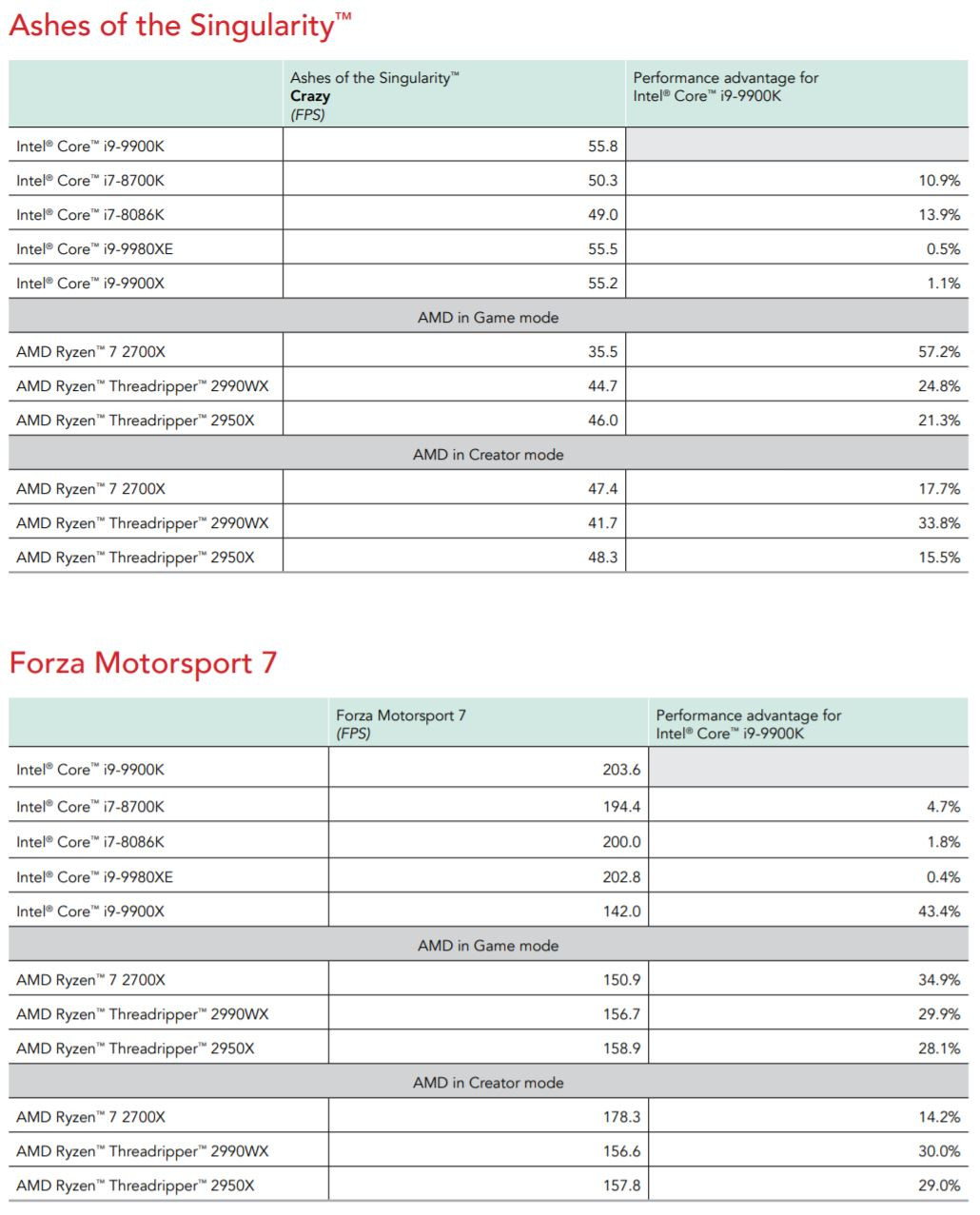
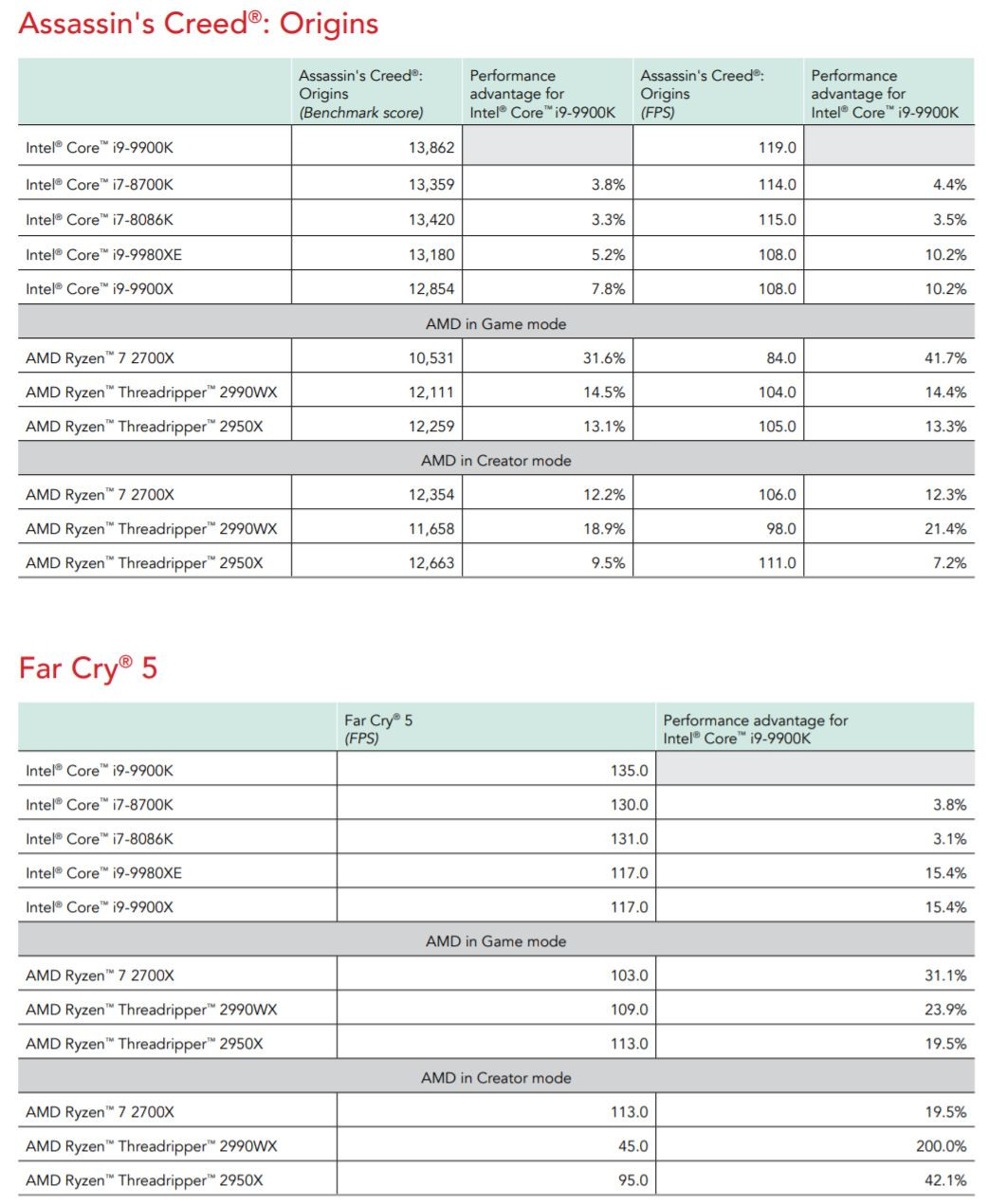
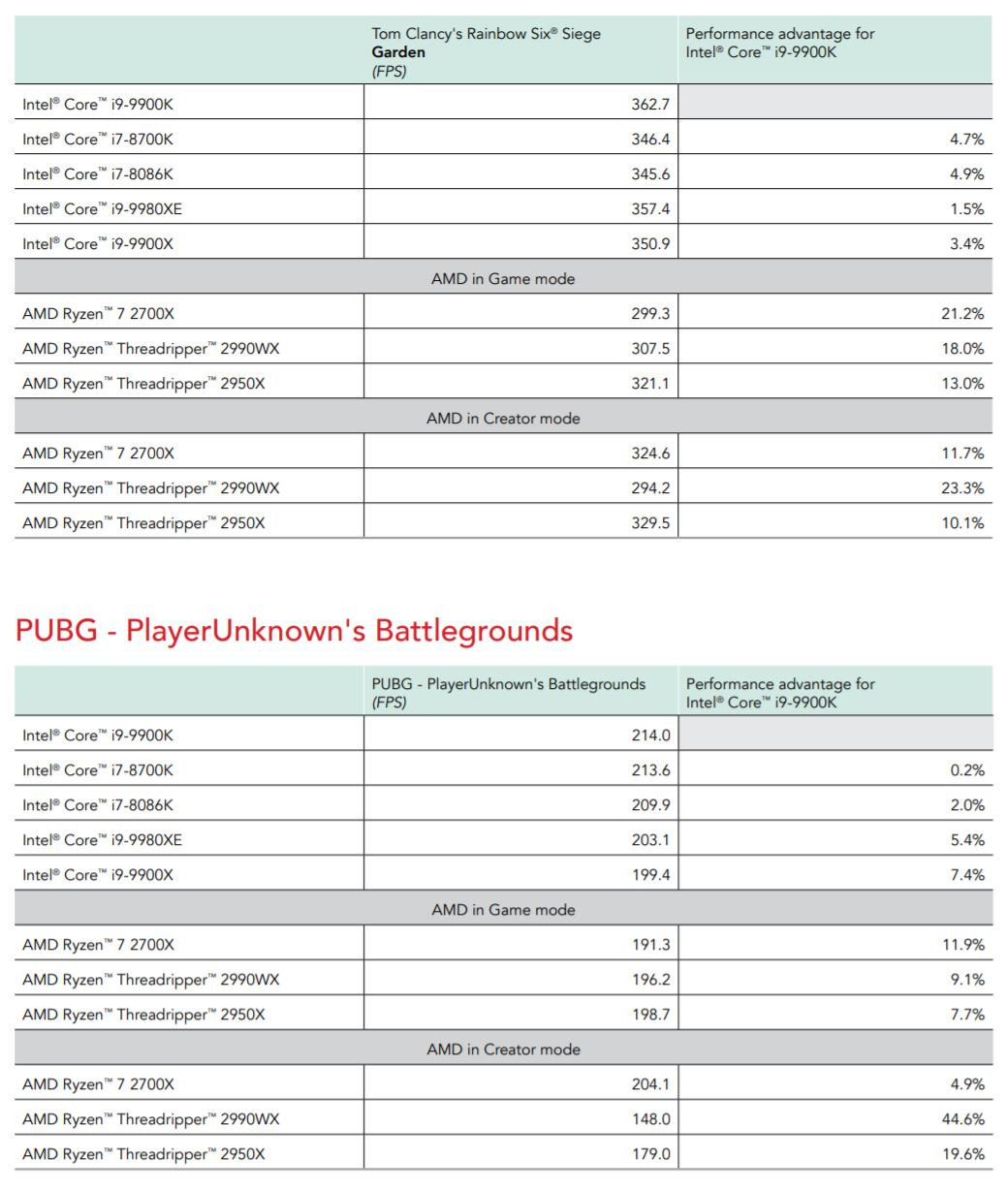
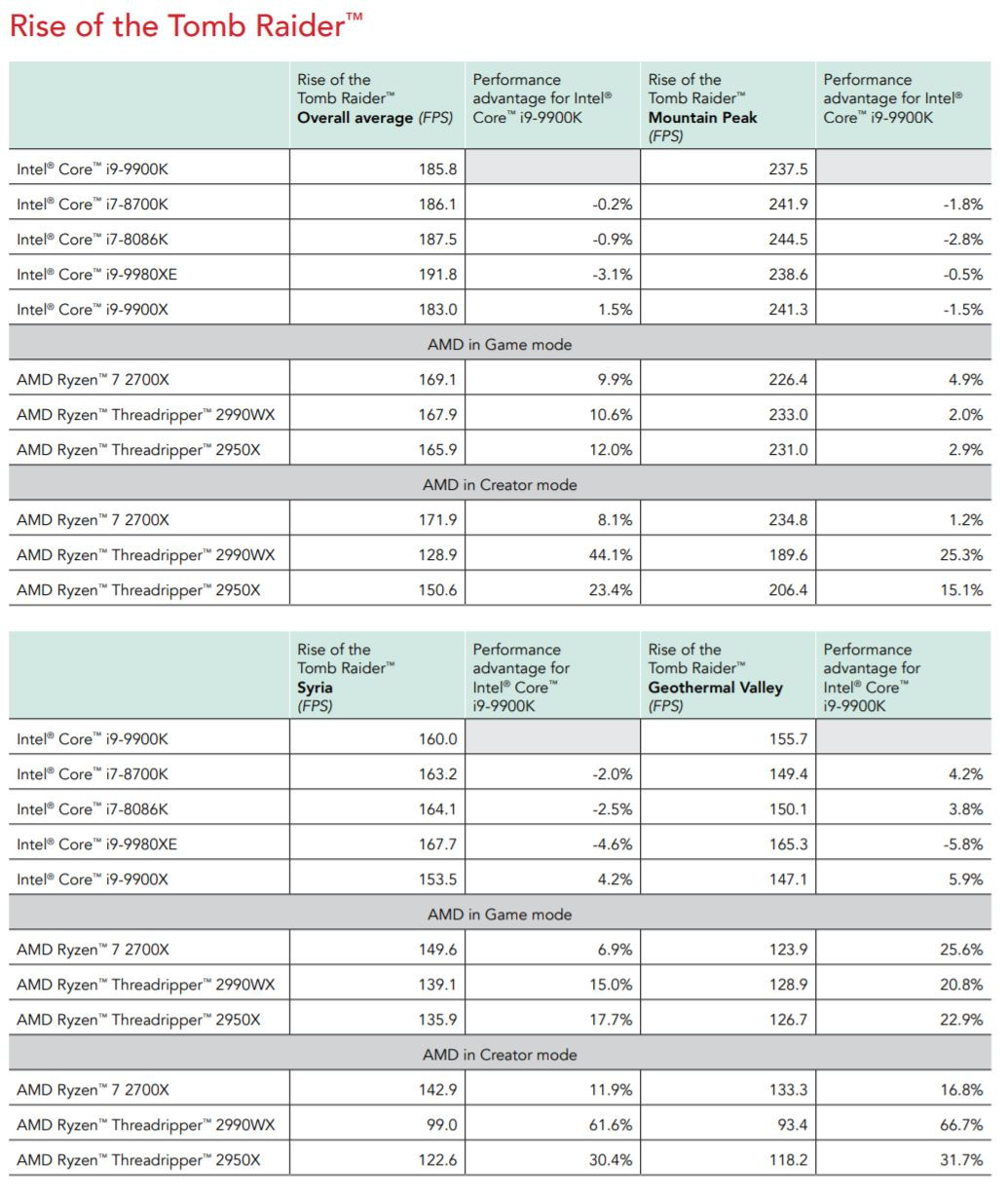
The original testing provided us with such gems as the i9-9900K "being up to 50 percent faster than 2700X at gaming." As part of its revised testing, while Principled Technologies corrected half its rookie-mistakes, by running the 2700X in the default "Creator Mode" that enables all 8 cores; it didn't correct the sub-optimal memory. Despite this, the data shows gaming performance percentage-differences between the i9-9900K and the 2700X narrow down to single-digit or around 12.39 percent on average, seldom crossing 20 percent. This is a significant departure from the earlier testing, which skewed the average on the basis of >40% differences in some games, due to half the cores being effectively disabled on the 2700X. The bottom-line of PT's new data is this: the Core i9-9900K is roughly 12 percent faster than the Ryzen 7 2700X at gaming, while being a whopping 66% pricier ($319 vs. $530 average online prices).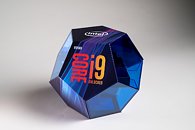 This whopping 12.3% gap between the i9-9900K and 2700X could narrow further to single-digit percentages if the 2700X is tested with an optimal memory configuration, such as single-rank 2-module dual-channel, with memory timings of around 14-14-14-34, even if the memory clock remains at DDR4-2933 MHz.
Intel responded to these "triumphant" new numbers with the following statement:
The entire testing data follows: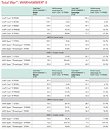
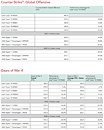
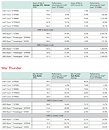
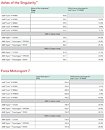
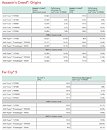
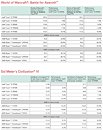
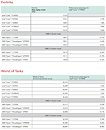
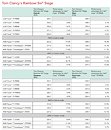
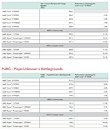
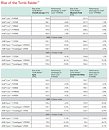
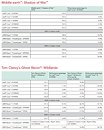
Source:
Principled Technologies (PDF)
The original testing provided us with such gems as the i9-9900K "being up to 50 percent faster than 2700X at gaming." As part of its revised testing, while Principled Technologies corrected half its rookie-mistakes, by running the 2700X in the default "Creator Mode" that enables all 8 cores; it didn't correct the sub-optimal memory. Despite this, the data shows gaming performance percentage-differences between the i9-9900K and the 2700X narrow down to single-digit or around 12.39 percent on average, seldom crossing 20 percent. This is a significant departure from the earlier testing, which skewed the average on the basis of >40% differences in some games, due to half the cores being effectively disabled on the 2700X. The bottom-line of PT's new data is this: the Core i9-9900K is roughly 12 percent faster than the Ryzen 7 2700X at gaming, while being a whopping 66% pricier ($319 vs. $530 average online prices).

Intel responded to these "triumphant" new numbers with the following statement:
Given the feedback from the tech community, we are pleased that Principled Technologies ran additional tests. They've now published these results along with even more detail on the configurations used and the rationale. The results continue to show that the 9th Gen Intel Core i9-9900K is the world's best gaming processor. We are thankful to Principled Technologies' time and transparency throughout the process. We always appreciate feedback from the tech community and are looking forward to comprehensive third party reviews coming out on October 19.The media never disputed the possibility of i9-9900K being faster than the 2700X. It did, however, call out the bovine defecation peddled as "performance advantage data."
The entire testing data follows:






322 Comments on New PT Data: i9-9900K is 66% Pricier While Being Just 12% Faster than 2700X at Gaming
Don't this it's possible but, if it were, what could really up the performance of AMD's chips is decoupling the Infinity Fabric from the RAM frequency to a divider that gave an extra ... say ... 1/8 th more speed. This by itself would boost performance and the benefits could by higher then going from 2133 average timings to 3200 "Stilt" timings, but it would also boost power consumption by as much as that 20W mentioned, if not more.
Enough OT.
What i'll be looking forward to with interest is the IPC change VS older / competition platforms: if @W1zzard would be so kind as to test all the CPUs planned for the review @ a suitable speed, without turbo / XFR, while having good RAM timings, i'm sure we TPUers would all appreciate it.
Intel i9 9900K $948.99NZD (inc GST 15%) vs AMD Ryzen 7 2700X $508.99 (inc GST 15%) all prices in NZD and exclude shipping cost
Seems like all of the dealing for slave wages mostly benefits us Americans. I don't like it, personally.
My 5960X is still running perfectly fine and I'm very excited for AMD's next CPUs that are to be released at some point... The CPU war is back where it should be and with the shortages that Intel are facing with their CPUs becoming more and more expensive, I don't see anyone really buying Intel if they want price/performance.
I'll just point you here.... with results from a rather overclocked Ryzen... I know it's only CB 15 and I know you'd never be able to use the CPU at these speeds day to day (LN2 or whatever was used isn't cheap at all and not really idea for 24/7 conditions!! :laugh:) but just goes to show how good AMD's Ryzen can be... Thanks to @Johan45 for sharing his results :)
I also own a Intel 5960xOC'd to 4.4 under custom water with a Gigabyte Aorus GTX1080TI with a waterblock; AMD 2700X stock under custom water with a GTX1080 under water and an EK block and finally an AMD 2600x with AIO cooler and GTX1070TI (the VR box portable).
No one doubted the 9900k would be the fastest gaming cpu. What is sad is the way Intel allowed a paid third part to test and release the final results without having the Intel engineers who know the true numbers check over the testing procedure first. GOOD GRIEF! Is the marketing department that strong that they put the clamps on the engineering department? What a screw up. Perhaps panic mode has Intel not executing properly.
Let's look a pros and cons.
PROS:
9900K will be the fastest gaming cpu for now.
CON
It will be @$200 more expensive than the 2700X
PRO
It will use the latest Intel mb/chipset
CONS
You will have to buy the 390 mb to get the most out of the 9900K
Your 8700K mb will accept the 9900k but depending upon it's quality may not OC as well.
The AMD370 chipset (which I have) supported the 1800X which I upped to the 2700X AND will support at least the upcoming Zen2.
This thread will go on and on and on.
When Zen2 comes out, and it will, I wonder how much I will pay for the fastest chip and I wonder if it will match or beat the 9900K?
edit: By the time that comes out though, I think Intel will be just right behind with another product lineup too.
What I misread was the overclocking ability of the Intel 370 mbs. BTW the same can be said for AMDs 370/470 mbs.
StrayKAT, I think Zen2 will be @4.5 to at most 4.6OCd while the 2700X is 4.2 to 4.3 MAX. The difference may also be the number of cores of the highest end Zen2. At least 8C/16T but rumors seem to be as high as 12C/24T. If AMD can release at stock a 12C/24T Zen2 stock that OCs to 4.5 look out.
What is also missing in this thread is that Jim Keller, of Ryzen renown, is now on Intel's payroll.
I doubt he had much, if anything to do with the 9900K but he sure knows how to bring people together to design a solid cpu lineup.
I think you can count yourself lucky if they can put 4.6 Ghz on the box.Thank you! Common sense...
P.S. The benchmark comparison of processors from different brands, must be made based on price. Only.
That is, of course, if you are not GPU limited in any way.
And that changes the perspective entirely, too - now consider the fact that a 9700K will perform 100% the same with 8 cores available and likely clock a tiny bit higher too, and the 66% price gap is what, 35-40% for a potential 20-40%+ performance advantage.
But, this title does generate more clicks. I get it :)