Sunday, January 6th 2019

NVIDIA G-SYNC now Supports FreeSync/VESA Adaptive-Sync Technology
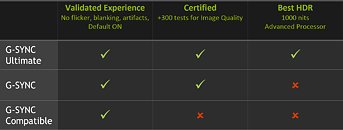
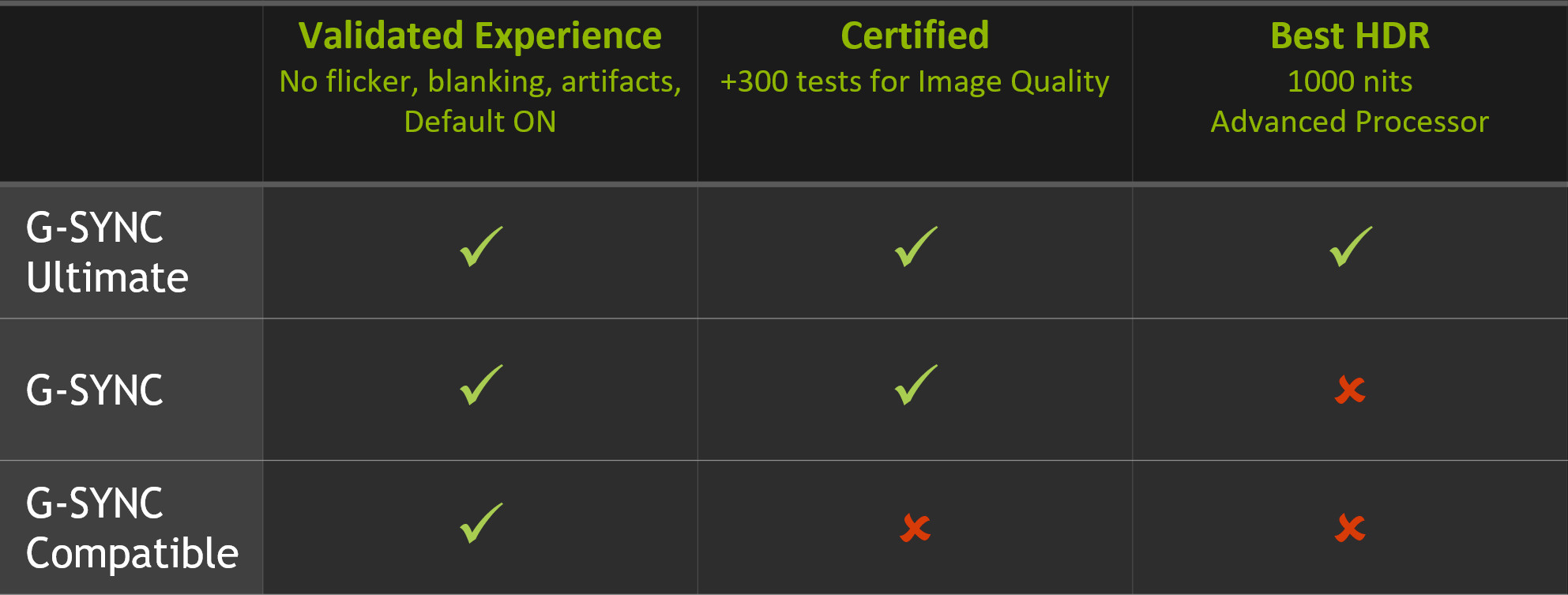
NVIDIA finally got around to realizing that the number of monitors with VESA adaptive-sync overwhelmingly outnumber those supporting NVIDIA G-Sync, and is going ahead with adding support for adaptive-sync monitors. This however, comes with a big rider. NVIDIA is not immediately going to unlock adaptive-sync to all monitors, just the ones it has tested and found to work "perfectly" with their hardware. NVIDIA announced that it has found a handful of the 550+ monitor models in the market that support adaptive-sync, and has enabled support to them. Over time, as it tests more monitors, support for these monitors will be added through GeForce driver updates, as a "certified" monitor.
At their CES event, the company provided a list of monitors that they already tested and that fulfill all requirements. G-Sync support for these models from Acer, ASUS, AOC, Agon and BenQ will be automatically enabled with a driver update on January 15th.
Update: We received word from NVIDIA that you can manually enable G-SYNC on all Adaptive-Sync monitors, even non-certified ones: "For gamers who have monitors that we have not yet tested, or that have failed validation, we'll give you an option to manually enable VRR, too."
Update 2: NVIDIA released these new Adaptive-Sync capable drivers, we tested G-SYNC on a FreeSync monitor.
At their CES event, the company provided a list of monitors that they already tested and that fulfill all requirements. G-Sync support for these models from Acer, ASUS, AOC, Agon and BenQ will be automatically enabled with a driver update on January 15th.
Update: We received word from NVIDIA that you can manually enable G-SYNC on all Adaptive-Sync monitors, even non-certified ones: "For gamers who have monitors that we have not yet tested, or that have failed validation, we'll give you an option to manually enable VRR, too."
Update 2: NVIDIA released these new Adaptive-Sync capable drivers, we tested G-SYNC on a FreeSync monitor.

231 Comments on NVIDIA G-SYNC now Supports FreeSync/VESA Adaptive-Sync Technology
There you go :) Free of chargeWasn't that blatantly obvious from the get-go? Gsync was always a ripoff.
G-snyc wasn't a complete ripoff, come on mate. It's not black and white.
The bye g-sync tax would be true only if all freesync monitors would be allowed which is not the case.
Update: We received word from NVIDIA that you can manually enable G-SYNC on all Adaptive-Sync monitors, even non-certified ones: "For gamers who have monitors that we have not yet tested, or that have failed validation, we'll give you an option to manually enable VRR, too." I guess, if that makes people feel better, by all means :D
Also, a monitor with only G-Sync will lock you down with nVidia limiting you future video card choices.It still is, don't worry. The plan didn't go as they planned it yet again.
Thank AMD for this, we all knew this has been coming, we did not know when, finally.
Honest question, if you could use a FreeSync display on a nVidia card (any FreeSync Display,) would you ever buy a G-Sync screen with the nVidia tax tacked on to it? I sure as hell wouldn't.
- DP Adaptive sync that (half of) Freesync is based on, has been an established thing for several years now.
- HDMI 2.1 is coming, just look at the announcements on this CES. It has VRR in the standard and it is coming to TVs first and monitors probably won't be far behind.
Nvidia has a desperate need to get on this VRR standards train. GSync worked for them when there were no widely adopted alternatives but with HDMI now joining DP having standard VRR functionality... they had no choice.The thing is, FreeSync will only work on it while your FPS is between 40 and 60. With LFC, it would also work when FPS drops below that. This is one of the things GSync got right from the start.
I think what's more likely is that Gsync sales were not all that much to begin with (its an overpriced niche) and this counters the AMD FreeSync offerings that are consistently better deals in the midrange. AMD doesn't really even need new GPUs to make Gsync look 'meh'.
One thing is absolutely true, and that is 'Thank you AMD'. They followed Gsync suit with their own open technology, and this time it stuck, it got better, and it effected a change in the marketplace. Its not always like that, and I think its fair to admit this was a fantastic move on their part. Not so much Nvidia, for them its just reality catching up and they should have done this years ago.
I wonder what the next item of "goodwill" nGreedia will bestow upon us mere plebs, after the Phys-X and Greed-Sync announcements...?
Nvidia told me adaptive sync was so terrible that you needed a their hardware solution with a fat mark up.