Wednesday, April 3rd 2019

Further Optimizations to NVIDIA RTX, DLSS For Battlefield V
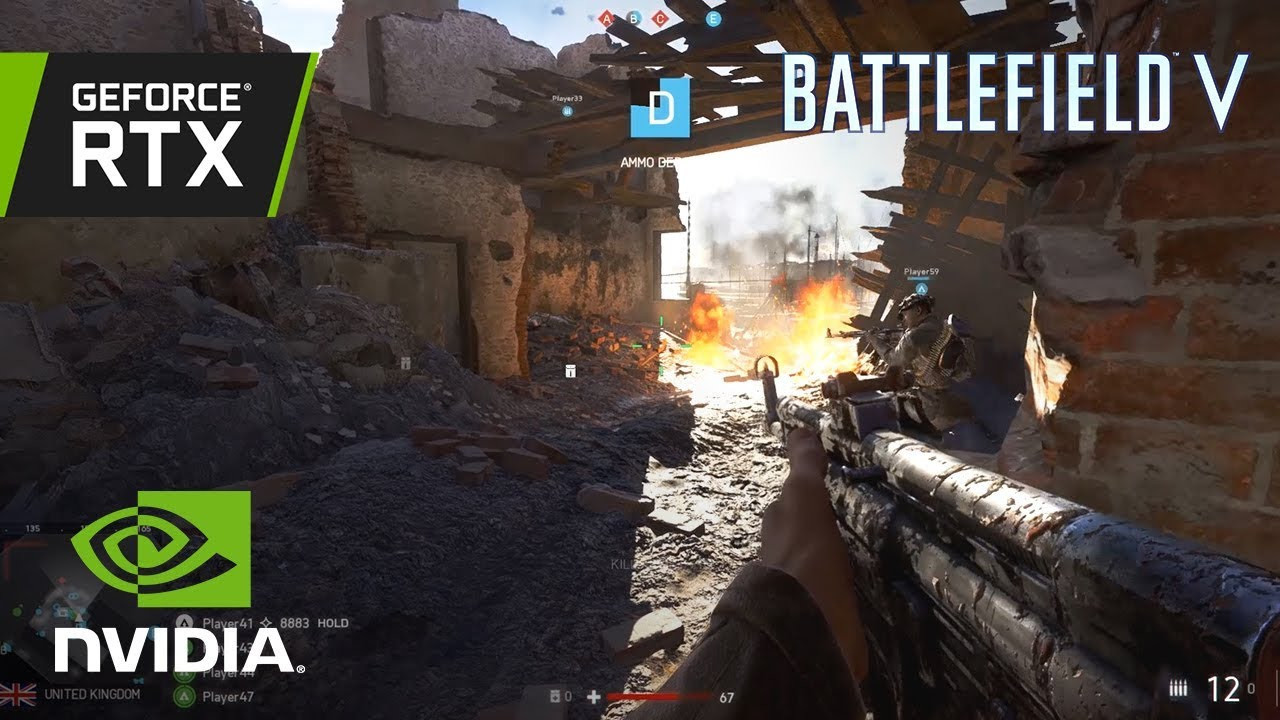
DICE and NVIDIA have been hard at work on their partnership to bring RTX and DLSS to Battlefield V. It seems the tech is a constant work in progress, as this isn't the first time the companies have introduced optimizations to the games' handling of DLSS and RTX since its release. According to the patch notes from the latest update, the Trial by Fire Update #2, there have been further optimizations to RTX on Ultra - with increased ray trace counts to improve quality of reflections, which will definitely hit performance further.
Additionally, DLSS now supports rendering in borderless mode, and DLSS sharpness has also been improved. This likely means that NVIDIA's servers are still hard at work processing their "ground truth" image for the available scenarios in-game, further optimizing image quality. This is one of those rare technologies that will be improving with time, bringing the "fine wine" argument to (likely) its clearest scenario yet.
Sources:
DICE, via Reddit
Additionally, DLSS now supports rendering in borderless mode, and DLSS sharpness has also been improved. This likely means that NVIDIA's servers are still hard at work processing their "ground truth" image for the available scenarios in-game, further optimizing image quality. This is one of those rare technologies that will be improving with time, bringing the "fine wine" argument to (likely) its clearest scenario yet.
32 Comments on Further Optimizations to NVIDIA RTX, DLSS For Battlefield V
But lets face it, DLSS was a crapstorm, and NEEDED fixing. Oh the hype when these RTX cards were launched, and most of it has turned to crap since. At least DLSS problems seem to be software only, and stands a chance of being improved. That's something, even if it's a little something.
You make it sound like "static" renders are easy and light, because there is no short deadline - it's just 1 frame.
In reality though, high-quality renders often take hours to make. Now... that could be hours on a decent workstation to make a car render for marketing materials. But it also could be hours on HPC cluster to make a single frame for a movie. And if you're doing a movie, this could mean weeks of 100% load on a supercomputer.
For example the cluster used for Avatar was in Top500 at the time (in the first half: among clusters used for particle research and government projects).
You can make almost any problem "light" or "hard" by manipulating the significance of result (accepted error).
In fact gaming could be called "light", because there are physical limits that make further advancement yield no actual gain. I.e. there exist resolution X and frequency Y that limit what you, as a human, can analyze. :-)