Tuesday, June 4th 2019

AMD Announces the Radeon Pro Vega II and Pro Vega II Duo Graphics Cards
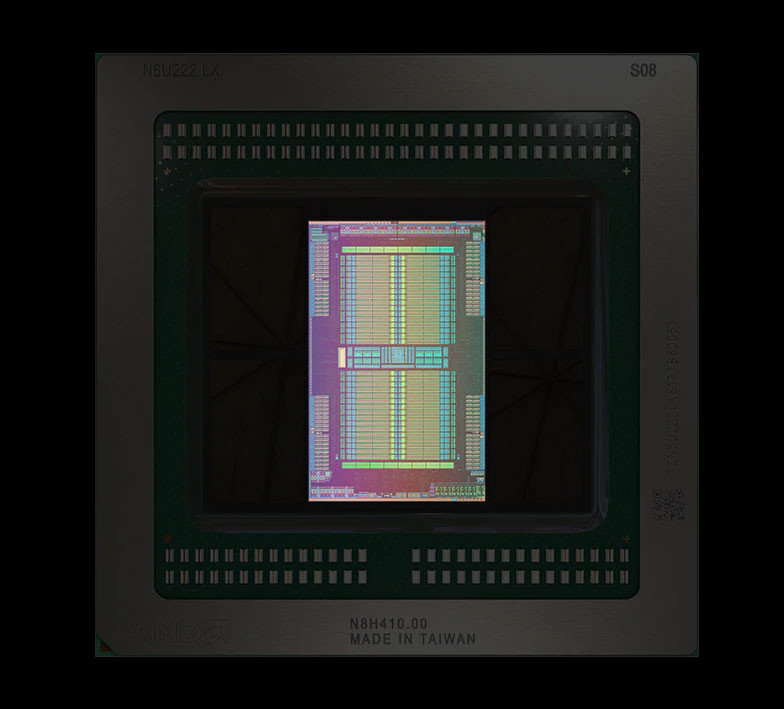
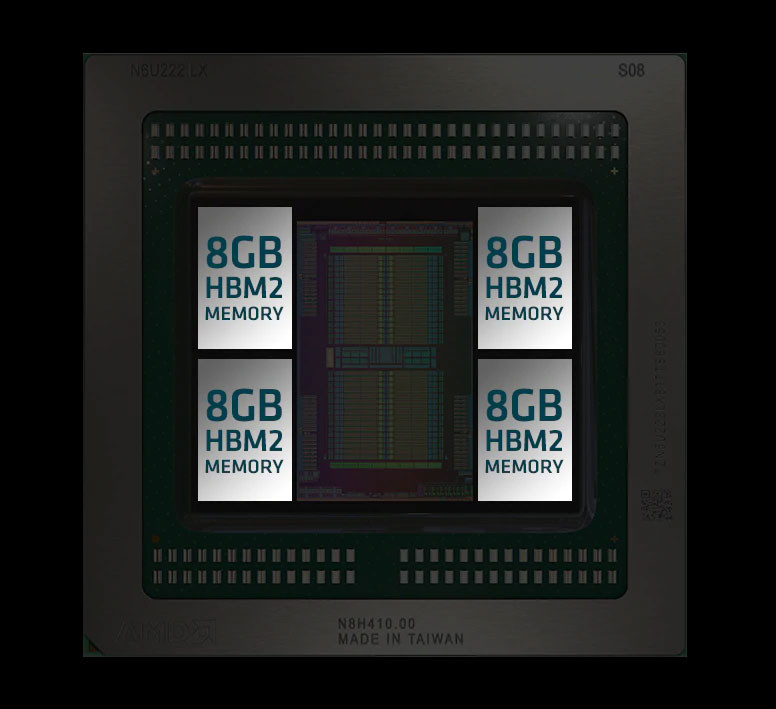
AMD today announced the Radeon Pro Vega II and Pro Vega II Duo graphics cards, making their debut with the new Apple Mac Pro workstation. Based on an enhanced 32 GB variant of the 7 nm "Vega 20" MCM, the Radeon Pro Vega II maxes out its GPU silicon, with 4,096 stream processors, 1.70 GHz peak engine clock, 32 GB of 4096-bit HBM2 memory, and 1 TB/s of memory bandwidth. The card features both PCI-Express 3.0 x16 and InfinityFabric interfaces. As its name suggests, the Pro Vega II is designed for professional workloads, and comes with certifications for nearly all professional content creation applications.
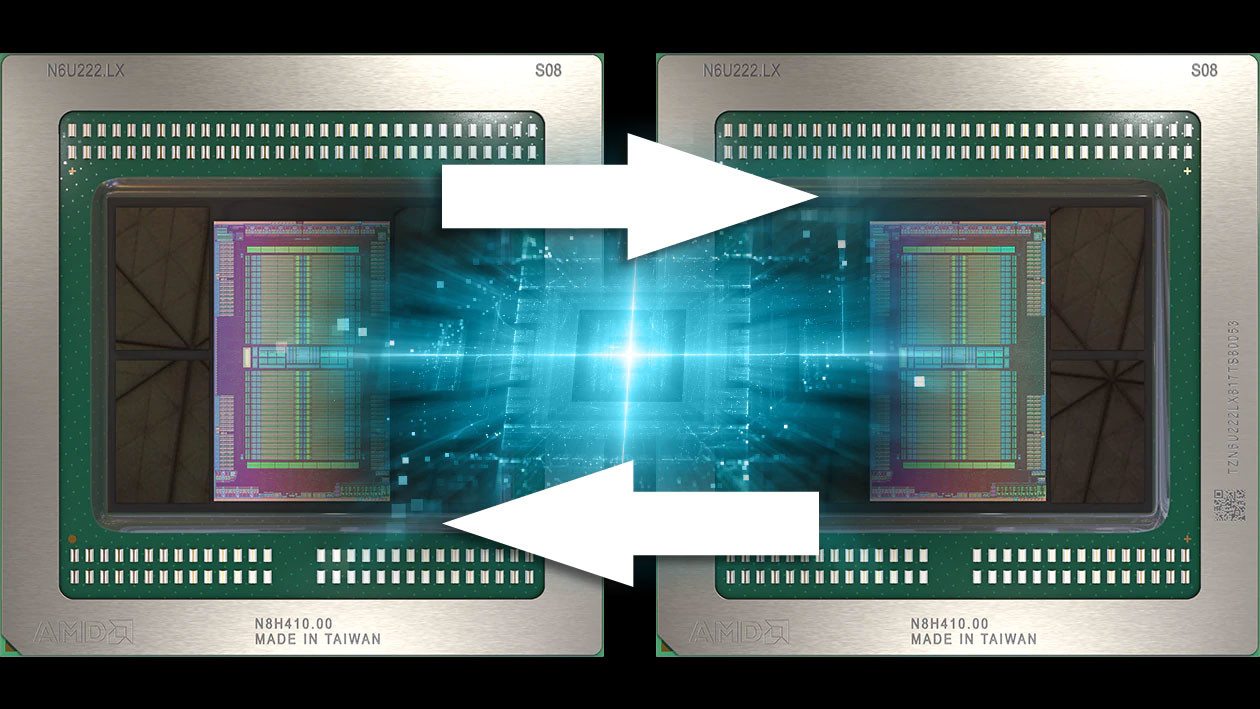
The Radeon Pro Vega II Duo is the first dual-GPU graphics card from AMD in ages. Purpose built for the Mac Pro (and available on the Apple workstation only), this card puts two fully unlocked "Vega 20" MCMs with 32 GB HBM2 memory each on a single PCB. The card uses a bridge chip to connect the two GPUs to the system bus, but in addition, has an 84.5 GB/s InfinityFabric link running between the two GPUs, for rapid memory access, GPU and memory virtualization, and interoperability between the two GPUs, bypassing the host system bus. In addition to certifications for every conceivable content creation suite for the MacOS platform, AMD dropped in heavy optimization for the Metal 3D graphics API. For now the two graphics cards are only available as options for the Apple Mac Pro. The single-GPU Pro Vega II may see standalone product availability later this year, but the Pro Vega II Duo will remain a Mac Pro-exclusive.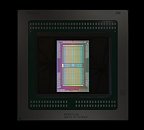
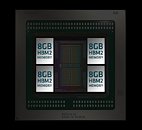
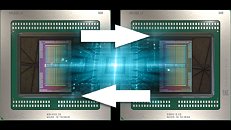
The Radeon Pro Vega II Duo is the first dual-GPU graphics card from AMD in ages. Purpose built for the Mac Pro (and available on the Apple workstation only), this card puts two fully unlocked "Vega 20" MCMs with 32 GB HBM2 memory each on a single PCB. The card uses a bridge chip to connect the two GPUs to the system bus, but in addition, has an 84.5 GB/s InfinityFabric link running between the two GPUs, for rapid memory access, GPU and memory virtualization, and interoperability between the two GPUs, bypassing the host system bus. In addition to certifications for every conceivable content creation suite for the MacOS platform, AMD dropped in heavy optimization for the Metal 3D graphics API. For now the two graphics cards are only available as options for the Apple Mac Pro. The single-GPU Pro Vega II may see standalone product availability later this year, but the Pro Vega II Duo will remain a Mac Pro-exclusive.
41 Comments on AMD Announces the Radeon Pro Vega II and Pro Vega II Duo Graphics Cards
Seriously though, this explains many of AMD's decisions. Very interestied to see what future this dual gpu has.
The new mac pro cheesegrater can take 2 single or dual gpus cards, and link them together.
Sow the seeds, reap the reward, Apple is expanding it's roots again into content creation focused growth. About time, cause like it or not us PC plebes have benefitted from the drive for better monitors.
Jokes aside, skipping this too even if i was a Apple user i still would not buying this.
I do love Apple’s internal design cleanness. This thing could just as easily have a glass shell.
A proper PSU is capable of putting 12A per yellow wire, easily. So with a 2x 8 pin connector your looking at 6x 12A = 72A or roughly 1200 watts alone, if you take the PCI-E slot not into account. There are cards with 3x 8 pin which increase this even further to 108A.
If cables was your concern, then load balancing is your friend. Many OC'ers just use a bunch of PSU's together, and there are even 2000Watts PSU's out there that suit the job perfectly running a rough overclocked system without even maxing the power consumption out that fast.
If you buy proper equipment you never face any of those issues you mention. It's pretty much designed to use it in a safe way. Your asking for problems if your going to cut wires and hack them up and get electrocuted lol.
I hope this means AMD is ready to give NVIDIA some meaningful competition. It must perform better than NVIDIA's tensor cores if Apple picked it for their HEDT, granted it's using twice as many GPUs to do so.
guess we will have to wait and see :)
A pity you can't rant about lack of heavily denoised RT gimmick.
So 28 Tflop single, 56 Half precision, 112 int8 tops.
Believe me, I'm not a fanboy, I want AMD to succeed so I can get excited about product launches from both sides of the aisle instead of the one-sided progression we've had for years, but I'm also a realist, and tech marketing doesn't affect me anymore than a late night infomercial for pillows, so without real-world testing it's hard to say.
BUT
Apple DOES have product access, and has assumingly tested it thoroughly, and didn't decide to base their platform around it on a whim. That gives hope.