Monday, August 3rd 2020

Intel Accused of Infringing FinFET Patents of the Microelectronics Institute of the Chinese Academy of Sciences

Today we are finding out that Intel has allegedly infringed FinFET patents of Microelectronics Institute of the Chinese Academy of Sciences. On July 28th, the patent review committee has heard an application that accuses Intel of violating a patent 201110240931.5 commonly referred to as FinFET patent. The patent dates back to 2011, and it comes from the Chinese Academy of Sciences, mainly Microelectronics Institute. The Chinese patent holders are asking for as much as 200 million yuan, which roughly translates to 28,664,380 US dollars. Given that this patent infringement is a major one for Intel, it is sure that a company will be pursued extensively in court. All of the Intel's semiconductors use FinFET technology, and if this is true, the violation is rather big. For more in detail reading, please refer to the source which goes through the history of Intel and Microelectronics Institute patent violation filing.
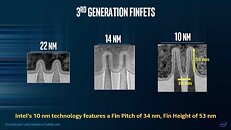
Intel 3rd generation FInFETs
Sources: Small Tech News, via @chiakokhua (Twitter)
Add your own comment

64 Comments on Intel Accused of Infringing FinFET Patents of the Microelectronics Institute of the Chinese Academy of Sciences

#26
voltage
Intel has been using finfet way before this filling. it seems the Chinese noticed Intel forgot to file and beat them to it, now suing. despicable tactic.
Posted on Reply
#27
sergionography
Chinese institute must've stole it first. Probably from Intel itself before it was officially filed as a parent.
Posted on Reply
#28
ajc9988
lexluthermiesterNo one said there wasn't.

Except that Intel R&D'ed, engineered and used their FinFET process before the 2011 timeframe MICAS claims. Their claim is without merit.
Are you familiar with improvement/blocking patents? The ones where you tweak the original in a novel way, thereby improving upon the initial patent? Then when someone uses your improvement, not just the original design, then you would need a license to use that improvement. This often leads to cross-licenses, etc.

Here, you and others are making grand statements on something you have no details or nuance on yet. This story, as presented here alone, is insufficient to draw conclusions, and by doing so about China's possession of IP that a company in our country may have violated says you are biased, if not bigoted.

For example, look up how many patents Huawei has as a proportion of the telecom market. I'll wait. What you will find is Huawei is the leader on patents. Now, Huawei has even filed and been granted US patents. Huawei then recently has sued Verizon for violation thereof. And Marco Rubio, around that time, proposed something similar to a bill of attainder refusing Huawei the right to seek enforcement in US courts. That would literally be us not honoring our IP law for patents we granted to foreign companies. Didn't pass, but you should look it up before speaking.

I can give numerous examples. Also, to the person that said they violated copyright, that makes no sense. No one country's government or one company is guilty of the crimes of others within those same borders, or else you would be guilty of fraud, war crimes, etc. Maybe charge you with a crime committed by the unibomber, right? See how absurd on its face that is.

Instead, let's wait to find out the nuances of the case before passing judgement. It may be a situation similar to when Samsung was sued by the Korea Advanced Institute of Science and Technology for infringement of their finFET patent.

But this anti-Chinese rhetoric without reason disgusts me!
Posted on Reply
#29
lexluthermiester
ajc9988Are you familiar with improvement/blocking patents? The ones where you tweak the original in a novel way, thereby improving upon the initial patent?
Yes, does not apply here as Intel came up with their versions of the idea before MICAS did. Again, MICAS claims has no merit and will fail. This is little more than China state sponsored nonsense.
For reference, the originating article;
www.smalltechnews.com/archives/194570
ajc9988Here, you and others are making grand statements on something you have no details or nuance on yet. This story, as presented here alone, is insufficient to draw conclusions, and by doing so about China's possession of IP that a company in our country may have violated says you are biased, if not bigoted.
That was adorable, you trying to throw veiled insults. Don't do that.

There is no reference to an actual court case as of yet and a bit of research yielded no results of one existing. That article is from a very small site of dubious quality and might be a fluff piece. Even if there is, this nonsense is little more than additional tit-for-tat that has been going on for years.
Posted on Reply
#30
ajc9988
lexluthermiesterYes, does not apply here as Intel came up with their versions of the idea before MICAS did. Again, MICAS claims has no merit and will fail. This is little more than China state sponsored nonsense.
Are you daft? If Intel did not file a patent for the improvement, or publish in a jurisdiction that allows first to publish, then it can still violate an improving patent, even if you own the patent to the underlying idea, which I believe the one Intel relied on was dated to between 1999 and 2001.

Now, can you give me the proof that they in no way used the changes to the patent filed there? Can you show, to more probable than not, that the patents are identical and that there is nothing new or novel in the patent filed 11 years later, give or take, when I showed there is a finFET patent Samsung was sued over filed by the Korea Advanced Institute of Science and Technology in 2003: patents.google.com/patent/US6885055B2/en (note, that is not Intel's patent for finFET, because there are multiple types of finFETs and implementations).

So, please, show me the body of evidence proving these patents are identical without any novelty. Please show me that Intel's implementation when building any chip since their first 22nm finFET design did not, in any way, implement what is being discussed in the Chinese patent, if you cannot invalidate it. Then we can sit down and hold your position. But not a second before that.

Edit: changed the characterization of the 2003 patent filing to more accurately state the relationship. Samsung had worked with KAIST on finFETs at one point, but lost the court battle.
Posted on Reply
#31
TheoneandonlyMrK
ajc9988Are you daft? If Intel did not file a patent for the improvement, or publish in a jurisdiction that allows first to publish, then it can still violate an improving patent, even if you own the patent to the underlying idea, which I believe the one Intel relied on was dated to between 1999 and 2001.

Now, can you give me the proof that they in no way used the changes to the patent filed there? Can you show, to more probable than not, that the patents are identical and that there is nothing new or novel in the patent filed 11 years later, give or take, when I showed there is a finFET patent Samsung filed which was the 2003 filing: patents.google.com/patent/US6885055B2/en (note, that is not Intel's patent for finFET, because there are multiple types of finFETs and implementations).

So, please, show me the body of evidence proving these patents are identical without any novelty. Please show me that Intel's implementation when building any chip since their first 22nm finFET design did not, in any way, implement what is being discussed in the Chinese patent, if you cannot invalidate it. Then we can sit down and hold your position. But not a second before that.
We should probably stick to speculation and let the lawyers actually decide.
I get your sentiment though, starting from an allegedly bigoted standpoint is not helpful on a global forum.
However no one's blind either and we all shop online.

So far your edging it (name calling)but it's not right to try to close down debate's with the. Bigot card either.
Posted on Reply
#32
RandallFlagg
Let's talk about China and IP for a moment.

Chinese Land Rover Evoque ("Named Wind Rover"):


Knockoff of CREST toothpaste:


Chinese knockoff of Heineken beer:


Funny video of a Chinese BMW knockoff that completely rusted apart after 2 years and 100,000 Km (60K miles):


So I could go on and on and on and fill a book with this stuff. It's pathetic what they've been allowed to get away with.
Posted on Reply
#33
lexluthermiester
ajc9988Are you daft?
You seem to need a mirror..
ajc9988Now, can you give me the proof that they in no way used the changes to the patent filed there?
Sure. Intel RELEASED products that used the process subject in the patent the same year the patent was filed. Intel R&D would have needed at least 3 years of lead-up time(likely more) for such before having a viable product for sale, directly meaning that Intel would have had to come up with and patented such tech before MICAS.

You were saying?
RandallFlaggKnockoff of CREST toothpaste:

What an unfortunate choice of name. LOL!
Posted on Reply
#34
ajc9988
lexluthermiesterThere is no reference to an actual court case as of yet and a bit of research yielded no results of one existing. That article is from a very small site of dubious quality and might be a fluff piece. Even if there is, this nonsense is little more than additional tit-for-tat that has been going on for years.
www.iam-media.com/litigation/chinese-state-research-lab-wants-intel-pay-chip-tech
patents.google.com/patent/US9070719B2/en

So, Intel ALREADY tried to and failed to invalidate this specific patent which has a US patent counterpart. The article did not have the US patent, so I tracked that down for you. This case evidently dates back years.
Posted on Reply
#35
RandallFlagg
I'm gonna keep on doing this until the China apologists go away.


Posted on Reply
#37
RandallFlagg
ajc9988You missed the point about me charging you with being the unibomber, didn't you. Each case is its own. Did the Chinese Institute do anything you just pointed to? THEN IT IS IRRELEVANT.
It's a systemic cultural problem in China where they do not respect the work of others. Probably a side-effect of communism, which pretty much says what's yours is mine. Keep in mind this is not minor stuff, making a car, opening a business, thousands - no hundredes of thousands - of people are involved in those rip-offs. This is obviously not a problem limited to one instance or issue and trying to deal with it that way has not and will not work.

China has given me so much ammo I can do this for weeks - literally.

On with the show:


Posted on Reply
#38
lexluthermiester
ajc9988The article did not have the US patent, so I tracked that down for you.
You didn't read that did you? That's the wrong patent... The problem here is that until court case numbers and filing information is revealed we don't have exact information to go on.
ajc9988You missed the point about me charging you with being the unibomber, didn't you. Each case is its own. Did the Chinese Institute do anything you just pointed to? THEN IT IS IRRELEVANT.
You are grasping at straws Mr Shadow Account, hush up and let it go.
Posted on Reply
#39
trparky
@RandallFlagg Wow, just wow. I wouldn't believe it if I didn't see those images you posted. Yep, I'm having a good time laughing here.
Posted on Reply
#40
ajc9988
lexluthermiesterYou didn't read that did you? That's the wrong patent... The problem here is that until court case numbers and filing information is revealed we don't have exact information to go on.


You are grasping at straws Mr Shadow Account, hush up and let it go.
No, you are ignorant is the issue here. So let me educate you. Although I searched for the patent through other means, if you click on the initial link in the first post, then look to the right side of the screen, you will find a place saying worldwide applications. Go from CN to US. You then will see the US number I just posted, showing it is the exact same patent discussed about previously in that article.

s3-us-west-1.amazonaws.com/ptab-filings%2FIPR2019-00834%2F1
This is the Intel petition for review.

s3-us-west-1.amazonaws.com/ptab-filings%2FIPR2018-01574%2F11
This was the preliminary response.

www.law360.com/articles/1206349/ptab-rejects-2nd-intel-challenge-to-semiconductor-patent
Here is an article, paywalled, showing Intel's second challenge to this specific patent was rejected.

On that same (first) link, scroll down to legal events. It shows Intel bringing proceedings multiple times. Evidently, their challenge IN THE U.S. Patent Bar failed multiple times trying to invalidate it. So the patent itself, cursorily, looks valid.

Next comes on whether or not Intel violated it. Now, why would you spend so much money and multiple court cases trying to invalidate a patent if you did not violate it?

Edit: added first within parenthetical.
Posted on Reply
#41
lexluthermiester
ajc9988No, you are ignorant is the issue here.
Once again, you need a mirror...
ajc9988So let me educate you.
Oh please do..
ajc9988www.law360.com/articles/1206349/ptab-rejects-2nd-intel-challenge-to-semiconductor-patent Here is an article, paywalled, showing Intel's second challenge to this specific patent was rejected.
Aww, how convenient, you citing an article that can't fully be read.
ajc9988Now, why would you spend so much money and multiple court cases trying to invalidate a patent if you did not violate it?
That answer is simple. Try to keep up...
Intel come up with something and is awarded a patent. MICAS copies it with a slight variation and gets a patent also. Intel tries to invalidate said copy patent because it is not enough of a change to warrant a new patent and said design infringes on advances Intel already came up with. Intel tries to invalidate said copy patents to protect what they have created.

Did you actually READ those PDF's you cited? Context is important, you are missing some.
Posted on Reply
#42
Hellfire
I can see some of ajc's points here. The attitude on the article seems one of extreme bias that there is no case to answer purely because the patent holder is Chinese.

I'm not saying that's everyone's stance but many have shown that.

However I agree with his point of the Chinese patent may be different to Intel's original one and if Intel did use the changes on the Chinese patent there MAY be a case to answer.

I mean hell, the changes here are the same things that goes on in other industries, especially with the pharmaceutical industry, A company improves upon a process designed by another company and gets a patent in its own name.
Posted on Reply
#43
ajc9988
lexluthermiesterOnce again, you need a mirror...

Oh please do..

Aww, how convenient, you citing an article that can't fully be read.

Are you done grasping at straws?
Sign up for the free 7 day trial on that. Maybe you do not understand that when it comes to legal interpretation, law360, somewhere I frequented back in grad school, is [more] authoritative [on some issues than other outlets].

Further, you did not disprove what I said. You did not show Intel prevailed in their challenge on either IPR2018-01574 or IPR2019-00834 . If you want, you can sign up for the free account at the USPTO and grab a copy of the decision from here: www.uspto.gov/patents-application-process/patent-trial-and-appeal-board/trials/patent-trial-and-appeal-board-end.html

That is the US government website where you can look up the IPR cases and see for yourself.

You really have no clue on what constitutes proof, do you? I gave you preliminary filings and the petition to challenge. I show it is the same patent. Now, I give to you the US government website to look it up for yourself. Further, just because it is behind the paywall and no one else covered it does not mean that is the only way to verify it.

You have given nothing but declaratory statements but lacked substantive proof in your responses. Notice how you ignore everything else presented, including me proving you wrong that it was the same patent, all to latch onto one thing.

Further, ignorant does not mean stupid. It's root is "ignore" as in you do not see or refuse to see what is there. It means that your lack of knowledge can be rectified, which I am attempting to do.

Edit: edited the line about law360 to better reflect the nature of my statement.
Posted on Reply
#44
Emu
Ignoring the whole anti-China rhetoric in the comments, the fact that the Chinese owners of the patent waited 9 years to accuse Intel of infringing a patent is actually be considered grounds for dismissal* (at least in US courts). If you had any interest in modern computing you would have noticed the numerous announcements by Intel regarding their use of FinFet so there is no way these Chinese people could claim that they had no idea of the infringement.

*There is a term for it, Laches, where basically you are putting the defendant (in this case, Intel) at a severe disadvantage by waiting so long to file suit against the alleged patent infringement. Basically, if you own a patent then you are not allowed to sit on it for years without enforcing it if you know that someone is infringing it. By not enforcing the patent infringement in a reasonable time it can be inferred that either the use is not infringing the patent or that you are allowing it and have no intention of enforcing the patent.
Posted on Reply
#45
ajc9988
EmuIgnoring the whole anti-China rhetoric in the comments, the fact that the Chinese owners of the patent waited 9 years to accuse Intel of infringing a patent is actually be considered grounds for dismissal* (at least in US courts). If you had any interest in modern computing you would have noticed the numerous announcements by Intel regarding their use of FinFet.

*There is a term for it, Laches, where basically you are putting the defendant (in this case, Intel) at a severe disadvantage by waiting so long to file suit against the alleged patent infringement. Basically, if you own a patent then you are not allowed to sit on it for years without enforcing it if you know that someone is infringing it. By not enforcing the patent infringement in a reasonable time it can be inferred that either the use is not infringing the patent or that you are allowing it and have no intention of enforcing the patent.
We have statute of limitations and repose for similar purposes. The problem with your argument is that the patent application was not granted until June 30, 2015. Intel had filed its first challenge to the patent in February of 2018, which ended with an Intel loss in January 2019, if I read that correctly earlier (I was doing quick research, so may have the month that was decided wrong). Intel then brought a second case to invalidate the patent, which was filed around March of 2019, and then dismissed in October time frame of 2019 for not stating a new argument substantially different from the first filing.

So although you are correct to point to laches, you are wrong in the application. Here, in this case, within 3 years of the patent application being granted, Intel filed to invalidate it. The patent being granted is the date beyond dispute that the patent is valid, even though it runs from the filing date. That means they did not sleep on their right and this case is proper after Intel tried to invalidate the patent within the time period, which the validity would need established in the primary case for patent infringement. Since Intel brought two such cases, with both failing, that can now be deemed proven. That moves the case up to the question of whether a violation of the patent occurred.

Hope that helps. And thank you for the lucid response. I do appreciate it!
Posted on Reply
#46
Caring1
dorsetknobIts State sponsored Corporate Ransomware

( if Intel had infringed patents then China might Ban the importation of infringing items).
AKA a trade embargo, which whittles down to nothing more than one nation chucking a tantrum, as they are just as effective.
RandallFlaggLet's talk about China and IP for a moment.

Chinese Land Rover Evoque ("Named Wind Rover"):


Knockoff of CREST toothpaste:


Chinese knockoff of Heineken beer:


Funny video of a Chinese BMW knockoff that completely rusted apart after 2 years and 100,000 Km (60K miles):


So I could go on and on and on and fill a book with this stuff. It's pathetic what they've been allowed to get away with.
Cute but totally irrelevant as they are clearly named allowing even the dimmest among us to differentiate the real product from the fake.
As long as those products are aimed at an internal market it harms no one.
Posted on Reply
#47
RandallFlagg
Lets get some more of this out of the way.

Even books are not safe from theft by China:


More Starbucks ripoffs :


One of many, many iPhone ripoffs.


But it doesn't stop there. They cloned the entire Apple store :

Posted on Reply
#48
Caring1
RandallFlaggYou may think it's funny, but it should not be funny in the least to the people whose standard of living is harmed by the stealing of this IP.

That is to say, pretty much everyone outside of China...
So stealing others pictures online and using them for your own purpose is alright because you are a flag waving patriot, but a closed shop like China can't manufacture products similar to others for their own market?
How is that hurting companies that do not trade in China?
Surely you can't be that blinded by patriotism that you think it takes away from income streams of external companies!
Posted on Reply
#49
Emu
ajc9988We have statute of limitations and repose for similar purposes. The problem with your argument is that the patent application was not granted until June 30, 2015. Intel had filed its first challenge to the patent in February of 2018, which ended with an Intel loss in January 2019, if I read that correctly earlier (I was doing quick research, so may have the month that was decided wrong). Intel then brought a second case to invalidate the patent, which was filed around March of 2019, and then dismissed in October time frame of 2019 for not stating a new argument substantially different from the first filing.

So although you are correct to point to laches, you are wrong in the application. Here, in this case, within 3 years of the patent application being granted, Intel filed to invalidate it. The patent being granted is the date beyond dispute that the patent is valid, even though it runs from the filing date. That means they did not sleep on their right and this case is proper after Intel tried to invalidate the patent within the time period, which the validity would need established in the primary case for patent infringement. Since Intel brought two such cases, with both failing, that can now be deemed proven. That moves the case up to the question of whether a violation of the patent occurred.

Hope that helps. And thank you for the lucid response. I do appreciate it!
Well, it was too early in the morning to do much beyond write a comment which actually provided something constructive to the discussion (defo too early to do any research into things) lol.

If what you said is correct then I would imagine that Intel would pay the ~$28 million in exchange for a license to use the technology and probably attempt to add in licenses for any other microprocessor related patents that the Microelectronics Institute of the Chinese Academy of Sciences may hold. It is way cheaper then defending the litigation and doesn't put them at odds with the Chinese government.
Posted on Reply
#50
Totally
Caring1So stealing others pictures online and using them for your own purpose is alright because you are a flag waving patriot, but a closed shop like China can't manufacture products similar to others for their own market?
How is that hurting companies that do not trade in China?
Surely you can't be that blinded by patriotism that you think it takes away from income streams of external companies!
Which companies in the images above do not operate in China? Besides the rhetorical questions the Chinese state though more lax compared to the period of near isolationism is very prohibitive on which foreign companies can do business. At this point they pretty much only allow companies that have IP they have yet to steal, or makes for good PR.
Posted on Reply
Add your own comment
Nov 14th, 2026 21:47 CST change timezone

New Forum Posts

Popular Reviews

TPU on YouTube

Controversial News Posts