Monday, September 19th 2022

AMD Radeon RX 7000-series RDNA3 GPUs Approach 4 GHz GPU Clocks
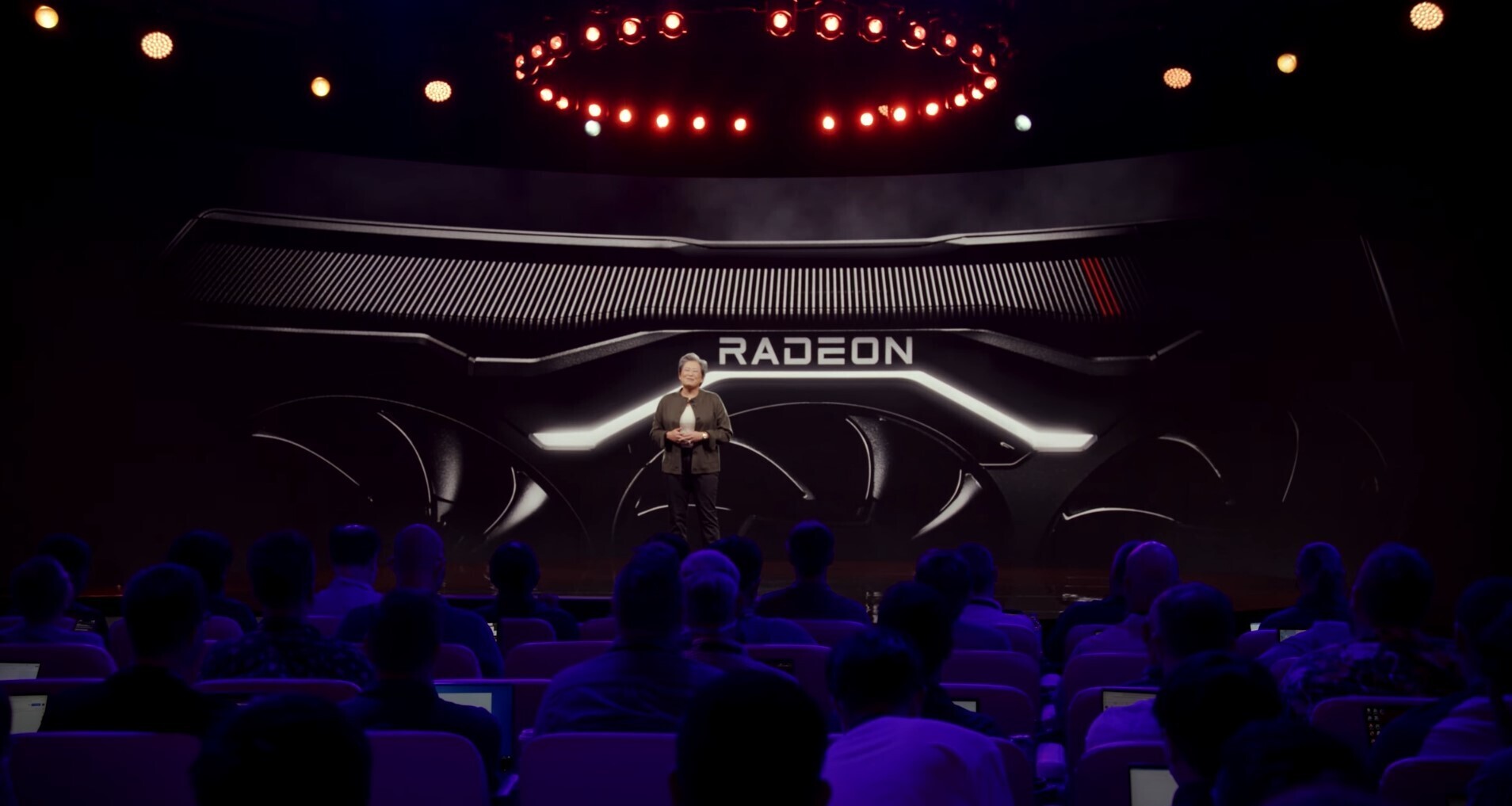
AMD's upcoming Radeon RX 7000-series GPUs based on the RDNA3 graphics architecture, are rumored to be capable of engine clocks (GPU clocks) close to 4 GHz. This is plausible, given that the current-gen RX 6000-series can hit 3 GHz. AMD's play against the RTX 4090 will hence be a product with +50% performance/Watt gain over the previous generation, a significantly increased shader-count, an over 70% increase in memory bandwidth (384-bit memory running at 20 Gbps or more), faster/larger Infinity Cache, and to top it all off, engine clocks approaching 4 GHz.
Source:
HXL (Twitter)
35 Comments on AMD Radeon RX 7000-series RDNA3 GPUs Approach 4 GHz GPU Clocks
AMD has a separate line of GPU's for workstations.
The workstation lineup shares 90% of the specs with the regular cards and many artists and professional studios since years prefer the regular ones because of the higher frequencies and cheaper costs. It's the case of the GTX 1080 and of the RTX top solutions. If you work with Blender or C4D, for example, you look at them, not at Quadro and Tesla. Those are cards optimized for CAD and scientific environment, but nowadays the high end consumer cards have workstation power and capabilities.
And still, looking at AMD cards from the gamer-only point of view, NVIDIA with the Tensor cores and the NVLink bridge beats them, no matter what.
The upcoming AMD cards have to beat these features, or at least offer equivalent (and very close in performance) hardware solutions, otherwise in specific tasks and games will fall back.
So, in the end and as for the current state of things, the NVIDIA cards offer a better overall performance value for the money, because they grant terrific performance in different scenarios. While the AMD consumer cards don't have the same capabilities and don't have the same kind of support that certain software houses offer to NVIDIA.
And the upcoming cards need to beat these features my gut lets me you would be buying Nvidia regardless so why does it matter.
Both ray tracing and machine learning got off to rocky starts on NVIDIA GeForce and many dismissed RTX and DLSS in their early iterations.
And there's no specific type of gamer. Some people still dismiss RT and DLSS-like technologies because whatever games they are currently enjoying don't harness those technologies. Heck, even Minecraft turned on RTX. A 15 year old game like Portal is now getting RTX and DLSS 3.0.
For sure, game developers have some interest in using the hardware that will harness these features available as development tools.
It's not like all of these new technologies only debut on brand new gaming titles. A lot of older (especially popular) games can receive these improvements.
I moved to NVIDIA recently just for CUDA and will buy a RTX in the future, after owning AMD gpus for many years.
cvaldes mentioned the rtx mod for Portal. You can bet that the modding community will make a total conversion of many popular and beloved games using the NVIDIA technology and many players will pick a RTX card just to play them.
AMD's GCN was a brilliant architecture for compute, and everybody was loud with compute gaining a foothold in games, which then never really happened. Nvidia's got CUDA for physics, but that's pretty much it.
Despite being a huge failure, AMD FX was (supposed to be) a very future-pointing project. It only took applications a decade to properly use the unique architecture with 8 integer and 4 FP units, but by that time, the individual cores were already too slow to do anything meaningful. I had an FX-8150 which gave me the biggest CPU bottleneck I've ever witnessed. I'm sure it would perform slightly better today if I still had it, but technology has moved forward so much that a little improvement won't save it from being the biggest disappointment of the 2010s.
I agree that RT may very well be the future of gaming. It's only that by the time it really goes mainstream, current-gen graphics cards will be long obsolete and too slow for proper RT.
You only buy PC hardware for the present. When the future comes, there will be newer, faster and more specialised hardware for it.