Thursday, October 13th 2022

NVIDIA Removes Hashrate Limiter for RTX 30-series LHR GPUs in the Latest Driver
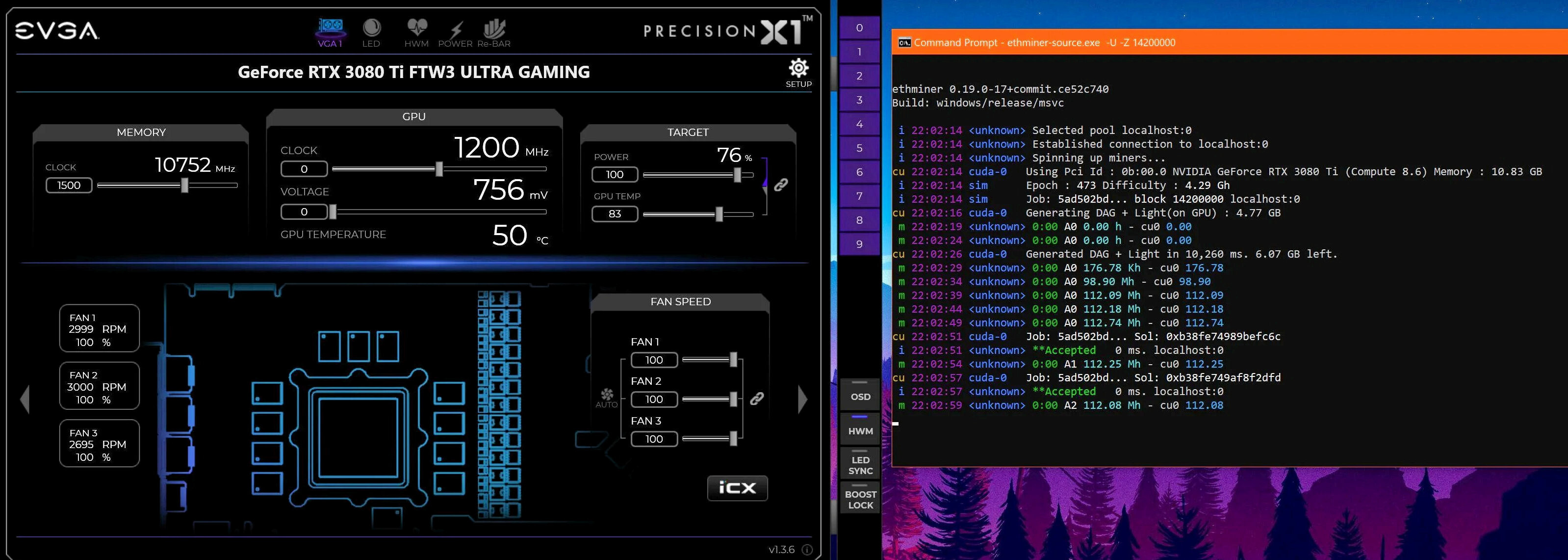
In a last-ditch effort to clear inventory of its GeForce RTX 30-series "Ampere" graphics cards, NVIDIA has reportedly removed the hashrate limiter in the latest GeForce 522.25 drivers, without mentioning it anywhere in the driver's release notes. A Redditor and GeForce RTX 3080 Ti owner by the username "Timbers007" rested that their card, which launched exclusively as LHR-enabled graphics cards (with no RTX 3080 Ti cards without LHR in circulation); is now achieving double its usual hashrates when benchmarked with ethminer. It's able to put out 112 MH/s, a hashrate only possible with mining software that circumvents the LHR limiter, such as NiceHash or NBMiner.
In the thick of the graphics card shortage in 2020-21, as crypto currency miners were buying up inventory of gaming graphics cards through sophisticated retail bots; NVIDIA attempted to sour the milk for miners by introducing LHR (lite hashrate), a supposedly hardware-level limitation that cripples the mining performance of the GPU. This failed to improve things as NVIDIA accidentally released drivers without the hashrate limiter early on and redacted them, but not before they spread among miners. It was only a titanic crash in crypto-currency values, and the recent Ethereum merge that killed GPU-accelerated mining, which arrested demand, bringing RTX 30-series GPUs to prices more acceptable to gamers, as miners began flooding the market with their used GPUs at much lower prices. Will this improve sales of the RTX 30-series? Unlikely. Miners with RTX 30-series LHR graphics cards who already had the hacks to circumvent the limiter, are dumping their cards.
Sources:
VideoCardz, Timbers007 (Reddit)
In the thick of the graphics card shortage in 2020-21, as crypto currency miners were buying up inventory of gaming graphics cards through sophisticated retail bots; NVIDIA attempted to sour the milk for miners by introducing LHR (lite hashrate), a supposedly hardware-level limitation that cripples the mining performance of the GPU. This failed to improve things as NVIDIA accidentally released drivers without the hashrate limiter early on and redacted them, but not before they spread among miners. It was only a titanic crash in crypto-currency values, and the recent Ethereum merge that killed GPU-accelerated mining, which arrested demand, bringing RTX 30-series GPUs to prices more acceptable to gamers, as miners began flooding the market with their used GPUs at much lower prices. Will this improve sales of the RTX 30-series? Unlikely. Miners with RTX 30-series LHR graphics cards who already had the hacks to circumvent the limiter, are dumping their cards.
62 Comments on NVIDIA Removes Hashrate Limiter for RTX 30-series LHR GPUs in the Latest Driver
Clearly NVIDIA tested both 10GB and 12GB variants in their labs and decided to go with 10GB for the 3080 and 12GB for the later 3080 Ti and 3080 12GB models. All three cards share the same GPU. If you buy an Alphacool full-length waterblock for the ASUS TUF Gaming 3080 10GB, you can use the same waterblock on the 3080 Ti and the 3080 12GB as they all use the same PCB.
Obviously this makes this easier for AIB partners as well as they can use the same cooler parts.
Bumping up the specs slightly to goose sales is also nothing new and not exclusive to the graphics card industry.
Well, NVIDIA shareholders might care because you can't stick a Radeon and GeForce graphics card into the same PCIe slot but the typical TPU participant really shouldn't care if you bought a GeForce card, a pair of Stan Smith tennis shoes, or a pair of fuzzy dice to hang from the rear view mirror of your lifted pickup truck.
:):p:D