Monday, August 4th 2025
Goldenmate Introduces Next-Gen UPS Systems with LiFePO4 Batteries
As modern homes and small businesses become increasingly dependent on connected devices and 24/7 digital access, the risks of sudden power outages-such as data loss, hardware damage, and operational disruption-are more critical than ever. Goldenmate, a brand committed to intelligent power solutions, has launched a next-generation line of UPS (Uninterruptible Power Supply) systems powered by lithium iron phosphate (LiFePO4) technology. These systems ensure consistent, secure backup power across essential devices, including network systems, workstations, and home servers.
Whether it's a home office or a small studio, Goldenmate UPS units provide instant response when power drops, keeping key electronics operational without interruption.
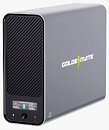
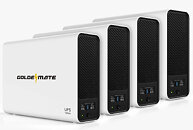 Instant Switching Protects Critical Systems, Including NAS Units
Goldenmate UPS models offer millisecond-level transfer time, enabling seamless switch-over from grid power to battery backup during blackouts or surges. This ensures zero disruption to:
Built on Safe, Long-Life LiFePO4 Technology
Compared to conventional lead-acid UPS products, Goldenmate's UPS systems use LiFePO4 batteries, offering major advantages in safety, longevity, and total cost of ownership:
Designed for Flexible Applications
Goldenmate UPS models come in a range of output capacities, tailored to specific user needs:
"At Goldenmate, we believe that digital reliability starts with uninterrupted power," said a Goldenmate spokesperson. "Our UPS solutions not only bridge power gaps - they actively protect the systems people trust to store, stream, and secure what matters most."
Source:
Goldenmate
Whether it's a home office or a small studio, Goldenmate UPS units provide instant response when power drops, keeping key electronics operational without interruption.


Goldenmate UPS models offer millisecond-level transfer time, enabling seamless switch-over from grid power to battery backup during blackouts or surges. This ensures zero disruption to:
- Desktop computers, monitors, routers
- Surveillance cameras and smart home hubs
- NAS (Network Attached Storage) systems - for protecting valuable personal data
- POS systems and audio/visual workstations
- Educational and medical support devices
Built on Safe, Long-Life LiFePO4 Technology
Compared to conventional lead-acid UPS products, Goldenmate's UPS systems use LiFePO4 batteries, offering major advantages in safety, longevity, and total cost of ownership:
- 5000+ deep charge cycles - ensuring stable, long-term performance
- Enhanced thermal and chemical safety - reducing the risk of overheating or fire
- Smart Battery Management System (BMS) - prevents overvoltage, short circuit, and over-discharge
- Low maintenance - with a 10+ year expected service life
Designed for Flexible Applications
Goldenmate UPS models come in a range of output capacities, tailored to specific user needs:
- 1000 VA / 600 W - For home routers, small PCs, and NAS protection
- 1000 VA / 800 W - Suits streaming gear, POS systems, and media centers
- 1500 VA / 1000-1200 W - For schools, clinics, small server rooms
- 2000 VA / 1600 W - Designed for complex workstations and industrial use
"At Goldenmate, we believe that digital reliability starts with uninterrupted power," said a Goldenmate spokesperson. "Our UPS solutions not only bridge power gaps - they actively protect the systems people trust to store, stream, and secure what matters most."
80 Comments on Goldenmate Introduces Next-Gen UPS Systems with LiFePO4 Batteries
They are way more efficient and compact, there's no doubting that, but the lead acid based UPSes can handle some beating and it's often really easy to expand their capacity. I personally have a 2VA unit with a 24V 40Ah expansion that gives me multiple hours of backup with a non negligible load.
Also, low harmonic distortion (<5%).
- 800W $200
- 1000W $400
I wonder why the big jump (run time?).Also they they are more expensive, either get one that's $200 for a 1000VA \ 800w or $400 for a 1500VA \ 1000w.
Mine have always been around the $160 mark for a 1500VA \ 900w or unless on sale.
Just make sure you get the same voltage. The amp/hour rating can be higher however, for longer run times, but not lower. For example, if the current cells are 12V 7.2AH, I always go with 12V 9AH.
And last, make sure you get the correct terminal size. There are inexpensive adapters but typically space inside the UPS battery compartment is too limited.
F1 vs F2 terminal connector size
F1 Terminal – 3/16” (0.187”, 4.8mm) wide
F2 Terminal – 1/4" (0.25”, 6.35mm) wide
If your UPS battery consists of two or more battery cells, they will be strapped in parallel, series or series/parallel configurations to achieve a specific output voltage required by the UPS. This strapping is typically done with one or more small jumper or interconnecting cables. Don't discard those straps (or any plastic framework) the old battery may have used. Save them to use to assemble your new battery. I recommend taking a photo of the battery wiring before disassembly to use as a guide when assembling the new cells into the new UPS battery.
1) Meaningless without a number of cycles associated
2) Being able to replace the battery is a win not a loss, the necessity will vary with use. This unit also need replacement if the battery is under constant use but you won't be able to.
3) Others also have a BMS, albeit possibly more rudimentary due to the simpler battery requirements
4) lol
5) will this company still exist in 5 years? eaton also offers 5 years on lithium UPSs up to 3kVA.
I'd rather buy from an established company than a no name one that's just throwing around unsubstantiated promises.
This type of thing seems to have been their main business.
goldenmateenergy.com/products/goldenmate-12v-400ah-lifepo4-lithium-deep-cycle-battery
They're in turn owned by this xinese battery cell manufacturer that apparently started in 2008.
www.goldencellbattery.com/
They post each model's specs with a different battery voltage, so you have to do the math to realize that their $899 ($799 on sale) 1500VA 1200W unit only has a 297 Wh battery. Compare to the Ecoflow Delta 3 Plus at 1024 Wh.
The Delta 3 Plus has UPS functionality with USB HID and 10ms response, and refurbs are available on Ecoflow's eBay store for $499. Its main drawback is that it's only manageable via phone app :(
Neither option is very user-friendly.
I have serviced many rack mounted UPS that don't have user-replaceable batteries. It typically involves opening the case (voiding the warranty - if any is left) and doing some unsoldering the old and soldering the new. Not a very complex or difficult task for an experienced tech. But for the normal user, it can be very challenging and intimidating - assuming they even have a soldering iron and the necessary soldering skills - which again, most normal users don't.
Sadly, I have seen non-replaceable batteries that are proprietary - meaning even techs have to get the expensive replacements from the UPS maker. Not good.
I also find the following options curious:
- 1000VA/600W
- 1000VA/800W
- 1500VA/1000W
- 1500VA/1200W
They have two 1000VA UPS, one rated at 600W, the other at 800W. Likewise, they have two 1500VA UPS, one 1000W and the other 1200W. In looking that 1000VA models, the difference appears to simply be Ah rating with 6Ah and 9Ah respectively. But that typically affects run time, not Wattage as that is a factor of the power factor.In fact, the formula to convert volt-amps to watts is VA x PF = W. Therefore, PF =W/VA.
600W/1000VA = .6PF
800W/1000VA = .8pf
According the specs for the 600W model,
The 600W model is rated for a runtime of ≤25min(300W @25℃)
The 800W model is rated for a runtime of ≤30min(400W @25℃)
IDK, but I thing they are playing with the numbers and the only real difference is the Ah rating of the batteries used.
Note they do not even include the specs for 1500VA models. :(
***
"CRITICAL" If you look at the specs for the 600 and 800W models, they both have a "Conversion time" of ≤20ms That is UNACCEPTIBLE!!!
Why? Because in the event of input power loss, or drop below minimum inputs as required in Table 4-1 the ATX Form Factor standard for PSUs (Table 4.8) states all ATX compliant power supplies are required to maintain (hold-up) output power for 12ms at 100% of full load, and recommend a minimum of 17ms with an 80% load.
If it takes 18-20ms for those UPS to cut-over to battery power, guess what? Too late! Your computer has already crashed - hard! And sadly, many, even quality PSUs from reputable makers have a hard time holding up power even 17ms!
I note most quality SLA UPS have a cutover time of ≤10ms.
I'd rather get the EcoFlow RIVER 3 Plus instead.
It's bigger and more expensive but its specs are 10ms and 30dB respectively.
The maximum hold up time specified by the ATX standard is 16ms. Food for thought.
The C-rating (or the rate it takes a charge or discharge) is not listed. But you can get a rough idea - at least with the 1000VA models by their 25 minute and 30 minute runtimes with 300W and 400W loads, respectively.
Frankly, I wish they used the same load value in these figures as that would give users a better idea of the capacities of these UPS when comparing models and deciding what is best for their need.
Surely, if the 6Ah hour battery in the 600W UPS provides 25 minutes at 300W load, the 800W UPS with it's 9Ah battery will support that same 300W load for significantly longer than 25 minutes (or the 30 minutes is claims w/400W.
Using different load values does NOT make comparing as easy as it should be.I provided a link to the latest standard in my last post above. It dictates 17ms at 80% load.
But note the new standard also says only 12ms if the PSU is at 100% load. Now for sure, I hope our PSUs are not being pushed that hard. Still 17ms is faster than our eyes/brains can detect (in a flickering light, for example). So anything longer than that is not good.
There are also many good quality PSUs that can withstand more than 20ms, so they would work with such UPS.
But if cheaper options with better specs are available, there isn't much to discuss.
Despite this "announcement", I have owned one of the units for over a year.
The battery chemistry is simply better than lead-acid. Safer, and can be deep-cycled without damaging the battery. The battery has a 10-year service life, and this includes being deeps cycled daily. Current testing on LiFePo4 is that a battery will still have 90% of its manufactured capacity after 1000 cycles. The chemistry is also recyclable, though not quite as efficiently as lead-acid.
So yes, it's logical that the same output and capacity will cost more on this battery chemistry, but you will get a much longer and more reliable service life out of it.
Keep seeing red flag the more and more i read there site lol.
These units can be good too.
I only say that half in jest, the real question is can you replace these batteries and it looks like no and how much do replacements actually cost. For now I will stick with led acid that cost me 20 bucks ever 3+ years vs buying new for multi hundreds every 8 to 10.