Monday, August 4th 2025
Goldenmate Introduces Next-Gen UPS Systems with LiFePO4 Batteries
As modern homes and small businesses become increasingly dependent on connected devices and 24/7 digital access, the risks of sudden power outages-such as data loss, hardware damage, and operational disruption-are more critical than ever. Goldenmate, a brand committed to intelligent power solutions, has launched a next-generation line of UPS (Uninterruptible Power Supply) systems powered by lithium iron phosphate (LiFePO4) technology. These systems ensure consistent, secure backup power across essential devices, including network systems, workstations, and home servers.
Whether it's a home office or a small studio, Goldenmate UPS units provide instant response when power drops, keeping key electronics operational without interruption.
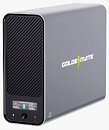
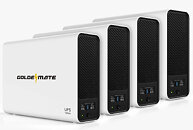 Instant Switching Protects Critical Systems, Including NAS Units
Goldenmate UPS models offer millisecond-level transfer time, enabling seamless switch-over from grid power to battery backup during blackouts or surges. This ensures zero disruption to:
Built on Safe, Long-Life LiFePO4 Technology
Compared to conventional lead-acid UPS products, Goldenmate's UPS systems use LiFePO4 batteries, offering major advantages in safety, longevity, and total cost of ownership:
Designed for Flexible Applications
Goldenmate UPS models come in a range of output capacities, tailored to specific user needs:
"At Goldenmate, we believe that digital reliability starts with uninterrupted power," said a Goldenmate spokesperson. "Our UPS solutions not only bridge power gaps - they actively protect the systems people trust to store, stream, and secure what matters most."
Source:
Goldenmate
Whether it's a home office or a small studio, Goldenmate UPS units provide instant response when power drops, keeping key electronics operational without interruption.


Goldenmate UPS models offer millisecond-level transfer time, enabling seamless switch-over from grid power to battery backup during blackouts or surges. This ensures zero disruption to:
- Desktop computers, monitors, routers
- Surveillance cameras and smart home hubs
- NAS (Network Attached Storage) systems - for protecting valuable personal data
- POS systems and audio/visual workstations
- Educational and medical support devices
Built on Safe, Long-Life LiFePO4 Technology
Compared to conventional lead-acid UPS products, Goldenmate's UPS systems use LiFePO4 batteries, offering major advantages in safety, longevity, and total cost of ownership:
- 5000+ deep charge cycles - ensuring stable, long-term performance
- Enhanced thermal and chemical safety - reducing the risk of overheating or fire
- Smart Battery Management System (BMS) - prevents overvoltage, short circuit, and over-discharge
- Low maintenance - with a 10+ year expected service life
Designed for Flexible Applications
Goldenmate UPS models come in a range of output capacities, tailored to specific user needs:
- 1000 VA / 600 W - For home routers, small PCs, and NAS protection
- 1000 VA / 800 W - Suits streaming gear, POS systems, and media centers
- 1500 VA / 1000-1200 W - For schools, clinics, small server rooms
- 2000 VA / 1600 W - Designed for complex workstations and industrial use
"At Goldenmate, we believe that digital reliability starts with uninterrupted power," said a Goldenmate spokesperson. "Our UPS solutions not only bridge power gaps - they actively protect the systems people trust to store, stream, and secure what matters most."
80 Comments on Goldenmate Introduces Next-Gen UPS Systems with LiFePO4 Batteries
As an aside did some looking into LiPO for the RV and the car battery format ones generally don't seem wroth it yet again based on cost and replacement rates vs what manufactures state. Manufacturers are optimistic. I'm sure that's not the case here. Hopefully some day
I have a couple big house batteries, I think 13kw, and they have been doing well and no I wouldn't want to replace them with led-acid. Different use case.I assumed that Cyberpower is simulating sine with co-sineBut if he bothered to read and not try to win a point no one cares about he would have seen it was not material to the discussion. That said I love the fact that a place exists online that isn't reddit where LiPO can have a cult following and those batteries can do no wrong.
RVs (and boats) however, may use the batteries for hours at a time, often with considerably bigger loads than that put on car batteries parked overnight. So they need deep cycle endurance.No. It has nothing to with co-sine. There are UPS with pure sinewave waveform outputs (when on battery only) and UPS with stepped/simulated/approximated/modified waveform UPSs. Cyberpower and other makers produce both. But again - that is off-topic and not for this thread.
I was joking about co-sine.
Even at a lower DoD, the LIFEPO4 will outlast the SLA by 3x, making it cheaper over a lifespan of 10 years let alone 15 years.
It says pure sinewave inverter on their website, no company is dumb enough to risk an expensive lawsuit if its not, probably somebody at YouTube tested it as well, I'm not bothered to search as the Goldenmate isn't available in my region.Nobody said LIFEPO4 batteries need to cycled daily........Again, nobody said anything about simulated sinewave inverters being not useable, or started a debate about anything, the post was just an explanation on why that model is cheaper, thats it, end of story.
You need to stop imagining things on your own, its getting annoying.Nobody is trying to win a point, I just fixed your apples to oranges comparison.
Even at lower DoD the Goldenmate is going to be cheaper over a 10 or 15 year lifespan.
Thats bad enough that it would stop me ever buying it.
However a 10 year life battery I like the sound off, as when I replaced my battery a year or so back, disposing of it was a huge hassle.
I totally agree with @chrcoluk. It seems to me, 99% (if not more) of UPS users put their heavy UPSs on the floor - even smaller UPSs. Placing them on desktops seems like a poor use of valuable desktop real estate. So who would want to get down on their hands and knees to view the display? Even in my youth I would have balked at that.
So that's hard "no" for me.
but it looks like the Goldenmate UPS does not.
Odd. He said 1000VA/800W. This says 1000VA/600W for $210.
But also on Amazon is this model rated at 1000VA/800W, also for $210. Clearly, converting depends on the PF used, but still, odd the difference.
FWIW, they output pure sinewave for those who find that essential. I do wish the warranty for the unit was a little longer than just 2 years. Even APC offers 3 year warranties, so does Cyberpower. Oh well.
Unfortunately, the high starting load of a fridge means a small UPS can't be used for this application.
A small generator would be better for a fridge if you experience power outages longer than 3 - 4 hours - if you keep the door closed, that is.
Goldenmate LiFePO4 batteries should be here today for me to try in an old APC UPS, but my main use may be for a computer and room fan during a power cut.
I put a gallon of water in the freezer to help with power cuts which so far are limited to about 2hrs.
A modern freezer is said to maintain the food in a frozen state for 48 hours AS LONG AS the door is kept closed. That seems like a stretch to me, even with the latest insulation materials.
An UPS without AVR is just a simple backup power supply. Great for things like emergency lighting, alarm systems, security cameras and emergency exit signs. But not for critical and sensitive computer (or medical) electronics devices.
goldenmateenergy.com/collections/ups
That said, I am starting to have doubts about this company and specifically about their marketing hype.
If you look atthis specific UPS, the description says it,First, "antomatically" is not a word. Did they mean automatically? Is that marketing BS? I don't know - they use antomatically in several places.
I note conditioning power and "automatically" correcting voltage levels are AVR functions. Now if done passively or actively with intelligence is a different story. Passive conditioning and correcting is likely too slow at 50 or 60 Hz.
One FAQ asks if the batteries are replaceable? Instead of answering with a simple Yes or No, they respond with marketing hype about the batteries lasting 10 years. They didn't answer the question. :(
The specs also say the Transfer Time is "<20ms". That is NOT good enough! :( Not for computers anyway.
The ATX Form Factor standard for PSUs (Table 4.8) states all ATX compliant power supplies are required to maintain (hold-up) output power for 12ms at 100% of full load, and recommend a minimum of 17ms with an 80% load despite a loss of input power.
This means it is likely our computers will crash before these UPS kick over to backup power. So what good is then? Any time a computer suddenly crashes, there is the risk of corrupt drives and/or corrupt data. NEVER GOOD!
It should be noted that any decent UPS with AVR from APC, CyberPower, Eaton/Tripp Lite and others will transfer power in 10ms or less - some as quick as 4ms.AVR is an absolute must. In fact, as far as I am concerned, having a good UPS with AVR is, by far, the primary reason for having an UPS in the first place. Backup power in the event of a full power outage is just a minor bonus feature - if it kicked in in time.
Full power outages in most industrialized parts of the world certainly happen but really are not that common. I live in Tornado Alley where we frequently have severe weather. And I live in a 100 year old neighborhood where the utilities are not buried. Yet according to my UPS log, in the last 24 weeks, we have only had two full outages, lasting a total 48 seconds!
The last long duration we had was last summer when, apparently, a squirrel became a crispy critter when he forgot to let go of one overhead power cable before grabbing the other. It took the power company about an out to come out, locate the transformer with the blown breaker, and reset it.
However, surges and spikes are common most everywhere. Even in regions with a very stable grid. And low voltage events like dips (opposite of spikes) and sags (opposite of surges), or long duration sags (brownouts) - any of which can cause our electronics to suddenly stop, resulting in possible data corruption are nearly as common. These are all event where AVR shines.
AND it is critical to understand that "internal sources" are actually the most common source for surges! As noted here,And the above assumes those devices are functioning properly! A 1500W $15 hair dryer made whoknowswhere with whoknowswhat parts may not.:( Now you know, Shrek, that surges and spikes can easily exceed several hundred to several thousand volts! And they can last from a few nanoseconds to several minutes!
I note for 120V mains, anything over 170VAC has the potential to be destructive.
Plus, lets not forget that the vast majority of users, including the OP, do NOT only use their UPS for their PC power supplies. Most users also protect their monitor(s) and perhaps their network gear as well with their UPS.
So, they seem to be saying two different things. It does not have AVR, but protects against fluctuations. So, which is it? Makes me nervous to trust this thing.
From what I can tell you have made a very good selection of UPS and should not be nervous about the choice.