Monday, January 5th 2026

MSI GeForce RTX 5090 Lighting Z Hands On: 40-Phase VRM and 2,500 W XOC BIOS
At the 2026 International CES show, MSI unveiled its most powerful GPU creation to date: GeForce RTX 5090 Lightning Z GPU. Coming as a fully custom PCB design, the board carries an GB202 GPU of the RTX 5090 with a factory boost clock of 2,730 MHz, and an "Extreme Performance" OC profile of 2,775 MHz. This results in the fastest LN2 GeForce RTX 5090 GPU ever, reaching as high as 3,742 MHz when put thought the hands of professional overclockers. Fully enabling this is the 40-phase VRM design that can provide smooth voltage curve needed to feed the GPU, with a maximum power rating of 800 W out of the box, while the "Extreme" power preset mode gives it a 1000 W power envelope on the 360 mm AIO water cooling. The card is powered by dual 16-pin 12V-2x6 power connectors, each giving the maximum of 600 W.
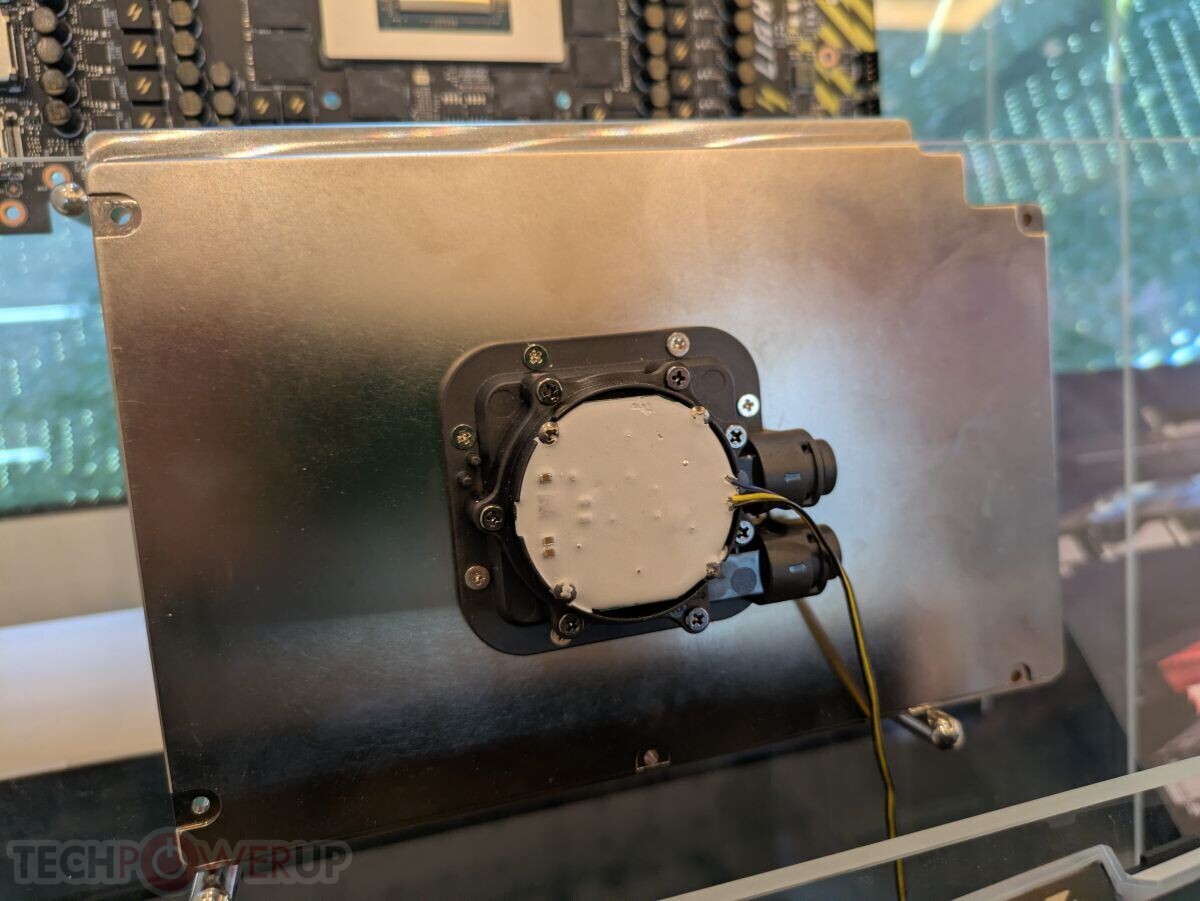
MSI has used the 28 Gbps Samsung GDDR7 modules, which can be overclocked to 36 Gbps on LN2, and probably at 30+ Gbps on the standard watercooling. In its regular form factor that comes from the factory, MSI has made the GPU appear as a small tablet device with its big screen. All you see is the yellow theme of the card and two tubes connected to the 360 mm radiator that dissipates a kilowatt of heat. In addition to the massive radiator, the GPU is covered in full-copper cold plate that entirely covers the 3 oz copper PCB, cooling the GPU, VRMs, and memory for a true all-in-one cooling. The pictures follow below.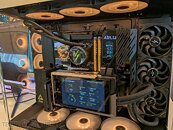
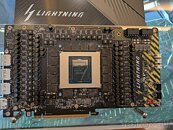
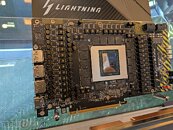
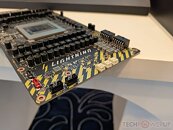
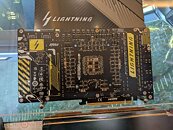
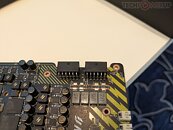 Overclockers like TSAIK achieved the impressive 3,742 MHz GPU clock speed through a series of modifications. Firstly, an XOC BIOS, likely provided by MSI exclusively for professional overclockers, was essential. These experts also modified the power input for the card, as it exceeds the capacity of the dual 12V-2x6 power connectors. Additionally, they utilized multiple high-capacity power supplies to support this setup. The extensive engineering involved in the PCB design allows the GPU to sustain multi-kilowatt loads. Additionally, only LN2 is capable of taming 2.5 kW of power in such a high density. For us mere mortals, MSI recommends a power supply with a capacity of 1600 W, providing ample room for basic overclocking. While pricing is currently unknown, the card will be made in 1,300 samples only, so don't expect it to come cheap. TechPowerUp will soon have a detailed review of the card, including performance testing for your pleasure.
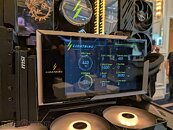
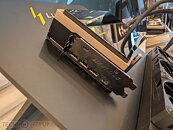
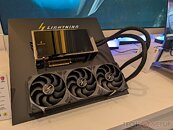
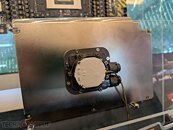
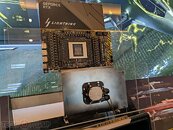
MSI has used the 28 Gbps Samsung GDDR7 modules, which can be overclocked to 36 Gbps on LN2, and probably at 30+ Gbps on the standard watercooling. In its regular form factor that comes from the factory, MSI has made the GPU appear as a small tablet device with its big screen. All you see is the yellow theme of the card and two tubes connected to the 360 mm radiator that dissipates a kilowatt of heat. In addition to the massive radiator, the GPU is covered in full-copper cold plate that entirely covers the 3 oz copper PCB, cooling the GPU, VRMs, and memory for a true all-in-one cooling. The pictures follow below.



22 Comments on MSI GeForce RTX 5090 Lighting Z Hands On: 40-Phase VRM and 2,500 W XOC BIOS
The limited edition factor reminded me of when AiB partners would have graphic design contests. Photoshop/GIMP wizards could compete submitting a graphic cover/design for a GPU line, and the. Win a free version of that GPU as well as their art work being printed on a set number of GPU's. Wonder if any brands still do that? Haven't seen it in a while.
If you think that more phasing to fill up the frequency gap means better, you need to press the reset button right now
Try running radiance on it to see if you can break 3000 points on the benchmark.
We are about half way through the 5090's life cycle and a Super or Ti version should be coming soon, followed by a 6090.
I think it more prudent to just wait for that.
I for one won't be upgrading anytime soon. Maybe not again for the next decade. By then we'll have the 8090 or 9090.
There's a lot I can do with $2000.
#1 I could invest it into my portfolio (buy Gold dividend paying ETF).
#2 I could put it towards my next vacation as I only fly business class and the seat rountrip is normally $4000
#3 I could save it for my next iPhone. I have iPhone 17 Pro Max 2TB and won't upgrade till iPhone 20.
Long story short: why upgrade again if I don't have to?
Nvidia refuses to make buying cards legitimate and easy for regular consumers. Why should I bother trying to wait in a line or camp outside of Microcenter when I can just wait for a prebuilt PC maker to buy a stock of them and then get the computer on sale?
My AAT2250 has 5090, 64GB DDR5 RAM and 8TB of SSD. $4799 on Black Friday sale!
The RAM and 5090 alone would probably demand more than 50% the cost now.
My friend paid $3000 on launch day for his 5090FE.
I paid $1999 on launch for mine.