Thursday, August 14th 2025
Report: Cloud-hosted Desktops Now Cheaper Than Laptops for Businesses?
According to the technology analyst firm, Gartner, we learned this week that hosted desktops, known as Desktop-as-a-Service (DaaS), are now often less expensive to operate than traditional laptops and are expected to become cost-effective for most employees within two years. That could force many enterprises to invest more in DaaS rather than their local PC infrastructure. In its Magic Quadrant for DaaS, Gartner forecasts that by 2027, approximately 20% of workers will use a cloud-hosted machine as their primary workspace, up from around 10% in 2019. The firm also expects DaaS to be cost-effective for approximately 95% of use cases/roles by 2027, compared with roughly 40% in 2019. Gartner cites lower total cost of ownership as a key factor, especially when organizations pair DaaS with light, inexpensive thin-client endpoints. New deployments are increasingly cloud-first, and many firms are choosing hosted solutions over building or expanding on-premises virtual desktop infrastructure. Especially with AI buildout requiring expensive GPUs, it could be more viable for enterprises to use a hosted acceleration when needed, instead of buying expensive hardware for local processing.
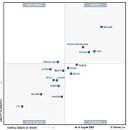
The report shows several market leaders and practical questions for IT teams. Microsoft is named the standout vendor for its wide cloud reach, workplace tools, and AI features, though buyers are advised to consider the differences between Windows 365 and Azure Virtual Desktop. Citrix is praised for its strong management and protocol technology, but is warned for offering bundled packages and long subscription terms. Omnissa is recognized for scalable offerings, while some customers worry about global support. AWS earns credit for integrating management tools into Workspaces. Beyond vendor rankings, experts highlight a new use case that could transform desktop strategy. As AI tools and autonomous agents begin to handle routine computer tasks, they will likely need their own optimized virtual workspaces. That raises questions about how those spaces will be designed, secured, and licensed. However, the takeaway is clear: budget planning, procurement, and desktop strategy must adapt to recurring cloud costs, endpoint choices, and a future where both people and software agents coexist in the digital workplace.
Source:
The Register
The report shows several market leaders and practical questions for IT teams. Microsoft is named the standout vendor for its wide cloud reach, workplace tools, and AI features, though buyers are advised to consider the differences between Windows 365 and Azure Virtual Desktop. Citrix is praised for its strong management and protocol technology, but is warned for offering bundled packages and long subscription terms. Omnissa is recognized for scalable offerings, while some customers worry about global support. AWS earns credit for integrating management tools into Workspaces. Beyond vendor rankings, experts highlight a new use case that could transform desktop strategy. As AI tools and autonomous agents begin to handle routine computer tasks, they will likely need their own optimized virtual workspaces. That raises questions about how those spaces will be designed, secured, and licensed. However, the takeaway is clear: budget planning, procurement, and desktop strategy must adapt to recurring cloud costs, endpoint choices, and a future where both people and software agents coexist in the digital workplace.


15 Comments on Report: Cloud-hosted Desktops Now Cheaper Than Laptops for Businesses?
But for real, I am not sure of the math they had. But somehow it could make sense.
I stopped reading the original reporting after this sentence. Stopped reading this one at the same point.
The bs the software industry has with this licensing crap may have made ownership a murky subject, the other crap they call SaaS even more so, but one can still exercise some control over his or her computer and what's running on it. Have fun owning anything but a useless KVM with a modem strapped to it with this "DaaS" scam.
While I miss the comfort of Linux, not having to lug around 5kg is pretty nice. For a while I had 2 dev laptops + corporate laptop + client laptop. Genuinely surprised my backpack survived that :laugh:
This cloud crap works only on paper, in reality it's a nightmare.
Companies force cheap workers to use them because they only care about saving every cent.
Yeah right. A laptop can go for 5+ years, we still have some over a decade old in use. Oh yeah, and they dont stop working if the internet gets interrupted.
Jokes aside something like a powerful dev station makes sense in a cloud - much less for the average office user. We did try some experiments with this - it was hard to find a use case for this, I assume it is the same for most organizations.
Imma gonna stop you right there.
If Gartner told me the sun came up in the east, tomorrow morning I would be outside with a compass.
Some saas is good
This is coming from someone that beta tested 5 remote desktop platforms and has extensive experience in remote desktop deployment. It's actually more trouble to support remote desktops than just having local clients that use MDM/vpro to administer security functions. One thing is many networks even hotels that these biz travelers would go to actually block rdp and other protocols to save bandwidth for other hotel guests as well as lots of coffee shops and convention centers. So it's even pointless to rely on that for employees.
The 2 previous tries to replace PCs in companies failed.
Why should it succeed this time ?