Thursday, August 21st 2025

Phison Responds to Falsified SSD Controller Issue Document Circulating Online

Earlier this week, we reported on a Windows 11 software update crashing SSDs, including those powered by Phison controllers. Certain bad actors capitalizing on these reports, are circulating false documents to spread FUD, the company said in a statement released to the press on Wednesday. Screenshots of the document are attached. The document is designed to mischaracterize and exaggerate problems, and even makes false claims about the safety of data stored on affected drives.

Phison said that it intends to pursue legal action against those behind the document. The document makes false claims about storage and data issues in the Microsoft Windows Security Updates of August 12, 2025, which Phison is addressing legally. Online testing shows the Windows 11 updates may affect SSDs and HDDs across vendors. Phison is working with Microsoft and other brands in the industry to maintain communication integrity. The company issued its only official statement on Tuesday (August 19), and no such documents were part of its statement.
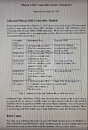
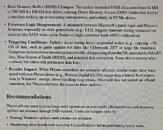
Phison's press note on the fraudulent document follows.

Phison Electronics has recently become aware of a falsified document that is positioned as allegedly originating from our company, and that has been shared with various customers. We wish to state unequivocally that the document in question—reproduced below—is neither an official nor unofficial communication from Phison.

Specifically, the document makes false claims regarding potential storage and data issues related to the Microsoft Windows Security Updates released on August 12, 2025. We are addressing the falsified document through appropriate legal processes.

Regarding the Windows 11 updates, current online testing reports show this may impact storage devices from multiple vendors, and span across both SSDs and HDDs.

We are working closely with Microsoft to help resolve this matter. Phison appreciates the continued cooperation of our partners and peers as we work together to maintain the integrity of communications within our industry.

On August 19, 2025, Phison released its only official statement to the media and customers regarding this issue. We appreciate your patience and are currently in the process of isolating any potential problems that could cause disruption or impact end users. For further information about the alleged widespread issues, we encourage you to consult coverage from WCCFTech and Tom's Hardware.
Add your own comment

23 Comments on Phison Responds to Falsified SSD Controller Issue Document Circulating Online

#1
Chomiq
Seriously, FUD was used in a news post?
Posted on Reply
#2
Quicks
Okay, all we want to know is if it's really a problem and should we uninstall the update just in case or when will Microsoft bring out another update to fix it.
Posted on Reply
#3
mb194dc
Definitely encouraging to hear it effects all vendors not just Phison...
Posted on Reply
#4
_roman_
techpowerup was very late on the "news article" post train.
igorslab and some others were faster, days faster

-- Anyway what i read first it was phision based. Later it was claimed several different vendors.

to make it clear - That topic is not solved. Just because one ucontroller vendor claims the claims are wrong without giving proof for it does not change the facts of a problematic update.

Phison if you read this. Post here or make a press statement where you deep tested any phison based ucontroller based NVME, ssd or storage witht hose affected claims. And make it that way so I can check if it is valid or not.

What i saw with those few nvme or SSD I had they are software changeable. Therefore it is always software generated by ai, user or software called hardware level firmware for the controller and hardware based ucontroller which play together with a pcb and those flash chips and dram.

A very bold claim to say not any of those firmware which are in use with any of those phison ucontrollers are affected.

edit: i want to see any firmware with any ucontroller from any SSD in any SSD-Size tested. Valid deep tested. I doubt this will be such easy possible. Making a press statement to say "NO" is much easier.
Posted on Reply
#5
Chaitanya
mb194dcDefinitely encouraging to hear it effects all vendors not just Phison...
So its clearly a M$ problem not SSD maker problem as always.
Posted on Reply
#6
W1zzard
ChomiqSeriously, FUD was used in a news post?
Not at TPU, but at other sites
Posted on Reply
#8
overclockedamd
Looks like I need to amend what I told the my coworkers earlier—turns out that Phison doc was fake, early articles ran with it before the correction. I knew it was M$ to blame but i thought it was Phison only.
Posted on Reply
#9
TheDeeGee
LittleBroThis data loss problem is not Phison's fault. Had there been no problematic update deployed by M$, there would be no problems with data integrity.

This is yet again on M$ and their royally horrendous Q&A. Maybe some of you recall similar issue from last year:
learn.microsoft.com/en-us/answers/questions/3945062/2024-11-update-of-windows-11-24h2-causing-endless
Lol, it's not even a year ago ... M$, will you let people have some rest?!
I agree with this.

It's like when hackers publish vulnerabilities before telling the software vendor, so everyone can exploit them while there is no fix yet.
Posted on Reply
#10
fe3a8b63
ChaitanyaSo its clearly a M$ problem not SSD maker problem as always.
So far I had 3 people call me when they got this update. All with SSDs that request more than 64MB HMB.

Two with WD Black SN770 and one Samsung 990 Evo

So Window's request of more HMB is the cause?

Apparently something similar happened in Nov 2024?

I started searching for a solution and found people reported BSODs back in 2024.

I did notice for a DRAM-less SSD of mine, HWinfo shows: HMB 64MB. Preferred: 200MB

But I'm on W10 atm
Posted on Reply
#11
Coremar
_roman_techpowerup was very late on the "news article" post train.
igorslab and some others were faster, days faster

-- Anyway what i read first it was phision based. Later it was claimed several different vendors.

to make it clear - That topic is not solved. Just because one ucontroller vendor claims the claims are wrong without giving proof for it does not change the facts of a problematic update.

Phison if you read this. Post here or make a press statement where you deep tested any phison based ucontroller based NVME, ssd or storage witht hose affected claims. And make it that way so I can check if it is valid or not.

What i saw with those few nvme or SSD I had they are software changeable. Therefore it is always software generated by ai, user or software called hardware level firmware for the controller and hardware based ucontroller which play together with a pcb and those flash chips and dram.

A very bold claim to say not any of those firmware which are in use with any of those phison ucontrollers are affected.

edit: i want to see any firmware with any ucontroller from any SSD in any SSD-Size tested. Valid deep tested. I doubt this will be such easy possible. Making a press statement to say "NO" is much easier.
First of all, what do you mean by techpowerup being late? They released news about dying drives in monday, the same day as Igorslab, while TPU also released the news about the Phison's first statement regarding the issue.

Second, nobody said anything about no Phison controllers being affected, they just said that the document is fake, because they do not yet know what exactly is really affected, and also the document seems to suggest that it was official Phison document. They are not saying that their stuff is not affected at all.
Posted on Reply
#12
r00tcz
SSD controller must never fail or crash or stop working if all you do is issue completely normal and valid SATA commands to it.
While Microsoft is partially to blame for not finding out this issue during testing, it's not their fault.
There is no such thing as "issuing too many writes" or reading/writing data too fast or too much of it.
SSD must handle completely saturated SATA or NVMe bus or it's simply not compliant and faulty. If it can't keep up or overheats or something, there are control mechanisms to do flow control etc.
But it must NEVER crash to the point of rendering whole drive inaccessible and causing data loss just because you send it some standard commands!
This is a clear bug of the affected controllers and as such they are completely unsafe to use as of now. Same bug can be triggered by Linux or other OS under specific scenarios and maybe it already happened, just no one heard of it yet because user base is much smaller.
All affected SSD manufacturers needs to fix this ASAP because this is a vulnerability and can be exploited. Windows update might have inadvertently triggered it, but it's far worse than that.
Posted on Reply
#13
abysal
Interesting, my Addlink S70 2TB nvme game drive, under Windows 10, would become unresponsive when heavy reads happened during play in CoD MW1/MW2/MW3. It would lock up the entire PC requiring a reboot.

I swapped it out with a Team Group MP34. But I'm retesting the Addlink S70 as a boot drive for a Windows 11 24H2 setup.

Have there been any reported issues outside of the Windows 11 + suspected update environment?
Posted on Reply
#14
jnv11
I am starting to wonder if the thing that is fouled up is whatever Windows uses to manage host memory buffers that DRAM-less SSDs depend on. I understand the need to cut power consumption and costs by not having a DRAM that requires constant refreshes, but that makes the SSD vulnerable to operating system mismanagement. With a hardware DRAM cache, the SSD can be much more self-contained and less vulnerable to operating system or hypervisor bugs.
Posted on Reply
#15
Coremar
r00tczSSD controller must never fail or crash or stop working if all you do is issue completely normal and valid SATA commands to it.
While Microsoft is partially to blame for not finding out this issue during testing, it's not their fault.
There is no such thing as "issuing too many writes" or reading/writing data too fast or too much of it.
SSD must handle completely saturated SATA or NVMe bus or it's simply not compliant and faulty. If it can't keep up or overheats or something, there are control mechanisms to do flow control etc.
But it must NEVER crash to the point of rendering whole drive inaccessible and causing data loss just because you send it some standard commands!
This is a clear bug of the affected controllers and as such they are completely unsafe to use as of now. Same bug can be triggered by Linux or other OS under specific scenarios and maybe it already happened, just no one heard of it yet because user base is much smaller.
All affected SSD manufacturers needs to fix this ASAP because this is a vulnerability and can be exploited. Windows update might have inadvertently triggered it, but it's far worse than that.
And how about proving to everyone that all the controllers received were actually just standard commands? Did you analyze it? Did you measured it with osciloscope or something? Or maybe you did capture the command midway to the controller? I mean tell us, how do you know what was really sent to the drive?
Software bug can cause to bypass control mechanisms just as easily as good hacker.
Yes there might be hardware vulnerability exploited by something in the system, but it is hardly caused by sending the same commands as before.
As of now it is impossible to say what really happened. I've seen enough corrupted firmwares caused by bugs in software to know that Windows update is easily capable of sending firmware update command completely accidentally with corrupted data. It is zeroes and ones afterall, sent from OS, through memory, CPU and PCIe to the controller, be it data to store or command to modify firmware. There might be different protocols for that, I don't know, but it still can be anything really.
So maybe let's wait for official statement before stating subjective opinion as the only truth.
Posted on Reply
#16
remixedcat
I'm tellin yall it's not the drives! it's the windows update messin w shit. If even drives w DRAM are experiencing these problems it's not HMB BS.
Posted on Reply
#17
chrcoluk
abysalInteresting, my Addlink S70 2TB nvme game drive, under Windows 10, would become unresponsive when heavy reads happened during play in CoD MW1/MW2/MW3. It would lock up the entire PC requiring a reboot.

I swapped it out with a Team Group MP34. But I'm retesting the Addlink S70 as a boot drive for a Windows 11 24H2 setup.

Have there been any reported issues outside of the Windows 11 + suspected update environment?
I had an issue with my SATA 850 Pro, the OS was doing large activity on a index database rebuild (windows search/file history), the drive load was hitting 100% in task manager, then the OS started locking up, and eventually hard locked. On the first reboot or two, it was not detected by bios, but a power cycle brought it back, this led to a chain of events where samsung confirmed the drive wasnt faulty, and after a long time I diagnosed a memory integrity issue on my (old) platform. But its interesting the problem did at least temporarily lead to the drive not being detected by the bios, and followed a period of heavy load on the drive.
This incident led to me getting my first NVME.
Posted on Reply
#18
LittleBro
TheDeeGeeI agree with this.

It's like when hackers publish vulnerabilities before telling the software vendor, so everyone can exploit them while there is no fix yet.
What makes you think that the problem is in NVMe drives?
Multiple brands of SSDs with multiple controllers go reported as affected, there's even WD SA500 (SATA, Marvell controller) reported.
Posted on Reply
#19
azrael
I wouldn't be surprised if it has something to do with Native Command Queueing or similar. Something in the NVMe specification that may be implemented incorrectly.
Posted on Reply
#20
RJARRRPCGP
abysalInteresting, my Addlink S70 2TB nvme game drive, under Windows 10, would become unresponsive when heavy reads happened during play in CoD MW1/MW2/MW3. It would lock up the entire PC requiring a reboot.
This reminds me of the very-early Windows 10 bug, where it hangs with SSDs, the odds of this happening, is higher with SSDs than with platter drives. But, it was with PATA SSDs, and it was with build no later than 1511, IIRC. That was a bug I noticed in 2016. The symptoms were this, Windows freezes with drive light lit solid than unfreezes minutes later, along with messages being logged about having to reset the ATA port, and a message that it had to retry. I don't know if such happened on NVMe or not. Also, 10 would randomly be unresponsive just going to the desktop. It also happened during Windows installation.
The event log clearly indicated storahci having an issue.

That bug was so bad, most would think their PC crashed!

I don't have evidence of that bug, being the now very old bug, making a comeback.
Posted on Reply
#21
RJARRRPCGP
abysalHave there been any reported issues outside of the Windows 11 + suspected update environment?
I performed tests last night and I suspect fake news going around, again! I suspect fake news with the intent to sabotage Windows 11's reputation.

No disappearing SSD or crashing when I did extremely heavy writes. No new errors related to the drive being reported by Windows, either.

This is with 11 24H2 26100.4946
Posted on Reply
#22
LittleBro
Oh dear lord ... Who would ever spend a second on sabotaging reputation of Windows 11? I mean who would ever do such thing when Microsoft already does it so well?
Posted on Reply
#23
Sora
fec32a4deTwo with WD Black SN770 and one Samsung 990 Evo
only faulty firmwre has issues.
fec32a4deI did notice for a DRAM-less SSD of mine, HWinfo shows: HMB 64MB. Preferred: 200MB
200MB hmb is not supported by default until windows 11 24h2, and on 11 23h2 it requires a regedit.
There is no support for it at all on 10.
Posted on Reply
Add your own comment
Nov 27th, 2026 01:03 CST change timezone

New Forum Posts

Popular Reviews

TPU on YouTube

Controversial News Posts