Friday, August 29th 2025

Intel CFO Bets on "Nova Lake" to Close "Arrow Lake" Desktop Gap
At a Deutsche Bank technology conference, Intel CFO David Zinsner told investors that the company is placing its hopes on "Nova Lake" to repair weaknesses left by the current "Arrow Lake" lineup. He acknowledged the desktop family did not deliver the dollar-for-dollar competitiveness Intel wanted, even when unit shipments looked relatively strong. The Core Ultra 200 generation fell short in several high-profile gaming comparisons and experienced early stability issues that necessitated multiple firmware and software updates. Intel attempted to mitigate criticism with an approved overclocking program that allowed partners to ship validated boost profiles, but this effort did not fully address questions about the value of its flagship products. Zinsner called Nova Lake a broader, more complete set of SKUs that should help Intel recover market footing once the chips arrive in 2026.
Intel is pitching Nova Lake as more than a simple refresh, with redesigned cores, higher counts on select parts, and beefed-up integrated graphics aimed at the premium desktop segment. Independent testing and some early engineering samples will be needed to confirm real-world gains, so claims about performance remain unproven. Some enthusiasts may worry about another platform change, as Nova Lake will require a new socket, which complicates upgrade choices compared to platforms that promise longer longevity. Zinsner also noted parallel server roadmap adjustments, including a return to multi-threading and refinements to future Xeon families. For desktop buyers, the next year promises to be eventful as Intel tries to close the gap while rival AMD continues its own roadmap, shifting to Zen 6.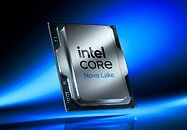
Source:
via Wccftech
Intel is pitching Nova Lake as more than a simple refresh, with redesigned cores, higher counts on select parts, and beefed-up integrated graphics aimed at the premium desktop segment. Independent testing and some early engineering samples will be needed to confirm real-world gains, so claims about performance remain unproven. Some enthusiasts may worry about another platform change, as Nova Lake will require a new socket, which complicates upgrade choices compared to platforms that promise longer longevity. Zinsner also noted parallel server roadmap adjustments, including a return to multi-threading and refinements to future Xeon families. For desktop buyers, the next year promises to be eventful as Intel tries to close the gap while rival AMD continues its own roadmap, shifting to Zen 6.

40 Comments on Intel CFO Bets on "Nova Lake" to Close "Arrow Lake" Desktop Gap
Didnt see anything new there.
the important question is on which chiplet is the IMC?
It will be interesting to see the gaming performance of nova lake.
it's a non issue for intel
I mean for GPUs, common rule is don't upgrade till you get twice as fast GPU. IE 3080 to 5080. To get twice as fast gaming CPU you need to upgrade from something like a 3700X to a 9800X3D, which is a six year update, new socket and three generations, four if you include the jump to X3D.
9700X still isn't twice as fast as 3700X. So it's the 3DVCache doing most of the lifting there.
Obviously for productivity you could go from something like a 1600 to a 5950X on same socket, but that's a bit of an outlier, and the kind of board you'd pair with a 1600 would really struggle with a 16 core anyway.
Besides, Intel was doing very well in sales with the 2 generation cycle. They're just hurting now due to the missteps with RPL/ARL. Not due to a lack of platform longevity.
Not sticking to a dedicated graphics solution last century is one that bit them very hard 20 years later.
Missing mobile and only putting in a tiny bit of effort in getting in that market sucks has been a mistake that has been eating at them for 15 years.
Pushing avx 512 on bloated cores when the market was screaming for more normal cores started biting them when amd presented the ryzen platform.
And there are more of those, like trusting apple and getting shafted for trying to make a modem to their requirements....
The real issue that dragged the company in to the pit it's sitting right now is building fabs with money they had to get from the market.
Fabs it doesn't even have a market for.
They could have lived off of the fat they built up for a decade while tinkering with their foundry business releasing mediocre products
Some people, like maybe a few percent of the enthusiast desktop pc market care about being able to save a couple of $$$ putting a new cpu in a motherboard and crippling it with slow ram and other older technology.
is not bad management, it's sensible business.
Intel managed to keep the same socket all the way from 2004 Pentium 4 era of single cores all the way up until 2009 Core 2 Quad era -- and Intel innovated far more in those 5 years to justify a new socket upgrade afterwards than it did during the entirety of their past 10 years combined. There's literally no reason why they can't make a future proof socket now and have it last at least 5 years (from Alder Lake until Arrow Lake at the very least). The era of throwaway desktop computing is finished -- we're not in the 2000s anymore where 2 computers released 5 years apart would have one of them be 4-8 times faster than it's predecessor. We've long been at the point of diminishing returns to justify socket changes. And AMD has proven Intel's old throwaway socket strategy to be a failure -- their old AM4 socket CPUs are still being made today due to how well they're selling in developing countries or entry-level markets (forcing Intel to now do the same) whereas in the past, as soon as the previous Intel socket was discontinued, you'd never get more than a miniscule discount on the price of those Intel CPUs from the retailers for that dead socket before it got completely discontinued (with only the used markets being viable). Intel needs every customer it can get right now -- and making a long lasting socket should be one of their top priorities for desktop (LONG before investing into any useless improvements for their integrated graphics -- keep those improvements for the notebook market).
About AVX512 for Intel, most users thought Intel didn't want to add it for consumer market as desktop, but actually Intel introduced AVX10.2 for Nova Lake and the capabilities are already integrated with AVX512.
A guy named ncrs already mentioned about it.: www.techpowerup.com/forums/threads/intel-brings-avx10-2-to-desktop-starting-with-nova-lake-processors.339702/#post-5566417
that means they have to account for every new USB standard, pci-e standard, memory standard in the socket years before the technology is launched.
I don't know the split, gemini spits out 1-3% of computer desktop sales are to enthusiasts like us.
this doesn't take into account intels main source of revenue, being servers and laptops where upgrading cpu's isn't being done.
So really it does not make much sense to waste time and effort in designing a multigenerational socket as the return is nihil.
nanoreview.net/en/cpu-compare/amd-ryzen-7-9700x-vs-amd-ryzen-7-3700x
gamersnexus.net/cpus/wasted-opportunity-amd-ryzen-7-9700x-cpu-review-benchmarks-vs-7800x3d-7700x-more
--
Intel users with CPUs from the 9000, 10000, or 11000 series often asked about upgrade paths.
There was no realistic option. The socket limitations made upgrades impossible.Claiming that a socket upgrade was needed anyway was misleading.
--
Zen5 was not that bad. I see even here people recommended a Ryzen 9600X and not a Ryzen 7400F, 7500F, 7600, 7600X or even Ryzen 7700 instead. This happens regardless of the up to ten percent performance increase of Zen 5 desktop compared to Zen 4 desktop. The cheaper purchase price of the 7000 processors or the two extra cores of the Ryzen 7700 is totally ignored.
--
Certain companies, e.g HP microtowers make it impossible to put in a single expansion card. Personal experience. ASUS also had some very slim prebuild towers which have the same issue.
Buying some HP and some ASUS prebuild computers do not allow any upgrades. Locked down Firmware where only a few hardware components are whitelisted, allowed to use, is another reason why upgrades are not possible. Non standard power supply unit. Non standard Fan connectors. Lack of USB ports on the mainboard for internal use and much more.
its why I did 5800X3D to 9800X3D got a 30% + improvement and on the gpu side 6800XT to 7900XTX which was a 50% improvement.
Side grades are a waste of money. I would never do 7800X3D to 9800X3D or 7900XTX to 9070XT.670E to 870E I would not consider a downgrade a sidegrade yes.
870E uses the same chipset and only adds USB 4.0agreed 5 years is a good run for me. I was on my x570 motherboard for 5 years before I went AM5. And in that time frame I did 3800X - 5800X - 5800X3D
"Changing motherboards every time a new Zen is out"
and that is just false. You're not forced to change anything, you get *offered* somewhat better boards and you can ignore them.