Tuesday, September 2nd 2025

Intel "Nova Lake-S" Engineering Sample Runs 52 Cores at 4.8 GHz

Intel's upcoming "Nova Lake-S" introduces a completely new microarchitecture and under-the-hood enhancements. However, the appearance of the latest shipping manifests indicates that Intel is ensuring its partners receive early samples to make necessary software/firmware optimizations. And now, it appears that the 52-core top SKU will ship with speeds that may exceed 5.0 GHz. An early engineering sample confirms the appearance of test hardware in partner shipments, which means that Intel is already moving validation pieces to OEMs and cooling vendors so they can start tuning systems well ahead of qualification samples and mass production. The 52-core part is a tiled design that pairs two compute tiles with a single SoC tile. Each compute tile houses eight P-Cores based on Coyote Cove and 16 efficient E-Cores based on Arctic Wolf, while the SoC tile contributes four low-power Arctic Wolf LPE-cores. That gives Nova Lake-S a 16 P-Core, 32 E-Core, and 4 LPE-Core configuration totaling 52 cores for the top SKU, with single-tile variants offering a 28-core option.

Intel will also offer big-cache bLLC variants aimed at workloads that benefit from larger on-die caches. On the platform side, Nova Lake-S will use the LGA-1954 socket with a 45x37.5 mm footprint, which matches LGA-1851 sizing and should preserve broad cooler compatibility even if some vendors need offset plates or other tweaks for optimal contact. The P-cores will ship without SMT, following the same choice made for Arrow Lake, while Intel's cache-first bLLC approach looks intended to counter AMD's stacked 3D V-Cache strategy. For now, the 4.8 GHz reading comes from an engineering sample and Pre-QS shipments; expect clock speeds to be refined upward as QS samples roll out and Intel moves closer to a formal launch. Given Intel's ambition to re-capture a significant part of the desktop market share, we can expect to see boost clock speeds north of 5.0 GHz.
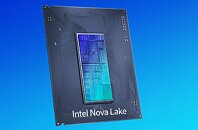
Intel Nova Lake
Sources: NBD, gamma0burst, via Wccftech
Add your own comment

35 Comments on Intel "Nova Lake-S" Engineering Sample Runs 52 Cores at 4.8 GHz

#1
oxrufiioxo
Even if the next generation of cpus ends up meh for gamers it'll at least be interesting.
Posted on Reply
#2
tsunami2311
At what TDP and what PL2 for Total of what crazy TDP? Am I only in missing the days when TDP of 95 actual ment 95TDP, to this day I rarely see my cpu pulling 95TDP short of me using some CPU torture test
Posted on Reply
#3
Squared
For context, these are the clock speeds of the P cores of the 14900K and 285K.
14900K285K
Max Turbo Frequency6 GHz5.7 GHz
Thermal Velocity Boost Frequency6 GHz5.7 GHz
Turbo Boost Max Technology 3.0 Frequency5.8 GHz5.6 GHz
Performance-core Max Turbo Frequency5.6 GHz5.5 GHz
Performance-core Base Frequency3.2 GHz3.7 GHz

(This table looks correct in the forum site. I guess it doesn't appear on the article site.)
Posted on Reply
#4
phanbuey
oxrufiioxoEven if the next generation of cpus ends up meh for gamers it'll at least be interesting.
Double the P cores - hopefully better IMC placement and latency, it could be good for gaming.

Not sure it will beat zen6x3d but for sure it will be a huge improvement over arrow lake. But agree - will be really nice to see the 16P finally come.
Posted on Reply
#5
oxrufiioxo
phanbueyDouble the P cores - hopefully better IMC placement and latency, it could be good for gaming.

Not sure it will beat zen6x3d but for sure it will be a huge improvement over arrow lake. But agree - will be really nice to see the 16P finally come.
It uses separate tiles for the cpu cores afaik
8+16 in each so I doubt it'll be meaningfully better for games besides the standard generational improvements which were mostly non existent vs raptorlake with the 200 series.

If all 16P cores were on the same tile with a bunch of cache maybe.

Either way it'll be interesting, my guess is they will have an 8P core varient with way more cache but will that be ok vs the 12P core zen6 X3D chip only time will tell.
Posted on Reply
#6
Darc Requiem
I'm curious to see if Intel will actually be competitive this time. Although switching sockets, yet again, won't do them any favors when it comes to platform adoption. That's the type of thing a company can only get away with from a position of dominance.
Posted on Reply
#7
kondamin
how reliable is that source?
if a sample is running at 4.6Ghz how long until the launch? as that seems like quite a decent clock for a sample.
Posted on Reply
#8
docnorth
Sounds promising, but recent Intel history makes me sceptical. :confused:
Nova Lake needs to clearly surpass RL for gaming and AL in terms of efficiency. Non-gaming performance shouldn't be an issue anyway.
Posted on Reply
#9
MufasaV
oxrufiioxoIt uses separate tiles for the cpu cores afaik
8+16 in each so I doubt it'll be meaningfully better for games besides the standard generational improvements which were mostly non existent vs raptorlake with the 200 series.

If all 16P cores were on the same tile with a bunch of cache maybe.

Either way it'll be interesting, my guess is they will have an 8P core varient with way more cache but will that be ok vs the 12P core zen6 X3D chip only time will tell.
Clearly we have seen by now that core count is not the limiting factor in games
Posted on Reply
#10
Visible Noise
kondaminhow reliable is that source?
if a sample is running at 4.6Ghz how long until the launch? as that seems like quite a decent clock for a sample.
WCCF?

Zero. Just a couple of guys that make shit up
Posted on Reply
#11
TheinsanegamerN
Darc RequiemI'm curious to see if Intel will actually be competitive this time. Although switching sockets, yet again, won't do them any favors when it comes to platform adoption. That's the type of thing a company can only get away with from a position of dominance.
As the vast majority do not upgrade every cycle, nobody cares. You can always buy an ultra 5, then ultra 7, then another 5 and 7 to emulate the experience though.
Posted on Reply
#12
lambda
Looks like it'll be a good performance uplift in multi-core terms.

I just hope they add more PCIE lanes to the platform and better support for higher clocked memory when running 4 sticks.
Posted on Reply
#13
liveaxel
kondaminhow reliable is that source?
if a sample is running at 4.6Ghz how long until the launch? as that seems like quite a decent clock for a sample.
The rumor is Nova Lake will launch in H2 2026, and seeing engineering samples in the field about a year out makes sense given that timeline.

And yeah, 4.8Ghz boost seems pretty darn high for silicon this far away from release. Maybe NVL will be good!
Posted on Reply
#14
Hecate91
TheinsanegamerNAs the vast majority do not upgrade every cycle, nobody cares. You can always buy an ultra 5, then ultra 7, then another 5 and 7 to emulate the experience though.
The vast majority don't build their own PC's either. For enthusiasts buying Ultra 7 or Ultra 9 high end hardware, Intel does change their sockets too often. When AMD can stick to a socket for at least 3 generations, Intel could easily do the same.
Though I would assume Intel buyers usually have the extra cash to throw down on a new mobo every time and don't care.
Posted on Reply
#15
TheinsanegamerN
Hecate91The vast majority don't build their own PC's either. For enthusiasts buying Ultra 7 or Ultra 9 high end hardware, Intel does change their sockets too often. When AMD can stick to a socket for at least 3 generations, Intel could easily do the same.
Though I would assume Intel buyers usually have the extra cash to throw down on a new mobo every time and don't care.
The vast majority of the DIY space do not upgrade every cycle either.

If you back and look at the ryzen 5000 owners club threads, the vast majority were running 500 series boards. Not 300s. Not even 400s.

Could Intel do the same? Sure! But why would they? What benefit does this grant Intel? What sells CPUs is performance, features, and efficiencies. Regardless of the platform, if a CPU is good, it will sell.
Posted on Reply
#16
kondamin
Hecate91The vast majority don't build their own PC's either. For enthusiasts buying Ultra 7 or Ultra 9 high end hardware, Intel does change their sockets too often. When AMD can stick to a socket for at least 3 generations, Intel could easily do the same.
Though I would assume Intel buyers usually have the extra cash to throw down on a new mobo every time and don't care.
the only times amd is the budget brand is when they lag intel, when they have something decent performing. they pick intels highest price and add some to it inflating prices even more than inflation already does.
if they had something that could seriously compete with nvidia they would be demanding +3000 USD for a graphics card.

AMD is not your friend, put your money where the performance is at your budget at the time you need to make a purchas.
Posted on Reply
#17
Hecate91
kondaminthe only times amd is the budget brand is when they lag intel, when they have something decent performing. they pick intels highest price and add some to it inflating prices even more than inflation already does.
if they had something that could seriously compete with nvidia they would be demanding +3000 USD for a graphics card.

AMD is not your friend, put your money where the performance is at your budget at the time you need to make a purchas.
Keeping a socket around doesn't have anything to do with budget, or being your friend, I never mentioned anything like that lol. AMD having the performance lead, of course they can ask for higher prices, not even going to get into GPU's but they compete just fine in the midrange market. I'd rather upgrade a CPU within the same platform than have to buy a new motherboard, nothing to do with a budget brand or a company being nicer, it's just less money spent to get a performance increase. Nova Lake would have been interesting if Intel hadn't switched sockets again, and since they're going hard with the more cores marketing with e-cores I doubt the 52 core will be cheap.
Posted on Reply
#18
overclockedamd
I hope with all my heart Nova Lake-S is a beast, but the dual tile design makes me think we’ll see the same quirks AMD’s dual CCD chips have with Windows’ scheduler. Unless Intel’s new bLLC cache really smooths out cross-tile latency, it risks being what I’ve said all along: a Cinebench/Blender monster for the marketing slides, but for gaming and day-to-day use just more of the same — only more of it.
Posted on Reply
#19
kondamin
overclockedamdI hope with all my heart Nova Lake-S is a beast, but the dual tile design makes me think we’ll see the same quirks AMD’s dual CCD chips have with Windows’ scheduler. Unless Intel’s new bLLC cache really smooths out cross-tile latency, it risks being what I’ve said all along: a Cinebench/Blender monster for the marketing slides, but for gaming and day-to-day use just more of the same — only more of it.
foveros should do that, if intel manages to fix the core to core issues they created for arrowlake
Posted on Reply
#20
RootinTootinPootin
phanbueyDouble the P cores - hopefully better IMC placement and latency, it could be good for gaming.

Not sure it will beat zen6x3d but for sure it will be a huge improvement over arrow lake. But agree - will be really nice to see the 16P finally come.
just something from Intel without the Dips would be fine for me, Hell is Us and other new game releases with UE5 is cancer for X3D current offerings.
Posted on Reply
#21
phanbuey
we really just need faster ram/unified memory - x3d is basically a ram bottleneck workaround.
Posted on Reply
#22
RootinTootinPootin
phanbueywe really just need faster ram/unified memory - x3d is basically a ram bottleneck workaround.
I highly agree, running 8200MT's on the X870E + 9950X3D feels so so so 6800-7000MT's of an Intel Raptor Lake and Arrow Lake (tuned), also newer BIOS updates for Z890 are now allowing me run higher D2D clocks than before and I am getting sub 65ns latency now (aida) with the tweaked U9 285k
Posted on Reply
#23
watzupken
The power draw is something that we need to see. On paper, the significant bump in core count sounds great, but will come with its trade offs.
Posted on Reply
#24
Jism
phanbueywe really just need faster ram/unified memory - x3d is basically a ram bottleneck workaround.
You clearly don't understand the advantage of having extra cache.
Posted on Reply
#25
phanbuey
JismYou clearly don't understand the advantage of having extra cache.
Is it to feed more data to the processor with fewer cache misses? i.e. prevent the system from going back to system ram to fetch data?

So like... to "work around" the limits that slow ram would impose on the application by having to go back to it?

Is that why X3D chips are generally less sensitive to ram speed than their non-X3D counterparts and benefit the most in latency sensitive tasks? It seems like they're "working around" the bottleneck that current DDR5, on its comparatively narrow bus, imposes.
Posted on Reply
Add your own comment
Nov 15th, 2026 18:40 CST change timezone

New Forum Posts

Popular Reviews

TPU on YouTube

Controversial News Posts