Friday, September 19th 2025
Pimax Unveils New VR Headsets Offering the Widest Field of View for Micro-OLED
Pimax today shared a major update on its Micro-OLED product line: the Dream Air SE, Dream Air, and Crystal Super Micro-OLED. First revealed earlier this year, these headsets are now approaching launch with finalized specs, enhanced features, and confirmed availability. Together, they showcase Pimax's ability to bring Micro-OLED displays and pancake optics into VR headsets that break industry conventions.
Breakthrough in Micro-OLED VR
Micro-OLED promises ultra-high pixel density, deep blacks, and near-infinite contrast, but faces challenges in heat management, optics, and high-resolution scaling. Pimax solved these with its proprietary ConcaveView pancake optics, making it the first VR brand to deliver Micro-OLED headsets at scale, not just prototypes.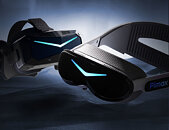
 Product Lineup
Pre-orders for all three headsets are open now, with shipments beginning later this year. Early adopters will receive exclusive accessories such as prescription lens frames and a free copy of Le Mans Ultimate. All models are supported by the Pimax Prime program, ensuring service and ongoing software updates. We're also offering a limited batch of prototype micro-OLED optical engines to loan exclusively to our earliest Crystal Super supporters.
Redefining the Future of VR
With the launch of Dream Air SE, Dream Air, and Crystal Super Micro-OLED, Pimax becomes the only brand offering a full lineup of Micro-OLED + pancake lens VR headsets. This milestone proves Micro-OLED VR is no longer just a concept—it's real, refined, and ready for users worldwide.
Source:
Pimax
Breakthrough in Micro-OLED VR
Micro-OLED promises ultra-high pixel density, deep blacks, and near-infinite contrast, but faces challenges in heat management, optics, and high-resolution scaling. Pimax solved these with its proprietary ConcaveView pancake optics, making it the first VR brand to deliver Micro-OLED headsets at scale, not just prototypes.


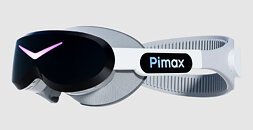
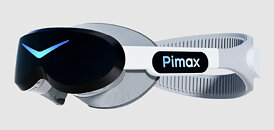
- Dream Air SE - A lightweight (under 140 g) all-in-one 5K headset with 2560 × 2560 resolution per eye, Tobii eye-tracking, dynamic foveated rendering, 6DOF SLAM tracking, and spatial audio. At $899, it makes Micro-OLED VR accessible to gamers and creators.
- Dream Air - The world's smallest full-feature 8K VR headset, offering 3840 × 3552 resolution per eye (27+ million pixels combined). At under 170 g, it delivers a 110° horizontal and 120°+ diagonal FOV with optimized stereo overlap, balancing portability with uncompromising image quality.
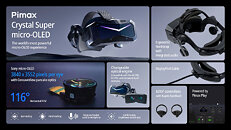
- Crystal Super Micro-OLED - Pimax's flagship, featuring 116° horizontal and 128°+ diagonal FOV, the widest ever on Micro-OLED VR. As part of the modular Crystal ecosystem, it supports interchangeable optical engines (Ultrawide, 57 PPD clarity, and Micro-OLED), ideal for enthusiasts and professional sim users.
Pre-orders for all three headsets are open now, with shipments beginning later this year. Early adopters will receive exclusive accessories such as prescription lens frames and a free copy of Le Mans Ultimate. All models are supported by the Pimax Prime program, ensuring service and ongoing software updates. We're also offering a limited batch of prototype micro-OLED optical engines to loan exclusively to our earliest Crystal Super supporters.
Redefining the Future of VR
With the launch of Dream Air SE, Dream Air, and Crystal Super Micro-OLED, Pimax becomes the only brand offering a full lineup of Micro-OLED + pancake lens VR headsets. This milestone proves Micro-OLED VR is no longer just a concept—it's real, refined, and ready for users worldwide.
16 Comments on Pimax Unveils New VR Headsets Offering the Widest Field of View for Micro-OLED
My 'question' on this kind of headset, is more longevity. One would assume the uOLEDs can be kept at a low illuminance, extending life; but, how do these deal with heat in the headset? OLED panels do not like hot.
Valve, Index 2 soon pls.
And yes 90hz OLED is faster than 90hz LCD
Maybe the latest means something? idk, I'm an OG Index owner. I'd love to see an OLED.
SteamVR has become increasingly capable AND bloated over the years. Bypassing it to run intense VR titles directly with native OpenXR API can result in big performance gains.
As for Pimax, the "DRM" is more like a mobile phone contract: Pay upfront + monthly fee to own the device in two years, or pay the full price upfront.
Maybe other aspects of that can be scammy, but I don't see it different than an iPhone.
Does Pimax require you to sign in to authenticate a paid-off headset when using it with a new machine or new OS install, or does it set the license permanently directly on the headset itself? I've been looking at finally getting a VR headset of my own ever since they announced the Pimax Air and it's almost-4K-per-eye abilities.
I think Pimax does a pretty simple 'call-home' to check the payment status of the device. There was an issue last year I believe, and they had server downtime for their authenticator, preventing ALL Pimax users from running their HMD hardware. The overwhelming complaints forced Pimax to improve their infrastructure (multiple authentication servers) and allow for offline usage during outage.
• Lighthouse version: Upfront Payment $1999 +Prime Fee $1168
• SLAM version: Upfront Payment $2330 +Prime Fee $1334
This is what I see for USD:
Dream Air (Lighthouse version)
$1,300 (upfront) + $700 (Prime Fee) = $2,000 USD
Dream Air (SLAM)
$1,500 (upfront) + $800 (Prime Fee) = $2,300 USD
Crystal Super (8K OLED)
$1,300 (upfront) + $900 (Prime Fee) = $2,200 USD
Competition:
Bigscreen Beyond 2e = $1,050 (base), $1,400 (full-kit)
MeganeX superlight 8K = $1,900
Somnium VR1 = $3,500
The cheapest way into VR remains Quest 3 because Meta is willing to sacrifice hardware margin. But it relies on video encoding to send the feed from the GPU to the headset via wired or wireless networking.
Nevermind the need for activation. It's hardware. Someone somewhere paid for that headset for it to end up in their hands, why should you give a flying f**k who's using it or your software? It's really not of your concern, it is quite literally out of your hands. It's total overreach, and it makes it incredibly difficult to justify the price when your competitors offer the invariably more convenent solution (even if the Beyond 2e's eye tracking seems a tad rough).