Wednesday, November 19th 2025

Microsoft Rolls Out Cobalt 200 CPU with 132 Arm Cores
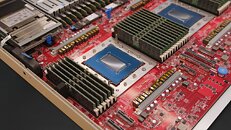
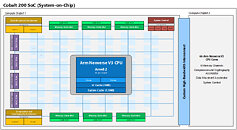
Microsoft has unveiled the Cobalt 200, a custom server processor designed for its Azure cloud infrastructure. According to the company, the chip offers approximately a 50% performance increase over its previous Cobalt 100 design and enhances energy efficiency. Some Cobalt 200 systems are already operational in Microsoft datacenters, with wider customer availability anticipated in 2026. This positions the Cobalt 200 as a key hardware component for many Azure services. The processor is built using Arm Neoverse V3 technology in a dual-chiplet layout, totaling 132 cores, and is manufactured on TSMC's 3 nm node. The design emphasizes precise power control, allowing each core to operate at its own voltage and frequency. This means each core can independently boost performance based on workload demands. The processor also includes a substantial 192 MB of L3 cache and 12 memory channels.
Additionally, Microsoft has integrated specialized accelerators for compression and cryptographic tasks, which the company states make up about 33% of typical cloud operations. This allows these functions to run without occupying general-purpose cores. Microsoft took a unique approach by modeling over 140 real-world Azure scenarios and employing AI-driven simulations to evaluate more than 350,000 configuration options before finalizing the architecture. Initial results from production deployments are promising, with one collaboration service noting a 45% improvement in performance and a 35% reduction in compute requirements compared to the previous platform. The chip also includes hardware memory encryption by default and supports Arm confidential compute features to enhance workload isolation for enterprise customers.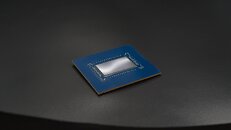

Source:
Microsoft
Additionally, Microsoft has integrated specialized accelerators for compression and cryptographic tasks, which the company states make up about 33% of typical cloud operations. This allows these functions to run without occupying general-purpose cores. Microsoft took a unique approach by modeling over 140 real-world Azure scenarios and employing AI-driven simulations to evaluate more than 350,000 configuration options before finalizing the architecture. Initial results from production deployments are promising, with one collaboration service noting a 45% improvement in performance and a 35% reduction in compute requirements compared to the previous platform. The chip also includes hardware memory encryption by default and supports Arm confidential compute features to enhance workload isolation for enterprise customers.


13 Comments on Microsoft Rolls Out Cobalt 200 CPU with 132 Arm Cores
I wonder if eventually Microsoft will offer selling their custom designs
that said, I'm wondering, what are they running Azure on ? Windows Server on ARM ? or a custom Linux ?
Behind the scenes on what actually powers Azure it's mostly Linux with some Windows here and there.
MS' does have their own distro meant for Azure as well: github.com/microsoft/azurelinuxLPCAMM is not suitable for such multi-channel designs, it'd require way too much board area. SOCAMM would be interesting, but it's not a really well defined thing atm and mostly a Nvidia initiative.
techcommunity.microsoft.com/blog/windowsosplatform/azure-host-os-%e2%80%93-cloud-host/3709528
Proxmox is way more "bloated" since it's not a barebones hypervisor, but rather a full blown distro with lots of management features. A better comparison would be with something like AWS' firecracker or their nitro hypervisors:
github.com/firecracker-microvm/firecracker
aws.amazon.com/ec2/nitro/
GCP also uses a KVM-based hypervisor, but I'm not sure about the extra details on it:
cloud.google.com/blog/products/gcp/7-ways-we-harden-our-kvm-hypervisor-at-google-cloud-security-in-plaintextIn this case I guess it's just not ready for its prime time yet.
But don't you think they have their own -possibly extensive, seeing how much MSoft likes having telemetry about everything- management features built-in that would sorta "make up" for the gap with stuff like proxmox?
you sure that's not an LGA socket ?I mean, they would probably be making that back in licenses and rents and...
A hypervisor for a hyperscaler doesn't need any of that. All you need (at a really high level) is a simple API that can spin up an instance out of an image with the related peripherals based on some config, an API to get high-level metrics of said VM, and APIs for managing its lifecycle, with no console or any other "quality of life" feature whatsoever.
The more CPU time and memory you use for those management things, the less CPU time and memory you can sell to others.