Tuesday, November 25th 2025

TSMC to Build Three New 2 nm Fabs in Taiwan for $28 Billion
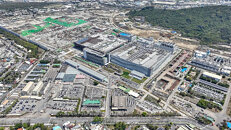
Liberty Times reports that TSMC is preparing to build three more 2 nm fabs in Taiwan, with a combined investment of roughly NT$900 billion (about $28 billion). The sites will likely be located near the Southern Taiwan Science Park. According to the report, TSMC originally planned seven 2 nm fabs, two in Hsinchu's Baoshan district and five in Kaohsiung's Nanzi district. The three new facilities would raise the total to 10, as demand for advanced nodes continues to climb. Groundbreaking could start as early as next year, pending land acquisition and environmental approvals. TSMC began initial 2 nm production this quarter and is already expanding its next nodes. The company broke ground on its first 1.4 nm fab in Taichung in November with volume production aimed for the second half of 2028. The A14 (1.4 nm) node is TSMC's next major process milestone after the 2 nm node and is expected to deliver up to 15% higher performance at the same power. Alternatively, at similar speeds to the 2 nm process, the 1.4 nm node will use 30% less power.
The company is also accelerating its U.S. plans. During its October earnings call, Chairman C.C. Wei said TSMC will bring N2 and more advanced technology to Arizona faster than originally scheduled. Nikkei recently reported that TSMC is close to securing more land next to its latest Arizona fab, signaling further expansion beyond its current $65 billion investment. As previously reported, TSMC expects the third U.S. fab to start 2 nm and A16 production in 2027, one year earlier than planned. The TSMC push on its U.S. expansion strategy is likely a result of competition from Intel's 18A and the upcoming 14A, however, U.S. fabs will remain one node generation behind the Taiwanese ones.
Sources:
TrendForce, Liberty Times
The company is also accelerating its U.S. plans. During its October earnings call, Chairman C.C. Wei said TSMC will bring N2 and more advanced technology to Arizona faster than originally scheduled. Nikkei recently reported that TSMC is close to securing more land next to its latest Arizona fab, signaling further expansion beyond its current $65 billion investment. As previously reported, TSMC expects the third U.S. fab to start 2 nm and A16 production in 2027, one year earlier than planned. The TSMC push on its U.S. expansion strategy is likely a result of competition from Intel's 18A and the upcoming 14A, however, U.S. fabs will remain one node generation behind the Taiwanese ones.


8 Comments on TSMC to Build Three New 2 nm Fabs in Taiwan for $28 Billion
I think neither of them will stand still; they'll fight tooth and nail to see who can always come up with the most advanced lithography.If I were Donald Trump, I would only give money to TSMC if they built the most modern factories on American soil.
Clint Eastwood often says "that's a malpaso".
------------------
Do you know if TSMC also manufactures DRAM on demand? It would be very good for everyone if TSMC and other large companies that have silicon factories, such as Texas Instruments and Globalfoundries, produced a lot of DRAM, so that prices wouldn't increase so much.
Even Intel should start manufacturing DRAM to meet the demand. Without DRAM, CPU and GPU manufacturers can't sell their chips.