Thursday, October 16th 2025
TSMC to Begin N2 Volume Production Before Year-End
TSMC announced today that its next-generation N2 node will enter series production before year's end, with a rapid ramp planned through 2026. This is the second 2 nm-class node to achieve high-volume manufacturing, with Intel's 18A node being the first. Last week, Intel confirmed that its Fab 52 is already pushing out 18A wafers in high-volume manufacturing capacity. The TSMC N2 milestone arrives as the manufacturer posted exceptionally strong Q3 financial results, showing that demand for the most advanced chips is moving faster than the industry can add new capacity. Revenue for Q3 was $33.10 billion, reflecting a 40.8% year-on-year gain and a 10.1% quarter-on-quarter increase.
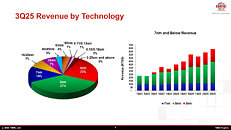
In the third quarter, TSMC processed an astonishing 4.085 million 300 mm wafers, a rise of approximately 22.4% compared to the same period a year earlier, and reported year-over-year revenue growth of nearly 41%, producing roughly $33.1 billion in sales and more than $15 billion in profit for the quarter. Revenue from advanced process families, including all variants of N3, N5, and N7, now accounts for approximately 74% of total sales. By each node, N3 process shipments accounted for 23% of wafer revenue, N5 for 37% and N7 for 14%. The N5 family showed the largest sales increase, reflecting intense demand for AI accelerators and other high-end devices. It is also worth noting that each node carries a different pricing strategy, with newer nodes being significantly more expensive due to the more advanced and involved manufacturing techniques going into them.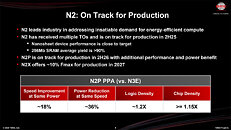
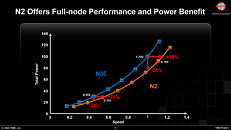
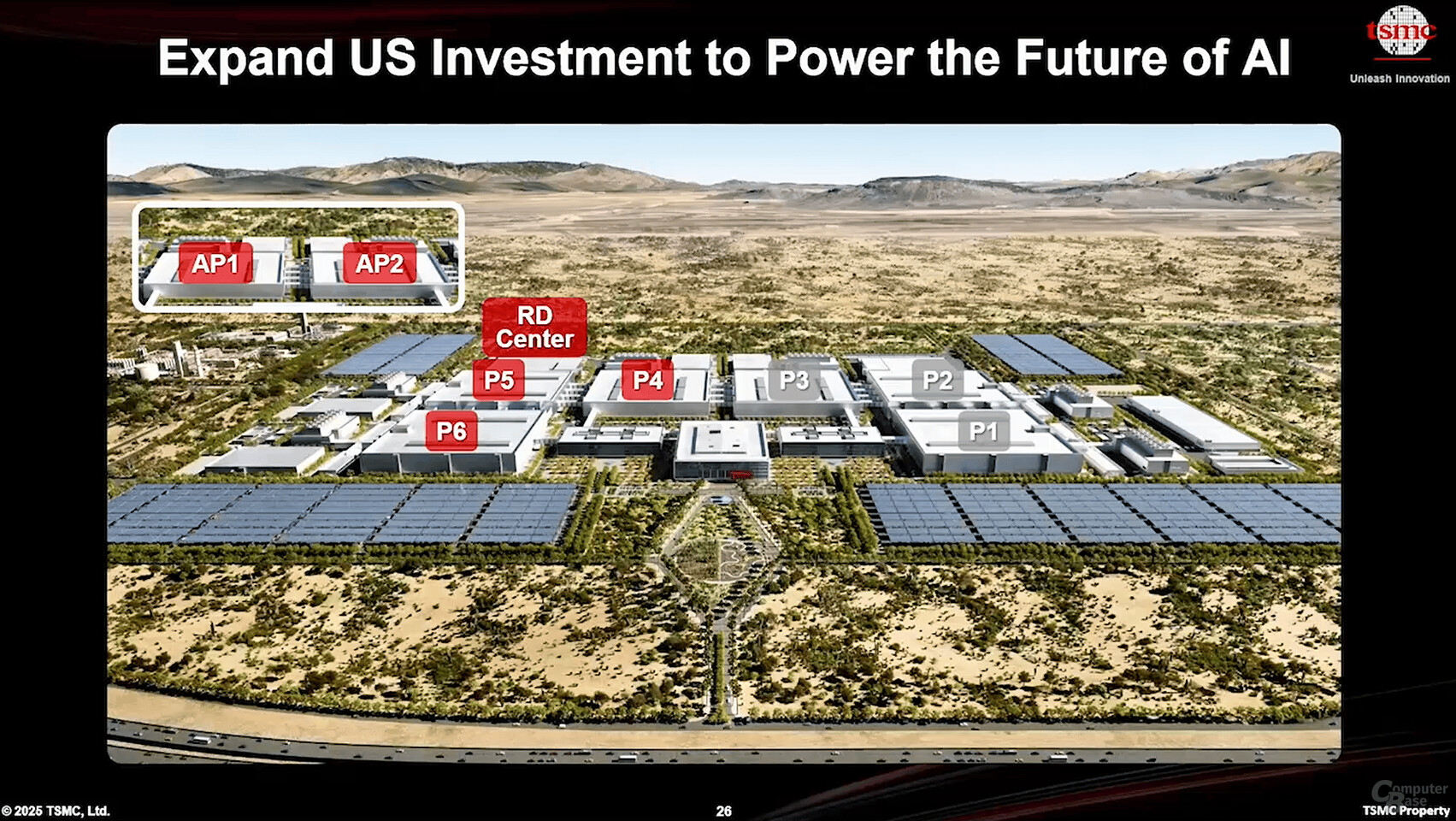
 TSMC is reinvesting heavily to close the gap between demand and supply. Last quarter, CAPEX reached $9.7 billion, and 2025 spending could total about $42 billion, with roughly 70% earmarked for new fabs and capacity and the remainder for specialties and packaging. The Arizona Fab 21 campus is being expanded and may host future N2 production phases, while an optimized N2P process is planned for the second half of 2026. Even with faster buildouts and outside packaging partners joining the effort, company leaders caution that capacity will likely remain tight through 2026 as customers continue to compete for allocations.

Source:
ComputerBase
In the third quarter, TSMC processed an astonishing 4.085 million 300 mm wafers, a rise of approximately 22.4% compared to the same period a year earlier, and reported year-over-year revenue growth of nearly 41%, producing roughly $33.1 billion in sales and more than $15 billion in profit for the quarter. Revenue from advanced process families, including all variants of N3, N5, and N7, now accounts for approximately 74% of total sales. By each node, N3 process shipments accounted for 23% of wafer revenue, N5 for 37% and N7 for 14%. The N5 family showed the largest sales increase, reflecting intense demand for AI accelerators and other high-end devices. It is also worth noting that each node carries a different pricing strategy, with newer nodes being significantly more expensive due to the more advanced and involved manufacturing techniques going into them.


10 Comments on TSMC to Begin N2 Volume Production Before Year-End
Instinct MI450, Apple A20/A20 Pro, Apple M6, Snapdragon 8 Elite, EPYC Venice, Ryzen Medusa Ridge, Dimensity 9600, Apple R2
And these are just the ones that are known. I don't see all of that coming out of their N2 fab next year with any real availability. 2026 will be the year of the scalper.
90nm is Pentium 4 /athlon 64 territory.
en.wikipedia.org/wiki/List_of_semiconductor_fabrication_plants
Athlon 64/Pentium 4 territory sure, and I still have chips like that in use today. One of them is next to me as a faithful NAS.
I fully expect demand for as far back as 7nm to continue as newer stuff struggles to make it out the door on time.You shut your mouth....But full agree.
I took a moment to track one fab back to this company - just for DSC for PIC (industrial) controls they have 7 pages of chips listed.