Wednesday, December 10th 2025

PennyLane Lightning Fast-Tracks Quantum Simulation on AMD Instinct GPUs
Quantum hardware is advancing rapidly, but until machines reach hundreds or thousands of reliable qubits, high-performance simulation is essential for building, testing, and optimizing real applications. State-of-the-art simulators capable of handling large-scale circuits let developers get ahead of the hardware and be ready when the technology arrives. PennyLane's Lightning on AMD GPUs transforms quantum circuit simulation into a high-performance computing pipeline, enabling researchers and engineers to tackle problem sizes previously unfeasible.
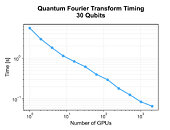
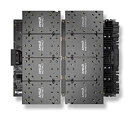
Pennylane's Lightning simulator, running on AMD GPU hardware, has been demonstrated at scale on the Frontier Supercomputer—however, expanding access to quantum simulation requires making this software stack available on a broader range of systems. In this post, we provide an avenue for anyone to try PennyLane on AMD GPUs via the AMD Developer Cloud. We will show how to do it using three methods: Docker, Python wheels, and source code installation, each tailored to different user preferences and needs. By the end, you will be able to run your first Hello World program on AMD hardware and have a development environment to explore more complex PennyLane programs.

 Three PennyLane "Hello World" Programs
PennyLane is a Python-based framework for hybrid Quantum-classical computing, supporting Quantum Computing, Quantum Machine Learning, and Quantum Chemistry (among other uses). It provides the necessary mechanisms to build, compile, and analyze quantum algorithms, and to perform operations such as automatic differentiation through interoperability with classical compute frameworks (e.g., JAX and PyTorch).
PennyLane programs can be executed on a variety of target backends. A backend may be a physical quantum hardware device (e.g., Xanadu's Aurora or IBM Q), or a quantum simulator suite. Lightning, of the latter category, is PennyLane's quantum simulator suite. It can run on multiple devices (e.g., CPUs and GPUs) with different implementations (e.g., tensor, qubit, and Kokkos).
In this blog (full version available here), we will use some Hello World Quantum Circuits written in PennyLane and executed on AMD GPUs. In particular, we have the following three different programs. Code segments in this section emphasize circuit creation. We will revisit the code during the execution phase for complete examples.
Sources:
AMD Developer Resources, Frontier Supercomputer Wikipedia entry (image source)
Pennylane's Lightning simulator, running on AMD GPU hardware, has been demonstrated at scale on the Frontier Supercomputer—however, expanding access to quantum simulation requires making this software stack available on a broader range of systems. In this post, we provide an avenue for anyone to try PennyLane on AMD GPUs via the AMD Developer Cloud. We will show how to do it using three methods: Docker, Python wheels, and source code installation, each tailored to different user preferences and needs. By the end, you will be able to run your first Hello World program on AMD hardware and have a development environment to explore more complex PennyLane programs.


PennyLane is a Python-based framework for hybrid Quantum-classical computing, supporting Quantum Computing, Quantum Machine Learning, and Quantum Chemistry (among other uses). It provides the necessary mechanisms to build, compile, and analyze quantum algorithms, and to perform operations such as automatic differentiation through interoperability with classical compute frameworks (e.g., JAX and PyTorch).
PennyLane programs can be executed on a variety of target backends. A backend may be a physical quantum hardware device (e.g., Xanadu's Aurora or IBM Q), or a quantum simulator suite. Lightning, of the latter category, is PennyLane's quantum simulator suite. It can run on multiple devices (e.g., CPUs and GPUs) with different implementations (e.g., tensor, qubit, and Kokkos).
In this blog (full version available here), we will use some Hello World Quantum Circuits written in PennyLane and executed on AMD GPUs. In particular, we have the following three different programs. Code segments in this section emphasize circuit creation. We will revisit the code during the execution phase for complete examples.
1 Comment on PennyLane Lightning Fast-Tracks Quantum Simulation on AMD Instinct GPUs