Tuesday, December 23rd 2025

Flagship Intel Xeon 698X "Granite Rapids-WS" SKU Listed at $8,300

Intel is seemingly nearing the launch of "Granite Rapids-WS" workstation processors as the latest listings have appeared, found by @momomo_us on X. The listings show the lineup starts with an entry-level Xeon 634 CPU with 48M cache and running 2.7 GHz base speed, priced at roughly $540. However, the lineup tops out at a much higher price point of $8,300 for the flagship Xeon 698X SKU carrying 336 MB of cache and possibly XCC die with 86 cores and 172 threads. We don't have final numbers until the processor officially launches, so core counts will be confirmed once the processors are officially released.

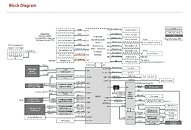
For the W890 workstation platform that hosts these CPUs, Intel chose socket E2 design with 4,710 LGA pins built to support TDP ratings reaching 350 watts. Intel is taking a two-tier approach with distinct "Expert" and "Mainstream" configurations: Expert-class implementations unlock 112 PCIe lanes (96 PCIe 5.0 lanes plus 16 PCIe 4.0 lanes), while the Mainstream tier delivers 80 PCIe 5.0 lanes. Below, you can see the listings showing the price of various CPU SKUs, which we assume are not final MSRPs.

  • Xeon 698X, 336M cache, 2.0 GHz, FC-LGA18N tray: $8,294.91
  • Xeon 696X, 336M cache, 2.4 GHz, FC-LGA18N tray: $6,071.38
  • Xeon 678X, 192M cache, 2.4 GHz, FC-LGA18N tray: $4,065.84
  • Xeon 676X, 144M cache, 2.8 GHz, FC-LGA18N tray: $2,709.81
  • Xeon 674X, 144M cache, 3.0 GHz, FC-LGA18N tray: $2,384.49
  • Xeon 658X, 144M cache, 3.0 GHz, FC-LGA18N tray: $1,842.30
  • Xeon 656, 72M cache, 2.9 GHz, FC-LGA18N tray: $1,516.99
  • Xeon 654, 72M cache, 3.1 GHz, FC-LGA18N tray: $1,300.11
  • Xeon 638, 72M cache, 3.2 GHz, FC-LGA18N tray: $974.80
  • Xeon 636, 48M cache, 3.5 GHz, FC-LGA18N tray: $692.86
  • Xeon 634, 48M cache, 2.7 GHz, FC-LGA18N tray: $541.04
Sources: @momomo_us, via VideoCardz
Add your own comment

17 Comments on Flagship Intel Xeon 698X "Granite Rapids-WS" SKU Listed at $8,300

#1
Chrispy_
These CPUs are all 100% P-core configurations, right?

xxxx-rapids = P-core and xxxx-forest = E-core, but I don't really know if there are any hybrid models like their consumer lineup.
Posted on Reply
#2
_JP_
In 20-something years, the unused units will make great coasters. :laugh:
Posted on Reply
#3
lambda
Chrispy_These CPUs are all 100% P-core configurations, right?

xxxx-rapids = P-core and xxxx-forest = E-core, but I don't really know if there are any hybrid models like their consumer lineup.
Yes, P cores only.

Sadly, RDIMM only so might as well not launch them given the terrible DRAM pricing.

I'm hoping the entry level SKUs are not priced to match AMD's TR.
Posted on Reply
#4
Chrispy_
Yeah, workstation purchasing is on hold right now for us. CPUs like this are typically purchased for systems that need a lot of RAM. Even our Ryzen workstations are getting 128GB and given that the cost of replacing an older 64GB workstation is prohibitive right now, I foresee a shift for many companies to postponing purchases and trying to work smarter/more conservatively with the hardware they already have.

The RAM crisis caused by the DRAM cartel's refusal to serve this sector any more hurts everyone - not just consumers.
Posted on Reply
#5
Wirko
_JP_In 20-something years, the unused units will make great coasters. :laugh:
You mean toasters? Maybe roasters?
Chrispy_Yeah, workstation purchasing is on hold right now for us. CPUs like this are typically purchased for systems that need a lot of RAM. Even our Ryzen workstations are getting 128GB and given that the cost of replacing an older 64GB workstation is prohibitive right now, I foresee a shift for many companies to postponing purchases and trying to work smarter/more conservatively with the hardware they already have.

The RAM crisis caused by the DRAM cartel's refusal to serve this sector any more hurts everyone - not just consumers.
It may even make sense to do otherwise stupid things, like recycle two 64GB workstations (if they are on DDR5) into one 128GB workstation.
Posted on Reply
#6
XeonsNOpterons
Hmm, this pricing is disappointing if true, though I am skeptical of these. The prices are very odd, so these could likely be some importer/exporter or just some other overpriced vendor. Sapphire Rapids-WS maxed out at $5889 (which was already too high) and that price was much less than the 60-core server Xeon flagship's $17000 (also insane). Considering the top Granite Rapids-SP chip is around the same as the top Sapphire Rapids-SP chip, I would really expect the Xeon 698X to be more like $6300. Then again, we have Lip Bu Tan, so greed may have forced it up... Either way, given that the Redwood P-cores are a little better in IPC than even AMD's latest Zen 5, the 86-core top chip would be like 95% of the performance of the 96-core TR 9995WX. And this 95% of the performance at 63.8% of the price. Really will be a no brainer for most people. On top of that, Intel just overclocks better than AMD, which you really should be doing with these chips as otherwise just go buy a server CPU.

Regardless, these prices for workstation chips have become absurd in the past 5 years. I remember when the top chip was around "only" $2000-3000 (i9-7980XE and Xeon W-3175X). The excuse that these are meant only for professionals is ludicrous because it just fuels a continous drive upwards in cost, pricing more and more professionals out of access. I want/need to make a CFD workstation that can also do other tasks with high single-core speeds, but this continuous price increasing is making it more and more difficult to find funds. If this madness is to at least slow down, Intel better price the Xeon 698X at maximum $6300. This should collapse AMD's pricing for TR PRO and potentially start a downwards price war for following workstation generations. But also as everyone has stated as well, the unregulated AI market has made RAM exorbitant in price as well, let alone the niche RDIMM market.
Posted on Reply
#7
igormp
XeonsNOpteronsthe 86-core top chip would be like 95% of the performance of the 96-core TR 9995WX. And this 95% of the performance at 63.8% of the price.
Minor caveat is that W890 is apparently only available in 4-channel configs, so it's more of a non-Pro competitor instead of competing with the Pro/WX CPUs, given that the latter was 8c and thus ~2x the memory bandwidth.

Intel may come up with 8c on their "Expert" configuration, it feels like a waste to not use the extra channels that already exist in those CPU dies.
Posted on Reply
#8
XeonsNOpterons
igormpMinor caveat is that W890 is apparently only available in 4-channel configs, so it's more of a non-Pro competitor instead of competing with the Pro/WX CPUs, given that the latter was 8c and thus ~2x the memory bandwidth.

Intel may come up with 8c on their "Expert" configuration, it feels like a waste to not use the extra channels that already exist in those CPU dies.
No, this should be 8-channel for some of the chips (likely all X-SKUs), not 4-channel. These diagrams are off anyways, best to wait for CES. Makes no sense for W890 to have only 4-channel when W790 was 8-channel with the W-3000 series CPUs. Using logic helps to weed out some of the likely misreported things, just like when we all got hopeful that W890 would support RDIMM and DIMM.
Posted on Reply
#9
Wirko
XeonsNOpteronsNo, this should be 8-channel for some of the chips (likely all X-SKUs), not 4-channel. These diagrams are off anyways, best to wait for CES. Makes no sense for W890 to have only 4-channel when W790 was 8-channel with the W-3000 series CPUs. Using logic helps to weed out some of the likely misreported things, just like when we all got hopeful that W890 would support RDIMM and DIMM.
Is MRDIMM support expected to come to workstation chips too? If it does, those 4 or 8 channels will get a big bandwidth boost. 8800 vs. 6400 = equivalent of 5.5 channels vs 4 channels.
Posted on Reply
#10
igormp
XeonsNOpteronsNo, this should be 8-channel for some of the chips (likely all X-SKUs), not 4-channel. These diagrams are off anyways, best to wait for CES. Makes no sense for W890 to have only 4-channel when W790 was 8-channel with the W-3000 series CPUs. Using logic helps to weed out some of the likely misreported things, just like when we all got hopeful that W890 would support RDIMM and DIMM.
If that's the case, then your comparison shall stand.
However, the diagram does include 96 PCIe 5.0 lanes, so it's likely the "Expert" config already (and it does mention an "Expert+Mainstream" configuration). Maybe this is closer to some setups such as ones that Gigabyte has for Threadripper that supports both the non-Pro with only 4-channels, and also 8-channels on Pro CPUs? (found in mobos such as the TRX50 AI TOP)

If they do have an "Expert-only" with 8 or even 12-channels that would be pretty sweet.

The RDIMM vs DIMM thing was just a fluke from a rumor page that got spread around without anything to back it up, I don't think this applies here.
Posted on Reply
#11
XeonsNOpterons
WirkoIs MRDIMM support expected to come to workstation chips too? If it does, those 4 or 8 channels will get a big bandwidth boost. 8800 vs. 6400 = equivalent of 5.5 channels vs 4 channels.
I do not know, it is possible as Granite Rapids-SP has such MRDIMM support. Those modules would likely be even more expensive than RDIMM :kookoo:
igormpIf they do have an "Expert-only" with 8 or even 12-channels that would be pretty sweet.
Nah, no 12-channel for this release, only up to 8-channel. My thinking is that since for now it looks like Intel has killed Diamond Rapids-SP, there will be a significant gap of time before they potentially make Coral Rapids-WS as the next workstation, which is just a stupidly large time gap where AMD will outcompete. To alleviate this, they may potentially bring in the LGA7529 socket for Granite Rapids-WS Refresh in late 2026 or 2027 to patch the hole. This would allow for up to 12-channel memory and a 128-132 core top SKU. My prediction is Zen 6 Threadripper will top out at around 128-144 cores, so if Intel makes the LGA7529 socket a workstation socket, they could keep up. I expect Zen 6 to only have maximum 10% better IPC than Redwood Cove cores and to fall 10-15% behind Panther Cove cores that will come in Diamond Rapids.
Posted on Reply
#12
Chrispy_
WirkoIt may even make sense to do otherwise stupid things, like recycle two 64GB workstations (if they are on DDR5) into one 128GB workstation.
DIMM size unfortunately prohibits that. If we're retiring something it's probably fully populated as I try to squeeze a RAM upgrade and potentially GPU upgrade into their service lifecycle chances are good they're 4x16GB and also likely DDR4 instead of DDR5 :(
Posted on Reply
#13
Wirko
XeonsNOpteronsI do not know, it is possible as Granite Rapids-SP has such MRDIMM support. Those modules would likely be even more expensive than RDIMM :kookoo:
More expensive for sure. You pay for capacity/density and you pay for speed. If you get what you pay for then the price is acceptable. With that said, I have no idea how much MRDIMMs cost, or used to cost before the supernova explosion in late September 2025.
Posted on Reply
#14
XeonsNOpterons
WirkoMore expensive for sure. You pay for capacity/density and you pay for speed. If you get what you pay for then the price is acceptable. With that said, I have no idea how much MRDIMMs cost, or used to cost before the supernova explosion in late September 2025.
Yep, I do not disagree with there being an option for MRDIMM; if others want to pay for the extra speed that is great. I more take issue with both TR and Xeon-WS requiring RDIMM, literally providing no major advantage I know of besides potentially larger maximum RAM capacity versus DIMMs. And RDIMM is like 2x more expensive. I am sure Micron has a secret deal with Intel and AMD so they force workstation users to use the more expensive RDIMM.
Posted on Reply
#15
Wirko
XeonsNOpteronsI am sure Micron has a secret deal with Intel and AMD so they force workstation users to use the more expensive RDIMM.
Micron, and those nearly-unknown firms that make buffer/register chips.
Posted on Reply
#16
efikkan
lambdaI'm hoping the entry level SKUs are not priced to match AMD's TR.
Xeon W have a much lower entry point than Threadripper, starting at much lower core counts, and are usually priced fairly similar for comparable core counts. They are unfortunately less available than Threadrippers, and the boost speed have been a little lacking in recent generations. If these could boost to about ~5.5 GHz at stock, they would be absolutely awesome.

Many Threadripper reviewers aren't even aware of this platform.

One advantage of Xeon W being rather unknown is that you can find good deals on the used market, especially if you're not after the high core count options.
XeonsNOpteronsAnd RDIMM is like 2x more expensive.
They aren't that more expensive under normal conditions.
(2x more expensive, meaning 3x the price? It's more like +20%)
Posted on Reply
#17
XeonsNOpterons
WirkoMicron, and those nearly-unknown firms that make buffer/register chips.
Unfortunately true most likely.
efikkanThey aren't that more expensive under normal conditions.
(2x more expensive, meaning 3x the price? It's more like +20%)
Not sure where you get your RDIMM prices, but New Egg has same capacity kits/modules being like 80% at minimum more expensive than normal DIMM... and that is like 4800MT/s for RDIMM versus 6400MT/s for DIMM. And this was pretty much the same case even before the whole AI garbage RAM crisis. It is just dumb and not worth any of the potential benefits that RDIMMs offer.
Posted on Reply
Add your own comment
Nov 21st, 2026 12:42 PST change timezone

New Forum Posts

Popular Reviews

TPU on YouTube

Controversial News Posts