Wednesday, December 24th 2025
Laptop SODIMM-to-DIMM Adapters Gain Traction as DRAM Costs Rise
As regular desktop memory prices have skyrocketed over the past year, more gamers are turning to repurposing laptop SODIMM memory using SODIMM-to-DIMM adapters. This allows them to use the more affordable memory in their builds. According to 3DCenter.org, these adapters are relatively inexpensive. When paired with SODIMM memory, which has experienced a smaller price increase—an average of 136% compared to 245% for desktop DIMMs—gamers find that buying laptop memory makes more sense. They can achieve good enough memory performance at a much lower cost and finally perform a system upgrade or build a new PC.
These adapters serve more as a workaround than an ideal solution, mainly designed for repurposing spare laptop memory rather than achieving peak performance. Users must be prepared for significantly reduced memory clock speeds and looser timings, as mobile SODIMMs inherently lack the performance capabilities of desktop modules. Additionally, the adapter's signal path often requires further down clocking to maintain system stability.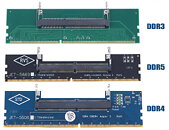 Despite these limitations, this approach offers undeniable financial benefits. Firstly, 3DCenter.org notes that the price for a 16 GB DDR5-4800 SODIMM module is around €100, while comparable desktop DDR5-4800 memory DIMMs are priced at approximately €146. Additionally, adapters are typically priced between €8 and €18 on Amazon, while Asian suppliers offer them for as little as €3 to €8. Even if you factor in the adapter cost, the SODIMM memory can be much more financially appealing for gamers who can access it or have leftover SODIMMs from past laptops, and want to build a new system.
Source:
3DCenter.org
These adapters serve more as a workaround than an ideal solution, mainly designed for repurposing spare laptop memory rather than achieving peak performance. Users must be prepared for significantly reduced memory clock speeds and looser timings, as mobile SODIMMs inherently lack the performance capabilities of desktop modules. Additionally, the adapter's signal path often requires further down clocking to maintain system stability.

38 Comments on Laptop SODIMM-to-DIMM Adapters Gain Traction as DRAM Costs Rise
The DRAM chip makers are the ones causing the shortage, because they want their customers who already bought chips from them, to be able to clear their dead inventory. Makes perfect sense 👍
SODIMMS have the exact same supply issues that regular DIMMs have, they don't use different DDR5 BGA packages compared to desktop DIMMs, they're just mounted to a differently-shaped PCB. They're just a few weeks behind the desktop/server DIMM supply problems due to a smaller market of DIY laptop RAM upgrades, and a little more remaining stock in the channel. Honestly, once everyone's back to work in the new year the SODIMM shortage will likely push their market price right up to the ~3x prices we're currently seeing on DDR5.
Realistically these add cost and reduce signal integrity which means lower frequencies and/or timings. If you're absolutely desperate, they'll let you finish a build that's completely missing all RAM, but it doesn't change the fact that the entire consumer PC industry is about to go through a crippling RAM drought that promises to have wider implications than either of the two previous crypto-mining booms or the global-scale long-term manufacturing shutdowns during the COVID-19 pandemic.
Shit's already getting real, how long will the trillion dollar circular ponzi fraud in the AI market continue before it all falls apart? Who knows...
Kingston, Corsair, G.Skill, etc. are the ones buying DRAM chips, and they try to buy millions of them from the DRAM chip manufacturers. If they get good availability and prices, we get to buy well-priced DDR modules like we did until 3-4 months ago. If not, then we get the current situation.
The astronomical price hikes are because there isn't enough RAM to go around, period. Doesn't matter what type of RAM you're talking about, demand has outstripped supply so everyone in the chain is scalping the end customer because the end customer is completely f*cked and doesn't have any choice any more.