Thursday, December 25th 2025
Framework Announces Another DRAM Price Hike, Memory Costs $10 per GB of Capacity
Framework updated its original DRAM price hike blog post on December 24th, 2025, explaining that the company must respond to the price volatility its suppliers are experiencing. Initially, Framework announced a 50% price increase for its DDR5 memory upgrade configurations. To maintain transparency with customers, the company stated its intention to raise the price of DDR5 memory in Framework Laptop DIY Edition orders by 50%. This decision directly responds to the significantly higher costs from DRAM suppliers and distributors. As a result, the company cannot absorb all these cost increases and needs to pass some on to consumers. Therefore, another increase today is a natural response, as the company originally suggested.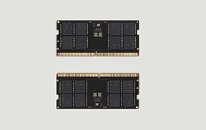
Source:
Framework
FrameworkWith costs from our suppliers continuing to increase, we've had to make a further price adjustment on DDR5 memory modules. During this period of extreme memory shortages and price volatility, our priority is to make sure you can still buy a computer when you need one. With that in mind, we're setting our memory configuration prices as close as possible to the actual purchase prices we have with our suppliers and distributors. Since we're constantly sourcing additional memory and each purchase comes in at different (and often higher) pricing, we're using the Weighted Average Cost (WAC) of inventory, which currently comes to $10/GB for 8 GB, 16 GB, and 32 GB modules, and slightly higher for 48 GB modules.

81 Comments on Framework Announces Another DRAM Price Hike, Memory Costs $10 per GB of Capacity
Those fabs are starting to come online.
Nothing about the chips act was about the LLM insanity that is wrecking the rest of the economy.
The supply chain is not interested in a repeat of previous boom-burst cycles where they are left with massive losses after the burst.
He who will work it out will make a small fortune
www.goodreads.com/quotes/25775-we-buy-things-we-don-t-need-with-money-we-don-t
It's not an anti-trust violation when a certain commodity (RAM, in this case) suddenly becomes 100x more valuable because there's a massively increased demand for it. That's how the price signal should function in a free and open market.
When demand rises (which it is from AI) and supply does not increase (which it can't, because RAM fabrication plants take years and 10s of billions of $ to build), prices rise (which they are).
www.theregister.com/2004/02/27/memory_makers_hit_by_pricefixing/
oag.ca.gov/news/press-releases/brown-announces-173-million-anti-trust-settlement-computer-chip-makers
www.justice.gov/archive/atr/public/press_releases/2006/219102.htm
per chip: 16GB at 36$
per module: 16GB at 160$
Look like module makers raised prices to astronimical levels, becuase there is shortage and they can sell at any price they ask. Don't know how they state that adjusting prices are caused by chip price increase.
www.dramexchange.com/
Right now, AI is "the big thing," and that means they have lots of money to throw at commodities like this. It sucks for us, but that's how the market works.RAM manufacturing takes years to build. They can't double production in a month when demand spikes. Also, RAM suppliers have to balance the very real risk of overproducing and hurting their long-term sustainability (which has happened many times in the past). If Samsung, SK Hynix, and Micron all start building new plants right now, those won't come online until ~2029 at the earliest. Will there still be a massive demand for memory at that time? Will the AI bubble have burst by then? Nobody knows, and if there isn't demand to justify those plants' existence, they've invested 100s of billions of $ of capital into useless fab plants. Bankruptcy is a real possibility.Why would OpenAI let them sit in a warehouse? Those chips for OpenAI's Stargate project are going into AMD and Nvidia GPUs. They're useless to OpenAI if they're not in GPUs.
It's anything but a "free and fair" market when taxpayers are footing the bill for datacenters, increased electricity costs, and tech ownership becoming unaffordable.Oh, no the poor multi-billion dollar ram manufacturers!
But really, maybe the suppliers shouldn't be allowed to sell out all of their supply for years while halting or delaying plans for expansion.
What these manufacturers are doing right now smells of price fixing, especially when they've been caught doing it several times in the past.It makes no sense why OpenAI would buy up wafers to let them sit other than being anti-competitive, OpenAI is a scam which hasn't even made a profit yet, grifting on a massive scale.
OpenAI is buying up unsliced wafers at up to 900,000 wafers per month from SK Hynix and Samsung.
www.tomshardware.com/pc-components/dram/openais-stargate-project-to-consume-up-to-40-percent-of-global-dram-output-inks-deal-with-samsung-and-sk-hynix-to-the-tune-of-up-to-900-000-wafers-per-month
If you knew even basic economics, you'd know that actually higher RAM prices are good for future supply! High RAM prices means they have more capital, and can make major investments like new fabs.
If it "smells of price fixing," you have a stuffy nose. Everything is perfectly explained by the extremely basic laws of supply and demand you should have learned in your high school econ class. More demand from AI + steady supply = rising prices. It's that simple.Except OpenAI isn't buying up wafers. If you can read, the article says that SK Hynix and Samsung signed a deal to supply OpenAI up to 900k wafers a month at some unspecified point in the future. OpenAI isn't taking 40% of DRAM output right now. That's just what they could take at some point in the future, if/when they have the money to pay (because obviously SK Hynix and Samsung aren't going to give them free RAM) and if/when Project Stargate ramps up (which depends on OpenAI raising $ trillions more to build these, and again, they'll be going into Nvidia and AMD GPUs).
Also, again, if you can read, the linked Reuters article says:A letter of intent (which isn't even legally binding lmao, it's a PR stunt) for 900k wafers in 4 years is not "buying up wafers to let them sit." Take off your tinfoil hat and start thinking logically.