News Posts matching #32 GB

Return to Keyword Browsing

CPU-Z Data Shows 16 GB RAM Gaining Ground While 32 GB and 64 GB RAM Shares Shrink

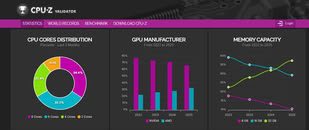
PCs with 32 GB and 64 GB of RAM are becoming less common, at least in the latest CPU-Z Validator statistics. According to Doc TB, one of the developers behind CPU-Z, this is the first time RAM capacity on PCs has declined year over year. 32 GB is still the most popular configuration at 37.2% of validations, though its share is down 2.5% compared to a year ago. 64 GB took a much bigger hit, falling 18% to 7.3%. Lower capacities are moving the other way, with 16 GB up 12.9% to 33.0% and 8 GB up 5.5% to 11.0%, while 96 GB and 128 GB setups dropped by more than 26% each. Memory type tells a similar story, with DDR4 now making up 54.5% of validations, up 6.0%, while DDR5 slipped 2.9% to 32.9%.

Of course, these figures only cover systems that users actually submit to the validator over the last three months, so they aren't a full picture of the PC market. Steam's September survey, for example, showed 32 GB overtaking 16 GB as the most common configuration among gamers, but that promptly flipped with the October survey. Still, the timing makes sense. Memory prices have climbed sharply this year, and Team Group expects the worst of the shortage to land between Q4 2026 and Q2 2027. DDR4 platforms may also get a second wind, with DDR4 motherboards getting released for unannounced LGA1700 processors expected in early 2027. It looks like plenty of people are sticking with older DDR4 systems or settling for 16 GB instead of paying current prices.
Massive Four-GPU RX 470 Card Surfaces, Probably Built for Crypto Miners

X user GOK has shared photos of a huge red graphics card that carries four Polaris GPUs on a single PCB, jokingly asking whether it might be the biggest PCIe graphics card in the world. The four GPUs sit in a 2x2 layout, and each one appears to be surrounded by eight GDDR5 memory chips, which would mean 8 GB per GPU and a gigantic 32 GB across the board. According to GOK, a sticker on the card identifies it as a quad RX 470, which would work out to 8,192 stream processors in total. Feeding all of that are four 8-pin power connectors, while the only display output is a single HDMI port. A second photo shows the card lying next to a motherboard, and it's noticeably bigger than the board itself.

The PCB does carry an AMD logo next to a "DYII-XQ570 V1.0" marking, but it looks like AMD may not have built this one. GOK pointed out that the card has no board OPN (part number) and that the marking doesn't follow AMD's official format, adding that small factories in China sometimes put the AMD logo on their own designs. He also identified the PCIe switch as a PI7C9X2G, a PCIe 2.0 part, and thinks the card was likely made by one of those factories for crypto miners. He hasn't tested it yet, since he doesn't have a heatsink for it. Multi-GPU Polaris mining boards aren't new either, as Sapphire had a dual RX 570 mining card with 16 GB and a single HDMI port back in 2021.

Steam Hardware Survey: Old Leaders Return as 16 GB RAM and RTX 3060 Are Back on Top

Valve's October 2026 Steam Hardware & Software Survey shows much of September's odd data snapping back. After 32 GB system RAM overtook 16 GB last month, the 16 GB tier is back in first place at 41.42% (up 3.60 points), while 32 GB dropped 5.16 points to 37.06%. The GeForce RTX 3060 is the most common GPU again at 3.62% across all platforms, a spot it held before September, while the RTX 5070 fell from 5.86% to 3.56%. It looks like the survey sample played a big part. Simplified Chinese fell 9.41 points to 21.98%, while English rose 4.84 points to 39.04%. The survey is voluntary, so a change in who responds can move the numbers without an actual hardware change behind it. We can't confirm that, but it would explain why so many categories shifted at once.

Windows 11 rose 1.17 points to 72.51%, and Linux climbed 0.90 points to 3.95%. The 1440p share dropped 5.22 points to 21.82%, while 1080p sits at 50.23%. On Windows, Intel gained 0.89 points to reach 53.48% CPU share, with AMD at 46.51%. Valve's Steam Frame, which launched in September, now holds 4.13% of surveyed VR headsets, up 3.72 points, while Meta Quest 3 continues to dominate with a 27.27% share. However, headset owners are only 1.75% of the survey, so it's a small group. The interesting bit is still the system RAM split, and while 32 GB RAM had been slowly gaining on 16 GB, it looks like September was the outlier. November's data should give us a better idea of the split.

Acer Predator Atlas 8 Debuts With Intel Arc G3 Extreme Starting at $1,299.99

Acer and Intel showed off the Predator Atlas 8 gaming handheld, powered by the new Intel Arc G3 APUs, at Computex in June 2026, and while it was speculated that the new handhelds would not be cheap, given the specs and expected performance, it seems less and less likely that there will be even a single Acer Predator Atlas 8 priced at under $1,000.

Acer recently updated its Predator Atlas 8 product page in the UK in order to allow users to "register their interest," and the OEM handily included prices for the various different Atlas 8 models on the page, giving us an idea of what to expect for the rest of the world as well. The cheapest version of Acer's Predator Atlas 8 gaming handheld will cost £999.99, which converts to $1,346, although it's likely that pricing will be lower in the US. The Acer Predator Atlas 8 is slated to release "this autumn," suggesting a release window sometime between September and December.

Update Oct 31st: Acer has officially listed the Predator Atlas 8 for $1,299.99 at Best Buy, and the only available configuration at the time of update is the Intel Arc G3 Extreme-powered variant with a 512 GB SSD and 24 GB of memory—a variant not previously listed on Acer's product page and likely introduced to bring the price down, given the ever-increasing cost of SSDs. It's unclear when the Arc G3 versions with less memory will be available.

HP EliteBoard G2a Keyboard Computer Launches with Eyewatering Price and AMD Ryzen AI 400 APUs

HP revealed the EliteBoard G2a keyboard PC at CES 2026, promising "next-generation local AI power in a keyboard-sized form factor." Now, 10 months later, HP has released the updated EliteBoard G2a, revealing pricing and some of the keyboard and underlying PC specs, in the process. The G2a features either the updated AMD Ryzen AI 7 Pro 450 APU or its smaller Ryzen AI 5 Pro 435 counterpart. The cheapest version of the HP EliteBoard G2a, which packs a Ryzen AI 5 Pro, 16 GB of DDR5-5600 memory, and 512 GB of PCIe Gen 5 SSD storage, comes in at $3,028, while the SKU with the Ryzen AI 7 Pro 450 APU paired with 32 GB of memory and a 512 GB SSD, comes in at $4,167.

The small form factor PC is capable of drawing 65 W over USB Power Delivery, and the only I/O it features is a single USB4 port and a single USB Type-C 10 Gbps port. The EliteBoard G2a also features built-in dual speakers and comes bundled with an HP 675M wireless mouse. The keyboard component of the mini PC is a membrane keyboard, not mechanical, and it follows what appears to be an 1800 layout, and it has white backlighting. Fortunately, the EliteBoard G2a uses SODIMM RAM, so it's upgradeable in the event that you want 32 GB of RAM but don't want to pay HP's upgrade cost.

Lenovo Legion Go 2 Price Hike Puts Ryzen Z2 Extreme Handheld Price Over $3,000

The second-generation Lenovo Legion Go handheld devices have already received a substantial price increase after their initial launch, with the entry-level Legion Go S jumping from $899.99 and $649.99 to $1,579.99 and $989.99, for the Z1 Extreme and Z2 Go models, respectively. This was after Lenovo already increased the price on the AMD Ryzen Z2 Extreme-powered Legion Go 2 from $1,349.99 to $1,999.99. Now, the same Legion Go 2 with 32 GB of RAM and 2 TB of storage that previously jumped to $2,849 can now be found on the Lenovo US online store for $3,081.99.

This is a $233 price jump that corresponds to around 8% of the total previous price, although the Legion Go 2 with 1 TB of storage can still be found at Best Buy for $1,999.99. The latest price increase for the Legion Go 2 comes as the gaming handheld continues to be out of stock at Lenovo, despite partner stores, like Best Buy, having stock of the handhelds. Lenovo hasn't yet announced the price hike for the Legion Go, but it seems reasonable to assume the price increase is linked to the ongoing RAMpocalypse that has repeatedly affected pricing across various PC hardware segments—but most severely RAM and DRAM.

Sandisk Releases SANDISK Guardian Memory Cards Series

Sandisk today announced the SANDISK Guardian Series, a new portfolio of high-endurance storage solutions engineered for the always-on cameras and systems consumers rely on to record and monitor important moments. Designed for use with compatible home security cameras, dash cams and built-in monitoring systems, SANDISK Guardian Series enables continuous recording with the durability to withstand harsh environmental conditions, and the continuous overwriting cameras require.

As cameras become increasingly central to monitoring homes, families, vehicles and personal property, consumers need storage that can withstand the demands of 24/7 recording to help support recorded footage availability when they need it. The SANDISK Guardian Series was developed to support those needs with high-endurance storage solutions designed for continuous operation, broad compatibility and dependable local recording.

Leak Tips NVIDIA RTX Spark-Powered Microsoft Surface Laptop Specs

Following what appears to have been a series of unfortunate events that led to a roadside laptop find resulting in confirmation that Microsoft will be launching a 20-core NVIDIA RTX Spark Surface Laptop, we now appear to have confirmation that Microsoft will also be launching a Surface Laptop Ultra on the other end of the Spark spectrum. According to Windows Central, Microsoft will reveal the full RTX Spark Surface line-up on October 7 at a special event in San Francisco.

Alongside the 20-core variant, the Windows Central report claims that Microsoft will launch a Surface Laptop with NVIDIA's 18-core RTX Spark. It is also claimed that the 18-core SKU will start with 24 GB of unified memory, while the 24-core version will start with 32 GB of memory. There will reportedly be a performance demonstration that shows off how the new Arm SoC delivers the same level of performance on battery life as it does when plugged into the wall.

Steam Hardware Survey: 32 GB Overtakes 16 GB as the Most Common System RAM Configuration

Valve's September 2026 Steam Hardware & Software Survey shows that 32 GB of RAM is now the most common memory capacity among participating gamers. The 32 GB tier gained 4.77 points to reach 42.22%, while 16 GB fell 3.38 points to 37.82%. Last month, 16 GB still led with 41.20% against 37.45%, so that is a big swing for a single month. The idea had been around for a while, with 32 GB already being floated as the next standard back in August 2025. Steam only reports capacity, so the survey says nothing about speed or whether those kits are DDR4 or DDR5. It makes sense, though, with several recent games asking for 32 GB RAM in the recommended specs, with 16 GB now often listed in the minimum requirements.

Elsewhere, AMD gained 1.89 points on Windows to reach 47.41% CPU share, and the GeForce RTX 5070 is the most common GPU at 5.86%, up 2.30 points. 1440p primary displays climbed 5.18 points to 27.04%, and Windows 11 keeps growing at 71.34%. Of course, one month doesn't make a trend, so it's reasonable to wait for October's numbers to see whether 32 GB remains at the top. The survey is also voluntary, and the sample changed a lot this month. For example, Simplified Chinese jumped 7.42 points to 31.39% of surveyed systems. That change in sampled systems could explain part of the RAM swing, though it could also simply be 32 GB RAM gaining popularity.

Ayaneo Opens Orders for Konkr Pocket Block, a Sub-$100 Game Boy-Style Android Handheld

Ayaneo has opened orders for the Konkr Pocket Block, the vertical Android handheld its budget Konkr sub-brand first showed off in May. The 2 GB RAM and 32 GB storage model costs $89, while the 3 GB and 64 GB version costs $109. Early bird pricing knocks $10 off both for a limited time, bringing them to $79 and $99. Ayaneo says shipping starts at the end of October. The handheld packs a 3.33-inch 4:3 LCD with a 960 x 720 resolution, a MediaTek Helio G85 chip, a microSD slot, and a 3,500 mAh battery. It runs Android 12 and has no fan, so Ayaneo is using a heat spreader instead.

It looks like the 2 GB model only comes in gray, while the 3 GB version also gets Cube Purple and a translucent Atoms White. The Helio G85 is a budget chip, so it might be best suited to emulating older systems up to around the PS1 and PSP era, while PS2 and GameCube games will probably be a struggle. Ayaneo billed the Pocket Block as the world's first AI handheld back in May, but it still hasn't said what the AI features are. In the meantime, the company also unveiled and launched the Game Boy Advance-inspired Konkr Pocket Advance. Pricing here looks to be reasonable enough that it may be worth a look, though readers are advised to wait for reviews first.

NVIDIA RTX 5090 Sells Out at Walmart for $4,299 After 10,000 Shoppers Add It to Cart

Walmart's GeForce Week promotion briefly listed MSI's GeForce RTX 5090 32 GB Gaming Trio OC at $4,299.99, and it sold out after showing up in roughly 10,000 shoppers' online carts. The listing has since gone out of stock, according to Videocardz, who first spotted it. That price sits about $2,300 above NVIDIA's $1,999 MSRP, a premium of roughly 115 percent. On paper, that looks steep, but RTX 5090 prices have been climbing hard lately, with some cards reportedly passing $9,000 to $10,000 on the secondary market. Against that, $4,299 from a major retailer apparently looked like a decent option.

It says a lot about how tight the RTX 5090 market has gotten that 10,000 people still added it to their carts. Part of the shortage seems to come from AI firms reportedly picking up RTX 5090 stock in bulk before it reaches gaming-focused retail, though it's hard to say how much of the scarcity traces back to that versus general Blackwell supply limits. The MSI Gaming Trio OC itself is a solid variant, with 21,760 CUDA cores, 32 GB of GDDR7 memory on a 512-bit bus, a 2,482 MHz boost clock, and a 575 W power draw. NVIDIA hasn't announced a successor to the RTX 5090 yet, so anyone chasing the fastest consumer GPU right now has very little room to negotiate on price.

Manufacturers Reportedly Planning Both 4 GB and 6 GB GDDR7 Chips For 2027-28

The NVIDIA GeForce RTX 5090 currently ships with 2 GB GDDR7 modules, but even 3 GB modules have seen limited adoption due to their high cost. However, that could change soon. According to Weibo leaker Golden Pig Upgrade, memory manufacturers are reportedly planning 4 GB and 6 GB GDDR7 chips for a 2027 to 2028 window, a jump that could reshape how much VRAM budget and mid-range GPUs can carry without needing a wider memory bus. A 128-bit card using four memory packages currently tops out at 8 GB with today's 2 GB chips. Move to 4 GB chips and that same card could hit 16 GB, or 24 GB with 6 GB modules. Scale that up to a 256-bit interface with eight packages, and you're looking at 32 GB or 48 GB respectively, without touching the PCB layout or bus width. Of course, going the other way is possible too, a narrower memory bus combined with higher density, faster memory chips, can lead to similar bandwidth, with lower relative cost.

This would matter most at the low end, where narrow 128-bit buses have made generous VRAM capacities either awkward or expensive to pull off. Videocardz, citing supply chain sources, notes that today's 3 GB GDDR7 chips are already unusually expensive due to extreme demand, and that cost has reportedly contributed to delays around the rumored RTX 5050 9 GB and the RTX 50 Super refresh. If 4 GB chips end up cheaper to produce at scale, they could become the more practical choice for mainstream cards, while 6 GB modules might make more sense for workstation and other high-memory GPUs first. It's worth noting that the leaker's timeline only points to sometime in 2027 or 2028, so there's no confirmation this lines up with NVIDIA's RTX 60 series or AMD's next Radeon generation specifically.

Dell Technologies Introduces the XPS Googlebook: The First XPS Laptop Built for Gemini Intelligence

Dell Technologies announced the XPS Googlebook, a 13-inch premium laptop, powered by the Snapdragon X Elite processor, and the first XPS device designed for Gemini Intelligence. Built for Android users and supercharged to power their most advanced workflows, the XPS Googlebook brings the premium materials of the XPS portfolio to the Googlebook platform for the first time.

Why it matters
The XPS Googlebook is the first Dell laptop built for Gemini Intelligence, marking an expansion of the XPS portfolio into a space where premium options have been limited. It brings together ecosystem integration with the design, materials and performance expected from XPS.

Acer Debuts its First Googlebook - the Embodiment of Premium, Intelligence-Powered Hardware

Acer today debuted the Acer Googlebook 14, designed for Gemini Intelligence and the first from the company in a brand-new category of flagship laptops bringing together premium materials, powerful performance, intelligence features, and seamless syncing with Android phones.

Designed for the new Googlebook OS, the device works seamlessly with Android-based workflows and supports touch, keyboard, stylus, voice, and traditional laptop interaction methods within a unified user experience and help from Gemini at every step. The Acer Googlebook 14 is the industry's first convertible Googlebook and provides users with groundbreaking new features designed to boost productivity and creativity by enabling context-aware actions for personalized, proactive help and a more intuitive, streamlined workflow.

Patriot Launches Viper Steel 5 Infinite ROG Edition Memory With Speeds Up to 7,600 MT/s

Patriot Memory today announced the release of the Patriot Viper Steel 5 Infinite RGB DDR5 ROG Edition. Born from an official certified collaboration with ASUS Republic of Gamers (ROG), this high-performance kit combines extreme DDR5 speeds with a patent-pending 3D Infinite Mirror optical structure. Built with tested XMP 3.0 base profiles reaching up to 7,000 MT/s, the series features an exclusive ROG Certified BIOS integration that unlocks hidden performance profiles up to 7,600 MT/s on compatible ASUS ROG motherboards.

Designed to complement the ASUS ROG hardware ecosystem, the Viper Steel 5 Infinite ROG Edition is housed in a custom matte carbon-black aluminium heat spreader. The chassis is styled with an official ROG Certified red label, slashed dot-matrix typography, and a diamond-cut Viper logo. Atop the module, a solid-media optical light-bar projects a multidimensional 3D light tunnel within standard memory slot dimensions, syncing seamlessly across ASUS Aura Sync, SignalRGB, and major motherboard RGB software.

Modified GeForce RTX 5090 with 96 GB Memory Shows Up on Alibaba for Nearly $4,000

A Chinese manufacturer is now selling a modified GeForce RTX 5090 with 96 GB of memory, three times the 32 GB on the retail card. Shenzhen Suqiao Intelligent Technology, an OEM/ODM with over a decade of experience building graphics cards, motherboards, and servers, listed the card on Alibaba for $3,888. That's roughly 35% less than a standard RTX 5090 currently costs in the US, and a fraction of what NVIDIA charges for its RTX PRO 6000 Blackwell. The latter uses the same GB202 die and now starts at a whopping $16,000.

Suqiao likely built this with a custom PCB running clamshell memory, packing GDDR7 modules on both sides of the board to double capacity, the same approach NVIDIA itself uses on the Pro 6000. The GPU die may come from harvested RTX 5090 units, reballed onto the new board and running on leaked or modified firmware, a method Chinese workshops already used to push the RTX 4090 to 48 GB VRAM. The listing does raise some doubts, though, since it mentions GDDR6X memory at 14 Gbps, which doesn't line up with a genuine 96 GB Blackwell build.

Framework Updates Laptop 13 Pro Pre-Orders Yet Again: Cheaper RAM Comes With Pricier Core Ultra X9 CPUs

Framework, the maker of repairable laptops and mini PCs, previously stirred up some controversy when it increased pre-order pricing on its Laptop 13 Pro after promising that the announced pricing would hold throughout pre-orders. Following that July price increase, however, Framework has revealed that it has once again dropped the price of pre-orders on the Framework Laptop 13 Pro, after it was able to secure a batch of LPCAMM2 memory at a lower price.

According to the latest update to Framework's RAMpocalypse tracker and updater page, the new Laptop 13 Pro pricing will not be lower than the original pre-orders, but it will be lower than the adjusted pricing after the previous price increase—that is to say, buyers will still be paying a higher price than expected, but it will not be as much higher. Framework will not only be reducing prices for currently available pre-orders, but it will be retroactively applying a discount to existing pre-orders and issuing partial refunds for pre-orders that have already been shipped at the higher price.

NVIDIA "N1X" Comes in Two SKUs: 20C CPU and 6,144C GPU or 18C CPU and 5,120C GPU

At IFA today, NVIDIA confirmed that the upcoming N1X SoC for the RTX Spark PC platform will come in two configurations. The top-end model will feature a 20-core "Grace" CPU and a GPU with 6,144 CUDA cores based on the "Blackwell" microarchitecture. NVIDIA envisions this version for both laptops and mini PCs, offering between 24 GB and 128 GB of LPDDR5X unified memory. The second configuration is slightly less powerful, with an 18-core "Grace" CPU, a "Blackwell" GPU with 5,120 CUDA cores, and 24-32 GB of LPDDR5X unified memory. This version is specifically aimed at laptops, which will be classified as Copilot+ AI PCs running Windows 11 for Arm.

Both chips are officially called "N1X," and there is no "N1" as previously thought. They are simply different configurations of the same chip, likely due to binning efforts during production. NVIDIA will launch these chips next month, and we expect to see systems from Acer, ASUS, Dell, MSI, HP, Microsoft, Lenovo, and many other OEMs. Pricing details are currently unknown, but with more memory, we can expect higher prices from any OEM, as memory is currently the most scarce resource.

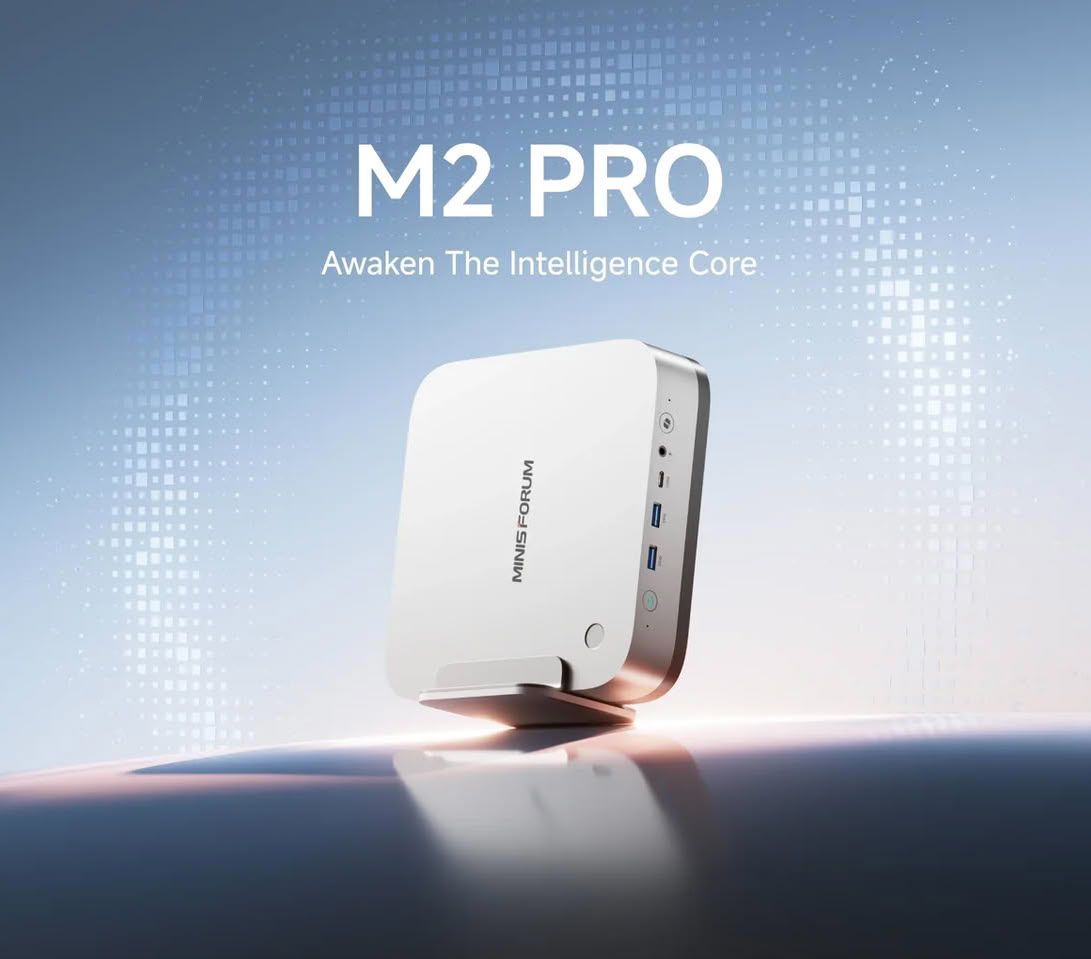
Minisforum Launches $1,800 M2 Pro Mini PC With Intel Arc B390 iGPU and 32 GB RAM

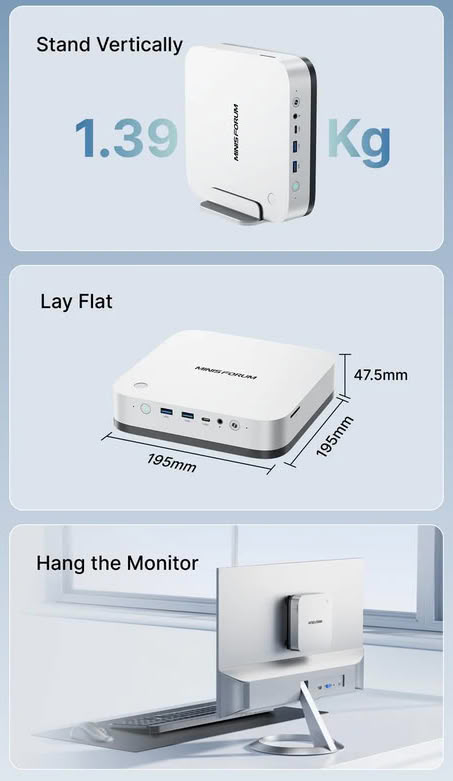
Minisforum is apparently continuing its ongoing attempt to flood the mini PC market with as many models as possible, with the M2 Pro being the latest entry into its Intel Panther Lake-powered mini PC line-up. The Minisforum M2 Pro packs Intel's latest Core Ultra X7 358H, with its powerful Arc B390 iGPU in tow, into an aluminium chassis measuring just 195 × 195 × 47.5 mm, or 1.8 L. Minisforum claims that the Intel Core X7 Ultra CPU inside the M2 Pro can sustain TDP of up to 65 W thanks to a dual heat pipe cooling solution and a flow-through cooling design.

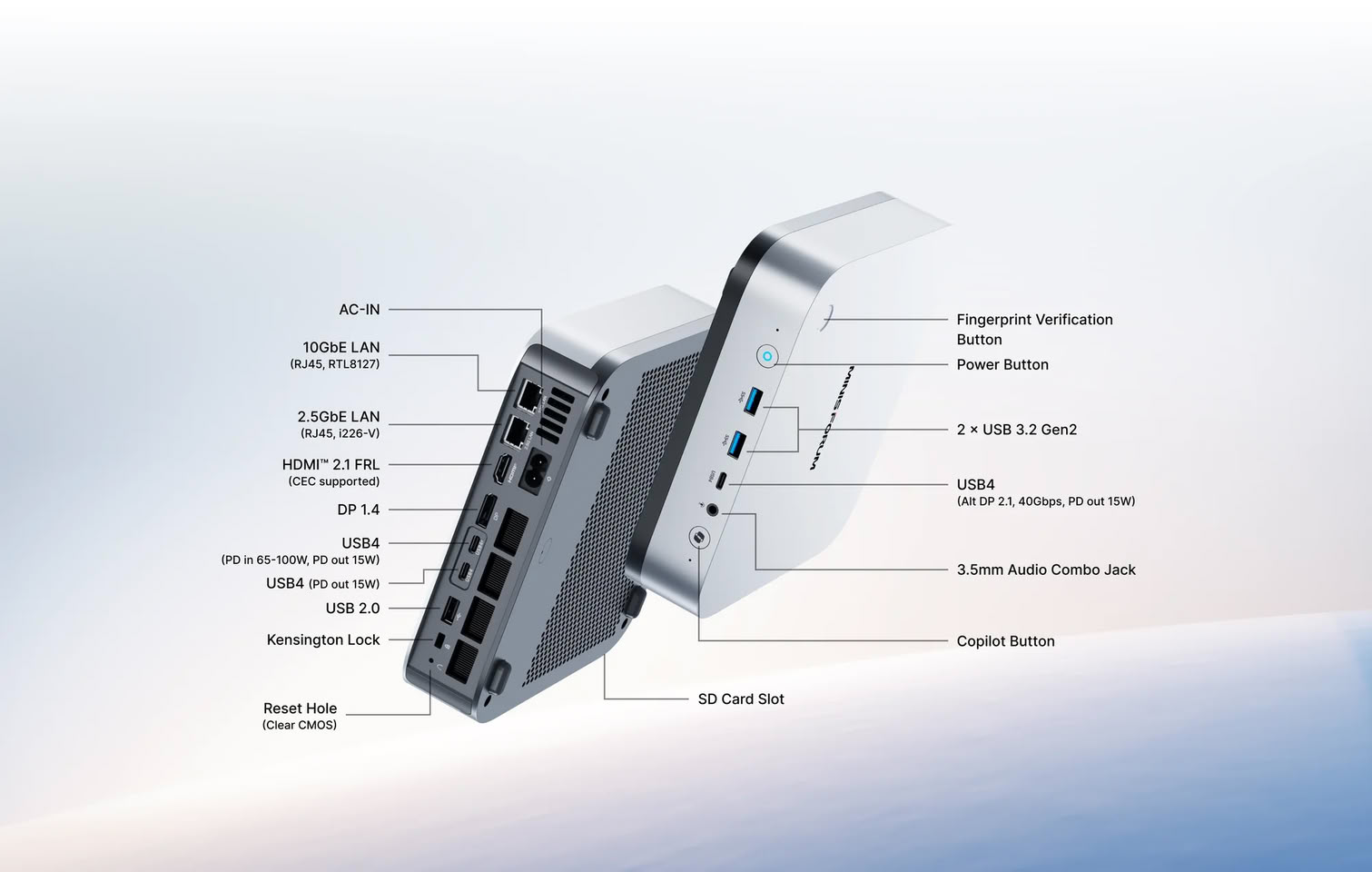
Minisforum seems to also be positioning the M2 Pro as something of a do-it-all machine, since it features built-in HDMI CEC, making it a solid, if somewhat expensive HTPC and living room console. The Minisforum M2 Pro also packs a 134.9 W PSU into the tiny chassis, meaning there is no need to hide a power brick behind a TV console or on a desk. The M2 Pro only comes in one variant, with the Intel Core Ultra X7 358H, 32 GB of LPDDR5X-7467 memory, and a 1 TB NVMe SSD, all for an MSRP of $1,799, with a launch discount bringing that down to $1,439. At that price, it's certainly not cheap, but it also has an impressive specs and features list to back up that price, including upgradeable and expandable storage and triple USB4 ports.

Framework Laptop 12 Gets Intel Core Series 3 CPUs and Thunderbolt 4 Upgrade

The Framework Laptop 12 was an almost instant hit when it launched, thanks to its whimsical, compact design and durable chassis, but there was always a bit of a perception amongst hardware enthusiasts that the small laptop wasn't a serious computer, thanks to its outdated 13th-Gen Intel CPUs. Now, Framework has just announced that the convertible laptop has received an update to Intel's latest Core Series 3 CPUs.

Following the update, the Framework 12 is available for pre-order with the Intel Core 3 304, Core 5 320, and Core 7 350 CPUs, delivering Intel's latest six-core (2× P-Cores, 4× E-Cores) CPUs. Unfortunately, there are still no versions with the Intel Core Ultra X7 358H or any with a proper Intel Arc B390 iGPU. That said, the Framework Laptop 12 also now ships with two Thunderbolt 4-capable USB Type-C ports in the two rear-most expansion bays, theoretically allowing for eGPU expansion or other Thunderbolt peripherals.

Memory Prices Break a Record With Nearly 500% Surge in the Last 12 Months

Memory pricing is a hot topic these days as consumers struggle to purchase any, with little hope of prices dropping. Memory costs are reaching new all-time highs, with various trackers reporting that prices in August this year are up to five times more expensive than the same month last year for DRAM kits. According to data from PCPartPicker, DDR5 memory prices have increased anywhere from 372% for 2 x 16 GB 4,800 MT/s kits to 485% for 2 x 32 GB kits running at 5,600 MT/s. A 6,000 MT/s 64 GB kit, which used to cost $222, is now considered a luxury investment at an astounding $1,272. At the TechPowerUp editorial team, we remember when that was the entire budget for building a very decent high-end gaming PC.

PCPartPicker also shows that DDR4 kits have increased by 120% to 177%, which is still significant but mainly affects those using the older DDR4 technology. For those on a newer DDR5 platform, the change is much more pronounced. Note that PCPartPicker only tracks pricing in the United States, while German websites like ComputerBase have reported a 345% year-over-year increase for August in the Eurozone, which is much higher than anything seen before. With no signs of slowing down, we might see even higher year-over-year changes.

Ryzen AI 9-Powered "Piston V" Mystery Mini PC Dual-Boots Bazzite and Windows

It seems as though mini PCs have never been more popular, with brands like Minisforum and Geekom releasing new models at an almost alarming rate. A new video by ETA Prime on YouTube, however, has shown off something different: an unbranded, mystery Mini-PC that only goes by the Piston V and dual-boots Bazzite and Windows right out of the box. Given that it runs Bazzite, it can boot right into a SteamOS-like view, revealing its intentions as a HTPC or living-room gaming PC.

The Piston V features a 10-core, 20-thread AMD Ryzen AI 9 365 CPU with an RDNA 3.5 AMD Radeon 880M iGPU (not the claimed RDNA 3 890M), 32 GB of DDR5-5600 memory, and a 1 TB M.2 SSD. While solid, the internals are the least interesting part of the new Mini-PC—in keeping with its apparent living-room gaming PC vibe, the Piston V also packs a circular built-in display on the front, which can be used to display static images, system stats, media UIs, and basically anything else you may need immediate access to while you're gaming or using your PC. On Linux, the mini PC already has a built-in performance monitor, which is a nice level of polish for what appears to be a niche OEM.

Lenovo ThinkCentre Neo 50q Gen 7 Launches As 1.2 L "Tiny PC"

Lenovo has officially unveiled the ThinkCentre Neo50q Gen 7, a desktop that it calls a "Tiny PC." The ThinkCentre 50q is being marketed as a versatile SFF desktop PC based on the Intel Core Ultra Series 3 CPUs, for use in anything from personal AI to business and home use, with multitasking productivity in mind. The ThinkCentre Neo 50q is not available just yet, but it is listed as "available soon" on Lenovo's online store.

The ThinkCentre Neo 50q fits an Intel Core Ultra 7 350 CPU into an aluminium chassis that measures just 36.5 × 179 × 182.9 mm, or 1.2 L in volume. It comes with up to 32 GB of upgradeable DDR5-5600 SODIMM memory, and up to a 2 TB PCIe Gen 4 SSD. The ThinkCentre 50q Gen 7 comes with built-in Wi-Fi 7 and Bluetooth 5.4 for connectivity, but it's also no slouch when it comes to physical ports, especially given its diminutive size.

Windows 11's Built-In Weather App Wastes More Than 1 GB of RAM

According to Windows Latest, the default weather application in Windows 11 can consume more than 1 GB of RAM just by displaying the weather forecast. When the Weather application is open, it uses nearly 1.2 GB of RAM, even without any scrolling, clicking, or other interactions. By default, Windows 11 uses the "MSN Weather" application, which not only uses a significant amount of RAM but also displays ads. For an operating system that costs real money, having ads in a Microsoft-owned weather app, for which you paid a licensing fee, is a disappointing experience.

Last week, Microsoft removed documentation from its website and materials that recommended 32 GB of RAM for new PC builds or purchases. The company now emphasizes that 8 GB devices are optimized to run Windows 11 smoothly. However, with an 8 GB RAM configuration, the weather application alone consumes about 15% of the available RAM. This is before any other services start running or daily tasks begin. Below screenshots are taken by the Windows Latest team.

Huawei MateBook Pro Arrives with Kirin X90 Plus SoC and $1,480 Price Tag

Huawei has just unveiled its latest MateBook Pro laptop, featuring a homegrown processor, operating system, and a fully integrated experience. Priced at 9,999 RMB for the base model with 24 GB of RAM and a 512 GB SSD, this equates to about $1,480. The top-end configuration offers 32 GB of RAM and a 1 TB SSD for 13,999 RMB, approximately $2,072 at the current exchange rate.

Inside, the previous Kirin X90 has been replaced by the new Kirin X90 Plus, which is kept cool by a foam-copper vapor chamber, allowing the chip to maintain a 40 W performance envelope. Huawei seems to have retained the same core counts and GPU specs with a 10-core, 20-thread design, but the improved thermal management suggests they are extracting more performance from this generation. No official specifications have been released yet, so this remains speculative.
Return to Keyword Browsing
Nov 11th, 2026 03:43 CST change timezone

New Forum Posts

Popular Reviews

TPU on YouTube

Controversial News Posts