Friday, January 16th 2026

AMD Ryzen 9 9950X3D2 Gets Benchmarked, Shows 7% Improvement over Regular X3D SKU
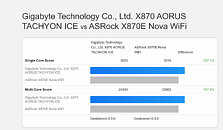
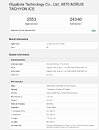
AMD's Ryzen 9 9950X3D2 processor has taken on a mythical status in the CPU world, as it has been rumored for some time without any commercial release. Recently, the CPU appeared in the online database of the Geekbench CPU benchmark, showing a slight performance improvement over its predecessor—the regular Ryzen 9 9950X3D CPU. A Geekbench v6.5 test revealed scores of 3,553 for single-core performance and 24,340 for multicore performance. This represents about a 7% improvement for the X3D2 model over the X3D in both single and multicore scores. Initially, CES 2026 was expected to be the announcement date for this processor, but after the show we got more hints that the SKU will perhaps appear later in the year.
Reportedly, the SKU features 16 cores and 32 threads, with 3D V-Cache on both chiplets, hence the name X3D2, totaling around 192 MB of L3 cache. It operates at a base frequency of 4.30 GHz, with boost clocks reaching up to 5.6 GHz. Compared to its predecessor, it sacrifices a modest 100 MHz in peak speed for significantly greater cache capacity. This configuration is expected to benefit cache-sensitive workloads and gaming, while also appealing to workstation users and content creators handling memory-intensive tasks. However, this enhanced capability comes with a thermal cost, as the rumored TDP increases to 200 W from the 9950X3D's 170 W, potentially pushing PPT values close to 250 W. With 3D V-Cache on both CCDs, the overall performance appears to be boosted by about 7%, so its appearance is justified in some workloads that enthusiasts would appreciate.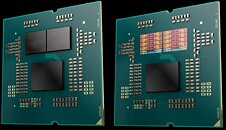
Sources:
Geekbench, via HXL on X
Reportedly, the SKU features 16 cores and 32 threads, with 3D V-Cache on both chiplets, hence the name X3D2, totaling around 192 MB of L3 cache. It operates at a base frequency of 4.30 GHz, with boost clocks reaching up to 5.6 GHz. Compared to its predecessor, it sacrifices a modest 100 MHz in peak speed for significantly greater cache capacity. This configuration is expected to benefit cache-sensitive workloads and gaming, while also appealing to workstation users and content creators handling memory-intensive tasks. However, this enhanced capability comes with a thermal cost, as the rumored TDP increases to 200 W from the 9950X3D's 170 W, potentially pushing PPT values close to 250 W. With 3D V-Cache on both CCDs, the overall performance appears to be boosted by about 7%, so its appearance is justified in some workloads that enthusiasts would appreciate.


45 Comments on AMD Ryzen 9 9950X3D2 Gets Benchmarked, Shows 7% Improvement over Regular X3D SKU
But hey, it could be worse. Back in the Core 2 days, a C2D could be had for under $200 while the C2Q launched for just under $900!
That ticked me off, so I removed item from my cart.
Now looking at 9950X3D2 chip, I'm guessing it will be $700.00 chip. The GB6 multi-core 24340 score is not very impressive,.. think I will stick with my 9950X for now.
AMD should consider manufacturing them like this:
tarkov specially every new x3d iteration improves massively on the min fps, like about 30% from 7800 to 9800, would love to see it with this one.
7% improvement in a non-cache sensitive application points out to higher average clocks, less time context switching and perhaps the increased TDP helps with median clock despite the reduction in max boost.
I was hoping for a new stepping vs 0,.. but it's still the same. Also I wanted to know if the 9950X3D2 is running a higher/lower clock bin chip like 9950X or has AMD dropped the clocks to give you 2 full speed 5.6 CCDs. Based on the multi-core GB6 bench it's clear they are not running 2 full speed CCDs, I will most likely pass on this chip and wait for the 9000 APUs to test.
I guess AMD was right all along haha.
Could have increased the clocks a little though.. I am sure its in the power budget. But silicon quality might be to blame there since the good stuff goes to the pro environment.
The benefit of an X3D2 is simplifying the scheduling algorithms into just being a simple, two-equal-node NUMA-ish system, something that schedulers have been pretty good at doing for decades. If you were expecting miracles... that's on you I'm afraid. Personally, I was expecting something like a 3% increase in geekbench, so 7% is a pleasant surprise.