Tuesday, January 27th 2026

AMD Prepares Radeon Low-Latency Video Decode for Linux Drivers
AMD has introduced a new low-latency video decode solution for Radeon GPUs on Linux with the RadeonSI Gallium3D driver as part of the Mesa 26.1 release. This Linux patch, utilizing Video Core Next (VCN), is designed to maximize the performance of AMD Radeon hardware-accelerated multimedia decode and encode. The patch aims to deliver a high-performance decoding kernel that reduces video decoding latency, although it requires more power consumption from the GPU, trading off some efficiency.
For users of the RadeonSI Gallium3D driver, this option can be enabled with the AMD_DEBUG=lowlatencydec environment variable. By default, this option is turned off due to its more aggressive power profile. The default setting is a higher-latency mode, which is more power-efficient. This distinction is particularly important for AMD laptops running Radeon GPUs on Linux, as they must balance performance and efficiency. While desktop users might benefit from having the new low-latency mode enabled by default, laptop users will need to consider the trade-off between reduced battery life and faster video decoding.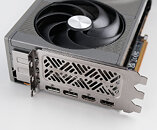
Sources:
GitLab Patch, Phoronix
For users of the RadeonSI Gallium3D driver, this option can be enabled with the AMD_DEBUG=lowlatencydec environment variable. By default, this option is turned off due to its more aggressive power profile. The default setting is a higher-latency mode, which is more power-efficient. This distinction is particularly important for AMD laptops running Radeon GPUs on Linux, as they must balance performance and efficiency. While desktop users might benefit from having the new low-latency mode enabled by default, laptop users will need to consider the trade-off between reduced battery life and faster video decoding.

7 Comments on AMD Prepares Radeon Low-Latency Video Decode for Linux Drivers
+ + video_cards_radeonsi : VIDEO_CARDS setting to build only Southern Islands based chips code for radeonI highly doubt the defaults. default inactive most likely.
I have used FMF (frame generation for video, DVD and Blu-Ray with my 7979 back in the day) and the fact they never implemented it for video games as it was calculated entirely in the video processing part of the die (also why it will cause more power consumption, the memory subsystem will be ramped up and other parts of the chip will need more power too, and if they use shaders for effects like denoise, sharpen, de-interlace etc.. means it will probably run around 15-25W on a full card running all the features.
I stream from my Windows 11 host using a 5090 paired with a 9950x3d to my bazzite client which uses a 5700x3d and a 6750 xt. Any latency improvements are welcome. I don't use HAGs and therefore do not use frame generation as both increase latency dramatically. I'm literally able to play multiplayer FPS with low latency at 4k.