News Posts matching #Video

Return to Keyword Browsing

Instagram Tests 90-Minute Horizontal Videos, Takes Aim at YouTube Creators

Instagram is testing a new format called Features, which lets creators upload horizontal videos up to 90 minutes long. The test started on Monday with a small group of US creators, following an earlier trial in Brazil, and it's aimed squarely at podcasters, comedians, and other long-form creators who mostly publish on YouTube today. Instagram head Adam Mosseri and VP of Product Tessa Lyons announced it in a video. Plenty of creators already post Reels clips to promote full episodes hosted elsewhere, so Instagram now wants to host the full episode too. Reels can link straight to the full video, and Features will also be recommended on the Explore page.

While YouTube shares ad revenue with creators in its Partner Program, Instagram has no plans to do the same for Features, at least for now. An Instagram representative said the company is funding some creators directly, but that it's "too early to share a long-term monetization model." Lyons said established creators can bring their existing sponsorships and branded content along. Instagram already tried long-form video once with IGTV, which launched in 2018 and was shut down in 2022. This time, the TV seems to be a bigger part of the plan, as the Instagram for TV app, which debuted on Amazon Fire TV in December 2025, has now reached Apple TV in the US. There's no firm date for a wider rollout, and without a revenue share, it's hard to see many creators leaving YouTube anytime soon.


28-Core Intel Nova Lake-S CPU Shows Promising Performance Boost in Leaked Benchmark

It looks as though the upcoming Intel Nova Lake-S CPU family will launch soon, headed-up by a 28-core Core Ultra 9 CPU. A new PassMark benchmark spotted by VideoCardz now purports to show expected performance of that 28-core Nova Lake-S CPU in two separate benchmark runs. The CPU, which is listed as "Nova Lake Client Platform," with the motherboard model giving it away as "NVL-S Embedded CRB 1 Fab2 Board," appears alongside an eight-core NVL-S CPU, and both CPUs achieve decent scores in the single-threaded performance benchmarks.

According to the PassMark database scores, the eight-core NVL-S scores up to 5,085 points, while the 24-core variant tops out at 5,210 points. Meanwhile, the 28-core—ostensibly the Core Ultra 9 4970K BFC—scores as high as 61,509 points in the multithreaded CPU test, and the eight-core variant, likely a Core Ultra 3 or 5 CPU, scores 23,478 points. If these PassMark scores are accurate, this puts the Core Ultra 9 4970K BFC at around 85% of the performance of an AMD Ryzen 9 9950X3D in multicore performance, while the CPU beats out the Intel Core Ultra 9 285K on single-threaded performance but misses out on matching the outgoing Intel chip by 5,721 points or around 8.5%.

YouTube Sets Early 2027 Target for AV2 Streams on the Web

The Alliance for Open Media (AOMedia) shared an update on AV2 this week, and the clearest date in it comes from YouTube. Des Keane, Engineering Director at YouTube, confirmed the platform will begin streaming in AV2, which is the royalty-free successor to AV1 that AOMedia says offers roughly 30% better compression. In practice, that means either sharper video at the same bitrate or the same quality using less bandwidth, and the codec also adds support for multi-stream and multi-view video, higher frame rates, and improved HDR. Keane put it plainly: "YouTube AV2 streams will be available for Web as soon as early 2027."

Chrome is the other half. Jim Bankoski, VP of Engineering for Google Chrome, said AV2 playback has been demonstrated in the browser, though Google hasn't said which Chrome version will get it or whether it will be on by default. That demo dates back to CES 2026, where Google streamed AV2 videos from YouTube to a gaming laptop at 1080p and 24 FPS using a custom Chrome build with the reference decoder. Netflix and Prime Video are also exploring the format, but neither has shared a timeline. Meta wants to repeat its AV1 rollout with AV2, and Intel is working on SVT-AV2.

Innodisk Launches All-in-One GMSL2 Camera Starter Kit to Accelerate Edge AI Vision Deployment

Innodisk, a leading global AI solution provider, today announced the Innodisk GMSL2 Camera Starter Kit, an all-in-one vision solution that bundles four 3MP GMSL2 camera modules, a capture card, FAKRA cables, and other necessary accessories.

A milestone in Innodisk's edge AI vision strategy, the kit lets customers set up a multi-camera system and begin validation right out of the box, shortening the path from proof of concept (PoC) to deployment. Full camera source code is included, giving customers flexibility throughout development and maintenance.

As AI vision moves toward multi-camera perception in robotics and intelligent vehicles, integrating cameras, capture cards, drivers, and host platforms has become increasingly complex, often taking six months or more before validation. The starter kit's pre-integrated hardware and software driver enable system integrators to speed up time-to-market.

Screenshots Reveal Cancelled "Assassin's Creed Destiny" Game Set in China

One of the myriad projects Ubisoft scrapped in its recent restructuring, which has resulted in hundreds of layoffs and a reduction in scope of other games, was apparently an Assassin's Creed project called Assassin's Creed Destiny, which would have seen the franchise visit China in 205 BCE, around the time of the collapse of the Qin Dynasty, the shortest-lived dynasty in China's long history. According to a recent report by MP1st, the game was in development in collaboration with TiMi, a Tencent-owned game studio, but the studio announced a restructuring shortly after the 2025 prototype that recently surfaced, and the game was scrapped not long after that.

In the leaked screenshots, which are sourced from the portfolios of artists associated with Assassin's Creed Destiny, there are intricate weapon designs, while an included video shows a female assassin hunting down a mysterious artifact housed in a besieged palace. As with other Assassin's Creed games, it was to feature historical figures, and one mentioned in the leaked game media is Xiang Yu, an ancient Chinese warlord that was besieging the palace and featured briefly in an early boss fight.

Homebrew App Brings Xbox Cloud Gaming to Jailbroken PS5s

Jailbroken PS5 owners can now stream Xbox games on Sony's console. Developer RafaelNGP has released PSBox Cloud Gaming on GitHub, an unofficial Xbox Cloud Gaming client that runs natively on homebrew-enabled PS5s through a loader such as ShadowMountPlus. Sign-in works through a code entered at microsoft.com/link, and a Game Pass Ultimate subscription is still required. The DualSense acts as an Xbox controller, rumble included, and the latest build even adds voice chat through the DualSense mic. Streams run at 1080p60 by default, with 720p for slower connections and an experimental 1440p mode where Microsoft offers it. Interestingly, the app can also use the PS5's GPU to upscale the stream to 4K, with a choice between AMD FSR 1 and the Anime4K upscaler.

The project is moving fast, too. Version 0.5.0, which brought the 4K upscaling, landed on October 8, and version 0.9.5 followed just two days later, picking up Remote Play to your own Xbox along the way. Video is H.264 decoded on the CPU, so there's no HDR for now, and bitrate sits at around 10 to 12 Mbps at 1080p. Some early testers reportedly ran into macroblocking, pink artifacts, and DualSense vibration issues. It's the latest in a busy stretch for PS5 homebrew, following emulators that run Nintendo Switch games, load PS2 discs, and even get Halo 2 running on the console. Of course, Microsoft could change or block the services the client relies on at any time, something the developer notes in the project's own README notes.

AMD GPUs Get Price Hike in China with International Increases To Follow

As if GPU prices weren't high enough, thanks to the ongoing RAMpocalypse driving up BOM costs continuously for what seems like the last year, the trend is clear. According to recent reports, it now seems as though AMD GPUs are slated to get even more price hikes in the near future. As reported by VideoCardz, based on a source on Board Channels, AMD has increased GPU vendor pricing by as much as $104 in China.

Reportedly, the AMD Radeon RX 9070 XT and RX6500 XT pricing will remain unchanged, but the RX 9070 will get a price hike equivalent to $104, being the steepest price increase on the list, while the RX 9060 XT 8 GB will get the smallest price increase, at $45. It is said that these price hikes are motivated by higher memory prices and manufacturing costs, and that, while they are seemingly local to China for the time being, international board partners have also been informed of the upcoming changes.

Logitech Unveils Its Biggest Enterprise Launch Ever

Today, Logitech unveiled the largest enterprise product launch in company history, engineered to equip companies for the AI revolution. Headlined by Logitech Rally Bar 2, Rally System 2 Pro, and Sound Shape technology, the new portfolio brings advanced compute, intelligence, and sensing into more workspaces to support the next decade of intelligent collaboration.
Henry Levak, general manager of Team Workspace Solutions at Logitech"This second generation of smart video collaboration devices is Logitech's answer to a new, dual mandate for IT: Deliver exceptional meeting experiences today while preparing for an AI-powered tomorrow."

AMD B650 Chipset Arrives on a $58 PCIe Expansion Card From JGINYUE

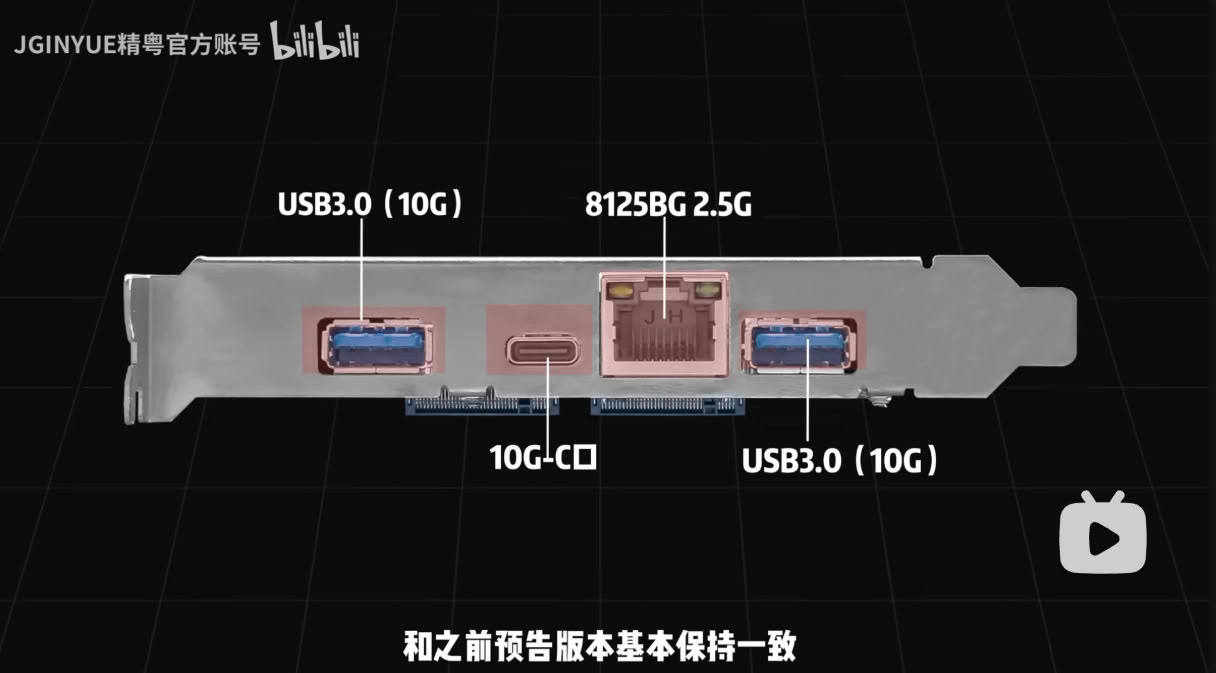
JGINYUE has put AMD's B650 chipset on a PCIe add-in card called the Xscale.io, and it costs just 388 yuan in China, VideoCardz reports. That works out to roughly $58, although some conversions put it closer to $54. The card uses the "Promontory 21" chip to add four M.2 slots, a 2.5 GbE port, two 10 Gbps USB Type-A ports, and one 10 Gbps USB Type-C port to any system with a spare PCIe slot. There are also two internal USB 2.0 headers. The four M.2 slots are not equal, however. The two on the front are PCIe 4.0 x4, while the two on the back are limited to PCIe 3.0 x2 and PCIe 3.0 x1, so the rear slots are probably best left for slower bulk storage.

The card takes a 6-pin PCIe power connector, and it has a 4-pin fan header for an optional 40 mm fan. Apparently, that header runs at a fixed speed, and the fan is not included. This isn't the first card of its kind, since Lekuo launched a B650 add-in card in August with four M.2 slots and four SATA ports, and WisdPi sells a $199 option with OCuLink. JGINYUE's version undercuts both by a wide margin. The company reportedly plans variants with 20 Gbps USB Type-C, 10 GbE, and a half-height design, though there's no word on availability outside China.

The Witcher's Henry Cavill Will Build a Video Game on a Googlebook This November

Google has announced that actor Henry Cavill will build a video game on a Googlebook this November, as part of a marketing partnership for its new Android-based laptops. In its blog post, Google describes Cavill as an actor, producer, and tech enthusiast with his own production company and a passion for gaming and fantasy lore, and says he is already using the laptop for personal passion projects. Google hasn't shared the genre, the game engine, who else is involved, or what form the end result will take. Updates are apparently coming through a landing page and an Instagram account. Here's what Cavill had to say about the project.
"When Google reached out to me and explained what they are doing with Googlebook, and all of its new, integrated tools, it had me intrigued. So, I asked for the opportunity to have a play with it ahead of release. After being hands on and spending some time with their team, I believe this has the potential to be the start of something rather special. Time and technology are marching forward at a breakneck pace, this, and all that Google are trying to do with it, has the whispers of the next generation."

Wici Wireless eGPU Promises RTX 5060 Ti and 5090 Performance Over Wi-Fi 7

There has been a lot of development in the eGPU scene lately, with Thunderbolt 5, OCuLink, and MCIO 8i providing serious gains in bandwidth and throughput for eGPU use cases. However, Wici has just launched the Wici One, a new wireless eGPU solution that relies on Wi-Fi 7 for data transfer instead of a cable connection, available with both an NVIDIA GeForce RTX 5060 Ti or an NVIDIA GeForce RTX 5090, the latter of which does not yet have a listed price.

While Wi-Fi 7 is capable of theoretical maximum speeds of around 46.1 Gbps, as VideoCardz points out, the 4×4 radio inside the Wici One, running at 320 MHz and 4096-QAM, would top out at just 11.5 Gbps. To add to this limitation, those speeds are likely only possible over very short distances, with very little interference. Still, Wici promises high-framerate gaming over the network-connected device, with Cyberpunk 2077 reaching 80 FPS at 4K Ultra with DLSS 4 on the RTX 5060 Ti version and Black Myth: Wukong hitting 60 FPS in the 4K Cinematic preset. No latency claims are made, however, but, gaming, a latency-sensitive workload, isn't Wici's main selling point. The true focus for Wici is as a workstation machine, since it contains not only a GPU. The Wici One is actually a full platform, replete with a CPU and storage—presumably, the platform relies entirely on VRAM, since there are no RAM specs or quantities listed.

DLSS 5 Boosts RTX 5090 Connector Power Spikes to 647 W, Pushing Past 90°C

NVIDIA's DLSS 5 has been controversial ever since its announcement and eventual launch. Perhaps more concerning than the visual changes is its effect on the user's hardware. As reported by Videocardz, Korean outlet QuasarZone ran its own thermal tests on the RTX 5090's power connector with DLSS 5 enabled, to see if the technology really has a hand in recent reports of melting 12V-2x6 connectors. Testing an RTX 5090 Founders Edition in Cyberpunk 2077 at 4K with DLSS Quality and the Ultra preset over 20 minutes, the 12V-2x6 connector reached 91.7°C on the sense-pin side with DLSS 5 on, up from 80.9°C without it. The latch side climbed from 77.1°C to 83.4°C. An RTX 5080 FE tested the same way stayed far cooler, reaching just 48.6°C and 52.2°C at those two points with DLSS 5 enabled.

The increased heat aligned with a real jump in power draw. HWiNFO logged the RTX 5090's average power draw rising from 509.2 W to 575.1 W with DLSS 5 on, right at its 575 W limit. The RTX 5080 went from 298.2 W to 350.3 W, close to its own 360 W ceiling. External PCAT readings, which also catch short spikes, showed higher figures still: total board power rose from 527.3 W average and 582.5 W peak to 593.9 W average and 658.0 W peak. On the 16-pin 12V-2x6 connector alone, the RTX 5090 pulled 582.7 W on average and briefly spiked as high as 646.7 W. Of course, transient power spikes over 600 W are normal, and are not necessarily to blame for any melting connector issues. The increased power draw, however, lines up with Tom's Hardware's early DLSS 5 testing, which showed a noticeable jump in power draw with DLSS 5 enabled.

Razer Unveils Kiyo V2 Pro: A 4K Webcam With 60 FPS Video

Razer, the leading global lifestyle brand for gamers, today announced the Razer Kiyo V2 Pro, a professional 4K webcam engineered for gamers, streamers, and content creators seeking studio-quality video without a complicated setup. As the latest addition to Razer's Kiyo webcam line, the Razer Kiyo V2 Pro delivers 4K resolution at 60 FPS, combining smooth, high-quality video with versatile features that make it easy to capture more, stay in frame, and showcase every detail.

An 86-degree wide-angle lens captures more of the scene with minimal edge distortion, making the Kiyo V2 Pro ideal for streaming, product demonstrations, collaborative content, or showcasing an entire gaming setup. Its universal pivoting mount supports both monitor and tripod placement, providing flexible positioning for any creative space, while an integrated privacy shutter offers instant peace of mind with a simple twist.

Manufacturers Reportedly Planning Both 4 GB and 6 GB GDDR7 Chips For 2027-28

The NVIDIA GeForce RTX 5090 currently ships with 2 GB GDDR7 modules, but even 3 GB modules have seen limited adoption due to their high cost. However, that could change soon. According to Weibo leaker Golden Pig Upgrade, memory manufacturers are reportedly planning 4 GB and 6 GB GDDR7 chips for a 2027 to 2028 window, a jump that could reshape how much VRAM budget and mid-range GPUs can carry without needing a wider memory bus. A 128-bit card using four memory packages currently tops out at 8 GB with today's 2 GB chips. Move to 4 GB chips and that same card could hit 16 GB, or 24 GB with 6 GB modules. Scale that up to a 256-bit interface with eight packages, and you're looking at 32 GB or 48 GB respectively, without touching the PCB layout or bus width. Of course, going the other way is possible too, a narrower memory bus combined with higher density, faster memory chips, can lead to similar bandwidth, with lower relative cost.

This would matter most at the low end, where narrow 128-bit buses have made generous VRAM capacities either awkward or expensive to pull off. Videocardz, citing supply chain sources, notes that today's 3 GB GDDR7 chips are already unusually expensive due to extreme demand, and that cost has reportedly contributed to delays around the rumored RTX 5050 9 GB and the RTX 50 Super refresh. If 4 GB chips end up cheaper to produce at scale, they could become the more practical choice for mainstream cards, while 6 GB modules might make more sense for workstation and other high-memory GPUs first. It's worth noting that the leaker's timeline only points to sometime in 2027 or 2028, so there's no confirmation this lines up with NVIDIA's RTX 60 series or AMD's next Radeon generation specifically.

First Certified Ultra96 HDMI 2.2 Cables Hit the Market From Silkland and ELECOM

Certified Ultra96 HDMI cables, required to unlock the full HDMI 2.2 specification, are now available for retail purchase. VideoCardz spotted Silkland taking orders for its new H96 series, which appears to be among the first certified Ultra96 cables available to consumers, offering up to 96 Gbps of bandwidth. ELECOM also revealed its own Ultra96 cables on September 8, advertised as the first certified products of their type in Japan, though those aren't expected to ship until mid-November. Silkland's cables, by comparison, opened for orders on September 14. Currently, there's nothing on the market that can actually use that bandwidth, so these cables are targeted towards future products.

HDMI 2.2 was finalized back in June 2025, and it enables some genuinely big jumps on paper, like uncompressed 8K at 60 Hz or 4K at 240 Hz with full 10-bit and 12-bit color. It also edges out DisplayPort 2.1's 80 Gbps ceiling. Actual HDMI 2.2 hardware, meaning GPUs, TVs, and monitors with the right silicon, isn't expected until 2027 at the earliest. Even then, AMD's upcoming RDNA 5 GPUs reportedly won't hit the full 96 Gbps tier, apparently topping out closer to 64 or 80 Gbps instead.

GTA VI Leaks Seemingly Cost Take-Two $2 Billion in Value

Over the course of the week of August 17, there have been several leaks purporting to show in-game content from recent builds of GTA VI from a leaker who claims to have actual hands-on access to a pre-release version of the game. According to Yahoo! Finance data, following the leaks, Take-Two's share price fell by roughly $15.29 per share compared to the Monday before the first leaks—this translated to a loss of $2.83 billion in market cap or a 2.54% loss in value over the course of the five days prior to publishing.

Take-Two has been working hard to take down the leaked content using DMCA notices, which includes videos showing NPC interactions, the full game map, and videos depicting actual gameplay and in-game mechanics in the pre-release build. Curiously, the leaker, Cyberleek, is reportedly targeting what they call anti-consumerism on the part of Rockstar and game publishers in general, with three commandments on the Cyberleek site demanding an end to digital pre-orders and "fake single-player DLC, as well as the preservation of single-player content.

Dell Introduces the Pro P 43 4K Huddle Conferencing Monitor

According to Frost & Sullivan 2024 research, around 64% of meeting rooms are huddle spaces and roughly 93% of them still lack integrated video conferencing. Your fastest-growing meeting format is also your least equipped. Most huddle rooms and small meeting spaces rely on separate cameras, speakers and displays, which means separate problems. Every room becomes a unique troubleshooting puzzle and scaling across 50 or 500 locations adds complexity, maintenance burden and inconsistency across rooms.

Today we're shipping a different answer. The Dell Pro P 43 4K Huddle Conferencing Monitor (P4326QEB) provides an all-in-one conferencing solution built for small meeting rooms and huddle spaces accommodating up to six people. It consolidates a Sony STARVIS 8MP 4K camera with 3D noise reduction, beamforming microphones, front-firing speakers and USB-C connectivity into a single 43-inch 4K display. One device replaces the entire stack and one USB-C cable runs the full meeting. Zoom Rooms certified, out of the box. For IT teams and facilities managers, this means fewer variables, faster rollouts and a more consistent experience across every huddle room you manage.

Ubisoft Barcelona To Strike Over Layoffs

Ubisoft has been undergoing a controversial restructuring, having previously laid off hundreds of staff across multiple studios. In the latest round of layoffs, announced earlier in June, the gaming giant laid off 51 employees—28% of its staff at the location—at its Barcelona studio, resulting in the announcement of a strike at the branch. According to Insider Gaming, employees at Ubisoft Barcelona will strike every Tuesday and Thursday afternoon between June 30 and July 16.

The striking workers are demanding: a continuity mandate and binding negotiations that would ensure the positions of the 51 affected staff; protections against future dismissals for a minimum of five years; compliance with internal promotions procedures that had not been adhered to; an unconditional return to work from home agreement that would allow 60% monthly remote work; and a career development pact that would see the salary improvement plans and social benefits packages reviewed. Previously, the French Video Game Workers' Union also responded to a round of layoffs at Ubisoft with a two-week strike that had similar demands.

Goodram Introduces PRO S6B0 SD Card for Photographers and Videographers

A single missed frame can mean losing the strongest shot from an entire session. For photographers, videographers, and content creators working with demanding formats, storage performance is not just a technical detail. It directly affects how smoothly the camera records, how quickly files move into post-production, and how confidently creators can work under time pressure.

Goodram introduces the new Goodram PRO S6B0 SD card, designed for users who need fast, stable, and predictable performance in everyday creative work. The card supports workflows built around 4K video recording, RAW photography, burst shooting, and large media file transfers.

EU "Cannot Propose a Legal Obligation" To Stop Destroying Videogames

The Stop Killing Games movement and the resulting Stop Destroying Videogames European Citizens' Initiative came to a head recently with a hearing in front of the European Commission, after a petition in support of the initiative garnered over 1.3 million signatures. Following the hearing, the European Commission published a press release detailing its response to the arguments presented by the Stop Destroying Games Initiative, and, while the Commission seemingly recognizes many of the issues with modern video game preservation and the consumer rights issues surrounding game licensing, the Commission has declined to put any laws in place to regulate the video games industry. It says that "The Commission considers that at this stage it cannot propose a legal obligation to keep video games playable after they stop being provided commercially." Instead, the European Commission will publish a code of conduct for the video games industry "on managing video games' end of life."

The European Commission justifies this course of action by stating that intellectual copyright concerns, which give copyright holders exclusive rights over their creations, and other IP rights "may also be relevant as they protect different visual and technological aspects of a video game." The Commission leans on existing EU law, which it says "provides for important safeguards protecting the economic interests of consumers," in that "video game providers must inform consumers about the duration and the conditions for terminating the contract before the consumers signs up for the video game." It goes on to point out that any consumer that is affected by a video game developer or publisher shutting down a game before the stated date may be eligible for a proportionate refund. The response by the Commission has largely been negatively received, with many gamers expressing their frustration at the lack of action in a follow-up post by the Commission on Instagram. Many of those commenting on the post say that they are disappointed that the democratic process seemed ineffectual, and many others said that a non-binding code of conduct is not what people asked for, blaming industry lobbying and monetary power for the lack of change. The full statement by the European Commission follows.

HP Debuts AI-Powered Unified Collaboration Ecosystem at InfoComm 2026

Today, at InfoComm 2026, HP Inc. introduced AI-powered communication and collaboration solutions designed to transform how work gets done. As organizations operate across increasingly distributed environments, HP is advancing its collaboration ecosystem—powered by the HP Workforce Experience Platform (WXP)—to deliver better experiences focused on connecting people, workspaces, and solutions.

"Organizations don't want more tools. They want to adopt intelligent collaboration solutions that not only deliver reliable meeting experiences, but that are easier to deploy, manage, and scale," said Carles Farre, Division President, HP Collaboration Solutions. "With innovations across HP devices, meeting room solutions, and platform capabilities, we're helping organizations create more seamless, engaging collaboration experiences for employees."

AMD Radeon 9050 Leaks With 8 GB VRAM, More Stream Processors Than 9060

It seems as though AMD's Radeon RX 9000-series GPU family may finally be getting a true entry-level variant. According to a recent report by VideoCardz citing a source inside one of AMD's AIB partners, AMD will soon announce the AMD Radeon RX 9050 with 8 GB of GDDR6 VRAM and a down-clocked version of AMD's Navi 44 GPU also used in the RX 9060. AMD has not yet revealed any details about the potential upcoming GPU, but there is a spec sheet divulging some of the details of the GPU, including a higher core count than the RX 9060. The card is expected to require a minimum 450 W PSU, suggesting reasonably low power draw, although likely not low enough to power off the PCIe slot alone.

The aforementioned spec sheet lists a Game clock of 1920 MHz and a Boost clock of up to 2600 MHz for the RX 9050, although, notably, the actual stream processor count is up from 1792 on the RX 9060 to 2048 on the 9050. It's entirely possible that we will see the GPU modding community come up with some way to hack a higher clock speed onto the 9050 via something like a 9060 XT vBIOS or some similar trick, but until then it's entirely likely that performance will be lower than the 9060, because the clock speeds are slower on the 9050—13% lower Boost clocks and 20% slower Game clocks. The reports also note that the specifications are preliminary, so it may be the case that some of the stream processors will be disabled to put the 9050 below the 9060. This non-finalized spec means we are also unlikely to see the Radeon RX 9050 launch anytime soon. The spec sheet also lists a PCIe 5 ×16 bus width and an HDMI 2.1b and dual DisplayPort 2.1a ports.

Valve Uploads Steam Controller Unboxing Video, Launch Imminent

Valve has quietly uploaded a Steam Controller unboxing video to the Steam platform. However, the video is currently unavailable for viewing, as attempting to play it results in a "This video has not been processed for streaming" message. This occurred late last night when one of the Valve watchers noticed, via a SteamDB entry, that Valve had uploaded a video titled "steam_controller_unboxing_2026" on April 20. It makes it seem as one of the clearest indications that the launch of this new hardware from Steam is imminent, possibly just days away.

This follows another confirmation from the same industry insider, @SadlyItsBradley on X, who noted recent shipping documents indicating that Valve has received its first large volume imports of a new wireless controller. The company may be stocking up warehouses in preparation for the Steam Controller's launch. Since this happened early last week, Valve's stockpiling of the new Steam Controller may be complete, and the first unboxing materials are about to be released for streaming. Additionally, this might coincide with the launch and pricing update, as we currently have no information about the Steam Controller's price. For now, all we know is that the launch is imminent, and we expect to hear the news any day now.

OpenAI Shuts Down Sora API and App, Disney Withdraws $1 Bn Investment

There has been much said about OpenAI's Sora video app—both positive, about how the tech would make video creators and social media influencers obsolete, and negative, about how it would kill creativity and fill the internet with soulless slop—but it seems like neither side of that argument will ever get to find out if they were correct. In a recent post on X, OpenAI announced that it would be shutting down both the Sora app and API, suggesting a pivot away from video generation at OpenAI. A final date for the app and API closure has not yet been announced, but OpenAI says it will reveal more information soon.

Following the announcement, The Hollywood Reporter reported that a Disney spokesperson had confirmed that the media giant would be withdrawing a previously announced $1 billion investment into OpenAI's video generation model and product. Disney's statement reads: "As the nascent AI field advances rapidly, we respect OpenAI's decision to exit the video generation business and to shift its priorities elsewhere. We appreciate the constructive collaboration between our teams and what we learned from it, and we will continue to engage with AI platforms to find new ways to meet fans where they are while responsibly embracing new technologies that respect IP and the rights of creators." The closure of Sora comes after backlash and legal action against OpenAI from a number of publishers, including Square Enix, Bandai Namco, and Nintendo over AI-generated videos created with some of their characters and other IPs.

NVIDIA DLSS 5 Takes 2D Frame and Motion Vectors as Input

The public is still learning more about DLSS 5 technology, and NVIDIA is gradually revealing additional details. In a conversation between YouTuber Daniel Owen and NVIDIA's GeForce Evangelist Jacob Freeman, we discover that DLSS 5 essentially takes 2D frames and motion vectors as input, applying its generative AI model to output frames in a 2D context rather than 3D. This means that while the model is trained on materials that might appear 3D, its actual work is based on 2D imagery. It identifies each frame's motion vectors and anchors the model to them, operating in a 2D space instead of a full 3D environment. This approach to handling graphics is much more computationally efficient, as achieving complete photorealism in 3D would require more GPU power than is currently available. No underlying geometry is changed. Instead, 2D images and motion vectors serve as input, a generative AI model processes textures and applies scene photorealism, resulting in the final output that NVIDIA promotes as DLSS 5.
Below, you can see the complete Q&A exchange between Daniel Owen and Jacob Freeman, which was nicely compiled by VideoCardz. Numbers represent questions from Daniel Owen, while answers are provided by NVIDIA's Jacob Freeman.
Return to Keyword Browsing
Nov 24th, 2026 04:17 CST change timezone

New Forum Posts

Popular Reviews

TPU on YouTube

Controversial News Posts