Tuesday, February 3rd 2026

Western Digital Designs High-Bandwidth HDDs That Quadruple I/O Speeds

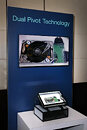
Western Digital has today presented its latest effort to catch up with traditional QLC NAND Flash SSDs by improving its HDD offerings. With the latest High-Bandwidth HDDs, Western Digital has implemented two new technologies in a classical multi-platter HDD design. The first innovation comes in a form of High Bandwidth Drive Technology, which enables double the I/O bandwidth with a path to 8x the current bandwidth in the future. It relies on simultaneous reading and writing from multiple heads on multiple tracks, which is already in customer hands for validation. The second one is Dual Pivot Technology that introduces a second set of independent actuators on a separate pivot, which will not scarify drive capacity unlike older dual actuator designs.

Using Dual Pivot Technology, HDDs can pack more drive platters in a standard 3.5-inch body for higher capacities, and the performance grows by an additional 2x, which is 4x I/O bandwidth compared to today's drives. This technology will pave the way for 100 TB HDDs, that offer speeds comparable to QLC-based SATA III SSDs, at much better price/performance ratio and better data retention, prompting the massive boom of HDD development. Western Digital's drives with High Bandwidth Drive Technology are already shipping to customers, while drives with Dual Pivot Technology are in development in Western Digital's labs and are scheduled to become available in 2028, with early customer sampling probably much sooner.
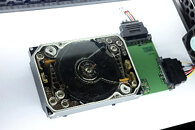

However, this is not where Western Digital is stopping. The company is also developing new Power-Optimized HDDs, which are designed to help customers access cold data in seconds, sitting right between traditional tape and regular HDDs. These Power-Optimized HDDs will trade some of the random I/O speeds for higher capacity, while operating at 20% lower power. For example, AI data centers hold massive amounts of data in a cold storage, but when the data is needed, the systems need it in seconds, not hours as seen with the traditional tape. So for this purpose, Western Digital made these HDDs that are trading off some performance for longevity, speed, and capacity, all while maintaining sub-second access time that the traditional cold storage tiers like tape can't execute. These drives will be in customer's hands for qualification in 2027.
Add your own comment

27 Comments on Western Digital Designs High-Bandwidth HDDs That Quadruple I/O Speeds

#1
Shrek
Always wondered if things would move to reading heads in parallel, I imagine this involves tiny corrections to each arm in real time.
Posted on Reply
#2
ymdhis
I'll believe it when I see it. Currently WD is really, really behind competitors in either offered size or prices. The AI boom equalized prices, but not sizes.

Regardless, it would be really sweet if HDDs could finally reach so high sequential read/write speeds. I mainly use them for cold backups, imagine being able to write them out in 1-2 hours instead of nearly a day.
Posted on Reply
#3
Chaitanya
Seagate already offers drives with dual read heads under Exos X2 series.
Posted on Reply
#4
FreedomEclipse
~Technological Technocrat~
It seems like only yesterday when WD were messing around with hybrid HDDs with an 8 or 16GB SSD installed for caching.

I wonder how well those drives would do today with all the advances made with NAND since 2015. Of course the mechanical side of it as well as the sata interface will still remain a bottleneck. But with the newer motor here to bump up mechanical reads and writes? Maybe SSHDs might come back again.
Posted on Reply
#5
Raiden85
I want that transparent HDD.
Posted on Reply
#6
nomdeplume
FreedomEclipseI wonder how well those drives would do today with all the advances made with NAND since 2015. Of course the mechanical side of it as well as the sata interface will still remain a bottleneck. But with the newer motor here to bump up mechanical reads and writes? Maybe SSHDs might come back again.
You are aware of the flash implemented on higher TB WD Gold as Armor Cache. Which effectively prevents write cache data loss from power outage in one mode and improves performance when turned off. No comment on SATA beyond what I've posted on the open forum.

Since you mentioned 2015 in one context. I'll also suggest the other, WD Ae cold storage.

Posted on Reply
#7
FreedomEclipse
~Technological Technocrat~
nomdeplumeYou are aware of the flash implemented on higher TB WD Gold as Armor Cache. Which effectively prevents write cache data loss from power outage in one mode and improves performance when turned off. No comment on SATA beyond what I've posted on the open forum.

Since you mentioned 2015 in one context. I'll also suggest the other, WD Ae cold storage.

Interesting. I actually didnt know about Armour cache or that anything came of SSHD's in general after they were phased out of the general consumer market.
Posted on Reply
#8
remixedcat
ChaitanyaSeagate already offers drives with dual read heads under Exos X2 series.
This
Posted on Reply
#9
Prima.Vera
AleksandarKThis technology will pave the way for 100 TB HDDs, that offer speeds comparable to QLC SSDs, at much better price/performance ratio and better data retention, prompting the massive boom of HDD development.
You mean SATA QLC SSDs. That's fine. I don't need more than 500MB/s for the backup and storage.
Posted on Reply
#10
azrael
For a moment I was truly baffled to read a post on new storage tech that doesn't mention AI, but there it was... in the last paragraph.
Posted on Reply
#11
tommo1982
The firmware of these drivers is going to be interesting.
Posted on Reply
#12
CornyOC
I would rather improvements in reliability aspects, nobody really cares to look at HDDs for speed factor, 2x data transfer speed is still crap compared to nvme form factor. From my point of view, consumers choose HDDs for size and deep storage. Better reliability would be close to target consumer sector.
Posted on Reply
#13
TheDeeGee
ChaitanyaSeagate already offers drives with dual read heads under Exos X2 series.
Seagate though... they always have the highest failure rate.
Posted on Reply
#14
kondamin
CornyOCI would rather improvements in reliability aspects, nobody really cares to look at HDDs for speed factor, 2x data transfer speed is still crap compared to nvme form factor. From my point of view, consumers choose HDDs for size and deep storage. Better reliability would be close to target consumer sector.
If you need to wait for something it’s always nice to have it done in half the time
Posted on Reply
#15
Nicholas Steel
> This technology will pave the way for 100 TB HDDs, that offer speeds comparable to QLC-based SATA III SSDs

Before or after the QLC drives exhaust their cache? 'cause as far as I know QLC drives are abysmal when they run out of cache, like sub 100MB/s.
Posted on Reply
#16
A&P211
FreedomEclipseIt seems like only yesterday when WD were messing around with hybrid HDDs with an 8 or 16GB SSD installed for caching.

I wonder how well those drives would do today with all the advances made with NAND since 2015. Of course the mechanical side of it as well as the sata interface will still remain a bottleneck. But with the newer motor here to bump up mechanical reads and writes? Maybe SSHDs might come back again.
I had one of those, it was a seagate 2tb FireCuda 2.5 SSHD. I used it for storage in a laptop. It was not a primary drive.
Posted on Reply
#17
remixedcat
CornyOCnvme form factor.
Seagate is working on nvme hard drives. Yes. Actual nvme spinning disks. Which is needed as it's faster and SATA/SAS ports are slowly being axed.
TheDeeGeeSeagate though... they always have the highest failure rate.
That was stemming from backblaze and that one model (ST3000DM001) and using used drives for years and they have terrible enclosures that are janky and custom made and the drives overheat and are subject to torture that normal drives don't go thru.
A&P211SSHD
I have a WDBLACK 500GB SSHD that's decent. For now it's just an OS imager drive.
Posted on Reply
#18
evernessince
FreedomEclipseIt seems like only yesterday when WD were messing around with hybrid HDDs with an 8 or 16GB SSD installed for caching.

I wonder how well those drives would do today with all the advances made with NAND since 2015. Of course the mechanical side of it as well as the sata interface will still remain a bottleneck. But with the newer motor here to bump up mechanical reads and writes? Maybe SSHDs might come back again.
Those hybrid drives were good for games and operating systems but useless for large file storage, which HDDs are increasingly being relegated to.

I still think they'd be good for those but the SSD cache would have to be increased in size and speed to make them worth it.
Posted on Reply
#19
nageme
CornyOCnobody really cares to look at HDDs for speed factor, 2x data transfer speed is still crap compared to nvme form factor.
Disagree. HDDs and SSDs serve different goals, and HDDs are too slow compared to their capacities.
Twice the speed would be very nice. 4 times even better.
Posted on Reply
#21
JohH
HairyLobstersSATA IV when?
Still probably never. Highest bandwidth drives are likely exclusive for DC where they may use 12gbps SAS (or even 22.5gbps if needed).
Posted on Reply
#22
efikkan
ymdhisI'll believe it when I see it. Currently WD is really, really behind competitors in either offered size or prices. The AI boom equalized prices, but not sizes.
But their reliability is superior though.
CornyOCI would rather improvements in reliability aspects, nobody really cares to look at HDDs for speed factor, 2x data transfer speed is still crap compared to nvme form factor. From my point of view, consumers choose HDDs for size and deep storage. Better reliability would be close to target consumer sector.
Speed matters a lot when rebuilding RAIDs etc., and have been stuck around ~250 MB/s since before 10 TB I believe. Getting it up to 1-2 GB/s would help a lot.
HairyLobstersSATA IV when?
It will probably be either SAS or NVMe.
Posted on Reply
#23
A&P211
evernessinceThose hybrid drives were good for games and operating systems but useless for large file storage, which HDDs are increasingly being relegated to.

I still think they'd be good for those but the SSD cache would have to be increased in size and speed to make them worth it.
The motors arent getting faster, the HD's are getting more heads so that it can read and write at faster speeds.
Posted on Reply
#25
Tomorrow
ChaitanyaSeagate already offers drives with dual read heads under Exos X2 series.
You mean offered. They were only limited to two models: 16TB and 18TB. Their were prices too high to make sense and availability was bad.
In my eyes it was an experiment at best. Not a mass produced product to be iterated on.
And i was right. There have been no successors with higher capacities and the initial models were EOL'd and are nigh impossible to find now.
CornyOCI would rather improvements in reliability aspects, nobody really cares to look at HDDs for speed factor, 2x data transfer speed is still crap compared to nvme form factor. From my point of view, consumers choose HDDs for size and deep storage. Better reliability would be close to target consumer sector.
Is there a problem with reliability with existing drives?
I cant think of anyone asking for mystical "improvements in reliability", but i see plenty of people complaining about the slowness of HDD's.

Aside from certain Seagate models having higher AFR i cant think of any high profile cases on mass reliability issues.
Even first gen Helium filled drives have held up far longer than anyone predicted given the technology was uncertain at the time.

The reason we need higher transfer speeds is precisely because speeds haven't kept up with capacity increases. Capacity has more than doubled, but speeds have remained the same. This affects several aspects of using the newest models. Many of them mentioned here.
It's like getting a bigger water tank, but still using the same small dinky water hose with low throughput.
HairyLobstersSATA IV when?
Rover4444We have SATA IV at home. If only the powers that be didn't keep gatekeeping SAS on consumer motherboards...
Indeed. We already have a faster standard that could be used without a problem on consumer boards.
I suppose thus far there hasn't been great incentive to use it since drives were not saturating SATA-III anyway.
Posted on Reply
Add your own comment
Nov 18th, 2026 07:49 CST change timezone

New Forum Posts

Popular Reviews

TPU on YouTube

Controversial News Posts