News Posts matching #HDD

Return to Keyword Browsing

OWC Upgrades ThunderBay 4 with Thunderbolt 5, Expands Capacity with Options Up to 128 TB

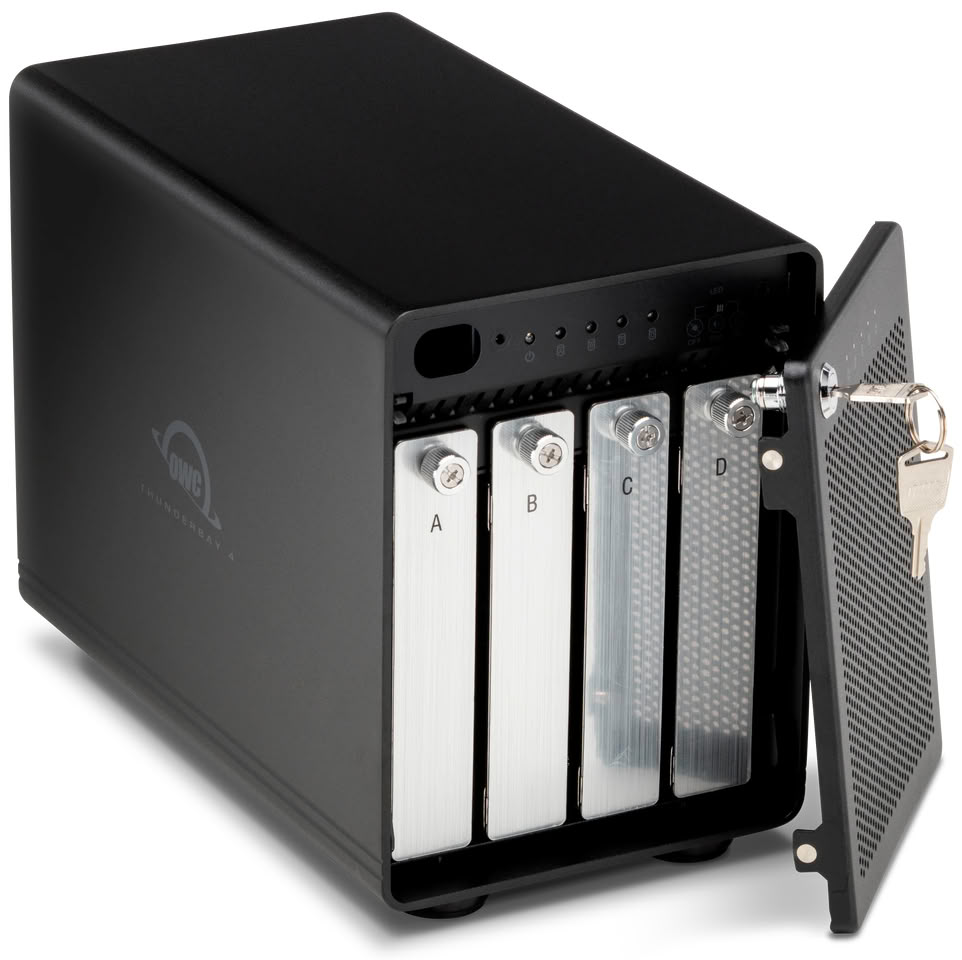
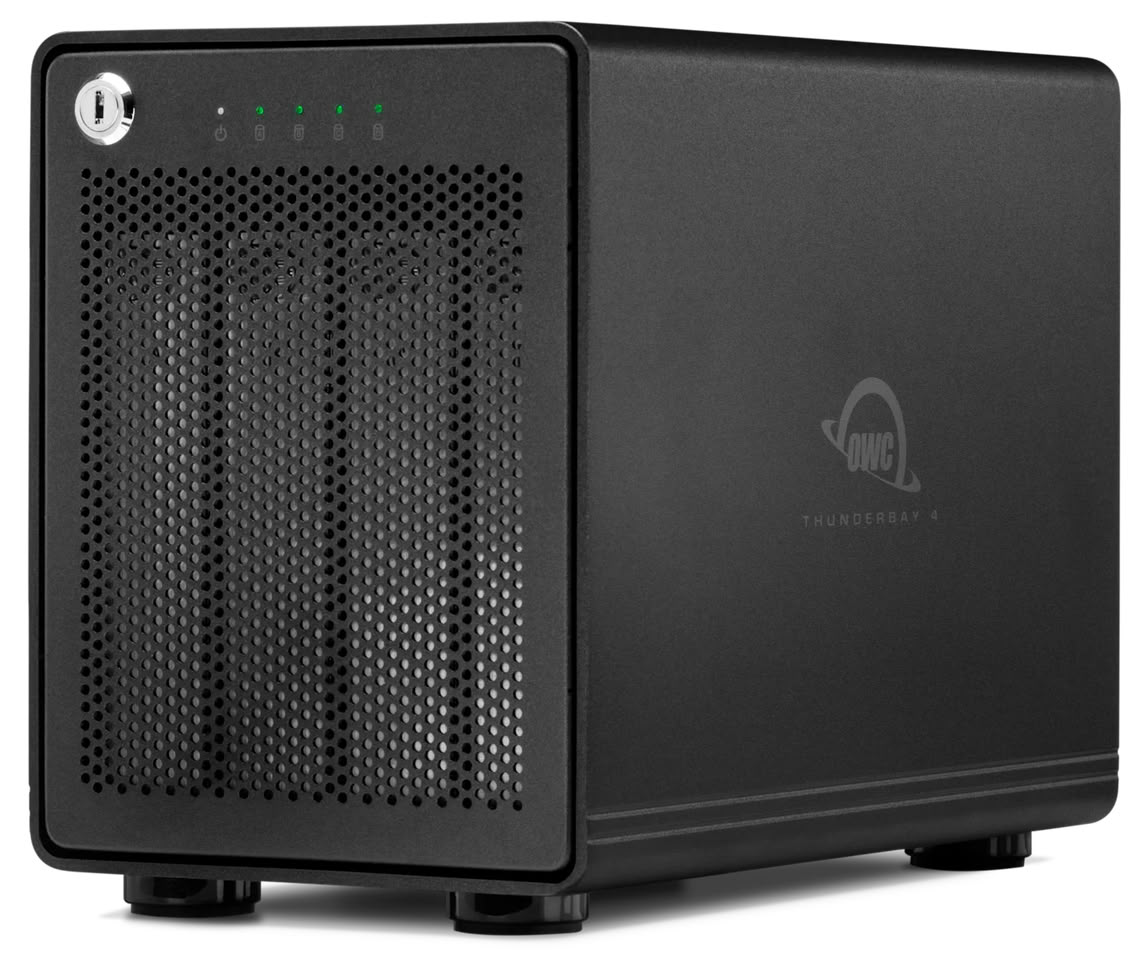
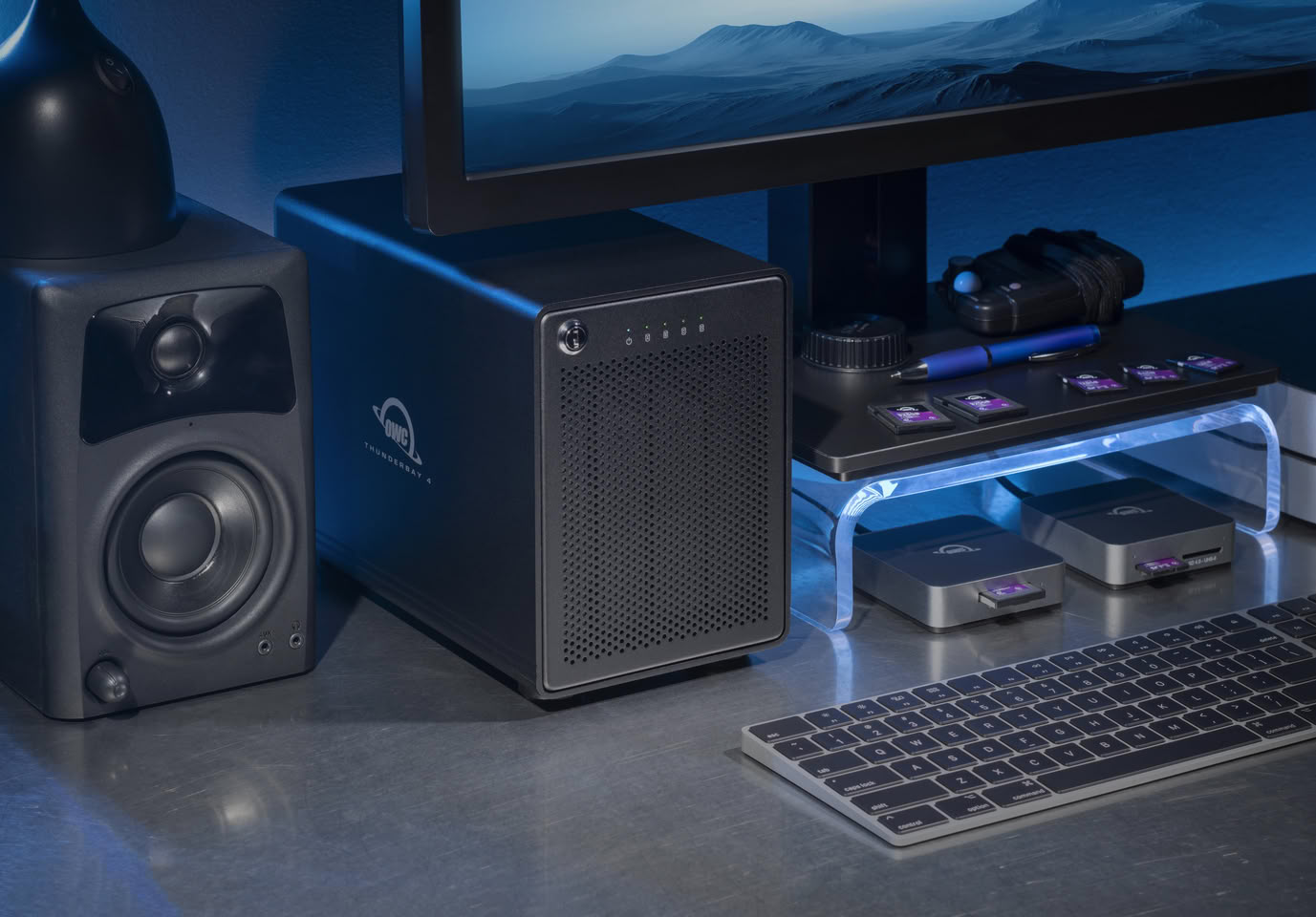
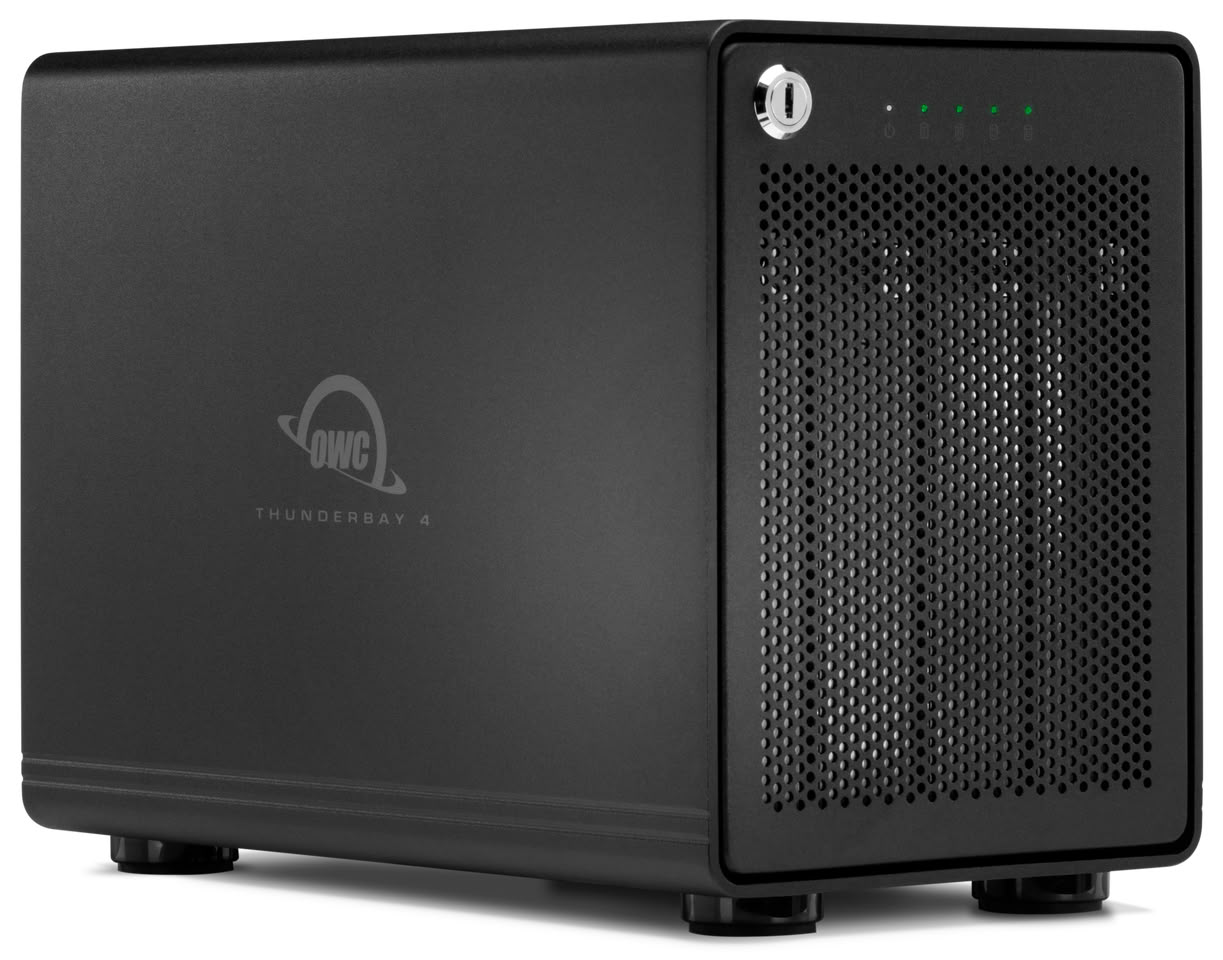
Other World Computing (OWC), a trusted leader in high-performance storage, memory, connectivity, software, and accessories that empower creative and business professionals to maximize performance, enhance reliability, and streamline workflows, today announced it has added Thunderbolt 5 capabilities to its flagship OWC ThunderBay 4 RAID solution.

With up to 128 TB of capacity, OWC ThunderBay 4 with Thunderbolt 5 brings together powerful features and delivers real-world benefits:
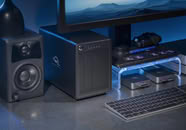
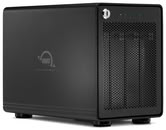
  • Two Thunderbolt 5 Ports - Current-generation host connection plus a downstream Thunderbolt 5 port for daisy-chaining additional Thunderbolt, USB4, and USB-C devices without giving up a port on the computer
  • Stop Juggling Loose Drives - Everything organized in one place with up to 128 TB of expandable capacity
  • Keep Edits Flowing Fast - Up to 1268 MB/s real-world HDD speed and up to 1703 MB/s SSD speed
  • Proven Design, Still the Standard - Four bay aluminium solution trusted by pros for over a decade
Seagate Launches the FireCuda Forge Powered by the New Alkemi Intelligent Platform

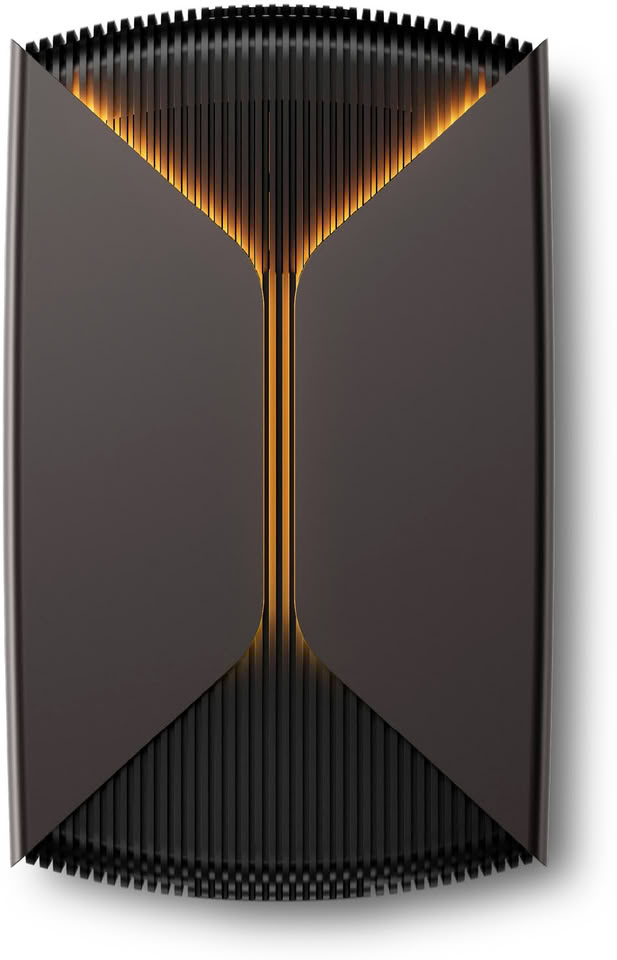
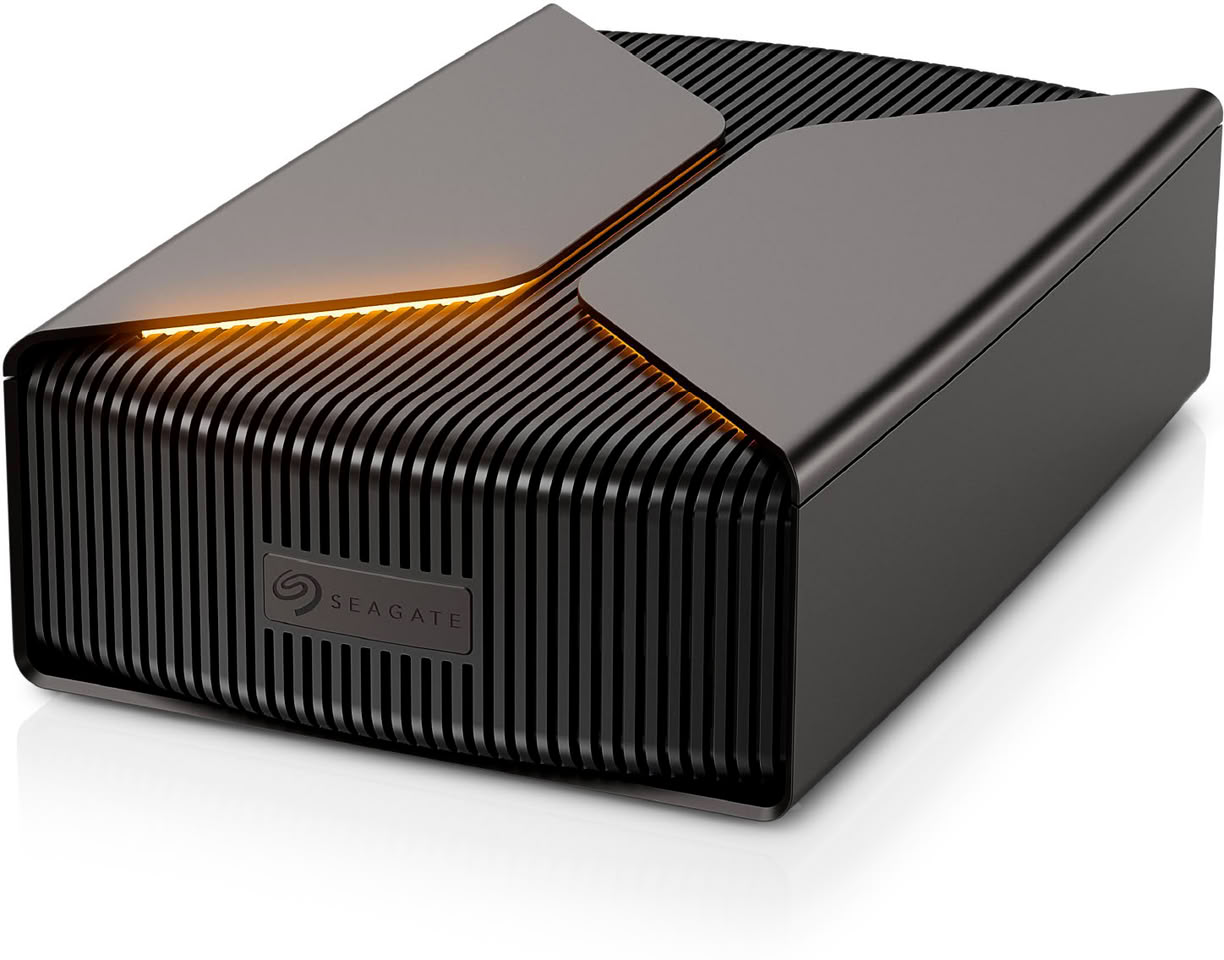
Seagate Technology Holdings plc, a mass-capacity data storage leader, today introduced the Seagate FireCuda Forge drive, representing the first Seagate hard drive powered by the Alkemi intelligent storage platform. With Alkemi, the FireCuda Forge combines solid-state drive (SSD) responsiveness and hard disk drive (HDD) capacity in a single drive, using adaptive intelligence to give gamers and creators the speed and space they need without added complexity.

A new platform for a new reality
From massive game libraries and 4K video to AI-powered animation, people are creating, working with, and keeping more data than ever. IDC projects annual global data generation will more than triple, from 218 zettabytes in 2025 to more than 718 zettabytes by 2030. As digital libraries expand, consumers need fast access to active content and the capacity to preserve growing collections.

QNAP Introduces USB4 JBOD Series with up to 12 Bays for Desktop and Rackmount Deployment

QNAP Systems, Inc., a leading innovator in computing, networking, and storage solutions, today introduced industry-leading high-capacity JBOD expansion units featuring USB4 connectivity: the 8-bay desktop TL-D810TC4 and 12-bay rackmount TL-R1210TC4-RP, delivering up to 40 Gbps theoretical bandwidth. Their USB4 Type-C ports are also compatible with Thunderbolt 5/4/3, giving creators and businesses a convenient, cost-efficient, and flexible way to expand storage.

The new USB4 JBOD series supports SATA 6 Gb/s HDDs and SSDs, allowing users to flexibly expand their NAS or computer storage based on their environment and workflow needs. This enables rapid capacity expansion and enhanced data protection. Its optimized ventilation and active cooling ensure stable performance and long-term reliability during extended operation. Whether for short-term projects, media creators requiring high-speed expansion, or businesses focused on long-term archiving and scheduled backups, the QNAP USB4 JBOD series delivers a dependable and flexible storage expansion solution.

Toshiba Launches Canvio Ready Portable HDD With Partly Recycled-Material Cover

Toshiba Electronics Asia (Singapore) (Toshiba) announces the new Canvio Ready 2.5-inch portable external hard disk drive (HDD). The redesigned enclosure features a timeless appearance with grip-enhancing ribbed detailing and the top cover is manufactured using 65% recycled material. The update retains the simple plug-and-play operation and dependable portable storage that users expect from Canvio Ready.

Available in capacities of up to 4 TB, Canvio Ready provides ample space for everyday digital life. Whether backing up family photos, carrying important files or storing a growing media library, the HDD offers a straightforward way to keep content close at hand. Users can simply connect the drive to their computer and start saving, with no software installation or setup required.

Toshiba Brings S300 AI Surveillance Hard Drive Series to Retail Channels

Toshiba Electronics Europe GmbH (Toshiba) has announced the availability of its S300 AI Surveillance Hard Drive in retail packaging, making its AI-optimized surveillance storage easier for professional users to source through retail and e-commerce channels. First introduced in bulk packaging in November 2025, the S300 AI is now available in retail packaging to support a broader range of purchasing models while delivering the same enterprise-grade performance and reliability.

The S300 AI retail range is aimed at professional surveillance deployments, including system integrators, IT resellers and security installers deploying advanced video analytics. By extending availability beyond traditional surveillance distribution channels, Toshiba makes it easier for customers to purchase replacement drives or smaller deployment quantities through established retail and online distribution channels while continuing to use storage designed specifically for AI-enabled surveillance workloads.

Seagate Roadmap Targets 50 TB HAMR Hard Drives in 2027

This Tuesday, Seagate presented its Q4 fiscal 2026 earnings report and during the presentation it offered some updated storage roadmap details. The company says that new 50 TB HAMR hard drives are planned for customer validation in 2027. The current Mozaic 4+ platform supports drives up to 44 TB and is built around Seagate's Heat-Assisted Magnetic Recording Technology (HAMR). By the end of 2026, the company expects that Mozaic 4+ models will account for 50% of its HAMR exabytes shipped to customers. "We expect to achieve our next ramp milestone by exiting calendar 2026 with 50% of our HAMR exabytes on our Mozaic 4 platform," CEO, Dave Mosley said. CFO Gianluca Romano confirmed the company is on track to exceed 5 TB per platter and since Seagate flagship-tier HDDs use ten platters, we will have 50 TB per drive. The next step is Mozaic 5+, the third generation of the platform, which will enable that +5 TB per platter density. As mentioned, first Mozaic 5+ drives are expected to ship to customers for qualification later in 2027, after which they go through OEM and data center validation before any broader availability.

Seagate also has a lab demonstration target of 10 TB per platter around 2028, which would eventually bring drives close to the 100 TB range. Last year, Seagate disclosed that it successfully produced a prototype platter capable of storing roughly 6.9 TB of data and is trying to reach 8 TB per platter. The broader capacity roadmap runs from 40-44 TB in the 2027/2028 window, scaling to 50-60 TB around 2030, and pushing past 80 TB in the 2031/2032 timeframe. Worth keeping in mind what "customers" means in this context, these drives first go to Big Tech, enterprises and AI companies, not retail. Consumer availability typically follows years later, if at all.

Synology Releases DiskStation Manager 7.4

Synology today announced the release of DiskStation Manager (DSM) 7.4, delivering DSM Agent, Synology ChatPlus and Meet, and Synology HDD-based post-processing deduplication and compression.

"As AI becomes more capable, the real challenge is no longer building intelligence itself, but putting it to work where data lives," said Bie-i Chu, Executive Vice President of the Synology NAS Group. "With DSM 7.4, we're providing users with a platform where AI drives greater productivity and smarter management, while keeping them in full control of their data and infrastructure."

Western Digital Showcases Its Unified G-DRIVE Lineup at Computex 2026

Western Digital showcased its refreshed G-DRIVE professional external storage lineup at Computex 2026 following its relaunch back in February as a unified brand. The lineup spans portable to rackmount-style storage solutions. At the top of the lineup sits the G-DRIVE 8 supporting up to 224 TB of capacity and featuring eight-bay hardware RAID. The WD G-DRIVE 4 is a four-bay model offering up to 80 TB of storage. Both models feature hardware RAID and Thunderbolt 5, daisy-chaining for up to six devices and an e-ink display. Western Digital plans for a release in early 2027.

The G-DRIVE 2 has a dual-bay configuration with storage capacity up to 56 TB. It also kept the Thunderbolt 5 connectivity, six-device daisy-chaining and the integrated e-ink display. It is expected in early 2027.

Radxa Introduces Qualcomm-Powered DragonStation and DragonBay NAS Systems

Radxa today announced that its upcoming AI NAS products, DragonStation and DragonBay, will ship with Fygo OS pre-installed, providing users with a complete private cloud and local AI experience right out of the box. Built on Qualcomm's high-performance computing platform, DragonStation and DragonBay combine powerful hardware with the intelligent software capabilities of Fygo OS, enabling users to securely store, manage, search, and interact with their data while maintaining full ownership and privacy.

As AI workloads increasingly move from the cloud to local infrastructure, users need systems that can not only store data, but also run AI services, process media, and support modern personal and team workflows. DragonStation and DragonBay are designed to meet that need.

Lian Li at Computex 2026: New Lancool, O11, and Wood Panel Cases

Renowned PC case maker, Lian Li, has officially unveiled its next-gen case line-up at Computex 2026, with updates to both its full- and mid-tower cases, including popular series, like the O11 and Lancool cases. The new Lancool cases consist of the Lancool 207XL, which takes a pragmatic approach and aims for maximum performance and compatibility, and the Lancool 4, which prioritizes aesthetics without compromising too much on thermal performance. The Lancool 207XL is an ATX mid-tower case launching sometime in Q4 2026 for $109.99, and it will feature support for up to ATX motherboards, 360 mm liquid cooling radiators, and ATX PSUs. The most notable feature of the Lancool 207XL is the dual cross-flow fans installed in the bottom of the case, which increase GPU airflow with minimal impact on the case's dimensions. The Lancool 207XL will ship with two pre-installed 170 × 30 mm fans in the front intake, which is covered by a front plastic front panel with vertical slats that should allow for decent airflow.

HDD and SSD Shortages Drive Customers to Sign 5-Year Supply Contracts

Hard Disk Drives (HDDs) and Solid State Drives (SSDs) are among the most sought-after commodities in computing today, as the expansion of AI data centers consumes everything in its path. According to Seagate, Sandisk, and Western Digital, demand is so high that customers are signing long-term supply agreements lasting up to five years. This duration is significant because customers are now planning their contracts around demand expansion, which is not only substantial but will also bring better balance to the supply chain. With customers driving steady demand, HDD and SSD manufacturers know exactly how much spinning rust or NAND Flash to produce to meet this demand. Over time, this is a positive development for a supply chain that will adapt with expanding production capacity. However, it poses a short-term challenge for PC gamers.

For example, at the start of this year, we reported that HDD prices have soared by an average of 46% since mid-September. These changes have made spinning rust an expensive commodity, but this is minor compared to NAND Flash prices, which have increased 500% in just a few months. The expansion of AI data centers has depleted any remaining inventory of HDDs and SSDs, leaving the consumer PC market to compete for the few remaining units available for gaming PCs. Interestingly, HDDs contain almost no silicon for storage purposes, so their significant price increases are a supply chain issue unrelated to the semiconductor industry. Apart from the controllers that use silicon, HDD platters are made from materials that are not currently in short supply. However, high demand keeps their prices elevated.

Seagate Technology Reports Fiscal Third Quarter 2026 Financial Results

Seagate Technology Holdings plc (NASDAQ: STX) (the "Company" or "Seagate"), a leading innovator of mass-capacity data storage, today reported financial results for its fiscal third quarter ended April 3, 2026.

"Seagate delivered outstanding March quarter results, exceeding the high end of our revenue and EPS guidance, achieving record margin performance, and generating close to $1 billion in free cash flow," said Dave Mosley, Seagate's chair and chief executive officer.

Promise Technology Showcases Pegasus5 R12 Thunderbolt 5 Storage Solutions at NAB 2026

PROMISE Technology, a global leader in high-performance storage for media and entertainment, will showcase next-generation Thunderbolt 5 solutions and AI-optimized platforms at NAB Show 2026.

"The Pegasus line has evolved with each generation of Thunderbolt to become a flagship storage system for PROMISE and a well-established brand within the creator community." said Alice Chang, Chief Marketing Officer for PROMISE. "As M&E production technology evolves, we continue to keep pace, not only with Thunderbolt but also with the leaps in performance required for AI optimized storage systems."

Gamers Will Cut RAM Before Settling for SSDs Smaller Than 512 GB, Lexar Says

During a media tour at Lexar HQ in China, Digital Foundry spoke with Lexar's Europe General Manager, Grace Su, who explained what gamers are buying and where they are willing to compromise. Interestingly, Lexar found that, despite the pricing of DRAM and NAND Flash, users could purchase lower-capacity RAM kits without issues, while SSDs with capacities lower than 512 GB weren't selling well. Although this is not a direct comparison, when building a new PC system, you need both a RAM kit and an SSD. Based on their budget, enthusiasts often have to decide between a larger SSD or a bigger RAM kit. However, Lexar reports that users are so committed to having larger SSD space that they are even willing to revert to HDDs rather than buy an SSD smaller than 512 GB. This is understandable, considering that modern games can take up hundreds of gigabytes of space.

Currently, high RAM prices are driving PC gamers to invest considerably more in their gaming rigs to play smoothly. As 16 GB is somewhat considered the minimum for a Windows 11 system, some games and tasks are so demanding that PC DIY enthusiasts need to invest in 32 GB kits at prices that were unimaginable just a year ago. For example, we reported on the DDR4 spot market pricing, which saw the cost of a single 16 Gb module increase by about 2,200% over the past year, with only a minor 5% correction in March. We can only hope for more corrections soon so that PC gamers can finally see signs of relief, but with AI demand projected to continue rising, that seems far from reality.

Toshiba Adds Metallic Blue Option to Canvio Flex Portable Drives

Toshiba Electronics Europe GmbH (Toshiba) has unveiled a metallic blue casing for its Canvio Flex 2.5-inch portable hard disk drive (HDD). The new color adds a fresh look to the range, alongside the original warm silver option. The new metallic blue model will be available exclusively across EMEA.

Available in 1 TB, 2 TB, and 4 TB capacities, the Canvio Flex is designed for easy storage across multiple devices. Pre-formatted with exFAT, it works seamlessly with Windows PCs and Macs, as well as with compatible Android and iOS tablets and smartphones, without requiring reformatting.

Toshiba Begins Sampling of 30-34 TB SMR Nearline Hard Disk Drives

Toshiba Electronic Devices & Storage Corporation ("Toshiba") has announced the M12 Series of 3.5-inch nearline hard disk drives (HDDs) for hyperscale and cloud service providers operating large-scale data centers. The new series uses Shingled Magnetic Recording (SMR) technology to deliver storage capacities ranging from 30 to 34 TB. Sample shipments have begun and Toshiba also plans to begin sample shipments of M12 drives that use Conventional Magnetic Recording (CMR) to deliver capacities of up to 28 TB in the third quarter of 2026.

Today is World Backup Day, the annual international initiative to remind companies and individuals of the importance of backing up and protecting their data. That need is now greater than ever, as the constant expansion of digital services and video content distribution, the widespread adoption of cloud services, and, most recently, the increasing use of data-hungry AI and data science, are driving forward immense growth in the volumes of data generated and stored worldwide.

ASUS Announces ExpertCenter P700 Mini Tower

ASUS today announced ExpertCenter P700 Mini Tower (PM700MG) with AMD Ryzen AI 400-series processors, a refreshed 15-liter business desktop designed to deliver exceptional performance, scalability, and reliability for professional creators, engineers, and small businesses. With cutting-edge hardware, business-grade security, and comprehensive manageability, ExpertCenter P700 Mini Tower is engineered to be the trusted backbone of business-critical workloads.

Blending next-generation AI performance with whisper-quiet thermal design, P700 Mini Tower is built to tackle modern professional tasks with ease—from generative AI and content creation to advanced data analysis. As Copilot+ PCs, these new desktops bring intelligence and creativity to the forefront of everyday business, while the exclusive ASUS MyExpert all-in-one AI platform boosts productivity in multiple innovative and flexible ways. They also benefit from ASUS ExpertGuardian, providing all-around protection for sensitive data, plus military-grade durability to ensure long-term reliability.

Morefine N1 NAS Launches With Ryzen 7 Pro 8845HS and dGPU Expansion Support

Morefine has announced the N1 NAS, a tower-style NAS solution that packs the AMD Ryzen 7 Pro 8845HS, up to 96 GB of DDR5-5600 ECC memory, dual 10 GbE ports, and built-in PCIe expansion. Pricing starts at $759 for a barebones version, but 32 GB of memory bumps that up to $1,209, while the 64 GB and 96 GB versions come in at $1,569 and $1,929. The Morefine N1 has three M.2 slots for up to 12 TB of SSD storage alongside four hot-swap 3.5-inch HDD bays accessible via the top of the case for an additional 120 TB. The aluminium case itself measured 218 × 193 × 372 mm, making it considerably smaller than many ITX systems but not quite as svelte as a traditional mini PC, like the recently announced Minisforum MS-A2.

The N1 also comes with a built-in 800 W PSU with 400 W dedicated to the GPU power budget, making it adequate for something like an NVIDIA GeForce RTX 5070 Ti, although the included PSU power connectors are not specified. Internal space for the dGPU is limited to 330 mm × 66 mm, too, so SFF GPUs will be the way to go. The port selection is also fairly decent for an SFF PC, packing dual USB 2.0, 1× USB4 port, 1× USB 3.2 Gen 2, 1× USB 3.2 Gen 1, a full size SD card reader, 1× HDMI 2.0, and dual 10 GbE RJ 45 ports. It also has a small 3-inch full color touch screen on the front of the case for displaying things like system information.

Seagate Delivers Next-Generation Mozaic 4+ Hard Drives with 44 TB Capacity

As technology innovation accelerates both data creation and value, the need for scalable, efficient, high-performance storage solutions has never been greater. Today, Seagate Technology announced its next-generation Mozaic 4+ platform, the industry's only heat-assisted magnetic recording (HAMR)-based storage platform deployed at-scale, is now qualified and in production with two leading hyperscale cloud providers. Supporting capacities up to 44 TB, these qualifications reflect production-scale deployments in hyperscale environments.

With additional customer qualifications under way, Seagate is delivering on its roadmap to scale from today's 4+TB per-disk toward a future 10 TB per-disk - enabling hard drive capacities of up to 100 TB. The platform incorporates a next-generation suspension architecture and an enhanced system-on-a-chip that enables precise recording at higher densities while maintaining enterprise-class reliability. Each platform generation allows continued gains in capacity without requiring disruptive architectural shifts.

Icy Dock Reveals Concept Product CP152-1, 2.5-inch Dual Slot Mobile Rack Adapter

The CP152-1 is a concept PCIe storage adapter card designed to explore market demand for a compact, rear-swappable 2.5" SATA SSD/HDD solution with built-in RAID 1 functionality. By utilizing a dual-slot PCIe form factor, the CP152-1 enables the installation of two 9.5 mm 2.5" SATA drives with RAID 1 or JBOD support, delivering a simplified approach to data protection and storage expansion without the need for traditional drive cages or backplanes.

The CP152-1 adopts a rear-accessible removable tray architecture, allowing system integrators to evaluate alternative service workflows and chassis layouts while maintaining a clean, cable-free PCIe installation.

WD Unifies its Professional Content Creator Storage Portfolio Under the G-DRIVE Brand

WD (Nasdaq: WDC) today announced the re-launch of its G-DRIVE brand as the unified identity for its content creator and creative professional external storage product portfolio. The brand consolidation brings together high-capacity, high-performance storage solutions under a single name brand - G-DRIVE - known for its quality, performance, and reliability.

The G-DRIVE brand, also represented by the iconic "G" logo, will replace Sandisk Professional branding across WD's creator storage lineup, including desktop drives, portable drives and multi-bay RAID systems purpose-built for the creative community's most demanding workflows: high-resolution photography, video production, graphic design, and audio engineering. Supporting individuals, businesses and production studios, G-DRIVE solutions support the full creative lifecycle, from on-set capture and real-time editing to backup and post-production. Products currently branded as Sandisk Professional will transition to the G-DRIVE brand by the end of this month.

Western Digital to Invest $73 Million into Thai Facility's HAMR HDD R&D Project

Earlier this week, Thai news outlets have reported a recent approval of a major THB2.3 billion (~$73.81 million USD) investment into Western Digital's local operations. The Southeast Asian nation's Board of Investment (BOI) gave the thumbs up to a new on-site HAMR HDD technology research and development project. Western Digital's central location has grown over the past couple of years—for example, around August 2024, Thailand's BOI gave a proposed HDD production hub enlargement the greenlight. Fresh news items outline an upcoming research and development project that will focus on HAMR (Heat-Assisted Magnetic Recording) technology, with a view to enhance hard disk drive (HDD) manufacturing capabilities. Additional details mention an international collaboration; involving the North American and Japanese teams—the Thai unit seems to be tasked with devising key components and HAMR's crucial "laser-based data recording process." Earlier on in February, WD's Innovation Day 2026 roadmapped an extensive future HAMR release cadence. By the end of the decade, the data storage specialist projects the debut of 100+ TB drives.

Western Digital Unveils New Hard Drive Solutions on its Innovation Day

At its Innovation Day 2026, Western Digital today unveiled a new customer-centric storage roadmap that reinvents the hard drive for AI needs, reinforcing its position as a strategic storage infrastructure partner for the AI-driven data economy. The announcements reflect how WD's fundamental business transformation has enabled a new generation of storage technologies spanning scalable capacity, breakthrough performance optimizations, power efficiency innovations and an intelligent platform API with cost-effective economics.

As AI generates massive amounts of data, it has spurred intense demand for data storage. To meet the moment, WD has focused deeply on customer needs, particularly capacity with proven reliability and economics, performance, power efficiency, and faster qualifications without customer business disruptions. During its Innovation Day, WD showcased technologies that address these essential customer requirements and will deliver them at scale.

Western Digital Designs High-Bandwidth HDDs That Quadruple I/O Speeds

Western Digital has today presented its latest effort to catch up with traditional QLC NAND Flash SSDs by improving its HDD offerings. With the latest High-Bandwidth HDDs, Western Digital has implemented two new technologies in a classical multi-platter HDD design. The first innovation comes in a form of High Bandwidth Drive Technology, which enables double the I/O bandwidth with a path to 8x the current bandwidth in the future. It relies on simultaneous reading and writing from multiple heads on multiple tracks, which is already in customer hands for validation. The second one is Dual Pivot Technology that introduces a second set of independent actuators on a separate pivot, which will not scarify drive capacity unlike older dual actuator designs.

Using Dual Pivot Technology, HDDs can pack more drive platters in a standard 3.5-inch body for higher capacities, and the performance grows by an additional 2x, which is 4x I/O bandwidth compared to today's drives. This technology will pave the way for 100 TB HDDs, that offer speeds comparable to QLC-based SATA III SSDs, at much better price/performance ratio and better data retention, prompting the massive boom of HDD development. Western Digital's drives with High Bandwidth Drive Technology are already shipping to customers, while drives with Dual Pivot Technology are in development in Western Digital's labs and are scheduled to become available in 2028, with early customer sampling probably much sooner.

HDD Prices Increase by an Average of 46% Over the Past Four Months

Hard Disk Drives are now in great demand, which has pushed their price premiums up by an average of 46% since mid-September. According to the ComputerBase tracker, HDDs have increased their prices over the past four months by anywhere from 23% to 66%, depending on the model. Standing at the lowest 23% increase is the Seagate IronWolf Pro NAS HDD + Rescue 16 TB HDD, while the highest price increase was observed in the Toshiba Cloud Scale Capacity MG10F AFA 22 TB model. The price tracker followed fluctuations of the 12 most popular HDD models based on their EUR listings and found that HDDs rose by an average of 46% across the four-month period, resulting in spinning rust being almost 50% more expensive, without any substantial supply chain shortage.

A month ago in December, DigiTimes reported that fourth-quarter 2025 contract negotiations concluded with traditional HDD prices rising about 4% quarter-over-quarter, the largest increase in the past eight quarters. This contributed to the overall 46% price increase observed today, as these single-digit contract changes accumulate and multiply by the time they reach consumers. Interestingly, HDDs contain almost no silicon for storage purposes, making their significant price increases a supply chain issue unrelated to the semiconductor industry. Apart from the controllers that use silicon, HDD platters are made from materials that are not currently in short supply. However, high demand is what keeps their prices elevated.
Return to Keyword Browsing
Nov 11th, 2026 03:12 CST change timezone

New Forum Posts

Popular Reviews

TPU on YouTube

Controversial News Posts