Monday, February 9th 2026
Next-Generation Xbox is Windows 11 PC/Console Hybrid for Gaming and Productivity
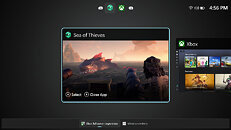
Microsoft's next-generation Xbox console is reportedly taking an unconventional route by running on a customized version Windows 11 OS instead of the specialized console OS that typically powers these devices. According to Windows Central, the system will function essentially as a gaming PC that boots into an Xbox interface by default. This UI is likely similar to what the current Xbox Full Screen Experience looks and feels like, and will likely provide the same performance boost. We have already seen that Xbox FSE mode brings about a 9.3% reduction in RAM usage and about an 8.6% higher FPS due to the smaller system overhead. Users could exit that interface to access the full Windows 11 operating system, meaning the hardware would support Steam, EPIC, and other competing game stores, as well as standard PC applications alongside Xbox games.
This is Microsoft's first radical departure from the walled-garden approach that has defined console gaming for decades. What it could translate to is the first hybrid system that serves multiple purposes, from traditional gaming to running productivity suites of Microsoft 365 apps like Word, Excel, and others, all from the same system. Teams from the Windows and Xbox divisions are reportedly collaborating closely to adapt the operating system for living room use. Microsoft is also working with hardware partners like ASUS to create multiple devices at different price points rather than releasing a single standard console. Plans for a first-party handheld device are still under consideration, though the traditional console appears to be the main focus.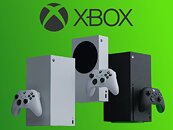
 We have already received confirmation from AMD that the upcoming console will use the "Magnus" SoC. It is rumored to feature the largest APU ever designed for a consumer console, with a 408 mm² chiplet design. Of this, 144 mm² is dedicated to the SoC built on TSMC's N3P node, while the GPU occupies 264 mm². The AMD chip is expected to include up to 11 CPU cores—three Zen 6 and eight Zen 6c—alongside a massive GPU setup with 68 RDNA 5 compute units, four shader engines, and at least 24 MB of L2 cache. Memory might expand to 48 GB of GDDR7 on a 192-bit bus. A dedicated NPU is rumored to offer significant on-device AI performance, with reports suggesting up to 110 TOPS.
Source:
Windows Central
This is Microsoft's first radical departure from the walled-garden approach that has defined console gaming for decades. What it could translate to is the first hybrid system that serves multiple purposes, from traditional gaming to running productivity suites of Microsoft 365 apps like Word, Excel, and others, all from the same system. Teams from the Windows and Xbox divisions are reportedly collaborating closely to adapt the operating system for living room use. Microsoft is also working with hardware partners like ASUS to create multiple devices at different price points rather than releasing a single standard console. Plans for a first-party handheld device are still under consideration, though the traditional console appears to be the main focus.


27 Comments on Next-Generation Xbox is Windows 11 PC/Console Hybrid for Gaming and Productivity
The actual opposite would be a counter to the Seam Machine, actually, which everyone in the gaming are have requested:
- Have the XBOX-optimized OS be installable in a rando x86 build, no matter the performance shortcomings because it's not the Series S/X. It's still better than a standard Windows, if it's only use will be gaming and the occasional webpage browse. Have it be "jumpable" to a desktop for Series X/S with a keyboard + mouse attached.
So much RAM? How much they expect this thing to cost if the RAM alone is $800.
Imagine the next Xbox & PS6 cost between $1500 - $2000. I can wait to see the sales figures, you can just as well build a gaming PC which is much more customisation friendly.
Anything else, call it a SFF PC and don't call it a console anymore.
MS Probably has secured ram price for a couple mil units from early out... Just my guesstimateI get ya, but they figured something has to be done to try to get it to sell more.. Them allowing other store fronts can work in their favor of selling more hardware, and no doubt you know they'll be collecting from whoever has a store front there
But the Series X and PS5 are virtually indistinguishable from mid-tier gaming PCs. Dev kits and software limitations are purely a matter of vendor lock-in, there's no practical reasons why they need to exist.
What even is the definition of a console? Is it just to play games? By that definition, the Playstations have NEVER been consoles, because they could play music and later DVDs and blu rays. Neither has the Xbox ever been a console. Does media streaming make it not a console anymore? Why does chatting and streaming get a pass if consoles are meant for gaming?
My issue at hand with this situation is a GAMING console is a device which was made for people to be able to NOT PRODUCE while using it, a device to escape the need for productivity, if you will.
And if memory $$$ remains a sticking point by the time the next-gen consoles release, the consoles would be the cheaper buy again. The Xbox esp. would be a contender since one could use it as a PC too (for those in the market to upgrade their PC regardless of whether it's for gaming or productivity or both). It wouldn't be the first time some companies buy a console for something other than gaming; the US military once had a bunch of PS3s running Linux as a budget supercomputer before retiring it when Sony ended support, and there were also stories of some companies also buying PS3s and using the Linux OS for their workplaces as it was cheaper than an equivalent PC at the time.
Sure, you can't exactly upgrade a console. But when everything from RAM to GPUs to storage drives are out of whack due to the AI bubble, the consoles become the cheaper and sometimes only option for some. Moreso in countries where the cost difference is even greater.