Wednesday, February 4th 2026

AMD Confirms Steam Machine in Early 2026, Xbox SoC Powered by RDNA 5 in 2027

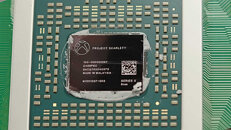
AMD posted its record fourth quarter revenue of $10.3 billion in 2025, and during the earnings call, the company issued some guidance on the upcoming product portfolio. During the call, AMD confirmed that Valve's Steam Machine is on track and shipping early this year, while its custom SoC division that designs processors for PlayStation and Xbox consoles will deliver an RDNA 5-based SoC for the next-generation Xbox console. While the Steam Machine specifications are confirmed, Xbox "Magnus" SoC is still largely a collection of rumored specifications. The "Magnus" SoC is rumored to feature the largest APU ever designed for a consumer console, with a 408 mm² chiplet design. Of this, 144 mm² is dedicated to the SoC built on TSMC's N3P node, while the GPU occupies 264 mm². The AMD chip is expected to include up to 11 CPU cores—three Zen 6 and eight Zen 6c—alongside a substantial GPU setup with 68 RDNA 5 compute units, four shader engines, and at least 24 MB of L2 cache. Memory might expand to 48 GB of GDDR7 on a 192-bit bus. A dedicated NPU is rumored to offer significant on-device AI performance, with reports suggesting up to 110 TOPS.
Dr. Lisa Su, AMDFor 2026, we expect semi-custom SoC annual revenue to decline by a significant double-digit percentage as we enter the seventh year of what has been a very strong console cycle. From a product standpoint, Valve is on track to begin shipping its AMD-powered Steam Machine early this year, and development of Microsoft's next-gen Xbox featuring an AMD semi-custom SoC is progressing well to support a launch in 2027.
The Xbox "Magnus" SoC is expected to offer significant hardware advantages, with Microsoft aiming for top-tier performance and versatility, creating a system that blurs the line between console and gaming PC. This system will reportedly be an all-in-one console and a PC, or there will be two separate systems that Microsoft is preparing for consumers next year. This is a complete opposite to Sony, who seems to be refining the PlayStation 6 with a focus on a more traditional console design. Both platforms are anticipated to launch in 2027.
Source: AMD Earnings Call Transcript
Add your own comment

52 Comments on AMD Confirms Steam Machine in Early 2026, Xbox SoC Powered by RDNA 5 in 2027

#1
GeoffreyA
Let's hope HL3 gets released alongside it.
Posted on Reply
#2
_roman_
48gib DRAM these days point to a possible price hike incoming,
Posted on Reply
#3
jesdals
48GB is one thing but GDDR7 seems unlikely in current climate
Posted on Reply
#4
purefun1965
Hopefully game companies will update their anti-cheat so Linux will work. Steam machine users will want to play those games.🤞
Posted on Reply
#5
wNotyarD
Why the hell is there an NPU on the chip for the new Xbox?
Posted on Reply
#6
Dr. Dro
purefun1965Hopefully game companies will update their anti-cheat so Linux will work. Steam machine users will want to play those games.🤞
Haha. No. Especially since Valve will sell them in 2 or 3 countries anyway.
wNotyarDWhy the hell is there an NPU on the chip for the new Xbox?
It'll probably be used for "Gaming Copilot". Large RAM size is also for LLM smoothness during gameplay.

...give me my Super Nintendo back
Posted on Reply
#7
FR3D1
Ninja Cat
@wNotyarD
This system will reportedly be an all-in-one console and a Copilot+ PC
With a friendly smile,
Fred.
Posted on Reply
#8
wNotyarD
FR3D1@wNotyarD


With a friendly smile,
Fred.
Calling it a Copilot+ PC? Will Xbox use full-fledged Windows going forward?

What could possibly go wrong...
Posted on Reply
#9
Darmok N Jalad
wNotyarDWhy the hell is there an NPU on the chip for the new Xbox?
Knowing MS, they're going to pull another X-bone and make the console about something other than gaming (LLM machine) and then wonder why everyone bought a Playstation instead.
Posted on Reply
#10
Hecate91
purefun1965Hopefully game companies will update their anti-cheat so Linux will work. Steam machine users will want to play those games.🤞
We can hope game companies will, but a majority of them won't because of laziness, extra cost of development, or hate for Linux and devs blaming Linux users for cheating in multiplayer games.
Linux and SteamOS will have to grab enough market share away from Windows for game companies to care.
Posted on Reply
#11
halcyon
"Memory might expand to 48 GB of GDDR7 "

Not possible with foreseeable production/demand ratio until at least 2028. So, either hugely expensive very low volume release OR, at best half of that for memory, most likely much less.
Posted on Reply
#12
vbq7qK68eyYAH4iR
Mere Mortal
wNotyarDWhy the hell is there an NPU on the chip for the new Xbox?
Because both Microsoft and Sony have said to get additional performance into the future, hardware doesn't scale like it once did, so they need to turn to features like upscaling to get better performance than the hardware would otherwise be capable of. With a very powerful NPU, Microsoft could use it as the upscaling hardware, like tensor cores on nVidia cards.
Posted on Reply
#13
wNotyarD
vbq7qK68eyYAH4iRBecause both Microsoft and Sony have said to get additional performance into the future, hardware doesn't scale like it once did, so they need to turn to features like upscaling to get better performance than the hardware would otherwise be capable of. With a very powerful NPU, Microsoft could use it as the upscaling hardware, like tensor cores on nVidia cards.
Isn't the RDNA5/UDNA hardware already there to do so, though?
Posted on Reply
#14
Dahita
AMD, if you can read this, any chance you can add support for HDMI QMS and CEC, along with Dolby/Widevine L1 licenses and HDR10+? This way we can transform this box into the perfect living room media/gaming machine. Thank you!
Posted on Reply
#15
ThomasK
Next gen consoles will be expensive, while PC gaming will be prohibitively expensive. So we're all left with overpriced consoles and cloud gaming as the only entry level gaming option.
Posted on Reply
#17
ymdhis
ThomasKNext gen consoles will be expensive, while PC gaming will be prohibitively expensive. So we're all left with overpriced consoles and cloud gaming as the only entry level gaming option.
Or you can buy a 1 gen older used PC for a third of the price and turn RTX/AA off in your game and it will run the same.
Posted on Reply
#18
Hecate91
ThomasKNext gen consoles will be expensive, while PC gaming will be prohibitively expensive. So we're all left with overpriced consoles and cloud gaming as the only entry level gaming option.
If the next gen Xbox is also a full PC then I expect Microsoft to price it like one, and it'll have Copilot and AI junk just like a Windows PC.
Although I'd rather stick to older games than pay for a console which requires a subscription for multiplayer games.
ymdhisOr you can buy a 1 gen older used PC for a third of the price and turn RTX/AA off in your game and it will run the same.
Where do you find 1 gen old PC's or parts for a third of the price of new? Everything used is inflated in price, especially RAM,SSD's, and any decent GPU.
Posted on Reply
#19
GhostRyder
I mean, it all sounds great if they can figure out supply chain issues with GDDR7. Otherwise, unless they are gonna charge 2k for the console I doubt it could be sold at a reasonable volume.
Posted on Reply
#20
LastDudeALive
AleksandarKThe AMD chip is expected to include up to 11 CPU cores—three Zen 6 and eight Zen 6c
This an odd decision, frankly. Obviously the three full-size cores will be the primary gaming cores, but many games already scale beyond 6 threads. If Zen 6c cores are designed the same way Zen 5c cores are, they'll have a gimped L3 cache and can't access the L3 cache of the larger cores. Any part of a game that's forced onto a c core will be significantly slower.

Why not have something like 6 Zen 6 cores with X3D cache, and then a secondary CCD with 4 Zen 6c cores to handle the OS?
Posted on Reply
#21
kondamin
LastDudeALiveThis an odd decision, frankly. Obviously the three full-size cores will be the primary gaming cores, but many games already scale beyond 6 threads. If Zen 6c cores are designed the same way Zen 5c cores are, they'll have a gimped L3 cache and can't access the L3 cache of the larger cores. Any part of a game that's forced onto a c core will be significantly slower.

Why not have something like 6 Zen 6 cores with X3D cache, and then a secondary CCD with 4 Zen 6c cores to handle the OS?
games for consoles can be optimised far better than games for PC, scheduling won't be as big of an issue as it is on windows.
Posted on Reply
#22
LastDudeALive
kondamingames for consoles can be optimised far better than games for PC, scheduling won't be as big of an issue as it is on windows.
Xbox runs Windows. And in any case, it's a regression from current-gen consoles, which have 8 cores. Zen 6 will be far better than Zen 2, but limiting games to 3 cores is just silly.
Posted on Reply
#23
kondamin
LastDudeALiveXbox runs Windows. And in any case, it's a regression from current-gen consoles, which have 8 cores. Zen 6 will be far better than Zen 2, but limiting games to 3 cores is just silly.
they are giving it 11 cores, just that 3 cores will have a bit more on die L3 cache.
And it's not hard to imagine that zen6's c cores will have as much l3 as the full zen5 cores do now.

and xbox windows is pretty stripped down and won't spawn as many useless threads
Posted on Reply
#24
Broken Processor
Xbone with an NPU? What if you don't want Copilot surly this is wasted hardware.
Posted on Reply
#25
Hecate91
Zen C cores are no less weird than Intel using E cores, however C cores are fully featured cores, only with less cache.
Consoles also have to fit into a certain TDP, and full size cores will probably have priority for processes needing extra cache.
Posted on Reply
Add your own comment
Nov 22nd, 2026 21:33 CST change timezone

New Forum Posts

Popular Reviews

TPU on YouTube

Controversial News Posts