Monday, February 23rd 2026

Intel Plans Return to Unified Core Design, No More Performance and Efficiency Core Split
According to the latest job listings, we learn that Intel is planning the return of a unified core architecture, something we haven't been accustomed to in the last few years. Starting with the 12th Generation "Alder Lake" processors, Intel began selling hybrid core processors that combine "Golden Cove" performance cores and "Gracemont" efficient cores. These became commonly known as P and E-Cores, which are now being used across Intel products in hybrid designs or P/E-core-only Xeon processors, of course, with the latest designs and iterations. However, as the new job listings suggest, Intel is assembling a team of engineers for its "Unified Core" design group that will deliver the new microarchitecture to power the next generation of processors.
Separating the core design into P-Cores and E-Cores has yielded Intel the desired results that the company hoped for. This includes product separation and many goals across platforms. For example, in the consumer sector, E-Cores run a lot of side and background tasks in the operating system, while P-Cores power main applications like games. To extract maximum performance, Intel has a dedicated Thread Director that makes the entire process work and dictates just what application goes to which core, in tandem with the operating system. Intel also provides P-Core-only and E-Core-only Xeon server processors that serve either performance sectors like HPC and AI or the cloud sector that needs many cores with somewhat lower performance, but in a dense 100-core+ package.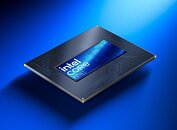
 With a unification of the P-Core and E-Cores, Intel would have to look into other techniques for separating its product offerings. That can simply be done by using smaller cache capacities, as L2 and L3 cache occupy a huge percentage of the CPU die, just like AMD does with Zen 5 and Zen 5c. We can hope to see other ways, as Intel's Unified Core design team could bring surprises and some interesting new technologies. The timeline for the launch of this "Unified Core" is still unknown, as the design is probably in the early stages. These processes take years, and it is likely that this new core design will be launching by the end of the decade. Until then, we are looking into the hybrid core design like we have been using in recent years.
Source:
LinkedIn Job Posting
Separating the core design into P-Cores and E-Cores has yielded Intel the desired results that the company hoped for. This includes product separation and many goals across platforms. For example, in the consumer sector, E-Cores run a lot of side and background tasks in the operating system, while P-Cores power main applications like games. To extract maximum performance, Intel has a dedicated Thread Director that makes the entire process work and dictates just what application goes to which core, in tandem with the operating system. Intel also provides P-Core-only and E-Core-only Xeon server processors that serve either performance sectors like HPC and AI or the cloud sector that needs many cores with somewhat lower performance, but in a dense 100-core+ package.


127 Comments on Intel Plans Return to Unified Core Design, No More Performance and Efficiency Core Split
For all we know it could be a business moniker.
Nothing in that screenshot points to any specific details, the word "unified" is performing the heavy lifting here.
Edit: Not directed at the author of the article.
wouldn't be that surprising to see 'p' cores go away as e cores get more functionality
Instead of Pc it will be BE (bigger E cores), as current P-cores are not much better than E-cores already.
A boosted E-core design tuned for higher frequency and bigger caches should be able to replace the P-core performance point.
So one base core design, with several variants.
The E-core design is newer so it likely has less technical debt, and therefore can easier scale IPC going forward.
Apple has proven that IPC can be still improved a lot, so it should make sense that they want to catch up as much as they can on that front using a similar approach.
They are still separated afaik...
Historically Intel CPU are more starved in back end while AMD CPUs are more starved in front end.
Too bad we don't have a quantum based x86 unlimited core.
But the Gracemont cores aren't power-efficient on desktop; they are clocked too high and are actually less lower efficient than the Golden Cove cores. Like AMD's chiplets, they lower manufacturing costs. Meteor Lake addressed this with Crestmont cores which improved more than the Redwood Cove cores did.
In any case improved efficiency remains the key, it provides many options, otherwise…:slap:
I wonder if adding a µop cache to it would improve it further, since Zen 5 has shown that (as long as the dual 4-wide decoders are enabled) its impact is not huge. Nonetheless, skymont/darkmont is clearly starved with their backend, specially when it comes to branch prediction. Feeding it a larger ROB (and load/store queues as well), and managing to increase the dispatcher may bring it really close to AS-levels, with a really wide core that doesn't need to clock as high.
And it's not just to divide high/low priority tasks. Efficiency is a huge reason for AMD/Intel's big/little designs. And that's very important in the laptop market, where they are currently getting manhandled by Apple. It's also important in the enterprise market (which is more important than the consumer market altogether). Enterprise customers loooooove the dense e-core only Xeons and AMD's c-core only EPYCs. And it's important to keep development costs under control by having similar architectures for enterprise and consumer.AMD has separation of cores, with their c cores. They have taken a different approach to it, opting to keep the same architecture instead of designing a new one, but it has the exact same limitations as Intel's E cores. Since they're significantly slower and have half the L3 cache, you need the OS to keep high-priority tasks (like gaming) off the c cores and on the P cores.
It was originally a response to AMD's node/core count advantage, yes. It wasn't just to "look" better, it did match performance. And now that they're on similar nodes, we can see that the density of single-threaded e-cores enables the Core Ultra CPU to match multi-threading power with lower thread counts. i.e. small cores are better for multi-threading, which, of course, is also shown by the success of e-core/c-core Xeon/EPYC designs.Laptops also need power efficiency. They're a very important market, and AMD and Intel need to compete against the king of efficiency, Apple. And sure, desktops can handle more, but Intel also deservedly got roasted (pun intended) with their 400W+ 13900K/14900K models and the overall power consumption of all Raptor Lake models. And remember that efficiency = power. If a design is more efficient, that means that when it gets more power in a desktop, you get a lot more multithreading power out of it.If a "marketing gimmick" can essentially match productivity performance with 8 less threads, I'll take more marketing gimmicks, please.